A bassinet stroller can be a great investment for new parents, offering a safe, flat sleeping space for your newborn while allowing for easy changes between home and outings. You’ll enjoy the benefits of comfort and portability, but be mindful of the high initial cost and limited use period of about 3 to 6 months. It’s essential to weigh these pros and cons based on your lifestyle and needs before deciding if it’s right for you. Explore more to see what suits your family best.
Bassinet Strollers Explained
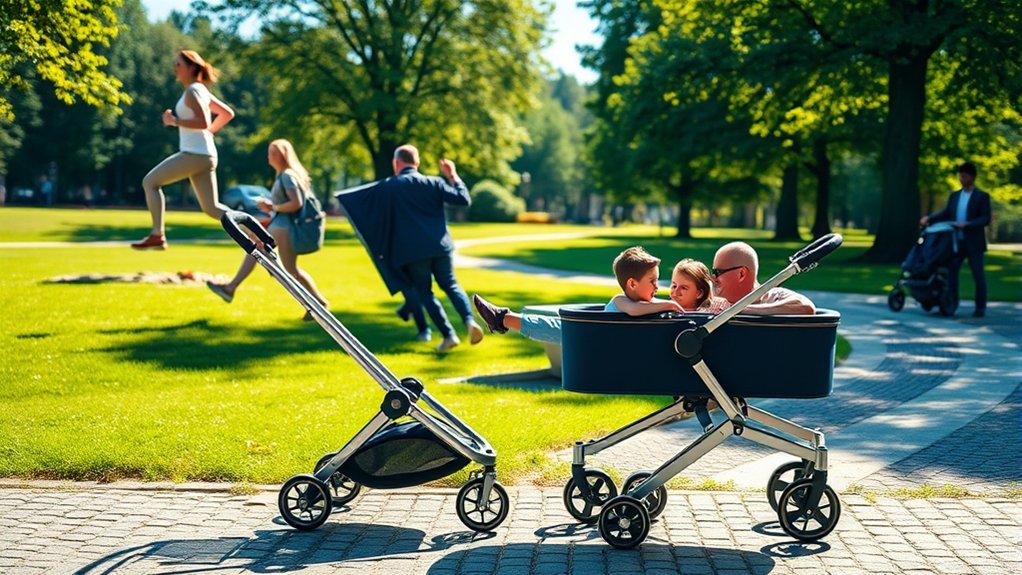
Bassinet strollers are a game-changer for new parents looking to combine mobility and safety.
Bassinet strollers revolutionize parenting by seamlessly blending safety and convenience for modern families on the go.
These strollers boast essential bassinet stroller features, like a flat sleeping area designed specifically for newborns, which promotes safer positioning during outings. You’ll appreciate the detachable bassinet attachment that makes shifting from home to stroller a breeze.
This lie-flat design helps prevent developmental concerns, such as positional plagiocephaly, giving you peace of mind. Most bassinet strollers are suitable for infants up to 3 to 6 months, ensuring your little one stays comfortable and secure.
Notable models like the Mockingbird and Thule Urban Glide cater to these safety considerations, allowing you to confidently navigate the world with your baby in tow.
Benefits of Using a Bassinet Stroller
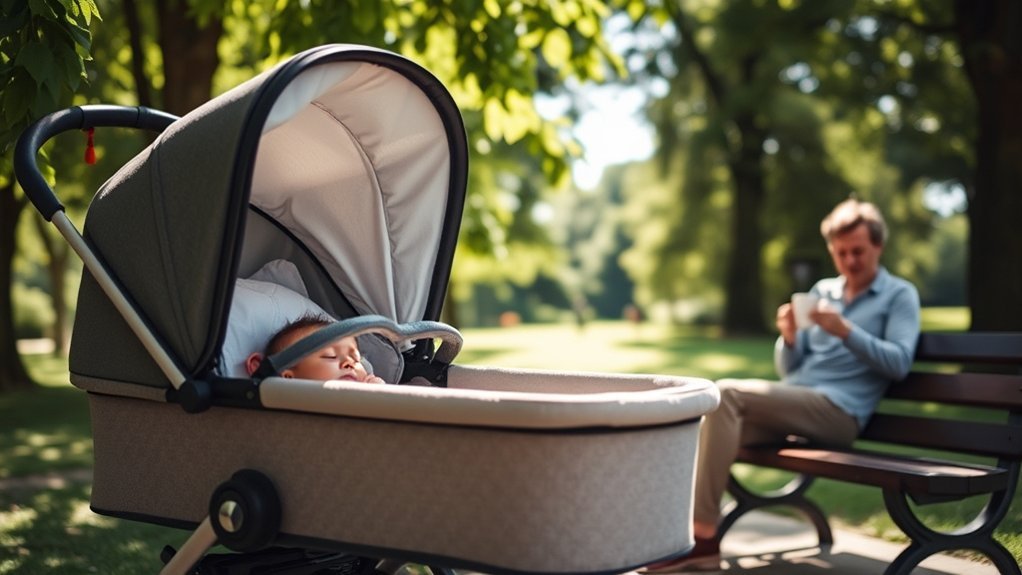
When it comes to keeping your newborn safe and comfortable while on the go, choosing a bassinet stroller offers remarkable advantages.
These strollers come with design features that allow your little one to lie flat, supporting healthy growth and natural movement. They promote safe positioning, which is essential for adequate oxygen intake and muscle strengthening.
Plus, the portable sleeping option means you can easily shift your sleeping baby without waking them. The gentle rocking motion stimulates the vestibular system, enhancing balance and coordination while promoting relaxation.
Using a bassinet stroller encourages outdoor activities, which benefits your mental health as you keep a watchful eye on your baby, all while adhering to safety standards that guarantee peace of mind.
Downsides to the Bassinet Stroller
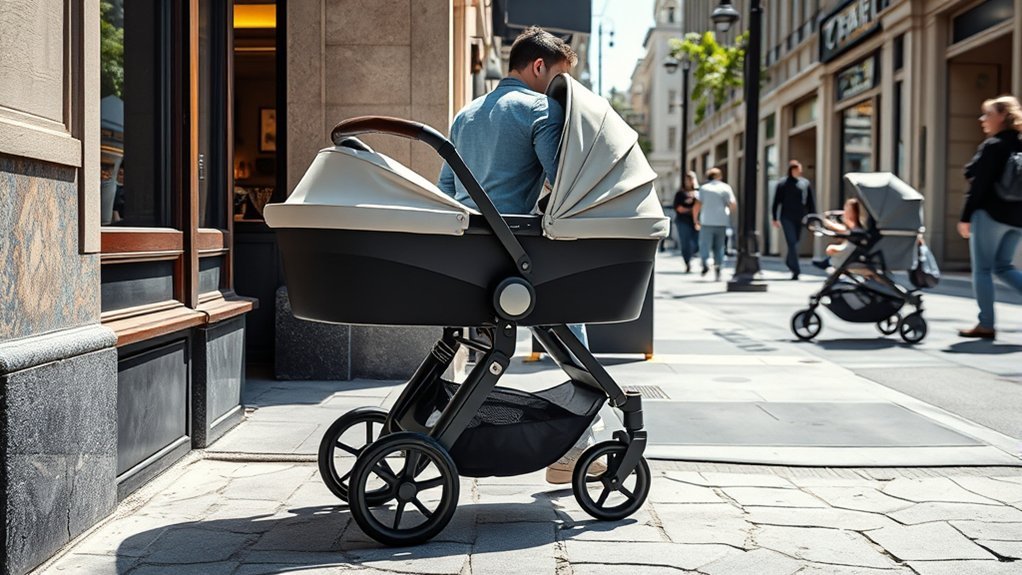
While bassinet strollers offer some great benefits, there are a few downsides you should consider.
For one, they often come with a high initial cost and have a short usage period, typically lasting just a few months.
Plus, they may struggle on uneven terrain, making them less versatile for your family’s adventures.
High Initial Cost
Purchasing a bassinet stroller can set you back considerably, often ranging from $140 to $300, which might strain a budget-conscious family’s finances.
These strollers can be markedly pricier than traditional options, making budget considerations essential. If you’re only using the bassinet for a short period—typically until your baby is 3 to 6 months old—the high initial cost may not feel justified.
Many bassinet strollers come as part of a travel system, pushing the overall price even higher. For some families, the financial impact of this investment outweighs the benefits, especially if your child grows quickly into a regular stroller seat.
Exploring used options or sales might ease the burden, but that upfront cost remains a substantial concern.
Short Usage Period
The short usage period of bassinet strollers can be a significant drawback for many families. Typically, these strollers are only suitable for about 3 to 6 months, just until your baby can sit up or roll over. This brief usage duration might make you question the investment, especially since you’ll need to shift to a standard stroller seat soon after.
| Pros | Cons |
|---|---|
| Comfortable for newborns | Short lifespan |
| Easy to maneuver | Rapid growth outgrowing |
| Cozy for infants | Frequent upgrades |
| Stylish options | Increased overall costs |
| Lightweight design | Limited use period |
Ultimately, the shift timing can lead to unexpected expenses, pushing you to buy new gear sooner than you planned.
Limited Terrain Compatibility
As you consider the short usage period of bassinet strollers, it’s important to think about where you’ll actually be using one.
These strollers shine on flat, smooth surfaces like sidewalks but struggle with uneven terrain challenges. If you’re an adventurous parent who loves outdoor activities, you might find them impractical for parks or trails.
The lack of buckling systems can make your baby feel jostled on bumpy paths, raising safety concerns. Plus, without proper suspension, rides over rough terrain can lead to discomfort for your little one.
Ultimately, if you often navigate diverse landscapes, you may want to explore traditional strollers or all-terrain models that offer greater versatility for your family’s escapades.
Is a Bassinet Stroller Necessary?
When you’re deciding if a bassinet stroller is necessary, think about how it benefits your newborn’s sleep and development.
While there are alternative options out there, the choice often hinges on your lifestyle and how often you plan to use it.
Weighing these factors can help you determine if this investment makes sense for your family.
Benefits for Newborns
While you might wonder if a bassinet stroller is really necessary, its benefits for newborns are hard to overlook.
Bassinet strollers provide a flat sleeping surface, which is vital for newborn safety, promoting healthier spinal and hip development compared to inclined car seats. The lie-flat position allows your baby to breathe freely, reducing the risk of respiratory issues.
Plus, these strollers encourage physical development by giving infants room to kick and turn, fundamental for muscle strengthening. When your little one falls asleep at home, transferring them to the bassinet stroller means fewer disturbances, ensuring better infant comfort.
Finally, using a bassinet stroller encourages outdoor activity for you, boosting your mental well-being during those early parenting days.
Alternative Options Available
If you’re considering whether a bassinet stroller is essential, you’ll find there are plenty of alternative options that can meet your needs without the commitment. Traditional strollers with newborn inserts provide a safe lying position for your infant. Travel systems combine car seats and strollers for easy changes. Baby-wearing solutions like wraps and carriers offer hands-free carrying while keeping your baby close. You can also opt for a portable bassinet, which serves as a safe sleeping space when you’re out and about.
Here’s a quick look at some alternatives:
| Option | Benefits | Storage |
|---|---|---|
| Traditional Stroller | Safe for newborns | Compact storage |
| Travel System | Easy changes between car & stroller | Convenient |
| Baby-Wearing | Promotes bonding | Minimal storage |
These choices allow for flexibility and comfort!
Lifestyle Considerations
Considering your lifestyle is essential when deciding whether a bassinet stroller is necessary for your family.
If you live an urban lifestyle and enjoy outdoor activities, a bassinet stroller can be a game-changer. It’s designed for those early months, offering a cozy and safe spot for your newborn while you stroll through the park or navigate city streets.
However, if driving dominates your routine, alternatives like travel systems might suit you better.
Remember, bassinet strollers are a short-term investment, ideal until your baby can roll over around 3 to 6 months.
Weigh your walking frequency against your needs, and you’ll find the right fit that lets you embrace parenthood with ease and freedom.
Factors to Consider When Choosing a Bassinet Stroller
When you’re choosing a bassinet stroller, it’s important to prioritize safety features, as they play a crucial role in ensuring your baby’s well-being during outings and naps.
Look for sturdy construction and breathable fabrics to keep your little one comfortable, whether you’re on a long walk or just running errands.
Portability options also matter; consider models that allow for easy attachment and detachment, making shifts between home and stroller seamless.
Compatibility with car seats can enhance versatility, making your investment more practical.
Plus, machine washable covers are a game changer for convenience, simplifying cleaning and maintenance.
Alternatives to Bassinet Strollers
Many parents find that bassinet strollers aren’t the only option for transporting their little ones.
Traditional strollers with newborn inserts offer a safe, reclined position for infants, ensuring you can use them as your child grows.
Travel systems combine car seats and strollers, providing versatility for families frequently on the go.
If you prefer hands-free carrying, wrap carriers promote closeness while allowing you to move easily.
Compact stroller frames can also accommodate infant car seats directly, eliminating the need for a separate bassinet.
Additionally, playards with bassinet features give you a dual-purpose sleeping space at home and on the go, offering more extended usability than a basic bassinet stroller.
Explore these alternatives to find what suits your family’s lifestyle best!
When to Stop Using a Bassinet Stroller
Determining the right time to stop using a bassinet stroller is vital for your baby’s safety and comfort.
Typically, you should shift to a standard stroller seat when your little one reaches around 6 months or can sit up independently.
Look for these signs that it’s time to move on:
- Your baby can sit up by themselves.
- They reach the manufacturer’s weight limit.
- They’re becoming too active for the confined space.
Adhering to safety guidelines is important, as continuing to use a bassinet stroller beyond the recommended age could pose risks.
Recognizing these developmental milestones will help promote your baby’s well-being while embracing their newfound freedom to explore the world!
Making the Most of Your Bassinet Stroller
To make the most of your bassinet stroller, take advantage of its unique features that cater to your baby’s needs. Use it for outdoor walks, letting your newborn lie flat and comfortably while soaking in the sights. This way, you foster curiosity and connection with the world around them.
Confirm your stroller is compatible with your car seat for smooth changes as your baby grows. Look for machine washable covers and breathable fabrics to keep things clean and comfy.
Don’t forget the portability factor! Bassinet strollers are perfect for portable naps, providing a safe sleeping environment wherever you go. Keep an eye on your baby’s milestones to know when it’s time to switch to a standard stroller seat.
Frequently Asked Questions
Can a Bassinet Stroller Be Used for Overnight Sleeping?
Yes, you can use a bassinet stroller for overnight sleeping, but confirm it meets sleep safety standards. It offers overnight convenience, letting you keep your baby close while confirming they’re safe and comfortable throughout the night.
How Long Can I Use a Bassinet Stroller?
You can typically use a bassinet stroller for about six months, depending on your baby’s weight and height. After that, consider moving to a regular stroller to maximize its lifespan and guarantee your child’s comfort.
Are Bassinet Strollers Safe for Newborns?
Yes, bassinet strollers are safe for newborns when they meet safety standards and provide proper newborn support. Always verify your stroller is certified, and check features like secure harnesses and flat sleeping surfaces for ideal safety.
What Features Should I Look for in a Bassinet Stroller?
When choosing a bassinet stroller, look for durability factors like sturdy construction and reliable wheels. Also, consider storage options that offer convenience for your outings, making your adventures with your little one more enjoyable and stress-free.
Is a Bassinet Stroller Compatible With My Car Seat?
A bassinet stroller often offers car seat integration, enhancing bassinet compatibility. Check your stroller model’s specifications to verify it securely fits your car seat, making your outings smoother and more convenient for you and your baby.
Conclusion
In the end, whether a bassinet stroller is necessary comes down to your lifestyle and preferences. As the saying goes, “One size doesn’t fit all.” Weigh the benefits and downsides, consider your needs, and explore alternatives before making a decision. If it fits your family’s routine and budget, it could be a valuable addition. Remember, the right stroller should make your outings easier while keeping your little one comfortable and safe.