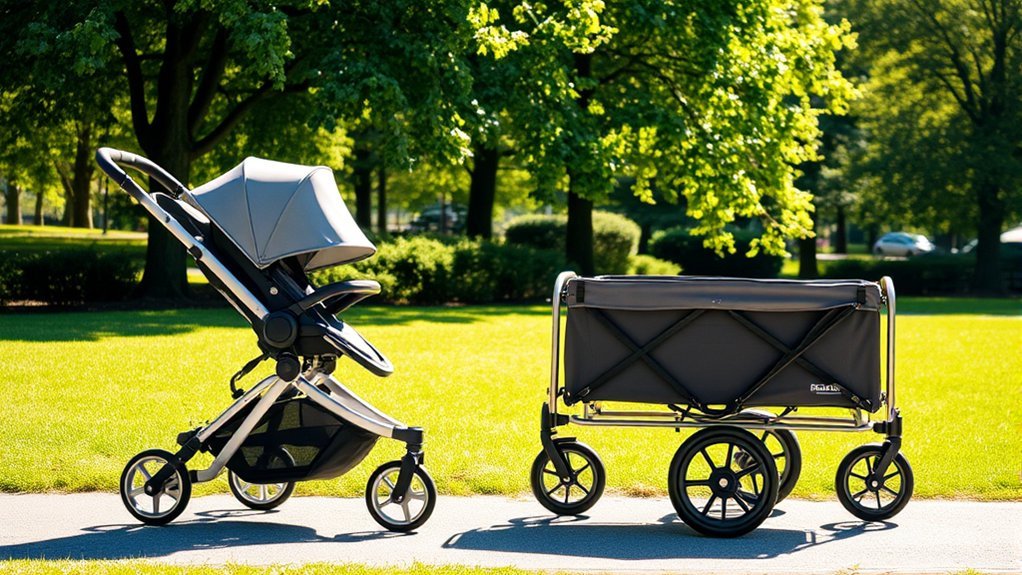
For smooth stroller naps, aim for consistency. Put your toddler in the stroller around the same time daily and watch for sleepy cues like yawning. Make sure the harness is secure but comfy, and keep the stroller in a stable position. A shaded spot helps keep things calm, too. If naps get tough, don’t stress; adjust the recline for comfort. Stick around for more tips and tricks to help your little one snooze peacefully on the go!
Understanding the Safety of Stroller Naps
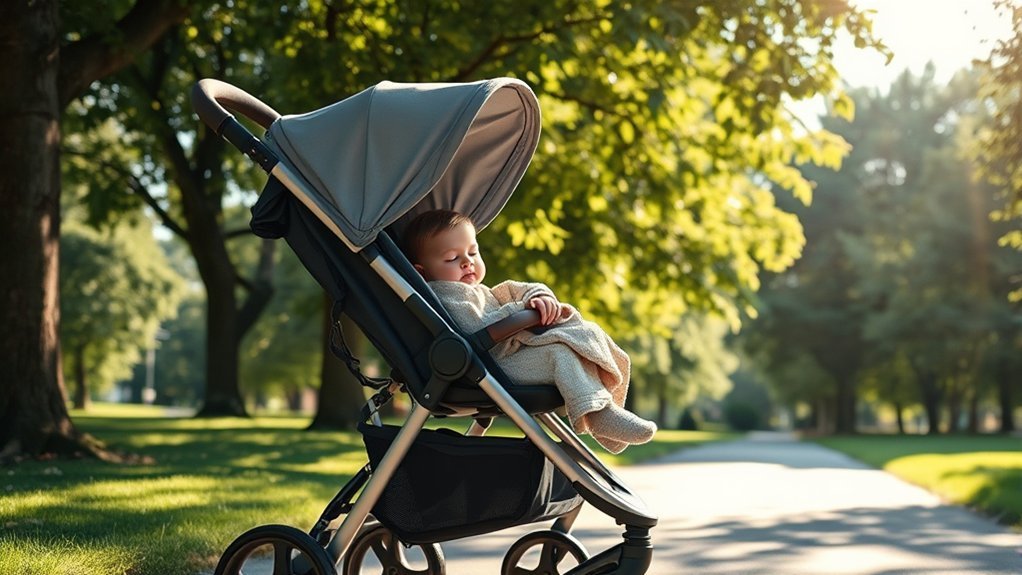
When you’re out and about with your little one, it can be tempting to let them nap in their stroller, especially if they’re dozing off after a fun outing.
However, stroller safety is key. The American Academy of Pediatrics recommends keeping those naps under 2 hours to avoid any risks associated with prolonged sleep in a stroller.
Always make sure your baby’s securely clipped in; a fall can happen faster than you think! Supervise them closely, too.
Once they wake up or after their nap duration is up, move them to a firm sleep surface on their back.
And remember, keep the stroller seat free of any items that could pose suffocation or strangulation hazards. Your little one’s safety is always worth the extra effort!
Establishing a Consistent Napping Routine
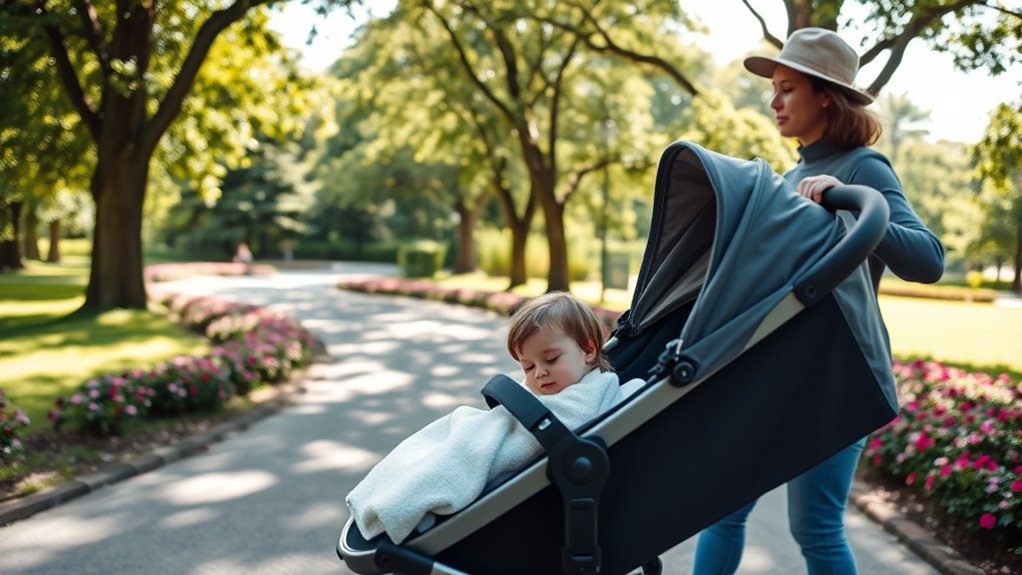
Creating a consistent napping routine can make a world of difference for both you and your toddler. Start by placing your little one in the stroller at the same time each day. This naptime consistency helps them associate the stroller with sleep.
Before strapping them in, engage in calming activities like reading a book or singing a lullaby to signal it’s time for a nap. Keep an eye out for sleepy cues, such as yawning, to know when to begin. Aim to put them down when they’re drowsy but not fully asleep, encouraging self-soothing.
Finally, use the same stroller for both naps and outings to maintain stroller familiarity, creating a comforting and secure environment for your toddler.
Recognizing Sleepy Cues in Your Toddler
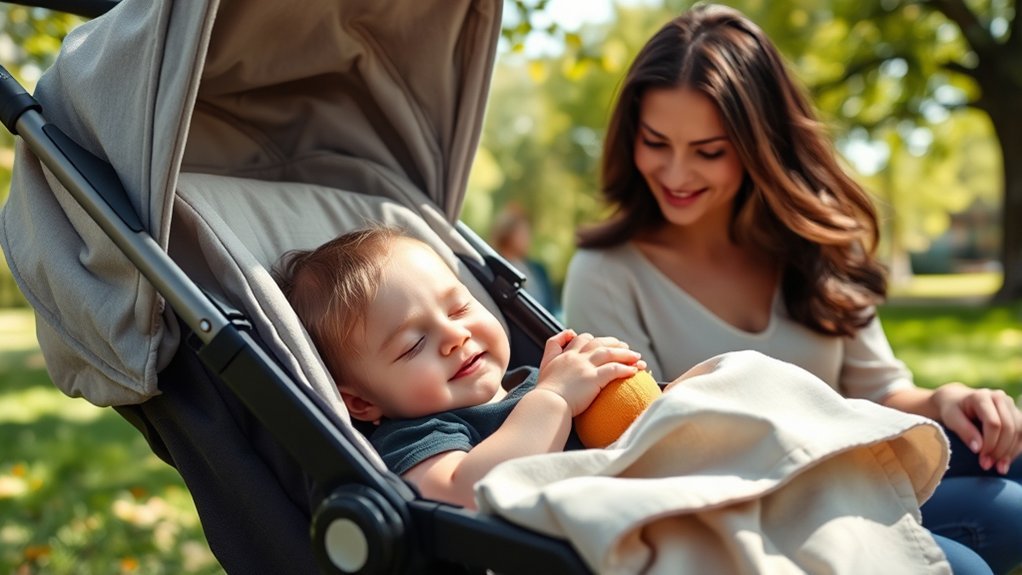
As a parent, you quickly learn that recognizing sleepy cues in your toddler can feel like deciphering a secret code. Typically, around two hours after waking, you’ll notice some sleepy signs.
Look out for eye rubbing, yawning, or a drop in their usual energy. I remember one outing when my son suddenly turned from a chatterbox to a quiet observer—definitely a sign he needed a nap!
Responding to these behavioral changes right away is key; catching them before they get overtired can save you from a cranky meltdown. Aim for naptime when your toddler’s drowsy but not fully asleep for a smoother shift.
Even when you’re out and about, staying aware of these cues helps maintain their nap schedule.
Creating a Sleep-Friendly Environment
To help your toddler drift off to sleep, setting up a sleep-friendly environment is essential. Start by dimming the lights if you’re indoors, or find a shaded spot outside. This minimizes distractions and creates a calming atmosphere.
I’ve found that using a noise machine or soft ambient sound can work wonders, too. Don’t forget to extend the stroller’s canopy to block out bright sunlight. Dress your little one in lightweight, breathable clothing to keep them comfortable and cool.
If you’re indoors, a quiet room can enhance familiarity and comfort. With the right stroller accessories like a good canopy and sound machine, you’ll create the perfect little haven for those precious nap times.
Timing Naps to Avoid Overtiredness
Naptime can feel like a balancing act, but timing it right is key to keeping your toddler happy and well-rested. Aim to put your little one down for a nap when they show sleepy cues, usually about two hours after waking. This helps you prevent overtiredness, which can lead to crankiness.
Here’s a quick guide to help you:
| Signs of Fatigue | Ideal Nap Time |
|---|---|
| Yawning | 1 PM |
| Eye rubbing | 12:30 PM |
| Fussiness | 12 PM |
| Clinginess | 11:30 AM |
| Zoning out | 11 AM |
Consistent nap duration and frequency can keep their mood stable. A calming pre-nap routine helps signal it’s time to wind down!
Managing the Transition From Two Naps to One
Shifting your toddler from two naps to one can be a challenge, but recognizing their sleepy signs is key to making it smoother.
Embracing some quiet time during the day can help them recharge without the need for a full nap.
And don’t forget about safety—if they doze off in the stroller or car seat, make sure they’re securely fastened for a worry-free ride!
Recognizing Sleepy Signs
As you start noticing your toddler’s sleepy signs, like eye rubbing and yawning, it becomes clear that they might be ready for a change in their nap schedule. Watch for these cues about two hours after they wake up. It’s common to see increased fussiness as they shift from two naps to one.
To help you track these signs, here’s a handy table:
| Sleepy Signs | Toddler Behavior |
|---|---|
| Eye rubbing | Increased fussiness |
| Yawning | Becoming less active |
| Clinginess | Irritability |
Timing is everything! Put your little one down when they’re drowsy, not fully asleep. A late afternoon cat nap can also smooth out this shift, keeping crankiness at bay.
Benefits of Quiet Time
Making the shift to one nap can feel challenging, but incorporating quiet time into your toddler’s day can really help ease the process. Embracing this moment not only supports their adjustment but also enhances their mood.
Here’s why quiet time is essential:
- Recharge: A little downtime helps your toddler reset, preventing overtiredness as they adapt.
- Mood Improvement: Late afternoon quiet time can keep energy levels up, making evenings more pleasant for everyone.
- Better Sleep: Establishing a consistent routine during quiet time promotes improved nighttime sleep quality, underscoring the importance of rest.
Safety During Transitions
Maneuvering the change from two naps to one can be a bit overwhelming, especially when you want to keep your little one safe and happy.
To help with this adjustment, watch for sleepy cues like eye rubbing and crankiness. These signs can guide you in determining the best nap duration. A late afternoon cat nap can really help bridge the gap while keeping your toddler refreshed.
When napping in the stroller, prioritize stroller safety. Always secure your child properly, and never leave them unattended.
Creating a calming atmosphere, similar to their usual sleep space, will encourage better sleep. With a bit of patience and attention, your toddler will adjust, and you’ll both enjoy those peaceful stroller moments.
Common Mistakes to Avoid With Stroller Naps
While stroller naps can be a lifesaver for busy parents, there are common mistakes you’ll want to avoid to guarantee your toddler gets the restful sleep they need.
Stroller naps are convenient, but avoiding common mistakes is essential for your toddler’s restful sleep.
1. Skipping naps altogether: This can lead to overtiredness, making nighttime sleep a battle.
Stick to your napping routines!
2. Allowing only short naps****: Toddlers need longer sleep stretches for proper development.
A quick snooze won’t cut it.
3. Letting your toddler dictate naptime****: Consistency is key.
Following a schedule helps establish healthy napping habits.
The Benefits of Napping on the Go
Napping on the go can be a game-changer for busy families, especially when your toddler needs some shut-eye but you’ve got errands to run.
Stroller naps offer fresh air and movement benefits that can soothe fussy little ones and help them drift off more easily. I remember those days when my toddler would stubbornly resist sleep until we hit the pavement. The gentle rocking of the stroller worked wonders!
Plus, it allows you to stick to your daily routine without sacrificing nap time. Just keep it under two hours for ideal rest, and you can enjoy guilt-free outings.
Shifting to a crib after stroller naps can enhance sleep quality, ensuring your little one wakes refreshed and ready for more adventures.
Ensuring Proper Supervision During Naps
Guaranteeing your toddler’s safety during stroller naps is a top priority, especially since those little ones can be unpredictable.
You want to create a safe environment for them while they drift off. Here are three key tips for effective nap supervision:
- Stroller Stability: Always engage the brake and guarantee the stroller is stable to prevent any accidental movement that could wake your toddler.
- Visibility is Key: Keep your little one in sight at all times. This way, you can quickly respond if they show any signs of distress.
- Limit Naptime: Aim for stroller naps under 2 hours to promote healthier sleep habits and avoid sleep deprivation.
Strategies for Handling Difficult Nap Days
When your toddler’s fighting nap time, it can feel like a battle you never signed up for. To tackle those toddler napping challenges, try to stick to a consistent routine. This signals it’s time to wind down, even if they resist.
Keep an eye out for sleep cues—like eye rubbing—and respond quickly to avoid overtiredness. Incorporate familiar calming activities, such as reading a beloved book or playing soft music, to create a soothing atmosphere.
If napping in the stroller is tough, adjust the recline or find a quieter spot. Remember, patience and flexibility are key; some days, shorter outings or extra quiet time can work wonders.
You’ve got this—nap resistance strategies are just part of the journey!
Frequently Asked Questions
Can I Use a Stroller for Overnight Sleeping?
You shouldn’t use a stroller for overnight sleeping. Stroller safety and overnight comfort can be compromised. Instead, set up a cozy crib or bassinet, ensuring your little one gets the rest they truly need.
What Age Is Appropriate for Stroller Naps?
From the moment your toddler’s eyes start to droop, stroller naps become a cozy escape. Generally, kids up to three years old enjoy stroller comfort for sleep. Just keep it comfy and watch for signs of tiredness!
How Long Should Stroller Naps Last?
Stroller nap duration should ideally last between 30 to 90 minutes. You’ll find this length helps your toddler recharge without disrupting nighttime sleep. Trust me, I’ve noticed the difference with my little one!
Should I Use a Blanket During Stroller Naps?
You can use a blanket during stroller naps, but make certain it’s lightweight for blanket safety. Think of it as a cozy hug that helps with temperature control, keeping your little one snug without overheating.
Can Stroller Naps Replace Regular Crib Naps?
Stroller naps can’t fully replace crib naps. While they’re convenient, maintaining a consistent nap routine in a safe crib guarantees your toddler sleeps soundly, promoting better rest and development. Trust me, you’ll notice the difference!
Conclusion
So, there you have it—your roadmap to stroller napping success! By tuning into your toddler’s sleepy cues and crafting that cozy sleep environment, you’re creating a little haven on wheels. Remember, it’s all about balance; don’t stress if things don’t go perfectly. Every nap is a step toward sweet dreams, whether at home or on the go. Embrace the journey, and soon enough, you’ll both be napping pros, ready to conquer the world—one snooze at a time!