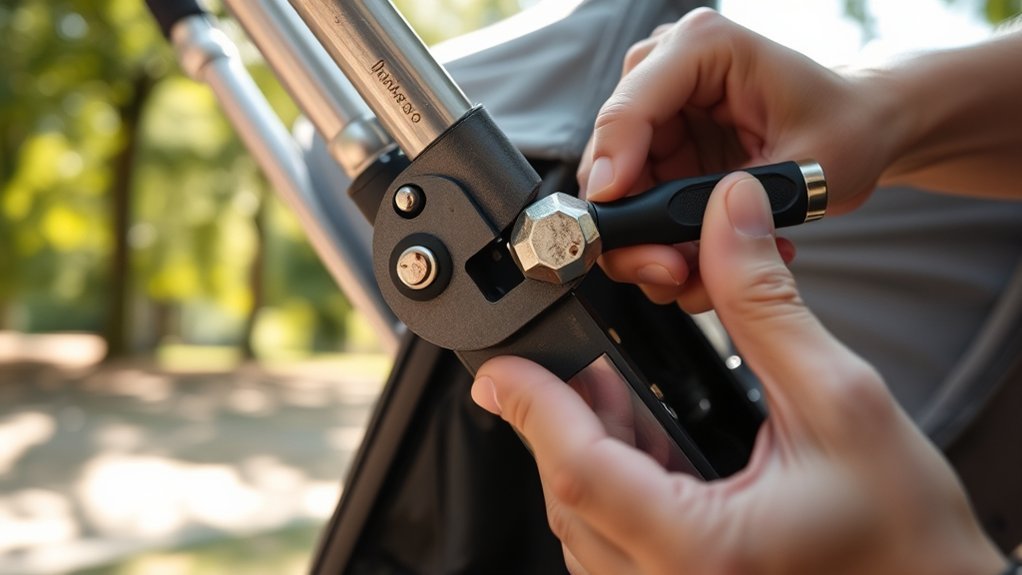

A stroller can make outings easier when your baby has reflux, but the stroller itself is not a treatment for gastroesophageal reflux (GER). The safest approach is to use a stroller that fits your baby’s age and size, keep them properly harnessed and supported while awake, and follow your pediatrician’s feeding advice. Most importantly, do not use an inclined stroller as a substitute for a safe, flat sleep surface.
Quick Answer
For a baby with reflux, choose a stable stroller that is approved for your baby’s age, offers secure harnessing and comfortable positioning, and rides smoothly. Do not rely on an inclined seat to treat reflux. If your baby falls asleep in the stroller, move them to a firm, flat, level sleep surface on their back as soon as practical.
Key Takeaways
- Infant reflux is common and usually improves as the digestive system matures during the first year.
- Holding your baby upright for about 20–30 minutes after a feed may help, but a semi-inclined stroller seat is not proven reflux treatment.
- Use only stroller positions, seats, bassinets, car seats, adapters and accessories approved by the manufacturer for your baby’s age, size and development.
- Always use the stroller’s restraint system correctly and watch for slumping or a chin-to-chest position.
- A stroller is not a routine infant sleep space. Babies with reflux should still sleep on their backs on a firm, flat and level approved sleep surface.
- Seek medical advice for forceful or green vomit, blood, feeding refusal, poor weight gain, breathing or swallowing problems, dehydration or other concerning symptoms.
Warning: Do not use a stroller, car seat, swing, wedge or other inclined sitting device as your baby’s routine sleep space because of reflux. The American Academy of Pediatrics recommends a firm, flat, level sleep surface and back sleeping for infants, including babies with reflux.
Medical note: This article provides general educational information and does not replace advice from your baby’s pediatrician. Reflux symptoms and feeding needs vary, especially in premature infants or babies with poor growth, feeding problems or other medical conditions.
Understanding Reflux in Babies

Gastroesophageal reflux, or GER, happens when stomach contents move back into the esophagus and sometimes into the mouth. Spitting up is extremely common in infancy and does not automatically mean that a baby has gastroesophageal reflux disease, or GERD.
According to the American Academy of Pediatrics, reflux in full-term babies commonly begins during the first few weeks of life, often peaks around 4–5 months and usually improves as the digestive system matures. Many babies who spit up regularly are otherwise comfortable, feed normally and continue gaining weight.
GERD is different. It refers to reflux that is associated with troublesome symptoms or complications, such as feeding difficulty, pain, poor weight gain or inflammation of the esophagus.
What Can Help After Feeding?
Your pediatrician may suggest feeding changes based on your baby’s symptoms and growth. Common strategies include avoiding overfeeding, burping at natural pauses and, for some babies, offering smaller feeds more often while still providing enough total nutrition.
The National Institute of Diabetes and Digestive and Kidney Diseases notes that holding an infant upright for about 20–30 minutes after feeding may be helpful when practical.
Note: “Upright after feeding” generally means holding and supervising your baby. It should not be interpreted as evidence that placing a baby in a semi-reclined stroller seat treats reflux.
Do not thicken feeds, change formula, remove foods from a breastfeeding parent’s diet or give reflux medicine solely on your own. These measures may be appropriate in specific situations, but your pediatrician should guide them.
For most full-term babies, ordinary infant reflux improves naturally as the digestive system matures, head control develops and the baby spends more time upright while awake.
Choosing the Right Stroller for a Baby With Reflux

When choosing a stroller for a baby who spits up frequently, focus first on safety, age-appropriate support and ease of supervision. Recline settings and suspension may improve comfort during a walk, but they should not be marketed or treated as medical therapy for reflux.
Before using any stroller seat, bassinet, infant car seat or adapter, check the manufacturer’s instructions for minimum age, weight limits, developmental requirements and approved configurations. A stroller that works well for an older baby with good head control may not be suitable for a newborn in the same seat configuration.
Recline for Comfort, Not Reflux Treatment
An adjustable seat can help you follow the stroller manufacturer’s positioning instructions and may make it easier to keep an awake baby comfortable. However, the American Academy of Pediatrics’ reflux and sleep guidance specifically warns that semi-inclined positioning does not improve reflux and may actually make it worse.
Instead of trying to create a particular reflux-fighting angle, use only the approved seat positions for your baby’s age and watch their posture. Their airway should remain open, their face should stay visible and they should not be folded forward with the chin pressed toward the chest.
The original Baby Jogger City Select example illustrates the difference between a feature and a treatment. The current City Select 2 lists adjustable seat recline and front-wheel suspension, which can be useful comfort features. They do not make the stroller a medical reflux device. Peg Perego also offers multi-position recline on various stroller models, but parents should verify the exact model and manual rather than relying on a vague name such as “Peg Perego Lite.”
Maneuverability and Support
A smooth, controllable stroller can make outings easier, especially when your baby is already uncomfortable. Useful features include:
- A secure restraint system: Use the stroller harness every ride according to the manufacturer’s instructions.
- Stable steering and suspension: These can reduce abrupt jolts on uneven paths and make the stroller easier to control.
- Reliable brakes and locks: Confirm that the parking brake, folding mechanism and seat attachments engage correctly.
- Good visibility: A peekaboo panel or parent-facing configuration may make it easier to monitor a young baby.
- Low, stable storage: Use the built-in basket rather than hanging heavy bags from the handle, which can affect stroller stability.
The U.S. Consumer Product Safety Commission’s carriage and stroller safety guidance covers restraint systems, stability, brakes, locking mechanisms and other safety requirements.
Safe Transition Options
Travel systems can make transitions from a vehicle to a stroller more convenient, but use only infant car seats and adapters that the stroller manufacturer specifically approves. Do not improvise an adapter or alter the car-seat angle to try to control reflux.
If your baby has recently eaten and your pediatrician recommends upright time, consider holding the baby upright and supervised before beginning a longer stroller outing. Moving directly from feeding into a tightly flexed or slumped seated position may not be comfortable for some babies.
Carriers can provide another supervised carrying option when used correctly, but the baby’s face and airway must remain clear. Follow the carrier manufacturer’s minimum-size requirements and positioning instructions.
Angled Seating: What It Can and Cannot Do

It is easy to assume that raising a baby’s head in a stroller must reduce reflux, but infant positioning is more complicated than that. A stroller seat is designed primarily for transportation, not for treating GER or providing a safe sleep environment.
Possible Comfort Benefits of Reclined Seating
For an awake baby who is developmentally ready for the stroller seat, an approved recline position may improve comfort, provide head and body support or reduce excessive slumping. Suspension and appropriate recline can also make the ride feel smoother.
Those benefits should not be confused with evidence that an inclined stroller reduces acid reflux. Research on seated infant positioning has not established semi-inclined seating as a reflux treatment, and AAP guidance specifically cautions against that assumption.
Pro Tip: Before leaving home, place your awake baby in the stroller, fasten the harness correctly and view their posture from the side. Check that they are not sliding downward, folding at the waist or dropping their chin tightly toward their chest.
Post-Feed Comfort and Digestion
The better-supported reflux strategy is not to find a particular stroller angle. If practical, hold your baby upright for roughly 20–30 minutes after a feed while they are awake and supervised. This is different from strapping a baby into a semi-reclined seat.
If your baby frequently becomes uncomfortable immediately after feeds, ask your pediatrician whether feeding volume, feeding technique, burping or other factors may be contributing. Avoid changing formula or thickening milk without professional guidance.
Safety Considerations for Reclining the Stroller
Whenever you adjust a stroller seat:
- Follow the manual: Use only recline positions approved for your baby’s age, weight and developmental stage.
- Lock the seat securely: Make sure the backrest and attachment points are fully engaged before moving.
- Use the restraint system: Never depend on the tray or belly bar to keep the baby in place.
- Avoid aftermarket wedges: Do not add unapproved cushions, reflux wedges or positioning products that change how the child fits in the restraint system.
- Watch the airway: Reposition or remove your baby if they slump, their head falls forward or breathing appears obstructed.
- Supervise continuously: Never leave an infant unattended in a stroller.
Safe Sleep Rules Still Apply to Babies With Reflux
Reflux does not change the basic safe-sleep recommendation. The NIH Safe to Sleep campaign recommends placing babies—including babies with reflux—on their backs for sleep on a firm, flat and level sleep surface.
Do not raise one end of the crib mattress or use a wedge to keep a sleeping baby’s head elevated. Raising the sleep surface has not been shown to reduce reflux and can allow the baby to slide into a dangerous position.
If your baby falls asleep in a stroller, car seat, swing, carrier or sling, the AAP recommends moving them to an appropriate firm, flat sleep surface on their back as soon as it is safe and practical.
Warning: Never prop a sleeping baby’s head or body with blankets, pillows, towels or aftermarket reflux positioners. These products can interfere with breathing or restraint-system performance.
Tips for Using a Stroller With a Reflux Baby
Small adjustments to your routine can make outings more comfortable without turning the stroller into a reflux treatment.
- Plan around feeding when possible. If your baby tends to spit up immediately after meals, allow some calm, supervised upright time before a long walk.
- Use the correct stroller configuration. Check the manufacturer’s instructions before placing a newborn or young infant directly in the stroller seat.
- Fasten the harness every time. Adjust it snugly enough to keep your baby from sliding or becoming trapped.
- Watch posture closely. Stop and reposition your baby if they become folded forward, slump to one side or appear uncomfortable.
- Choose smoother routes when practical. Good wheels and suspension may reduce jarring, although they do not directly treat reflux.
- Carry cleanup essentials. Burp cloths, wipes and a change of clothing can make frequent spit-up easier to manage.
- Offer position changes during longer outings. Take reasonable breaks based on your baby’s comfort and the stroller manufacturer’s instructions rather than relying on an arbitrary universal time limit.
- Stop if your baby becomes distressed. Check feeding needs, diaper, temperature, harness fit, posture and signs of illness before continuing.
Recommended Stroller Features for Comfort
No pediatric reflux guideline identifies a particular “best stroller for reflux.” Instead, look for practical features that help you transport and monitor your baby safely.
| Feature | Why It Helps |
| Manufacturer-approved age-appropriate seating | Ensures the stroller configuration is designed for your baby’s size and developmental stage. |
| Adjustable recline | Allows age-appropriate comfort adjustments when used according to the manual; it should not be considered reflux therapy. |
| Secure restraint system | Helps prevent sliding, falls and dangerous entrapment. |
| Good suspension and controllable wheels | Can make rides smoother and reduce abrupt jolting on uneven surfaces. |
| Ventilation and sun protection | Helps with general comfort during warm or sunny outings. |
| Low storage basket | Keeps burp cloths, wipes and spare clothes accessible without hanging heavy bags from the handle. |
Using Your Baby’s Reactions as Useful Information
Parents often become very good at recognizing when their baby’s reflux is most noticeable. Those observations are useful, but they should not be treated as proof that a particular stroller angle or product is medically treating GER.
Instead, watch for patterns. Note whether discomfort tends to happen immediately after large feeds, after a sudden position change, during a particular stroller configuration or when your baby becomes slumped. If symptoms are persistent, share those observations with your pediatrician.
Note: A simple feeding and symptom log can be more useful than changing stroller positions repeatedly. Record the feed time, approximate amount, spit-up or vomiting, crying, posture and any feeding refusal or breathing symptoms.
When to Call Your Pediatrician
Most uncomplicated infant reflux improves with time, but some symptoms need medical evaluation because they can indicate GERD or another condition.
Contact your baby’s healthcare professional promptly if you notice:
- poor weight gain or weight loss;
- repeated refusal to feed;
- frequent pain, severe irritability or back arching associated with feeds;
- problems swallowing, choking or persistent coughing or wheezing;
- vomiting that is becoming much more frequent or regularly forceful;
- blood in vomit or vomit that looks like coffee grounds;
- green or yellow-green vomit that may contain bile;
- signs of dehydration, unusual tiredness or substantially fewer wet diapers; or
- any breathing difficulty, blue color, limpness or other sign that your baby is seriously unwell.
The NIDDK infant GER and GERD guidance lists forceful vomiting, bile, bleeding, dehydration, poor growth, breathing problems and swallowing problems among symptoms that warrant medical attention.
Frequently Asked Questions
Can Stroller Use Reduce Reflux Symptoms in Babies?
A stroller may keep an awake baby comfortable during an outing, but there is no good evidence that an inclined stroller seat treats infant reflux. In fact, the AAP notes that semi-inclined positioning can worsen reflux in some babies. If practical, holding your baby upright for about 20–30 minutes after feeding is a better-supported strategy.
How Long Can I Keep My Baby in a Stroller?
There is no universal reflux-specific rule that every baby must leave a stroller after exactly two hours. Follow the stroller manufacturer’s age, weight and use instructions, monitor your baby’s posture and comfort, and provide reasonable breaks during longer outings. Remove or reposition your baby sooner if they slump, become distressed, need feeding or need a diaper change.
What Should I Do if My Baby Cries in the Stroller?
Stop and check your baby’s position, harness fit, temperature, diaper and feeding needs. Pick them up if needed and make sure they are breathing comfortably. If crying repeatedly occurs with feeding, vomiting, back arching, feeding refusal or poor weight gain, discuss the pattern with your pediatrician rather than repeatedly changing the stroller angle.
Are There Specific Stroller Brands Recommended for Reflux Babies?
Major pediatric reflux guidelines do not recommend a specific stroller brand for GER or GERD. Models from Baby Jogger, UPPAbaby, Peg Perego and other established manufacturers may offer useful features such as adjustable recline, suspension or compatible newborn configurations, but choose according to safety certification, the exact product manual, your baby’s age and fit—not claims that the stroller will treat reflux.
Can I Use a Stroller for Sleeping During Reflux Flare-Ups?
No. A stroller should not be used as a baby’s routine sleep space because of reflux. Babies with reflux should still be placed on their backs on a firm, flat and level approved sleep surface. If your baby falls asleep in the stroller, move them to an appropriate sleep surface as soon as it is safe and practical.
Conclusion
A stroller can still be a useful part of daily life with a reflux-prone baby, but comfort and safety matter more than creating a particular seat angle. Use a configuration approved for your baby’s age, fasten the harness properly, watch for slumping and take breaks when your baby needs them. When practical, hold your baby upright after feeding rather than relying on a semi-inclined stroller to control reflux.
Above all, keep stroller use separate from sleep. Babies with reflux should follow the same safe-sleep guidance as other infants: place them on their backs on a firm, flat and level approved sleep surface. If reflux is painful, worsening, interfering with feeding or growth, or accompanied by concerning vomiting or breathing symptoms, contact your pediatrician.
Sources
- American Academy of Pediatrics — GER & GERD — infant reflux course, symptoms, feeding measures and warning signs.
- American Academy of Pediatrics — Safe Sleep for Babies With Reflux — back sleeping, flat sleep surfaces and risks of semi-inclined positioning.
- NIH Safe to Sleep — Back Sleeping — safe sleep guidance for infants, including babies with reflux.
- NIDDK — Treatment for GER & GERD in Infants — post-feed upright holding, treatment principles and medication cautions.
- U.S. Consumer Product Safety Commission — Carriages and Strollers — stroller restraint, stability, brake and safety requirements.