To guarantee stroller buckle safety, make sure your child’s harness fits properly by adjusting straps monthly. The 5-point harness should be snug, with only two fingers’ width at the collarbone, and the chest clip at armpit level. Regularly check for pinch points and avoid aftermarket products, as they may compromise safety. It’s also important to involve older siblings in safety checks. With these practical tips, you’ll create secure rides for your little one and discover more ways to enhance safety.
Importance of a Proper Harness Fit
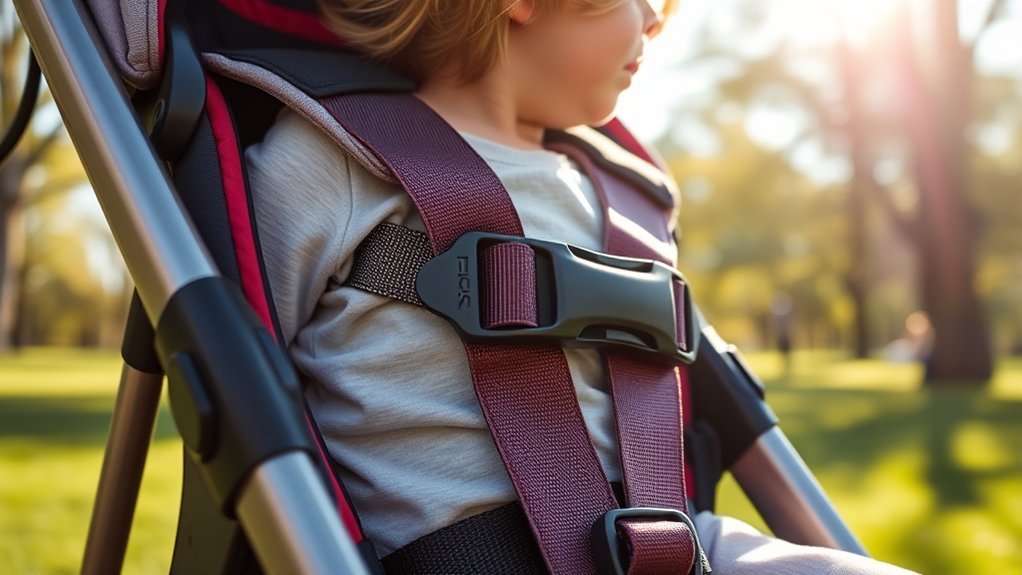
When it comes to stroller safety, ensuring a proper harness fit is essential for your child’s protection. A five-point harness greatly reduces the risk of falls and climbing out, common causes of stroller injuries.
To achieve the best fit, follow these harness sizing tips: regularly check the straps, ensuring they’re snug but not pinching. Adjust monthly to accommodate your child’s growth, which helps maintain correct posture and breathing, preventing issues like positional asphyxiation.
Regularly check and adjust the harness straps to ensure a snug fit, supporting your child’s safety and comfort.
Remember, the crotch strap keeps your child from sliding, while the shoulder straps secure them upright.
Prioritizing safety awareness not only safeguards your child but also empowers you as a caregiver, allowing for worry-free outings that you both can enjoy.
Anatomy of a 5-Point Harness
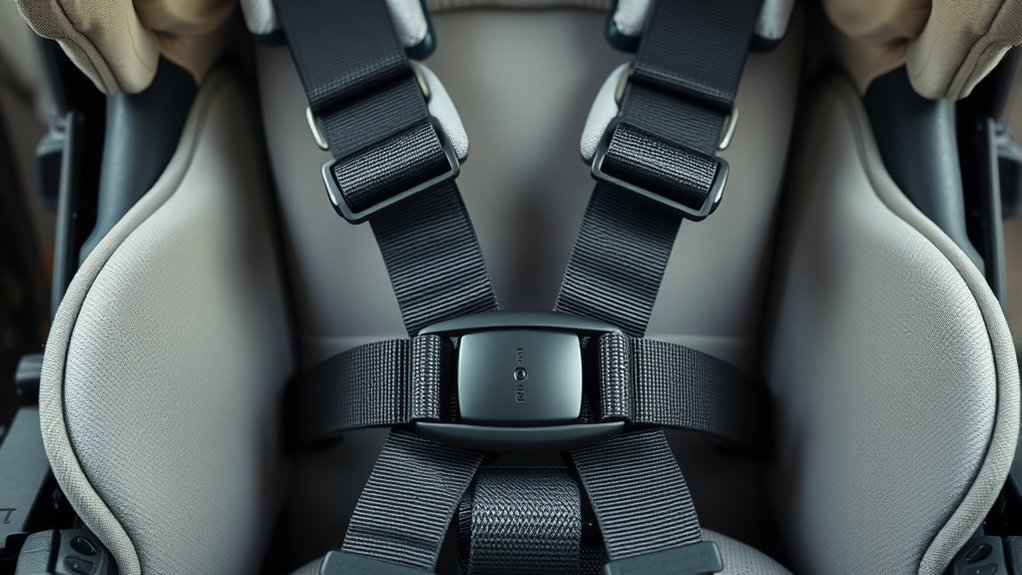
Understanding the anatomy of a 5-point harness is vital for keeping your child safe in the stroller.
Each component, from the adjustable shoulder and waist straps to the central buckle, plays an important role in providing security during your outings.
Harness Strap Components
A 5-point harness is vital for keeping your child secure in the stroller, featuring two shoulder straps, two waist straps, and one crotch strap that work together to provide thorough restraint.
The shoulder straps prevent forward movement, while the waist straps secure the hips, and the crotch strap prevents sliding down.
It’s important to guarantee the harness materials used are durable, as they directly impact safety and longevity.
Proper adjustment is key—shoulder straps should sit at or just above the shoulders, and the lower straps should be tight enough to allow only minimal pinchable webbing.
Buckle Mechanism Functionality
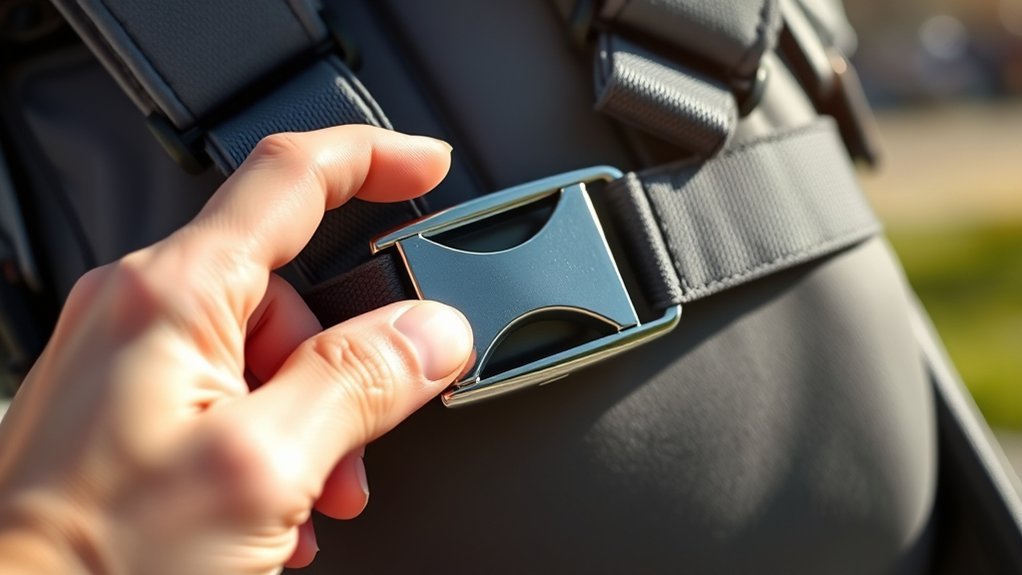
While the buckle mechanism may seem simple, it plays a critical role in the safety of your child in the stroller.
The 5-point harness consists of two shoulder straps, two waist straps, and a crotch strap, all held securely by the central buckle. This mechanism locks the straps in place, guaranteeing your little one stays safe during rides. The chest clip prevents slipping and keeps everything positioned correctly.
To maintain this safety system, follow buckle maintenance tips like regular cleaning and inspection for wear. If you notice any issues, consider buckle replacement options to guarantee continued protection.
Understanding this mechanism empowers you to adjust it correctly, safeguarding your child’s adventures in the stroller.
Safety Features Overview
When choosing a stroller, it’s vital to pay attention to the safety features, especially the anatomy of the 5-point harness. This harness design innovation includes two shoulder straps, two waist straps, and a crotch strap, securing your child at five points for maximum safety.
Position the shoulder straps at or just above your child’s shoulders for ideal support. Confirm the waist straps are snug, allowing only one or two fingers’ width to prevent slipping. The chest clip, ideally at armpit level, keeps shoulder straps in place.
Regular adjustments are important as your child grows, making sure the straps remain snug. These safety feature enhancements provide peace of mind, allowing you to focus on enjoying your outings together.
Setting Shoulder Straps at the Right Height
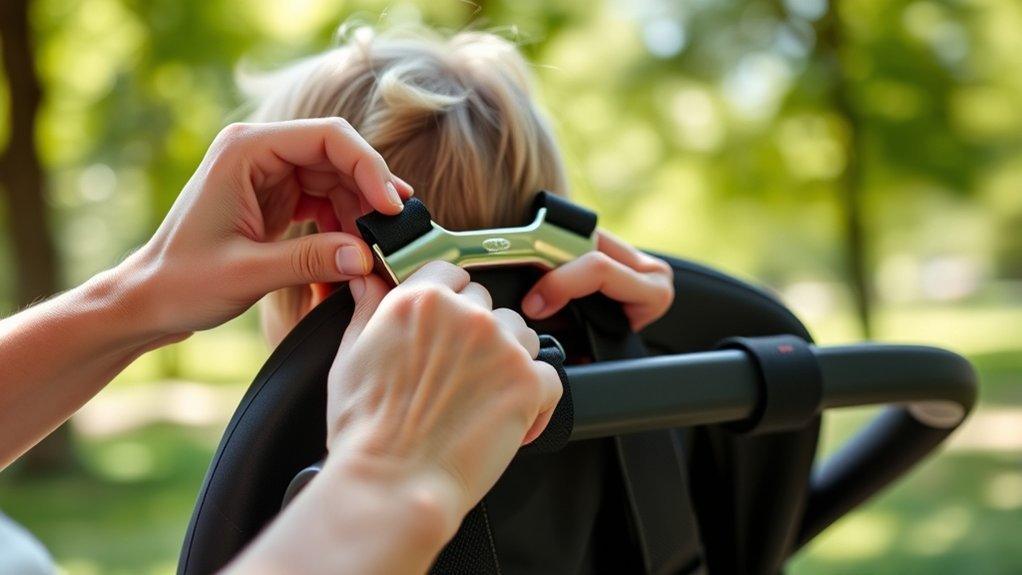
Ensuring that your child’s shoulder straps are set at the right height is essential for their safety and comfort in the stroller.
The shoulder strap adjustment should be at or just above your child’s shoulders to prevent slumping or sliding out. Regularly check this height, especially as your little one grows, to maintain the effectiveness of the harness.
Keep in mind child growth considerations; if your child wears thicker clothing, adjust the straps accordingly. Properly positioned straps enhance the five-point harness system‘s effectiveness, considerably reducing injury risks during sudden stops.
Ensuring Snugness Without Pinching
To guarantee your child’s safety without causing discomfort, adjust the harness straps snugly against their body, allowing no more than two fingers’ width at the collarbone.
Regularly inspect the harness each month to accommodate growth and confirm that the straps remain properly positioned.
Harness Adjustment Techniques
Adjusting your child’s stroller harness correctly is essential for their safety and comfort, as a snug fit helps prevent accidents while ensuring they feel secure.
Start by using harness adjustment tools to position the shoulder straps at or just above your child’s shoulders. Tighten the straps until you can’t pinch any webbing at the collarbone, ensuring they’re held securely without discomfort.
For the lower straps, allow only one or two fingers’ width for comfort, preventing your child from sliding out. Remember to place additional layers over the harness, which maintains snugness.
Regularly perform a harness fit evaluation, adjusting as your child grows, and always use the pinch test to confirm a proper fit.
Monthly Safety Inspections
Regular inspections of your stroller’s harness system help keep your child safe and comfortable as they grow.
Performing a monthly safety inspection guarantees the harness adjusts properly to your child’s needs, preventing slack that could lead to unsafe riding conditions.
Here’s what to focus on:
- Pinch Test: Check for any pinchable webbing at the collarbone to guarantee the harness is snug but not too tight.
- Shoulder Strap Height: Confirm the straps sit at or just above your child’s shoulders for optimum safety.
- Post-Wash Adjustments: After cleaning the stroller or changing seasonal clothing, readjust the harness to maintain a secure fit.
Proper Positioning of the Chest Clip
Ensuring the chest clip is positioned at armpit level is essential for your child’s safety in the stroller. This proper chest clip positioning prevents shoulder straps from slipping, enhancing overall security during rides.
A correctly placed clip keeps the harness system tight, markedly reducing the risk of falls or your child attempting to climb out. Remember, maintaining a snug fit around your child’s torso promotes better posture and breathing.
Regular safety checks are important, especially after adjusting the harness or when your child grows. By being diligent with the chest clip, you empower your child to enjoy stroller rides safely, allowing for a liberating experience without the worry of accidents.
Prioritize this small but critical detail for peace of mind.
Adjusting for Seasonal Clothing Changes
As the seasons change and your child bundles up in thicker clothing, it’s essential to reassess the fit of the stroller’s harness system.
Seasonal adjustments are necessary to guarantee safety during your rides. Here are some tips to keep in mind:
- Adjust shoulder straps to the correct height, typically at or just above the shoulders, accommodating those additional clothing layers.
- Perform the pinch test for strap tightness; no pinchable webbing should remain at the collarbone, even with bulkier outfits.
- Place coats and blankets over the harness, not beneath it, to maintain a snug fit.
Regular checks will help you prevent any slack that could jeopardize your child’s safety during sudden movements.
Stay proactive for those safer, enjoyable rides!
Monitoring Harness Fit Regularly
Since your child grows quickly, it’s important to monitor the harness fit regularly to keep them safe and secure in the stroller.
Aim to check the harness at least once a month, adjusting the shoulder straps so they sit at or just above your child’s shoulders for proper restraint and comfort.
Use the pinch test to verify there’s no pinchable webbing at the collarbone, confirming the straps are snug enough.
Always re-evaluate the harness fit after washing the stroller fabric or changing seasonal clothing to maintain safety.
Keep an eye on the chest clip position, making sure it stays at armpit level.
Regular growth tracking and comfort adjustments are key to a secure and enjoyable ride for your little one.
Avoiding Aftermarket Products
When it comes to your child’s safety, avoiding aftermarket products is essential.
These accessories often haven’t been tested with your specific stroller model, which can lead to poor harness fit and increased risks during an accident.
Stick with manufacturer-approved items to guarantee compliance with safety standards and keep your little one secure.
Safety Standards Compliance
Choosing the right stroller involves more than just aesthetics; it’s essential to guarantee safety compliance, especially when it comes to avoiding aftermarket products.
These aftermarket items often don’t meet safety regulations set by organizations like ASTM and JPMA, jeopardizing your child’s safety.
Consider the following:
- Aftermarket products may not be crash-tested with your stroller, increasing injury risk.
- Non-certified accessories can void your stroller’s warranty, leaving you liable for safety issues.
- Manufacturers design strollers to work with their components; using aftermarket products can disrupt this synergy.
Risk of Poor Fit
While it might be tempting to enhance your stroller with aftermarket products, doing so can greatly increase the risk of a poor fit and compromise your child’s safety. These accessories often lack safety testing and can interfere with the harness system, leading to inadequate restraint. Here are some key risk factors to evaluate:
| Risk Factor | Potential Consequences | Safety Tips |
|---|---|---|
| Poor fit with harness | Increased injury risk | Always use manufacturer-approved items |
| Unintended pinch points | Safety feature failure | Check for compliance with safety standards |
| Voiding warranty | No support during incidents | Prioritize certified products |
Make informed choices. Always opt for products recommended by the stroller manufacturer to guarantee maximum protection for your child.
Reliability of Manufacturer Products
Using manufacturer-approved products not only enhances safety but also guarantees that your stroller’s features function as intended.
When it comes to stroller buckles, opting for original parts is essential for your child’s security.
Here’s why you should stick with manufacturer reliability:
- Aftermarket products often lack rigorous product testing, compromising safety.
- Non-certified accessories can void your warranty, leaving you liable for incidents.
- Manufacturer-designed buckles meet specific safety standards, ensuring effective child restraint.
Tips for Educating Older Children on Safety
Educating older children about stroller safety is essential for ensuring everyone’s well-being during outings. Start by emphasizing the importance of buckling themselves and their younger siblings into the harness system. This prevents falls and keeps everyone secure.
Involve them in checking the harness, so they understand how snug straps should fit. Use role-playing to demonstrate safe behaviors around the stroller, like avoiding climbing in or out without supervision and being cautious of pinch points.
Discuss the importance of keeping hands and bodies inside while the stroller’s moving. Reinforce that safety is a shared responsibility, encouraging older children to remind adults about engaging the brakes when stationary and checking harnesses, empowering them in their sibling roles.
Common Harness Mistakes to Avoid
A secure harness is essential for your child’s safety in a stroller, yet many parents unknowingly make common mistakes that can compromise that safety.
To enhance your safety awareness, be mindful of these harness misuse pitfalls:
- Leaving the harness unbuckled, even for a moment, can lead to serious risks.
- Twisted straps must be straightened; they can hinder the harness’s effectiveness during sudden movements.
- Confirm the chest clip is at armpit level to prevent your child from slipping out.
Additionally, avoid overloading the handlebars, as it alters the stroller’s center of gravity, increasing tipping risks.
Frequently Asked Questions
How Often Should I Clean the Stroller Harness?
You should clean the stroller harness regularly, ideally once a month, to maintain proper stroller maintenance and guarantee your child’s safety. Following these safety guidelines helps keep your rides enjoyable and worry-free for both of you.
What Should I Do if the Harness Is Damaged?
If the harness is damaged, you’ll want to explore harness replacement options immediately. Regular harness safety checks guarantee your child’s safety. Trust your instincts; a secure harness is essential for worry-free outings with your little one.
Can I Use a Stroller Without a Harness?
No, you shouldn’t use a stroller without a harness. Harnesses guarantee stroller safety by keeping your child secure. They’re essential for preventing accidents and guaranteeing your little one enjoys a safe, liberating ride.
Are There Weight Limits for Stroller Harnesses?
Yes, there are weight limits for stroller harnesses. You should always check the manufacturer’s guidelines for harness adjustments, ensuring safety regulations are met, so your child enjoys a secure and comfortable ride every time.
How Do I Store the Stroller Safely When Not in Use?
To store your stroller safely, consider folding it and placing it in a dry, cool area. Use stroller storage solutions like hooks or bags to prevent damage and keep it accessible for your next adventure.
Conclusion
In summary, ensuring your child’s safety in a stroller is essential, especially since studies show that improper harness use increases the risk of injury by up to 80%. By regularly checking the fit of the harness, adjusting the straps, and avoiding aftermarket products, you can provide a secure riding experience. Educating older children about safety can also foster good habits. Remember, a properly buckled child is a happy child, ready for adventures together!