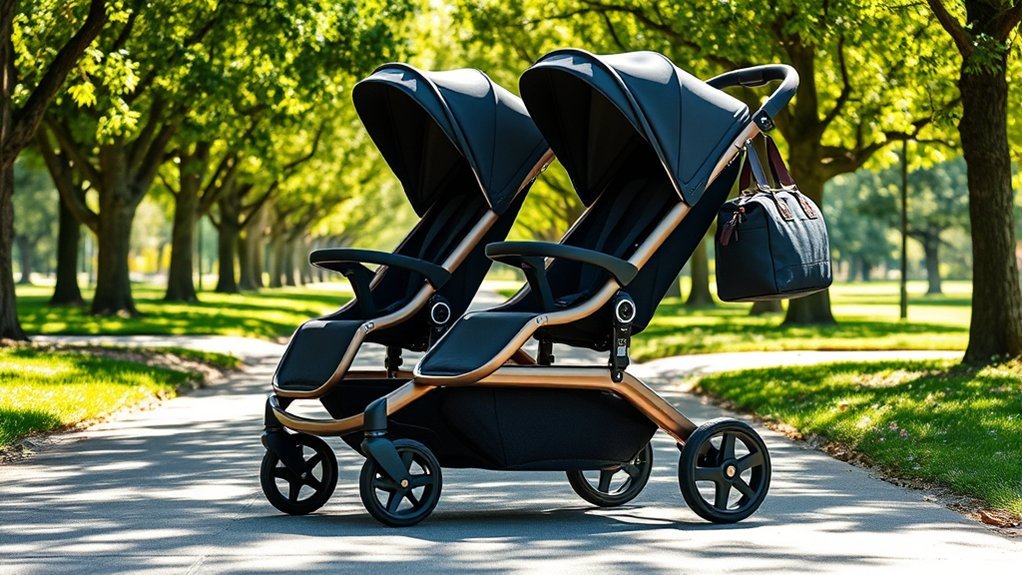
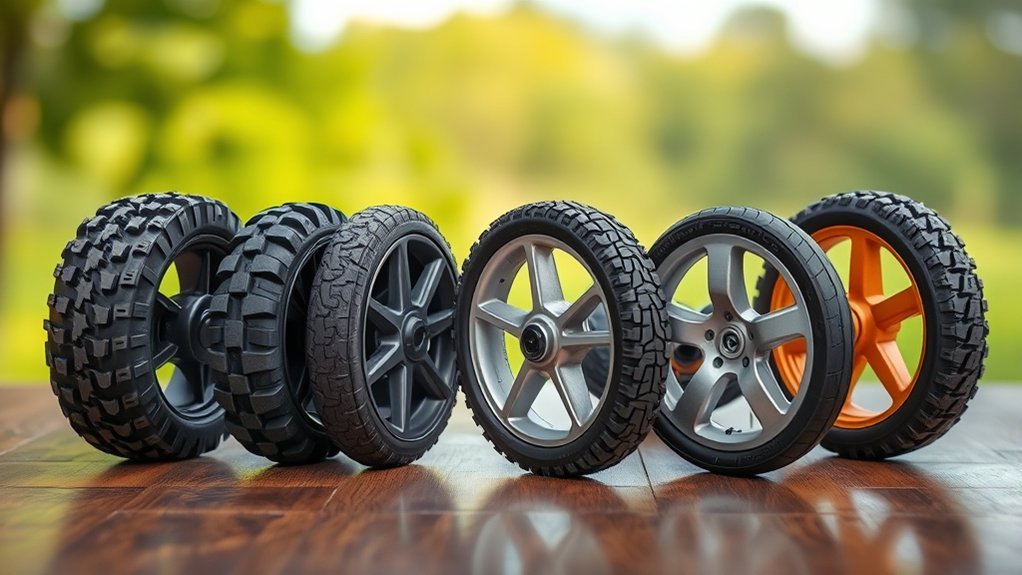
Selecting the right all-terrain stroller wheels can make the difference between a controlled, comfortable push and a rough ride over gravel, roots, cracked pavement, sand, or snow. The best choice depends on more than tire material alone: wheel diameter, tread, tire fill, chassis suspension, front-wheel design, and your stroller manufacturer’s instructions all affect real-world performance.
Quick Answer
For frequent rough trails or a stroller specifically approved for jogging, large pneumatic rubber tires usually provide excellent cushioning and grip. For everyday gravel, parks, cracked sidewalks, and mixed surfaces, foam-filled or other never-flat rubber tires offer strong all-terrain performance without pressure checks or puncture-related flats. Always match the wheel system to the stroller’s intended use.
Key Takeaways
- Air-Filled Pneumatic Rubber: Excellent cushioning and traction for rough terrain, but tires require pressure checks and can puncture.
- Foam-Filled or Never-Flat Rubber: Eliminates pressure maintenance and puncture-related flats while still providing good cushioning for many mixed-surface routes.
- ER / EVA-Rubber Designs: Usually combine a lightweight EVA-based structure with added rubber or a rubber outer layer, but the exact construction varies by manufacturer.
- Wheel Diameter Matters: Larger wheels generally cross cracks, roots, curbs, and loose surfaces more easily than very small wheels.
- Jogging Requires the Right Stroller: If your stroller is approved for running and uses a locking front wheel, follow the manufacturer’s instructions for switching to jogging mode. An “all-terrain” label alone does not mean a stroller is approved for running.
- Maintenance Is Model-Specific: Follow the stroller manual for tire pressure, axle lubrication, bearing care, replacement parts, and service intervals.
Understanding All-Terrain Stroller Wheel Types

All-terrain stroller performance comes from several parts working together. The tire’s outer material affects grip and wear, the material inside the tire affects cushioning and puncture resistance, wheel diameter influences how easily the stroller crosses obstacles, and the hub, axle, bearings, suspension, and front-wheel geometry affect control.
This distinction matters because terms such as rubber tire, foam-filled tire, EVA wheel, and composite wheel can describe different parts of the wheel assembly. A stroller can, for example, use a rubber outer tire filled with foam and mounted on a molded composite hub.
Standard lightweight strollers commonly use EVA or other solid materials because they reduce weight and work well on smooth surfaces. More terrain-focused models may use pneumatic rubber tires, foam-filled or “never-flat” rubber tires, rubber-coated EVA designs, larger wheel diameters, deeper tread, and additional chassis suspension.
How Wheel Size Affects Terrain Performance
Larger wheels generally approach a curb, root, rut, or stone at a shallower angle than small wheels. That makes it easier for the stroller to climb over an obstacle instead of stopping abruptly against it. The exact wheel size you need still depends on the stroller’s design and intended use.
- Around 16 Inches: Common on the rear of dedicated jogging and rugged all-terrain strollers. Current products such as the BOB Revolution Flex 3.0 use 16-inch rear pneumatic tires, while Thule promotes 16-inch air-filled tires on the Urban Glide 3.
- Around 12 Inches: Common on larger front wheels and some versatile all-terrain designs, balancing obstacle clearance with maneuverability and storage size.
- Smaller Wheels: Work well for compact strollers and smooth urban surfaces but generally require more effort when crossing deep gravel, large cracks, roots, soft sand, or other irregular ground.
All-Terrain Stroller Wheel Comparison
| Wheel Type | Traction | Shock Absorption | Maintenance Needs | Best Terrain |
|---|---|---|---|---|
| Pneumatic Rubber (Air-Filled) | High | Excellent | Regular pressure checks; puncture repair may be needed | Rough trails, gravel, grass, snow, and approved jogging use |
| Foam-Filled / Never-Flat Rubber | High | Good to Very Good | No inflation; inspect tread, hub, and axle | Packed dirt, gravel, parks, grass, and broken sidewalks |
| ER / EVA + Rubber Designs | Moderate to High | Moderate | Low; monitor tread and wheel condition | Grass, parks, boardwalks, suburban paths, and light gravel |
| Basic EVA / Molded Plastic | Low to Moderate | Limited | Low; inspect for wear, embedded debris, and damage | Indoor floors, paved paths, and smoother urban surfaces |
Benefits of Inflatable Rubber Wheels

Inflatable pneumatic stroller tires work much like bicycle tires: air inside the tire compresses when the wheel hits an obstacle. That air volume helps isolate the stroller frame and seat from small impacts and surface vibration.
Pneumatic tires are therefore a strong choice when you regularly cross roots, rough gravel, uneven trails, grass, or other demanding surfaces. Their rubber tread can also provide useful grip, although actual traction depends on tread pattern, compound, tire width, pressure, surface conditions, and the stroller’s suspension.
The main trade-off is maintenance. Pneumatic tires can lose pressure or be punctured, and tire pressure is not universal across stroller brands. Check the tire sidewall, wheel marking, and owner’s manual. For example, some BOB pneumatic stroller wheels are rated up to 30 psi, while other stroller designs specify different ranges.
Warning: Never exceed the tire or wheel’s stated maximum inflation pressure. Use a pump that lets you control pressure accurately—typically a bicycle hand or floor pump with a gauge—and follow your stroller manual. Do not assume that a pressure recommendation from another stroller model applies to yours.
Pro Tip: If your stroller uses compatible inner tubes, a tube sealant can reduce the chance that a small tread-area puncture ends your outing. Slime specifically lists jogging strollers as an application for its tube sealant and states that its tube formula can seal tread-area punctures up to 1/8 inch. Follow the sealant manufacturer’s quantity instructions and your stroller or tire manufacturer’s guidance rather than using a universal dose.
Advantages of ER (EVA + Rubber) Wheels

ER-style wheels combine EVA-based material with rubber to improve grip and wear resistance while keeping weight lower than many large pneumatic systems. However, ER is not one universal engineering specification. One manufacturer may use EVA foam with rubber added to the material, while another may use an EVA structure with a rubber outer skin.
This type of wheel can make sense on family strollers that need to handle grass, parks, cracked sidewalks, playground paths, and occasional gravel without requiring tire-pressure checks. The rubber component generally provides better surface grip and abrasion resistance than a basic uncovered EVA wheel.
ER/EVA-rubber wheels do not automatically provide the same cushioning as a large air-filled tire. Their real ride quality depends on tire thickness, wheel diameter, chassis suspension, stroller weight, and the surface underneath them.
Features of Foam-Filled Rubber Wheels
Foam-filled or other “never-flat” tires are a popular alternative to pneumatic tires. Instead of relying on pressurized air, the tire contains foam or another resilient fill material that cannot lose pressure through a normal puncture. Manufacturers use different constructions, so not every foam-filled stroller tire is made from the same polyurethane formulation.
Current all-terrain strollers demonstrate how capable this approach can be. UPPAbaby’s Ridge V2 uses never-flat foam-filled tires, while Baby Jogger uses foam-filled “Forever-Air” rubber tires on several all-terrain models.
Traction and Stability
Traction comes primarily from the tire’s outer material, tread pattern, width, and contact with the ground. A foam-filled tire with a well-designed rubber tread can provide strong grip on gravel, grass, damp pavement, and other mixed surfaces without requiring inflation.
Maintenance-Free Convenience
The biggest advantage is freedom from pressure checks and puncture-related flats. You still need to inspect the tread, axle attachment, hub, wheel alignment, and any quick-release mechanism. “Never-flat” describes the tire’s resistance to deflation; it does not mean the entire wheel assembly requires no inspection or service.
Shock Absorption Performance
Foam-filled tires generally provide more compliance than a hard molded wheel, but ride quality depends heavily on the complete stroller. A good suspension system can absorb impacts that the tires alone cannot, while a rigid chassis may transmit more vibration even when fitted with relatively soft tires.
The smoothest stroller is not determined by tire fill alone. Wheel diameter, tire construction, tread, chassis suspension, frame stiffness, and correct setup work together to control vibration and impacts.
Exploring Composite and Plastic Wheel Options
“Composite wheel” can describe the structural hub rather than the tire itself, so it should not automatically be treated as a low-performance wheel material. A stroller may use a strong molded composite hub while still having a capable pneumatic or foam-filled rubber tire around it.
- Composite Hubs With Rubber Tires: Lightweight molded or fiber-reinforced hubs can support pneumatic or solid/foam-filled rubber tires. Performance depends mainly on the complete wheel assembly rather than the hub material by itself.
- Basic EVA or Molded Plastic Wheels: These are light, simple, and appropriate for many compact strollers. They work best on smoother surfaces because they provide less tire deformation and impact cushioning than large pneumatic or thick never-flat rubber systems.
Note: Do not judge an all-terrain stroller from the tire material alone. Check wheel diameter, tread, suspension, front-wheel configuration, braking system, stroller weight, and the manufacturer’s stated terrain and activity limits.
Which Stroller Wheel Type Is Best for Each Terrain?
The best setup depends on where you actually push the stroller. You usually gain more by matching the entire wheel-and-suspension system to your route than by chasing one particular tire material.
- Smooth Sidewalks and Shopping Areas: EVA, polyurethane, rubber-coated EVA, and never-flat tires can all work well. Smaller wheels improve compactness and maneuverability.
- Cracked Sidewalks and Park Paths: Medium-to-large foam-filled, rubber, or ER-style wheels paired with suspension offer a useful balance of comfort and convenience.
- Gravel and Packed Dirt: Larger wheels with rubber tread are easier to control than tiny hard wheels. Pneumatic and quality never-flat systems are both strong choices.
- Roots and Rough Forest Trails: Prioritize large wheels, useful tread, suspension, ground clearance, and a stroller specifically rated for the intended terrain.
- Snow and Sand: Larger-diameter, wider tires generally perform better than narrow compact wheels. Keep pneumatic tires within the manufacturer’s approved pressure range.
- Running or Jogging: Use only a stroller that the manufacturer explicitly approves for that activity. Follow its instructions for front-wheel lock, tracking, tire pressure, child age/development, and speed-related safety.
Warning: “All-terrain” and “jogging” are not interchangeable labels. Some all-terrain strollers are designed only for walking. If you plan to run, use a model specifically approved for running and follow its manual. On jogging strollers that require a locked front wheel, never run with the wheel left in free-swivel mode.
Maintenance Tips for All-Terrain Stroller Wheels
All-terrain wheels regularly encounter dust, mud, sand, water, road salt, grass, and small stones. Simple inspection and cleaning helps prevent avoidable wheel drag, looseness, uneven tracking, and premature wear.
Regular Tire Inspections
Inspect the wheel assemblies frequently if you regularly use rough or dirty routes:
- Check Pneumatic Pressure: Inflate each tire to the pressure specified by its sidewall/wheel marking or the stroller manual. Do not use a generic PSI number from another stroller.
- Inspect the Tread: Remove stones, thorns, glass, or other debris before it works deeper into the tire. Look for cuts, cracking, bald areas, bulges, or other damage.
- Check Wheel Attachment: After installing a removable wheel, verify that its axle, quick-release, or latch is fully engaged according to the manual.
- Check for Wobble or Hub Play: Lift the unloaded stroller and gently check each wheel for unusual side-to-side movement. Persistent looseness, grinding, or wobble deserves inspection before the stroller is used again.
- Check Tracking: If a jogging stroller consistently pulls to one side with correct tire pressure and its front wheel in the manufacturer’s jogging position, follow the model’s tracking-adjustment procedure.
Cleaning and Lubrication
Cleaning requirements are fairly universal; lubrication requirements are not. Some manufacturers recommend silicone lubricant on specific moving parts, while other designs call for oil or grease on exposed axles or joints. Follow the instructions for your exact stroller.
| Component | Cleaning Protocol | Lubrication Guidance | When to Check |
|---|---|---|---|
| Removable Axles & Receivers | Remove loose dirt and wipe with a clean cloth; dry after wet or salty conditions | Use only the lubricant and method specified by the stroller manufacturer | Regularly and after sand, mud, or salt exposure |
| Sealed Bearings / Hub Assembly | Wipe exterior dirt away; avoid directing high-pressure water into the hub | Do not flood a sealed bearing with cleaners or lubricant unless the manufacturer specifically instructs you to service it | When noise, roughness, looseness, or contamination appears |
| Tire Tread & Rim | Clean with water, mild soap, and a soft or nylon brush as appropriate | Keep the tread free of oily residue unless the tire manufacturer says otherwise | After dirty trips and during routine inspections |
Avoid spraying solvent cleaners, penetrating fluids, grease, or oil indiscriminately into a wheel hub. A sealed bearing normally should not be treated like an exposed axle or hinge. If a wheel squeaks, grinds, binds, or develops noticeable play, consult the stroller manual before choosing a lubricant or disassembling the hub.
When to Replace or Service Stroller Wheels
There is no universal three-year or five-year replacement schedule for stroller wheels. Usage, terrain, storage, UV exposure, moisture, tire pressure, and material all affect wear. Inspect the condition instead of relying on age alone.
- Replace or professionally inspect a pneumatic tire that has serious sidewall cracking, bulges, exposed casing, repeated pressure loss, or damage that cannot be safely repaired.
- Inspect a solid or foam-filled wheel if it develops deep splits, large flat spots, severe tread loss, or deformation.
- Stop using the stroller until checked if a wheel repeatedly loosens, fails to latch securely, wobbles excessively, grinds, or shows a damaged axle.
- Use manufacturer-supplied or manufacturer-recommended replacement parts when the manual requires them.
Can You Upgrade or Swap Stroller Wheels?
Sometimes—but only when the replacement assembly is designed and approved for your stroller. Matching diameter alone is not enough. Wheel systems can differ in axle diameter, axle length, latch depth, brake engagement, hub spacing, tracking geometry, and load testing.
Before buying a replacement wheel, confirm:
- Exact stroller brand, model, and model year or serial-number range.
- Front versus rear wheel position.
- Axle and quick-release compatibility.
- Parking-brake or brake-cog engagement.
- Correct wheel diameter and tire specification.
- Whether the manufacturer approves that replacement for the stroller.
A third-party wheel that appears to fit can still interfere with the brake, tracking, retention mechanism, or frame clearance, so wheel modifications should not be treated as a cosmetic upgrade.
Frequently Asked Questions
What is the best stroller wheel type for snowy conditions?
Large wheels with useful tread generally handle snow better than small, narrow wheels. Pneumatic tires are a strong option, and some large never-flat rubber systems also work well. If your stroller has a manufacturer-approved fixed or locked front-wheel mode for rough conditions, use it as directed. Keep pneumatic tires within the approved pressure range rather than intentionally underinflating them by a generic amount.
How do wheel types affect stroller weight limits?
Wheel construction can affect durability and ride quality, but it does not establish the stroller’s official weight capacity. The safe load limit comes from testing the complete stroller—including its frame, seat, fasteners, wheels, brakes, and other components. Always use the weight and height limits published for your exact stroller model.
Can I replace my stroller’s wheels with different types?
Only use an alternative wheel assembly when it is compatible with your exact stroller and permitted by the manufacturer. Axle dimensions, retention systems, brake interfaces, wheel clearance, and tracking geometry vary. A wheel that physically slides onto an axle is not automatically a safe replacement.
Are all-terrain wheels compatible with all stroller brands?
No. Stroller wheels and axles are not standardized as universal replacement parts. Different models use different axle lengths, diameters, latches, hubs, brake interfaces, and wheel geometry. Check the manufacturer’s replacement-parts information for your exact model before ordering.
What is the average lifespan of all-terrain stroller wheels?
There is no reliable universal lifespan. Tire compound, mileage, terrain, pressure, UV exposure, storage conditions, water, salt, and impacts all change how quickly a wheel wears. Inspect wheels regularly and replace or service them when you see serious cracking, deformation, excessive tread wear, recurring air loss, hub looseness, grinding, or damaged attachment hardware.
Are foam-filled stroller tires as smooth as air-filled tires?
Not necessarily. Air-filled tires can provide excellent impact compliance, while modern foam-filled and never-flat tires can also deliver a comfortable ride. The smoother setup depends on the complete stroller, including tire size, tire construction, wheel diameter, suspension, frame design, and terrain.
Do all all-terrain strollers work for jogging?
No. Use a stroller for running only when the manufacturer specifically approves it for jogging or running. Follow the model’s instructions for child age or development, front-wheel position, tire pressure, tracking, harness use, brakes, and other running-related safety requirements.
Conclusion
Your ideal all-terrain stroller wheel depends on where you walk and how much maintenance you want. Pneumatic tires remain an excellent choice for demanding surfaces because their air volume provides useful cushioning and their rubber tread can deliver strong grip. Foam-filled and other never-flat rubber systems trade pressure checks and puncture-related flats for a slightly different ride, making them especially practical for mixed suburban paths, gravel, parks, and everyday use.
Do not judge a stroller by tire material alone. Wheel diameter, tread, suspension, front-wheel design, braking, tracking, and manufacturer-approved use all matter. Most importantly, follow the pressure, maintenance, replacement-part, terrain, and jogging instructions for your exact stroller rather than applying specifications from another model.
Sources
- U.S. Consumer Product Safety Commission — federal carriage and stroller requirements and incorporation of ASTM F833.
- ASTM International — ASTM F833-21 — current consumer safety performance specification for carriages and strollers.
- BOB Gear User Guides — manufacturer guidance for pneumatic tire pressure, front-wheel jogging mode, tracking, and wheel attachment.
- Thule Urban Glide 3 — current example of a stroller using large air-filled all-terrain tires and a lockable swivel front wheel.
- Slime Tube Sealant — manufacturer information for tube-sealant use, including jogging-stroller applications and supported tread puncture size.