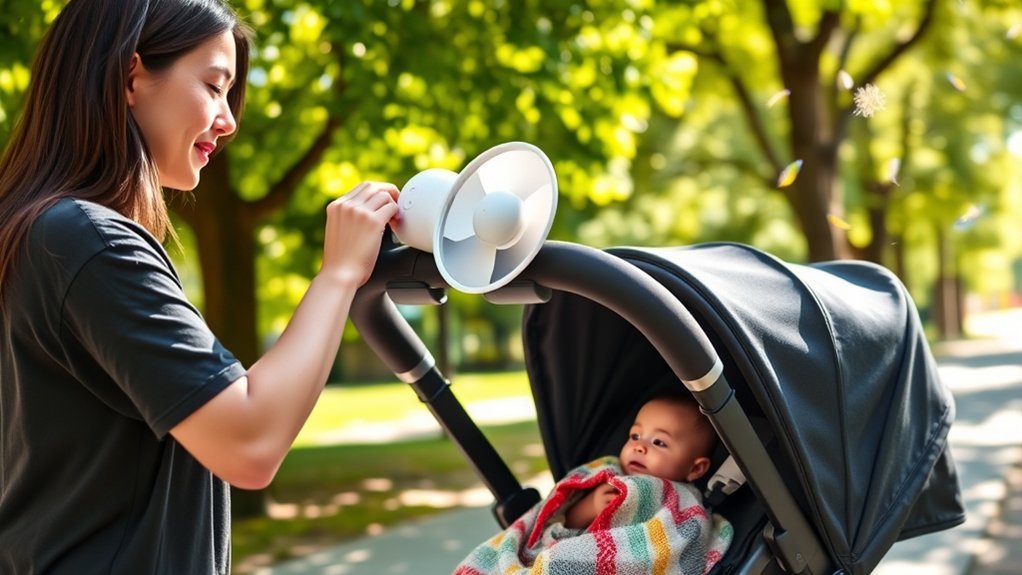
Stroller fans are essential for keeping your baby cool, but safety is key. Choose fans with enclosed blades and strong clamps to prevent accidents. Position the fan securely on the handlebar or stroller hood, avoiding the child’s direct line of sight. Monitor for signs of heat stress, like flushed skin or fussiness, and keep your baby hydrated. Regularly clean and check the fan for wear. By knowing these tips, you can guarantee safer and more enjoyable outings for your little one.
Understanding the Importance of Stroller Fans
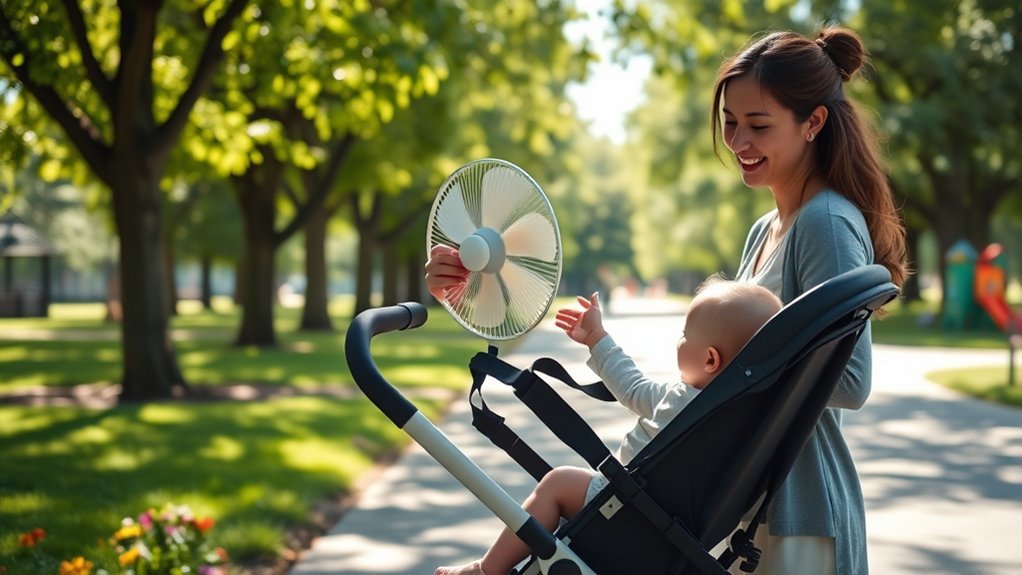
As temperatures rise, it’s essential to recognize how stroller fans play an important role in keeping your baby comfortable and safe.
Babies can’t effectively regulate their body temperature, making them vulnerable to overheating. By being aware of the temperature at stroller height—often much hotter than at adult height—you can understand the importance of using stroller fans to draw in cooler air and improve ventilation.
Since babies can’t communicate discomfort, you must proactively guarantee their comfort through proper airflow. When choosing a stroller fan, consider safety features and proper placement, aiming it across your baby’s torso while securing it out of reach.
This simple act of temperature regulation can prevent heat-related issues and keep your little one happy during outings.
Key Safety Features to Look for in Stroller Fans
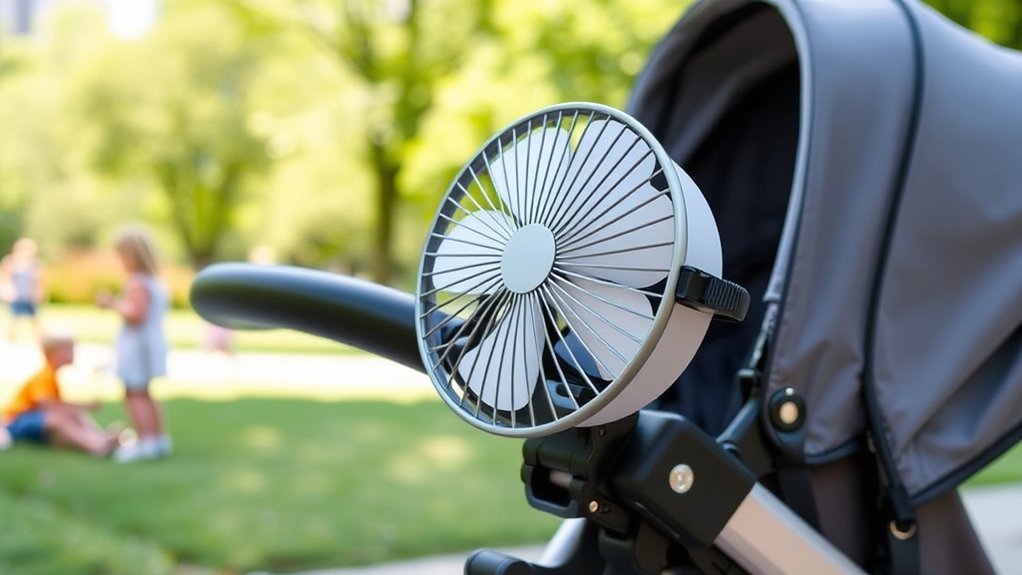
Choosing the right stroller fan goes beyond just guaranteeing your baby’s comfort; it’s also about safety.
Prioritize fan blade safety by selecting models with enclosed blades or bladeless designs to keep curious fingers safe. Look for fans equipped with strong clamps that securely attach to the stroller frame, ideally with rubber padding to prevent slipping.
Noise reduction is essential, so opt for fans that operate below 70 dB, creating a peaceful environment for napping babies. Confirm the fan has adjustable speed settings to customize airflow as needed.
Finally, check for protective grilles and stable mounts that prevent sagging or detachment, maintaining a secure setup during your outings. Your baby’s safety and comfort should always come first.
Proper Placement and Secure Attachment
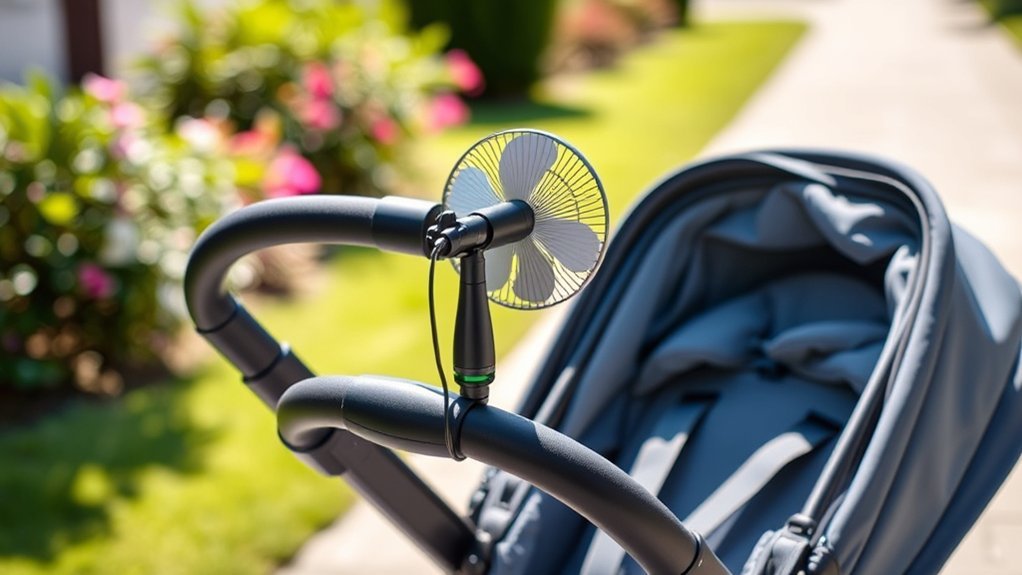
When setting up your stroller fan, start by placing it on the handlebar and then move it to a higher position on the stroller hood to keep it out of your child’s reach.
Make sure it’s securely attached with strong clamps or mounts, and always check for stability with a tug test.
Avoid direct access to the fan by your child to prevent any potential injuries from the blades.
Optimal Fan Positioning
To guarantee ideal airflow and safety for your child, position the stroller fan near their shoulder, allowing it to draw in cooler air from above while keeping it out of reach. This helps optimize fan airflow dynamics and enhances comfort.
Always consider child safety considerations; avoid placing the fan directly in the child’s line of sight. Starting with the fan on the handlebar provides initial cooling, but for enhanced safety, shift it higher as needed.
Regularly perform a tug test on the fan mounts to ascertain stability throughout your outing. Also, check compatibility with your stroller and car seat to prevent any hazards.
Proper placement can make a significant difference in creating a safe, enjoyable ride for both you and your child.
Secure Mounting Techniques
Properly securing your stroller fan is essential for guaranteeing both airflow and safety. Use strong clamps with rubber pads to attach the fan securely to the stroller frame, preventing slipping during movement.
Position the fan higher on the stroller hood to draw in cooler air while keeping it out of your child’s direct line of sight. Before heading out, perform a tug test on the mount to confirm fan stability—this will help you avoid unexpected detachment.
Regularly check the fan’s attachment and guarantee compatibility with your stroller’s mounting techniques to minimize risks. If needed, utilize netting or mesh barriers around the fan to protect curious fingers while maintaining unobstructed airflow.
Safety and comfort go hand in hand!
Avoiding Direct Access
Ensuring your stroller fan is out of your child’s reach is essential for their safety. Position the fan higher on the stroller hood to keep it out of sight and away from curious fingers.
Securely attach the fan using strong clamps with rubber pads that grip the frame, reducing the risk of slipping during bumpy rides. Regularly perform a tug test on the mounts to confirm stability.
To enhance fan blade safety, consider using mesh barriers around the fan area, providing extra protection against accidental contact.
Always choose fans designed for stroller use, as they typically feature enclosed blades, ensuring effective stroller ventilation without compromising safety.
Prioritizing these precautions allows for a worry-free ride for both you and your little one.
Recognizing Potential Hazards and Risks
As you use a stroller fan to keep your child cool, it’s vital to recognize potential hazards that can arise from its use.
Start with hazard identification: make sure your fan has protective grilles or is bladeless to prevent injuries from spinning blades. Conduct a risk assessment by checking the fan’s clips and mounts regularly; wear and tear can compromise safety, especially during bumpy rides.
Secure mounting is important to prevent the fan from detaching, which poses risks to your child and others. Position the fan out of your child’s direct line of sight to minimize their reach, and be aware of older siblings who might be curious.
Keeping safety at the forefront creates a more liberated environment for everyone.
Monitoring Your Child’s Comfort and Safety
When you’re out with your child, it’s essential to keep an eye on signs of heat stress, like flushed skin or unusual fussiness.
Position the stroller fan to draw cooler air from above and guarantee it’s stable to avoid any accidents.
Don’t forget to keep your little one hydrated, as proper hydration is key to their comfort and safety.
Recognizing Heat Stress Symptoms
Heat stress can sneak up on even the most vigilant parents, making it essential to stay alert to your child’s comfort and safety in warm weather.
Babies are particularly vulnerable since they can’t effectively regulate their body temperature. Watch for infant signs of heat stress, including flushed skin, lethargy, unusual fussiness, a rapid heartbeat, and changes in sweating or urination patterns.
Be proactive—overheating can escalate quickly, and infants may not express discomfort until they’re in distress. At the first sign of heat stress, move your baby to a cool, shaded area, loosen their clothing, and offer fluids if they’re old enough.
Regularly check your baby’s temperature and comfort level during outings to prevent heat-related illnesses.
Safe Fan Placement Strategies
Properly positioning your stroller fan is essential for keeping your child safe and comfortable during warm outings. Attach the fan near your child’s shoulder, allowing for ideal airflow direction while keeping it out of direct reach to prevent curious fingers from accessing the blades.
Secure the fan to a stable part of the stroller, like the hood or handlebar, and perform a tug test to verify it’s firmly mounted. Avoid placing it directly in your child’s line of sight to minimize the risk of reaching.
Regularly check its stability, as bumpy rides can loosen it. For added protection, consider using mesh barriers around the fan to safeguard against potential injuries, guaranteeing a worry-free ride for both of you.
Ensuring Proper Hydration Levels
While keeping your stroller fan securely positioned is important for comfort, paying attention to hydration is equally essential for your child’s well-being during hot outings.
Babies require about 50% more fluids in warm weather, which means increasing their intake from 20oz to 30oz daily. For infants under six months, breastmilk or formula is your best fluid source, while those over six months can sip small amounts of water.
Monitor for signs of dehydration, like decreased urination or a dry mouth. To make hydration easier, keep a stroller cooler stocked with cold drinks.
Always check on your baby’s comfort, providing fluids promptly at the first sign of discomfort or fussiness. These hydration tips can help guarantee safer, happier rides.
Cleaning and Maintenance Best Practices
Cleaning and maintaining your stroller fan is essential for guaranteeing its efficiency and safety. Regularly clean your fan to keep airflow ideal by using effective cleaning techniques.
Regular cleaning and maintenance of your stroller fan is crucial for optimal performance and safety during your outings.
Wipe down the exterior with a damp cloth and gently brush the blades, avoiding any electrical components. While you’re at it, check the clips, mounts, and battery compartment for any wear or damage to guarantee secure attachment.
Remember, harsh chemicals or abrasive materials can harm your fan, so stick to gentle cleaning supplies. Store your fan in a cool, dry place and charge the battery every three months.
Following these fan maintenance tips will prolong its lifespan and keep your rides safe and enjoyable.
Heat Stress Awareness and Management
As the temperature rises, it’s vital to be aware of heat stress, especially in infants who can’t effectively regulate their body temperature. Monitor your baby closely during warm outings. Look for signs like flushed skin, lethargy, rapid heartbeat, or unusual fussiness; these require immediate cooling measures.
Heat stress prevention is significant, so guarantee your little one stays hydrated—babies need about 50% more fluids in hot weather. If your baby is over six months, consider offering water alongside breastmilk or formula.
Use a stroller fan to enhance airflow and prevent overheating, positioning it to draw cooler air from above the canopy. Finally, avoid direct sunlight and seek shade frequently to reduce the risk of dehydration and heat-related illnesses.
Real-Life Scenarios for Safe Fan Usage
Heat stress isn’t the only concern when using a stroller fan; understanding how to use it safely is equally important.
Position your fan above your child’s shoulder, drawing in cooler air while keeping curious fingers away. Opt for fan types with protective grilles or go bladeless to prevent accidents.
Before heading out, perform a “tug test” on the fan’s clips and mounts to guarantee stability, avoiding any surprises during bumpy rides.
Be mindful of fan noise, too; choose models that stay below 70 dB to create a soothing environment, especially during naps.
Regularly check the fan’s mounting to avoid sagging canopies that could obstruct airflow and compromise safety. Your child’s comfort relies on your vigilant precautions.
Selecting the Right Stroller Fan for Your Needs
How can you guarantee your stroller fan meets your specific needs? Start by considering fan types; opt for models with protective grilles or bladeless designs to protect curious fingers.
Look for strong clips or flexible tripod legs to ascertain a secure attachment to your stroller, providing stability during movement. Choose fans that operate quietly—ideally under 70 dB—to keep your baby undisturbed during naps.
Rechargeable fans with multiple speed settings are essential, allowing you to customize airflow according to weather conditions and your baby’s comfort.
Finally, verify compatibility with your stroller and car seat to ascertain safe usage across different settings. Prioritizing these features will lead you to the right stroller fan for a safer, more enjoyable ride.
Frequently Asked Questions
Can Stroller Fans Be Used in All Types of Weather?
You can use stroller fans in various weather, but be cautious. Consider the weather conditions and avoid exposing the fan to rain. Guarantee proper fan placement for ideal airflow and safety, keeping your child comfortable.
How Loud Are Stroller Fans During Operation?
Stroller fans typically operate at low noise levels, often resembling a gentle breeze. However, if you’re sound sensitive, even this subtle hum might disrupt your peace. Choose wisely, ensuring everyone’s comfort on your adventures.
Are Battery-Operated Fans Safe for Long Trips?
Battery-operated fans can be safe for long trips if you follow battery safety precautions and guarantee proper fan placement. Keep the fan secured and avoid overheating to guarantee a smooth and enjoyable experience for everyone involved.
What Is the Ideal Fan Speed for Children?
For children, an ideal fan speed provides maximum airflow while ensuring child comfort. You should aim for a gentle breeze; too high can cause discomfort or anxiety. Always monitor your child’s reaction to adjust accordingly.
Can I Use a Stroller Fan With a Newborn?
Sure, you can use a stroller fan with a newborn, but keep it at a safe distance. Fan placement matters—ensure it’s not blasting directly on them. Prioritize newborn safety while enjoying those liberating breezes!
Conclusion
By prioritizing stroller fan safety, you’re not just ensuring comfort; you’re creating a safer environment for your child. Remember, a well-chosen fan can be a refreshing change on hot days, but it’s essential to stay vigilant. Always secure it properly, monitor your child’s reactions, and maintain the fan regularly. After all, in the domain of parenting, it’s the small details that often make the biggest difference in keeping your little one safe and happy.