To prevent stroller tipping, secure your child with a properly fitted five-point harness, keep heavy items low in the under-seat basket, and avoid hanging loaded bags from the handlebars. Before each outing, check that the wheels are tight, the brakes lock securely, and the stroller feels balanced on the surface you plan to use. A stroller with a wide wheelbase, sturdy frame, and larger wheels can also improve stability, especially on uneven sidewalks, grass, gravel, or curbs.
Quick Answer
The safest way to prevent stroller tip-overs is to keep weight low and centered, buckle your child every time, lock the brakes when stopped, and avoid overloading the handlebar. Choose a stroller with a stable frame, wide wheelbase, reliable brakes, and wheels suited to your usual terrain.
Key Takeaways
- Use the five-point harness on every walk, even for short trips.
- Do not hang heavy diaper bags, shopping bags, or backpacks from the handlebar.
- Place heavier items in the under-seat basket and stay within the stroller’s storage limit.
- Check wheels, brakes, bolts, hinges, and alignment regularly to reduce tipping risk.
- Match the stroller to the terrain. Larger wheels and a wider wheelbase usually offer better stability outdoors.
At a Glance
| Time Required | 1–2 minutes before each walk; 10–15 minutes for a deeper monthly check |
| Difficulty | Easy |
| Tools Needed | Your stroller manual, a clean cloth, and the correct screwdriver or Allen key if your model needs wheel or frame tightening |
| Cost | Usually free unless a worn wheel, brake part, or replacement strap is needed |
Understanding the Causes of Stroller Tip-Overs
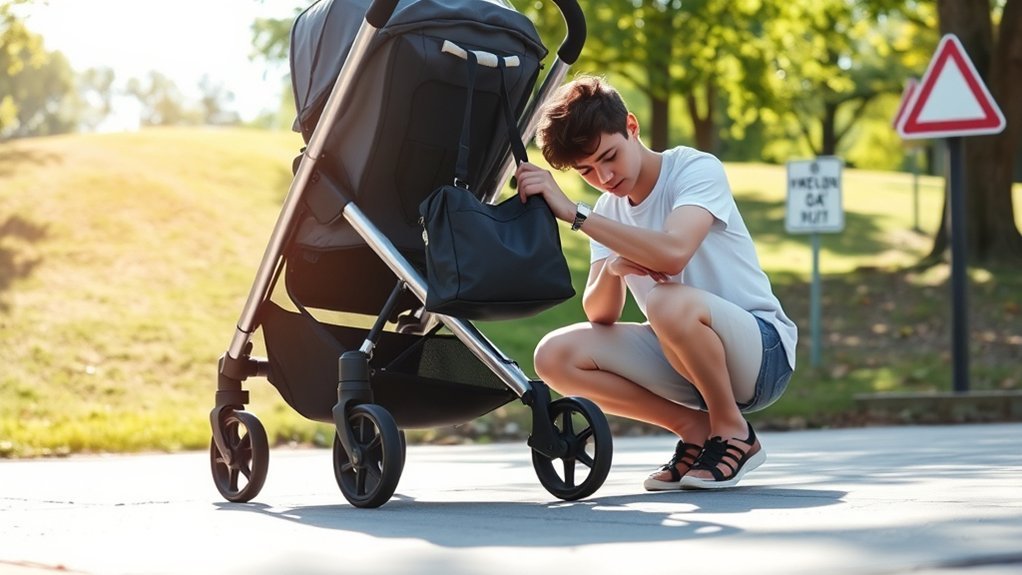
Stroller tip-overs can happen unexpectedly, often because of small habits that shift the stroller’s center of gravity. A common cause is placing too much weight on the handlebars. Heavy diaper bags, purses, shopping bags, and backpacks can pull the stroller backward and make it easier to tip.
Your child’s movement can also affect balance. If a child leans over the side, tries to stand, climbs into the stroller alone, or reaches for something outside the seat, the stroller can become unstable quickly. This risk increases when the stroller is parked on a slope or positioned near a curb.
Uneven ground, narrow wheel placement, small wheels, loose wheels, and weak brakes can make the problem worse. A stroller may feel steady on a smooth store floor but behave very differently on cracked sidewalks, grass, gravel, ramps, or bumpy paths.
Regular maintenance is critical. Misaligned wheels, worn tires, loose hinges, damaged locks, and brakes that do not hold firmly are serious safety hazards. Staying alert, supervising your child, and checking the stroller before use can help prevent accidents and keep outings safer for both you and your little one.
Warning: Never leave a child unattended in a stroller, even when the brakes are locked. Brakes reduce movement, but they do not replace adult supervision.
Key Design Features for Enhanced Stability
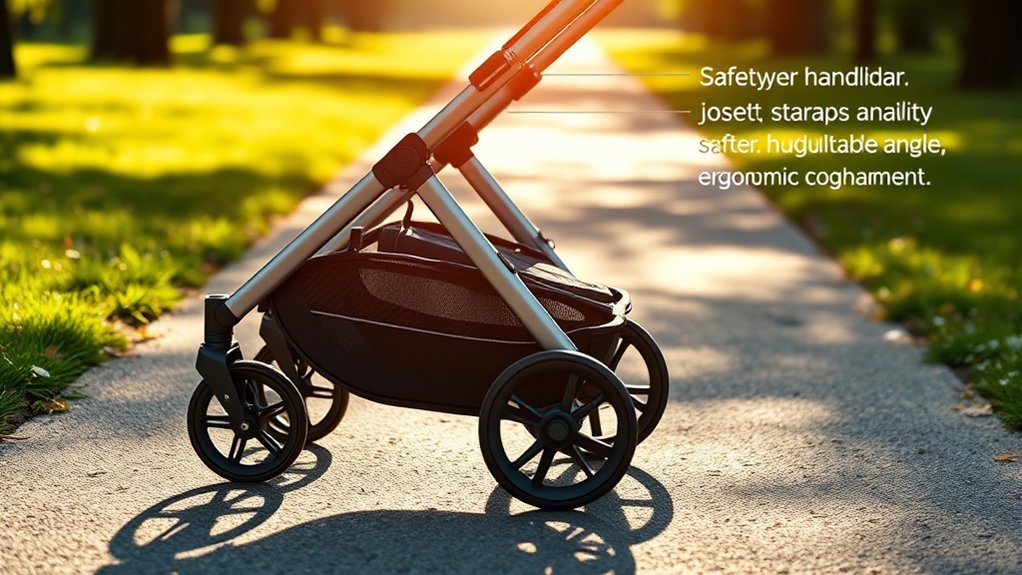
When choosing a stroller, understanding key design features that improve stability is essential for preventing tip-overs. A stable stroller should feel balanced when empty, when your child is seated, and when the storage basket is loaded within the manufacturer’s limit.
Look for a robust frame construction made from metal or reinforced materials. A sturdy frame helps the stroller handle daily use without flexing, twisting, or feeling unstable during turns.
A sturdy frame, wide base, secure harness, and reliable brakes work together to reduce stroller tipping risk.
A wide wheelbase is another critical stability feature. It improves balance and support, especially when you turn corners, cross thresholds, or push over uneven ground.
Pay attention to wheel placement. Wheels that sit farther apart can improve resistance to tipping, while larger wheels usually handle bumps and uneven terrain better than tiny plastic wheels.
If you’re considering a side-by-side stroller, choose one with a strong frame and a continuous footrest when available. A continuous footrest can act as a stabilizing bar and reduce the chance of children placing their feet in unsafe positions.
Finally, check for recognized stroller safety standards or certifications such as ASTM F833, EN 1888, ISO 31110, or JPMA certification where applicable. These signals do not replace safe use, but they can help you choose a stroller built with structural integrity and safety testing in mind.
The Importance of Wheel Size and Placement
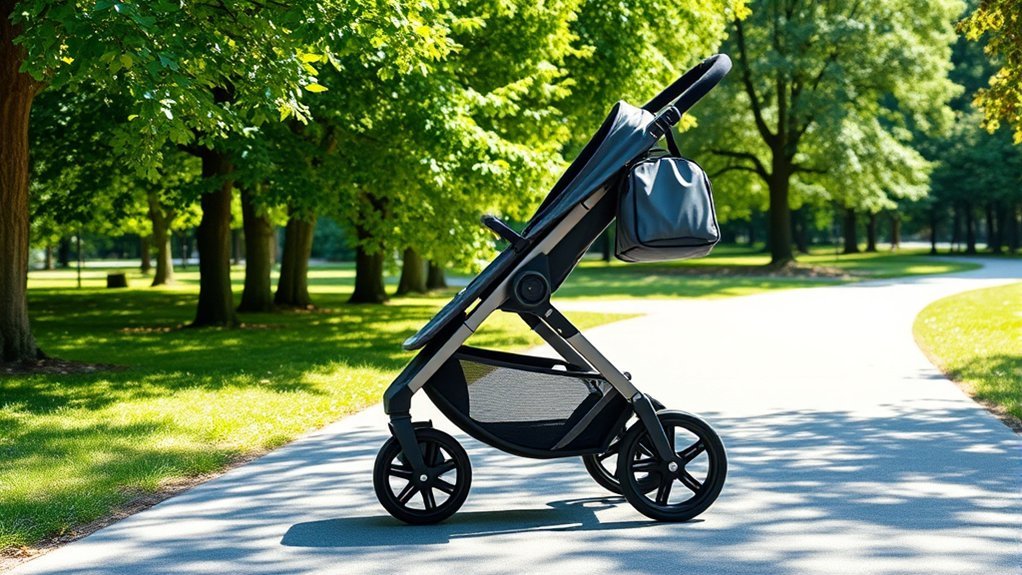
When choosing a stroller, pay close attention to wheel size and placement because both greatly affect stability. The right wheels help the stroller stay balanced, roll smoothly, and handle small obstacles without sudden jolts.
Larger wheels can handle uneven terrain better, reducing the chance of tipping when you pass over cracks, grass, gravel, roots, or raised pavement.
A wider wheelbase also provides enhanced support, making your stroller safer and easier to maneuver in everyday situations.
Wider Wheelbase Benefits
A wider wheelbase is vital for enhancing stability in a stroller because it increases the stroller’s resistance to side-to-side tipping. By spreading the wheels farther apart, the stroller can distribute weight more evenly and maintain better balance.
This stability enhancement is especially important when maneuvering uneven terrain or obstacles. Larger wheels can further improve performance by rolling over bumps instead of stopping abruptly against them.
For side-by-side strollers, a continuous footrest may add support and help keep children’s feet from slipping into unsafe positions. It can also contribute to a more stable structure when combined with a strong frame.
Adhering to safety standards like ASTM F833 can help ensure that your stroller’s design includes stability and structural safety considerations. Prioritizing these features means you can enjoy peace of mind during your daily walks, errands, and outdoor adventures.
Larger Wheel Advantages
Larger wheels play an essential role in stroller design, especially for parents who walk outdoors often. They can improve stability and safety by helping the stroller roll over uneven surfaces with less shaking and less sudden stopping.
Proper wheel placement is vital. A wider wheelbase increases resistance to tipping forces, helping your stroller remain steady during unexpected jolts, turns, and changes in surface height.
Strollers with larger wheels may also offer better shock absorption, especially when paired with good suspension. This creates a smoother ride and helps you maintain control when the ground is not perfectly flat.
Always make sure your stroller is designed for the terrain you plan to use. A lightweight umbrella stroller may be fine for smooth indoor floors, while rough sidewalks, grass, gravel, and trails usually call for larger wheels, a stronger frame, and better suspension.
Pro Tip: Before buying a stroller, push it with one hand, turn it slowly, and test how it feels with weight in the seat and basket. A stroller that feels wobbly in the store may feel worse outside.
Effective Brake Systems for Safety
When it comes to stroller safety, an effective brake system is essential. Brakes help keep the stroller still when you stop, load your child, adjust the harness, or pause on a slight incline.
You should verify that the locking mechanism secures both rear wheels and is easy to engage. If only one wheel locks, the stroller may pivot or roll, especially on slopes.
Regular maintenance checks will keep the brake system in top shape, reducing the risk of stroller tip-over and giving you more confidence during daily use.
Locking Mechanism Importance
Effective brake systems are vital for preventing stroller tipping because they support stability and safety during use. A reliable locking mechanism should engage both rear wheels easily, reducing the risk of leaving one wheel free. This feature is important on slopes, ramps, driveways, sidewalks, parking lots, and uneven terrain.
| Feature | Importance | Benefit |
|---|---|---|
| One-step brake system | Helps both wheels lock at the same time | Minimizes tipping and rolling risk |
| Firm hold on slopes | Keeps stroller stationary when stopped | Helps prevent roll-away incidents |
| Tether straps | Adds extra security on some stroller types | Helps prevent loss of grip |
Following safety standards and the stroller manufacturer’s manual helps ensure your brake system is used correctly. Always lock the brakes before placing your child in the stroller, taking your child out, or stopping near a curb or slope.
Regular Maintenance Checks
To keep your stroller’s brake system reliable, regular maintenance checks are essential. A brake that worked well last month may perform poorly if dirt, sand, worn parts, or loose wheels affect the mechanism.
Start by following a maintenance schedule that includes routine inspections of wheel alignment and tightness. Misaligned or loose wheels pose significant safety risks and can contribute to tipping.
Your brake system should securely lock both rear wheels and engage easily. Linked one-step brakes are helpful because they reduce the chance of accidentally leaving one wheel unlocked.
Test your brakes on a gentle slope while keeping one hand firmly on the stroller. The stroller should stay still. If it rolls, shifts, or feels unstable, stop using it until the issue is fixed.
Clean the wheel hubs and brake mechanisms to remove debris. Dirt buildup can reduce brake performance and cause grinding, sticking, or uneven movement.
Finally, regularly check bolts and hinges for wear to keep your stroller stable and compliant with the manufacturer’s safety guidance.
Ensuring Proper Harness Use for Child Security
Using a five-point harness is essential for securing your child in the stroller. It helps keep your child centered in the seat and reduces the risk of slipping, leaning, standing, or falling during a sudden stop or tip.
To guarantee safety, keep these tips in mind:
- Buckle the harness snugly before every trip, no matter how short.
- Adjust the straps so they fit close to your child’s body without pinching.
- Regularly inspect the harness for fraying, weak stitching, damaged buckles, or twisted straps.
- Educate your child on safe behaviors, such as not leaning, standing, climbing, or reaching outside the stroller.
- Do not rely on the stroller tray alone to hold your child in place. The harness should do the securing.
Note: A loose harness can allow a child to shift their weight quickly. That sudden movement can affect stroller balance, especially near curbs, ramps, and uneven ground.
Safe Storage Practices: Where to Place Weight
Proper weight distribution is essential for stroller safety. It helps prevent tipping and supports a stable ride for your child.
Always store heavier items in the under-seat basket and stay within the basket’s weight limit. The basket is usually designed to keep weight low and centered, which helps maintain balance.
Avoid hanging bags from the handlebar. Even one heavy diaper bag can shift the center of gravity backward and increase the risk of the stroller tipping, especially if your child is lightweight or the seat is empty.
If you must hang a small, light bag, check your stroller manual first. Some manufacturers warn against handlebar storage completely, while others may allow only very light accessories.
If you use accessories such as cup holders, parent organizers, snack trays, or hooks, keep them lightly loaded. Accessories may be convenient, but they can change balance when overloaded.
If you must carry multiple items, place the heaviest items under the seat, keep lighter items close to the stroller frame, and avoid side-loading one part of the stroller. Uneven weight distribution can make the stroller pull to one side or tip more easily.
Remember to supervise children closely. Teach them not to lean over the sides, climb onto the footrest, stand in the seat, or pull on the handlebar, as these actions can change weight distribution and compromise handlebar safety.
Regular Maintenance for Optimal Performance
To keep your stroller safe and stable, inspect the wheel alignment, wheel tightness, brake system, frame locks, seat attachment, and harness condition. A quick check before each outing can prevent many common problems.
Check the brake functionality to confirm it locks securely, especially on slopes, to prevent roll-away incidents. Also make sure folding locks and seat connectors click firmly into place before placing your child inside.
Inspect Wheel Alignment Regularly
Regularly inspecting wheel alignment is essential for keeping your stroller safe and functional, especially since misaligned wheels can lead to tipping hazards or poor steering.
Make it a habit to check your stroller’s wheels before each use. Here are key aspects to focus on:
- Confirm wheels are tightly secured, with no signs of looseness, cracking, wobbling, or uneven wear.
- Clean wheel hubs to remove hair, sand, mud, leaves, and debris that can affect smooth movement.
- Check that the stroller rolls straight and does not pull sharply to one side.
- Use the correct tool from your stroller manual if your model allows wheel tightening.
- Inspect the stroller after rough terrain, travel, storage, or airline gate-checking.
Proper wheel inspection enhances stability and can also extend the lifespan of stroller components.
Maintain Brake Functionality
Inspecting wheel alignment lays the groundwork for a safe stroller experience, but maintaining brake functionality is just as important.
Regular brake cleaning is vital because debris can impair performance and increase safety risks. Check that the brake system locks both rear wheels securely and engages easily with a linked one-step mechanism when available.
Test the brake system on a gentle slope to make sure it holds firm. Keep one hand on the stroller during the test. If the stroller moves after the brake is engaged, stop using the stroller until the brake is cleaned, adjusted, repaired, or replaced.
Frequently inspect wheel alignment and tightness because misaligned wheels can compromise braking effectiveness. A loose wheel can make the stroller unstable even if the brake itself works.
Establish a seasonal maintenance routine to deep clean wheels, check bolts and hinges, inspect straps and buckles, and confirm that the stroller folds and locks correctly.
Terrain Considerations When Choosing a Stroller
When traversing varied terrains, selecting the right stroller is vital for safety and stability. Different terrain types and surface conditions require careful consideration to prevent tipping.
For smooth indoor floors, malls, airports, and paved sidewalks, a lightweight stroller with smaller wheels may be enough. For cracked sidewalks, grass, gravel, park paths, or uneven neighborhoods, a sturdier stroller with larger wheels and better suspension is usually safer and easier to control.
Here are some key features to look for:
- Larger wheels: They navigate obstacles better and improve stability on uneven surfaces.
- Wide wheelbase: This enhances resistance to tipping, especially on rough terrain.
- Robust frame construction: High-quality materials help the stroller remain sturdy in challenging environments.
- Good suspension: Suspension can reduce jolts and improve comfort on bumpy surfaces.
- Easy steering: A stroller that turns smoothly is less likely to jerk or catch on obstacles.
Additionally, consider side-by-side strollers with a continuous footrest for added balance if you need a double stroller.
Regularly inspect wheel alignment and maintenance to keep your stroller safe on rugged paths. Even the best all-terrain stroller can become unsafe if the wheels are loose, brakes are weak, or frame locks are worn.
Safety Standards to Look For in Stroller Design
Choosing the right stroller involves not just considering terrain but also understanding the safety standards and certifications that apply to stroller design.
Look for strollers that meet recognized safety certifications or standards such as ASTM F833, EN 1888, ISO 31110, or JPMA certification where relevant. These standards and certifications can address areas such as stability, structural integrity, restraint systems, locking mechanisms, and other safety requirements.
Choose strollers with recognized safety testing, strong brakes, a secure harness, and a stable frame for better protection during everyday use.
A wide wheelbase is important for enhancing stability and reducing the risk of tipping. Strong frame construction is also key, especially for daily use, outdoor walks, and heavier toddlers within the stroller’s approved weight range.
Prioritize strollers with clear manufacturer instructions, visible warning labels, secure folding locks, a working brake system, and a harness that fits your child properly.
Regular maintenance and inspection are essential. A stroller that met safety standards when new still needs proper care to remain safe and functional over time.
Everyday Habits to Prevent Accidental Tipping
To keep your child safe and prevent accidental tipping, adopt everyday habits that promote stroller stability. Small routines make a big difference, especially when you are tired, carrying bags, or moving through busy spaces.
- Always use a five-point harness to secure your child and reduce leaning risks.
- Avoid hanging heavy bags from the stroller handles. Store heavier items in the under-seat basket instead.
- Lock the brakes before stopping, loading, unloading, or adjusting your child.
- Keep one hand on the stroller when you are near traffic, stairs, ramps, curbs, escalators, or slopes.
- Do not let older children climb, push, pull, or hang from the stroller.
- Regularly inspect the stroller’s wheels for misalignment and make sure they are tight and free from debris.
- Stay within the manufacturer’s child weight, storage, and accessory limits.
- Use ramps and curb cuts when possible instead of lifting the stroller over obstacles while your child is seated.
What to Do If Your Stroller Starts to Tip
If your stroller starts to tip, stay calm and act quickly. Keep both hands on the handlebar if possible, pull the stroller back toward a balanced position, and stop moving.
Once the stroller is stable, check your child immediately. Look for signs of injury, distress, crying that does not settle, unusual sleepiness, vomiting, swelling, or difficulty moving. If you notice concerning symptoms after a fall or tip-over, contact a medical professional or emergency service.
After your child is safe, inspect the stroller before using it again. Check the frame, wheels, brakes, harness, seat connection, folding lock, and any accessories. If something looks bent, cracked, loose, or damaged, stop using the stroller until it is repaired or replaced.
Warning: Do not continue using a stroller after a hard fall, crash, or tip-over if the frame, wheels, harness, brakes, or locking parts appear damaged.
Frequently Asked Questions
Can I use a regular backpack as a stroller storage solution?
You can use a regular backpack for stroller storage only if it is stored safely. The best option is usually the under-seat basket, as long as you stay within the basket’s weight limit. Avoid hanging a heavy backpack from the handlebar because it can shift the stroller’s center of gravity and increase tipping risk.
What weight limit should I consider for my stroller?
Follow the exact weight limit in your stroller manual and on the product label. Many strollers have separate limits for the child seat, storage basket, cup holder, parent organizer, and accessories. Never combine those limits or assume the stroller can safely hold more than the manufacturer allows.
How often should I inspect my stroller for stability?
Do a quick check before every outing. Make sure the brakes lock, the harness buckles, the wheels are secure, and the frame is fully open and locked. Do a deeper inspection every few weeks, after rough terrain, after travel, or anytime the stroller feels loose, wobbly, or hard to steer.
Are there specific strollers designed for uneven terrain?
Yes. All-terrain strollers are designed for uneven surfaces and often include larger wheels, better suspension, stronger frames, and improved steering. They are usually a better choice for grass, gravel, trails, rough sidewalks, and outdoor parks than small-wheel lightweight strollers.
What should I do if my stroller tips over?
Check your child first and make sure they are safe. Look for pain, swelling, unusual crying, vomiting, sleepiness, or any sign of injury. Then inspect the stroller for broken, bent, or loose parts before using it again. If your child may be hurt, seek medical advice right away.
Is it safe to hang a diaper bag from stroller hooks?
Use stroller hooks carefully and only if your stroller manual allows them. Heavy bags on hooks can pull the handlebar backward and make the stroller tip. Keep heavy items in the storage basket and use hooks only for very light items when permitted by the manufacturer.
Can a stroller tip over even when the brakes are locked?
Yes. Brakes help prevent rolling, but they do not guarantee the stroller cannot tip. A stroller can still tip if weight is placed too high, a child leans far to one side, the stroller is on uneven ground, or the frame is unstable. Use brakes together with safe loading and close supervision.
Conclusion
Preventing a stroller disaster starts with simple habits: buckle the harness, keep heavy items low, avoid overloaded handlebars, lock the brakes when stopped, and check the stroller often. Stability is key, but it comes from more than one feature. A wide wheelbase, strong frame, reliable brakes, properly placed wheels, and safe storage all work together.
Choose a stroller that fits your child, your daily terrain, and your storage needs. Maintain it like an important piece of safety gear, not just baby equipment. With the right setup and careful everyday use, you can keep your stroller upright, your child secure, and your outings smoother and safer.