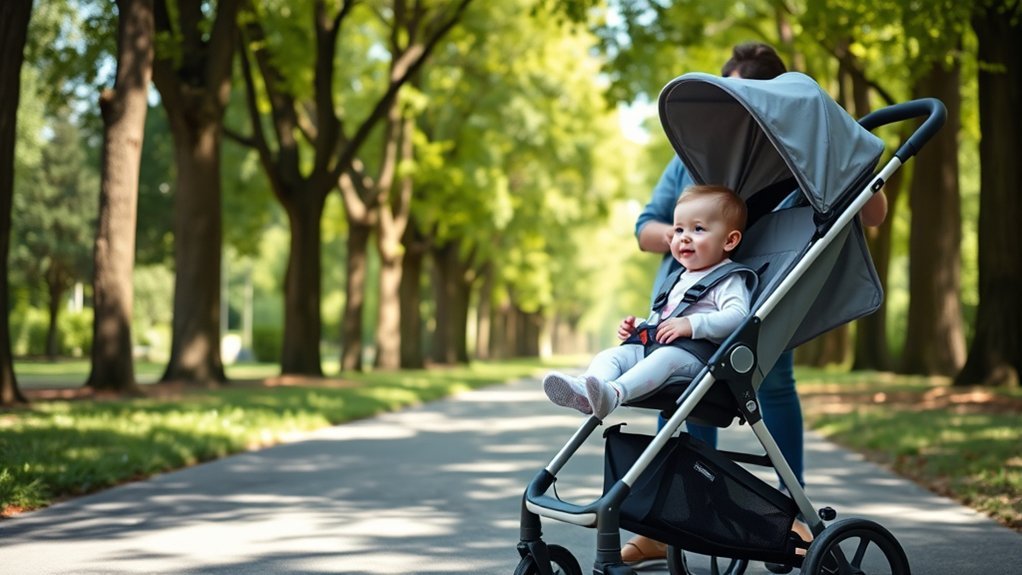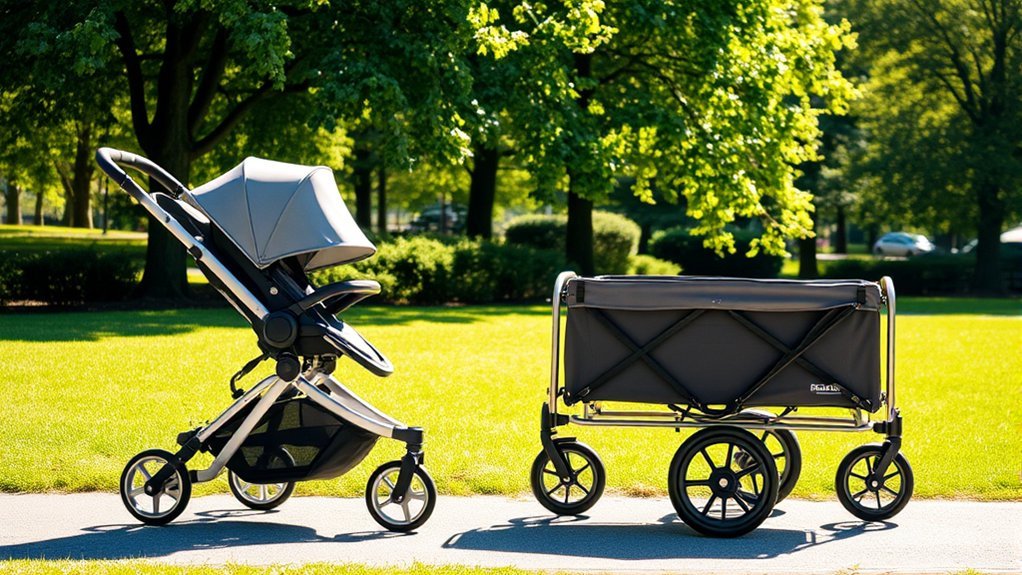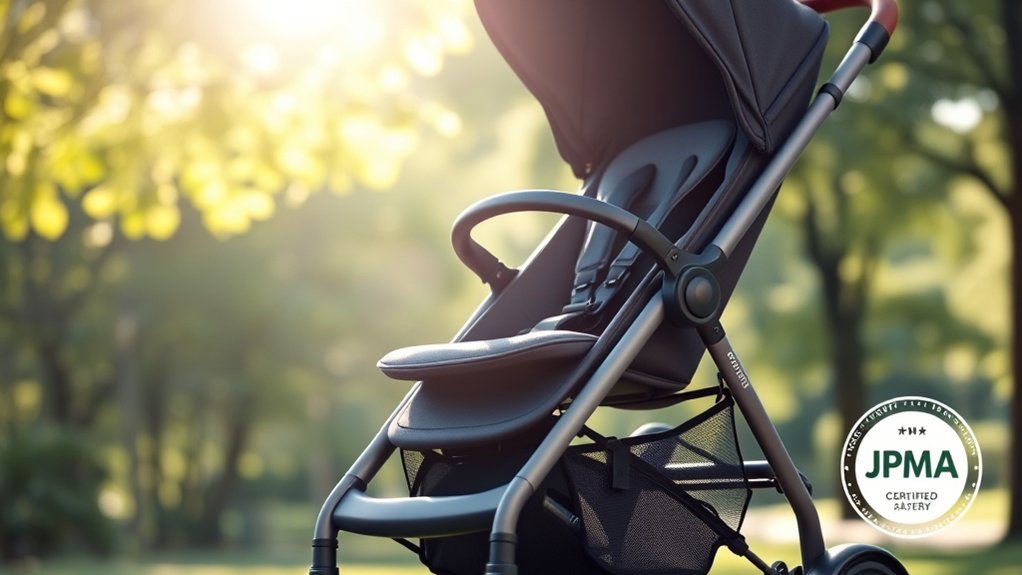
JPMA certification signifies that your stroller meets strict safety standards, offering peace of mind that your child is protected from hazards. It means the stroller has passed rigorous testing for features like stability, brake reliability, and harness effectiveness. By choosing a JPMA-certified stroller, you’re making an informed decision that prioritizes safety while reducing the risk of accidents. If you want to discover more about key safety features and best practices, keep exploring!
Understanding JPMA Certification
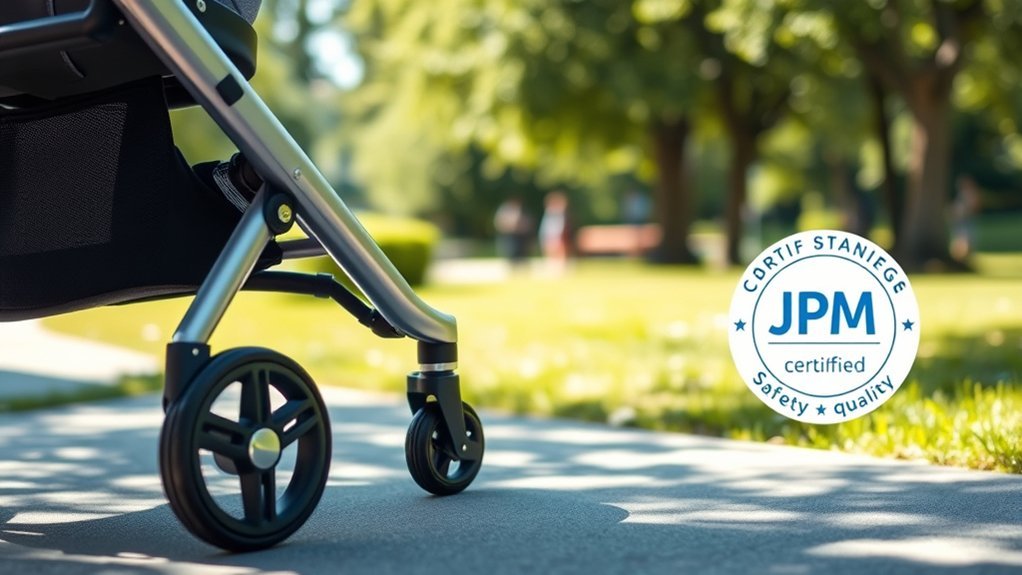
When it comes to stroller safety, understanding JPMA certification is vital for parents. This certification indicates that a stroller meets rigorous safety standards, giving you peace of mind.
The JPMA certification process involves thorough evaluations of key safety features such as stability, braking mechanisms, and harness systems. Strollers that bear the JPMA sticker have met or exceeded the ASTM F833 standard, minimizing hazards like tipping and brake failures.
The JPMA certification ensures strollers meet stringent safety standards, minimizing risks like tipping and brake failures.
Plus, these strollers undergo annual retesting to guarantee compliance with evolving safety regulations. By choosing a JPMA-certified stroller, you’re prioritizing your child’s safety and embracing the benefits of industry best practices.
It empowers you to make informed decisions, guaranteeing a safer journey for your little one.
Importance of Safety Standards
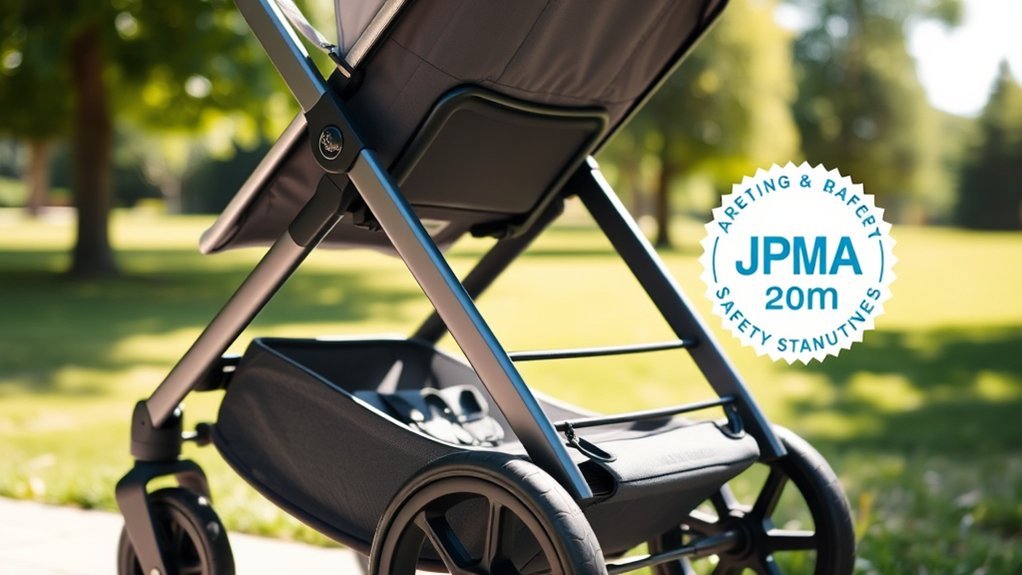
When it comes to your child’s safety, adhering to established stroller safety standards is vital.
These regulations guarantee that strollers meet rigorous testing for essential features, helping to prevent injuries caused by design flaws or improper use.
Ensuring Child Safety
Ensuring your child’s safety in a stroller is paramount, and adherence to safety standards plays an essential role in achieving that goal.
With approximately 64,373 stroller-related injuries each year in the U.S., compliance with established safety regulations is imperative. Strollers certified by JPMA have undergone rigorous testing for braking, stability, and harness systems, greatly reducing the risk of falls and tip-overs.
The mandatory five-point harness is the gold standard for securing your child, preventing ejection during movement. Regular inspections and adherence to weight limits enhance stability, while proper child supervision and the right stroller accessories further safeguard your little one.
Choosing a stroller that meets these standards empowers you to embrace parenthood with confidence.
Compliance With Regulations
Understanding stroller safety standards is crucial for every parent. Compliance with stroller regulations, like ASTM F833, guarantees strollers are rigorously tested for stability, braking mechanisms, and restraint systems.
This commitment to safety greatly reduces the risk of injuries, which average around 64,000 annually in the U.S. By choosing JPMA-certified strollers, you gain reassurance that the product meets or exceeds safety benchmarks.
The compliance benefits include features designed to prevent tipping and guarantee reliable harness systems and parking brakes, enhancing your child’s safety during use.
Regular updates to these standards are essential for addressing new risks and integrating the latest safety technologies, empowering you to make informed choices for your family’s well-being.
Key Safety Features in Strollers
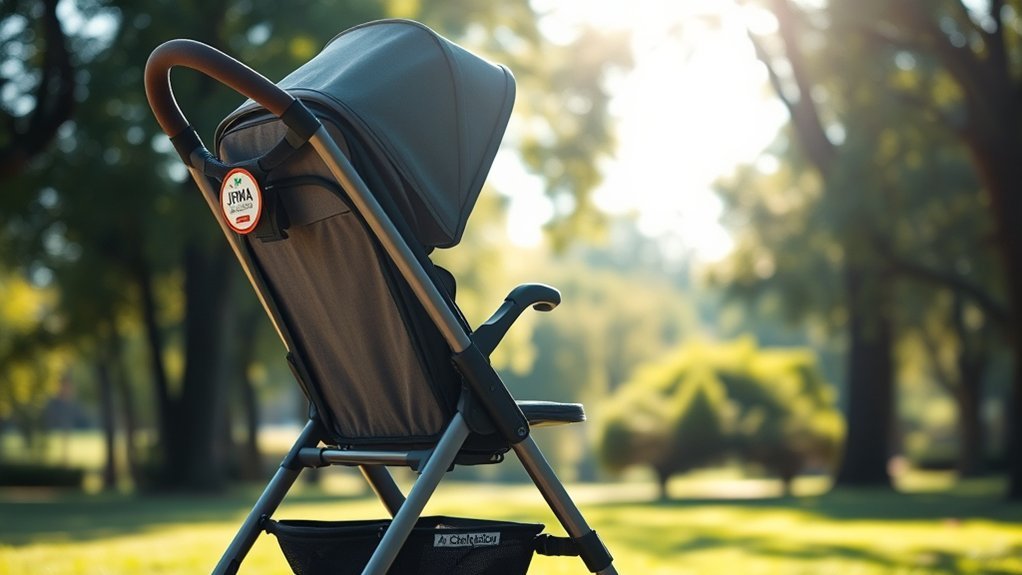
When choosing a stroller, it’s vital to focus on key safety features that protect your child.
A five-point harness, reliable brake systems, and stability design elements are essential for ensuring a secure and smooth ride.
Five-Point Harness Importance
The five-point harness stands as the gold standard in stroller safety, offering essential protection for your little one. This system effectively reduces the risk of falls and tip-overs, essential for toddler safety.
Proper harness adjustments guarantee the straps are snug, allowing only two fingers to fit between the strap and your child’s body, optimizing their security. Strollers with a five-point harness must meet safety standards like ASTM F833, preventing your child from climbing out or shifting too much.
Regularly checking and maintaining the harness is important, as wear can compromise its effectiveness. Ultimately, this feature helps infants and toddlers maintain their position, guaranteeing their stability and safeguarding against potential injuries from unrestrained movement.
Reliable Brake Systems
A reliable brake system is essential for stroller safety, ensuring your child stays secure while you make quick stops. Effective brake functionality locks both rear wheels, preventing rollaways and tip-overs, particularly with your little one inside.
The ASTM F833 standard mandates parking brakes that are easy for you to engage yet out of reach of curious hands, reducing the risk of unintended movement. Regularly inspect these safety mechanisms, as worn brakes can lead to serious accidents—over 64,000 stroller-related injuries occur annually.
Choose strollers designed for intuitive use, allowing you to activate the brakes swiftly with a single foot pedal. Prioritizing a robust brake system is crucial for your peace of mind as you navigate daily adventures with your child.
Stability Features Essential
While exploring strollers, understanding the stability features is essential for making certain your child’s safety. A broad wheelbase design and low seat position are important in resisting tip-overs, providing peace of mind during your adventures.
Look for strollers with solid metal frames, particularly aluminum alloys, as they combine strength and lightweight stability. Reliable braking systems are critical; confirm they lock both rear wheels to prevent rollaways.
The industry-standard five-point harness system keeps your child securely in place, maintaining the center of gravity. Additionally, strollers undergo regular stability tests on inclined planes, simulating real-world conditions to verify they can safely support specified loads without losing structural integrity.
Prioritize these features to empower your journey with safety and confidence!
The Role of Stability in Stroller Safety
When selecting a stroller, recognizing the importance of stability is key to guaranteeing your child’s safety.
Stability plays a vital role in tip over prevention and can markedly reduce the risk of injuries.
Here are four essential stability features to take into account:
- Broad Wheelbase: A wider base provides better balance and support.
- Low Seat Position: Keeping the seat low helps lower the center of gravity, enhancing stability.
- Solid Metal Frames: Robust frames resist tipping during movement.
- Rigorous Stability Testing: Verify compliance with ASTM F833 and JPMA standards for safe use.
Common Risks and How to Mitigate Them
Understanding the stability features of strollers is just the beginning; recognizing common risks and knowing how to mitigate them is equally important.
Stroller falls and tip-overs account for thousands of injuries each year, so implementing effective tip-over prevention strategies is vital. Make sure your stroller has a broad wheelbase and avoid hanging heavy bags from the handlebars, as this can disrupt stability.
Stroller falls are common; ensure stability by choosing a broad wheelbase and avoiding heavy bags on handlebars.
Always utilize a five-point harness to securely hold your child in place, preventing any shifts in center of gravity. Regularly inspect stroller brakes, ensuring they lock both rear wheels to minimize accidents when stationary.
Finally, follow manufacturer instructions and safety standards like ASTM F833 to reduce risks associated with improper use and mechanical failures. Your child’s safety is paramount!
Regular Maintenance and Inspections
Regular maintenance and inspections are essential for guaranteeing your stroller remains safe and functional.
To keep your stroller in top shape, follow these maintenance tips:
- Check for wear and tear on wheels and brakes to guarantee proper function.
- Inspect folding mechanisms to prevent pinch points and maintain child-resistant features.
- Conduct routine inspections of the five-point harness system for security and fit, making sure it’s free from fraying.
- Clean stroller parts and mechanisms regularly to prevent dirt buildup that can lead to malfunctions.
Staying Informed on Recalls
Keeping your stroller well-maintained is just one part of guaranteeing your child’s safety. Staying informed about recall notifications is equally essential for injury prevention.
The Consumer Product Safety Commission (CPSC) offers a searchable database for stroller recalls, helping you check for brand and model-specific alerts. Recent recalls have revealed issues like brake failures and choking hazards, underscoring the significance of vigilance.
Register your stroller with the manufacturer to receive timely alerts and take prompt action when necessary. Regularly checking recall information is critical, especially for travel strollers, which may be more prone to defects.
With over 64,000 stroller-related injuries each year, your proactive approach can protect your child and guarantee compliance with safety standards.
Best Practices for Stroller Use
When you’re out and about with your little one, following best practices for stroller use is essential for ensuring their safety and comfort.
Here are four key tips to keep in mind:
- Always use the five-point harness system to secure your child, ensuring straps are snug.
- Apply stroller brakes every time you stop to prevent accidental rollaways.
- Check for wear and tear on stroller components regularly, including brakes and folding mechanisms.
- Avoid hanging heavy bags from the handlebars; instead, use the designated storage basket for balance.
Frequently Asked Questions
How Long Does the JPMA Certification Last for a Stroller?
The JPMA certification lasts as long as the stroller meets safety standards, typically for its entire lifespan. Regularly check for updates, ensuring your stroller maintains its safety credentials and offers the best protection for your child.
Can Non-Jpma Certified Strollers Be Safe?
Non-JPMA certified strollers can be safe, but you must research alternative certifications and safety features. Trust your instincts, prioritize quality, and guarantee the stroller meets your needs for your child’s well-being and your peace of mind.
What Should I Do if My Stroller Is Recalled?
If your stroller’s recalled, follow the manufacturer’s stroller recall procedures immediately. Check consumer safety guidelines for instructions on returning, repairing, or exchanging your stroller, ensuring your child’s safety is always your top priority.
Are There Age Limits for Using a JPMA Certified Stroller?
You might think your toddler can cruise forever in a stroller, but safety guidelines often recommend age limits. Typically, JPMA certified strollers suit children from birth to about 50 pounds, ensuring their safety and comfort.
How Often Should I Check My Stroller for Safety?
You should check your stroller for safety every month. Use stroller maintenance tips and follow a safety inspection checklist to guarantee it’s in top condition. Regular checks help prevent accidents and keep your little one safe.
Conclusion
In summary, understanding JPMA certification and stroller safety standards is essential for keeping your little one safe. By prioritizing key safety features, maintaining stability, and performing regular inspections, you can greatly reduce risks. Are you doing enough to stay informed on recalls and best practices? Remember, your child’s safety is worth every effort you make. By being proactive and knowledgeable, you guarantee a secure and enjoyable experience for both you and your child during outings.