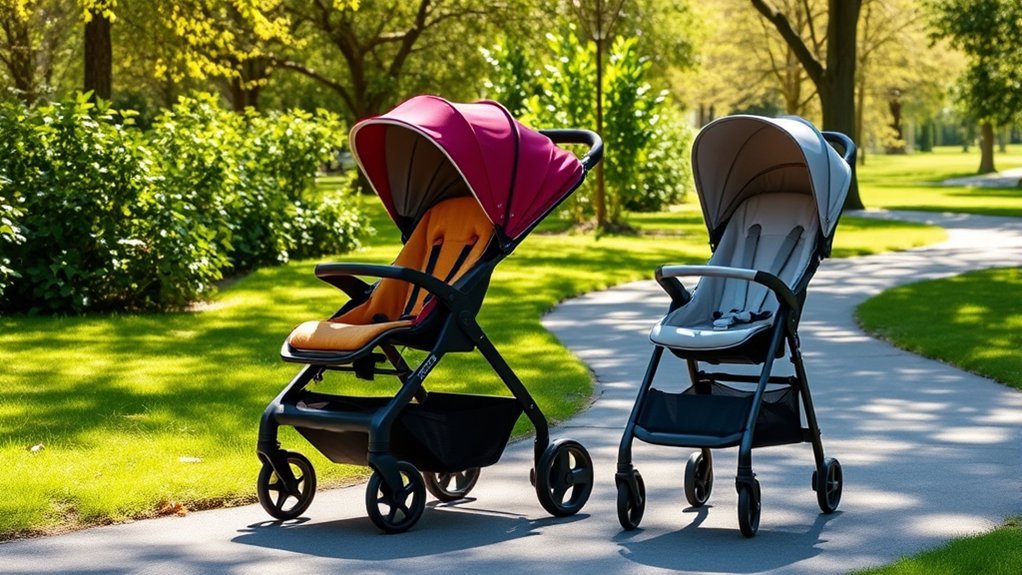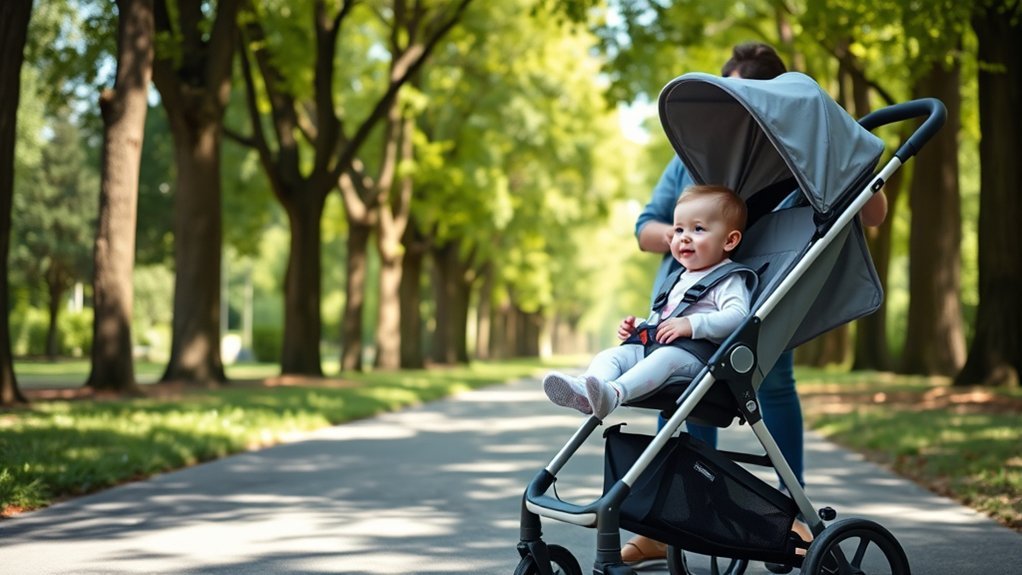
To guarantee safe stroller rides, first, select a stroller that fits your child’s age and size. Always use a five-point harness, adjusting it snugly. Regularly inspect the stroller for wear, especially brakes and wheels. Use UV protective canopies and secure toys to prevent choking. Engage the brakes when stationary and never leave your child unattended. For even more tips on maintenance and safety checks to keep rides enjoyable, keep exploring your options.
Stroller Safety Features
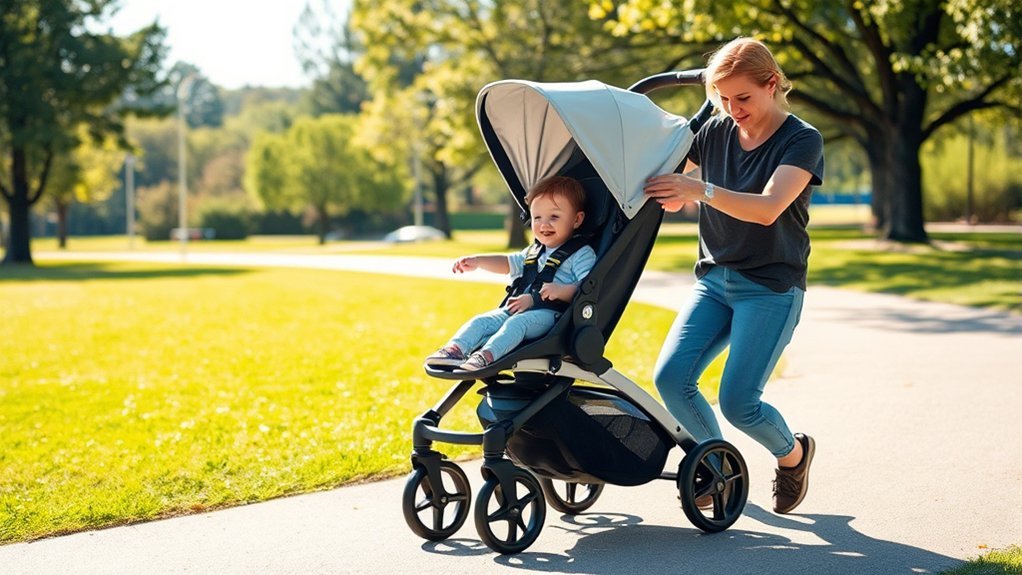
When you’re choosing a stroller, it’s essential to take into account essential safety features that guarantee your child’s well-being.
Start by selecting a stroller that suits your child’s age, height, and weight. A wide base enhances stability, reducing the risk of tipping. Look for strollers equipped with effective two-wheel locks, ensuring they remain stationary when needed.
Choose a stroller that fits your child’s size and features a wide base for added stability and safety.
Always check for pinch points when folding or unfolding, as these can trap tiny fingers. Additionally, choose strollers with wheels positioned out of your child’s reach to minimize accidents.
Finally, consider stroller materials that are durable yet safe, and explore stroller accessories like safety straps and canopies that provide extra protection. These details will help create a secure environment for your little one.
Proper Use of Harness and Strapping
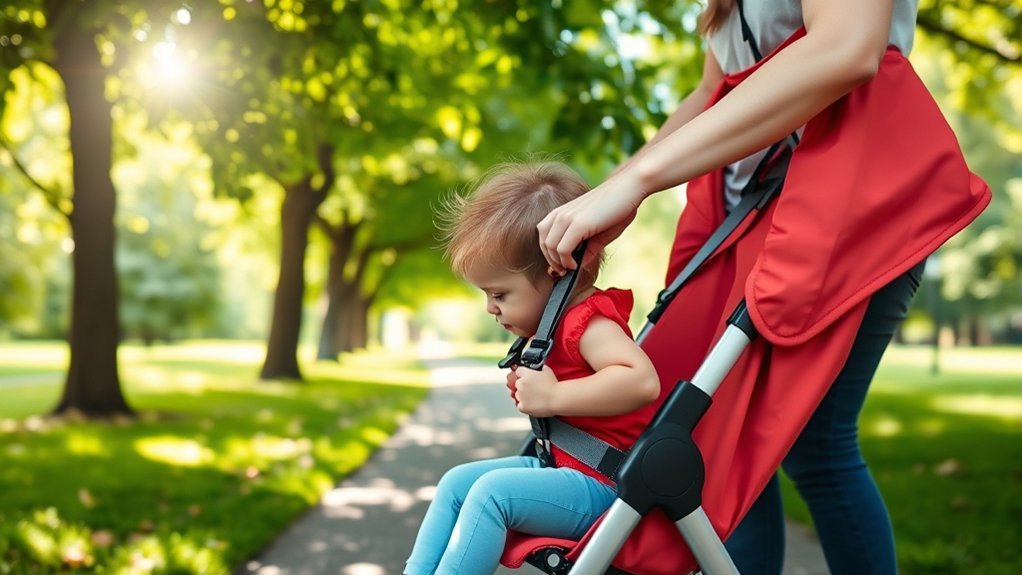
To guarantee your child’s safety while using a stroller, it’s crucial to properly use the harness and strapping system.
Here are key practices to follow:
- Always use a five-point harness system for maximum security.
- Adjust the straps snugly, allowing only two fingers to fit between the strap and your child’s body.
- Inspect the harness regularly for wear or malfunctions.
- Make it a habit to secure buckling every time you use the stroller, even for short distances.
- Frequently check and adjust the harness as your child grows, ensuring a proper fit.
Additional Safety Considerations
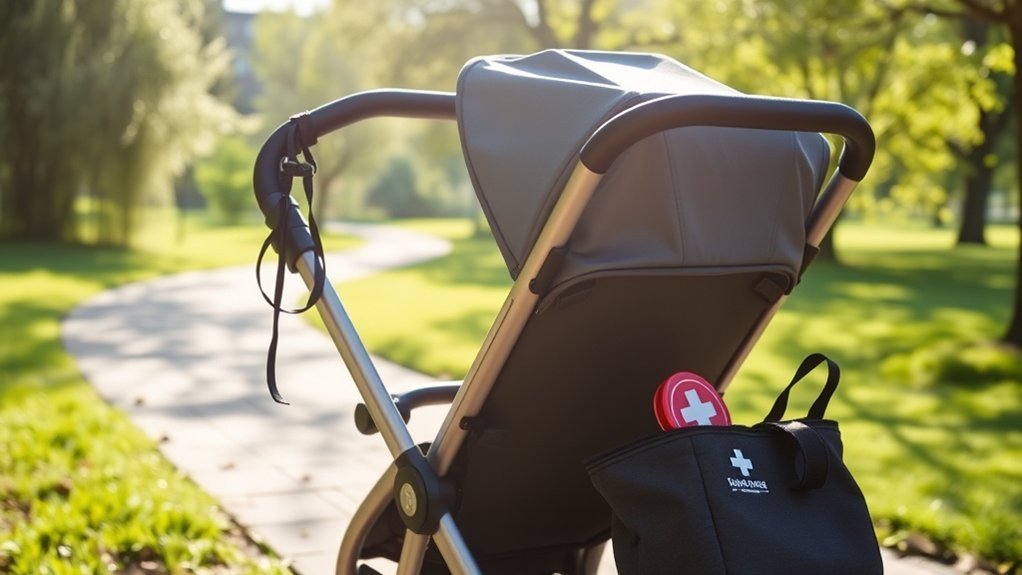
While guaranteeing your child’s safety in a stroller, it’s important to contemplate various additional safety measures beyond the harness system.
First, look for baby gear with UV protective canopies to shield your little one from harmful sun exposure during outings.
Securely attach toys designed specifically for stroller use to prevent hazards, avoiding choking risks.
Use tightly rolled blankets for supportive padding, and steer clear of loose items that could pose a suffocation hazard.
For twin strollers, verify footrests are designed to prevent slipping, reducing the risk of falls.
Finally, always supervise your baby when in the stroller; this vigilance is essential for their safety and well-being.
Your proactive approach can enhance your child’s ride experience considerably.
Stroller Usage Tips
Ensuring safe and effective stroller usage is essential for both you and your child. Here are some practical tips to keep in mind:
- Always engage the stroller brakes when stationary, especially on slopes.
- Store bags in designated areas, not on handles, to maintain balance.
- Regularly inspect your stroller for safety concerns, focusing on brakes, wheels, and harness systems.
- Never leave your baby unattended; they can shift unexpectedly.
- Register your stroller with the manufacturer for safety alerts and recalls.
Maintaining and Inspecting Your Stroller
Regular maintenance and inspection of your stroller are essential to guarantee its safety and longevity. Aim for an inspection frequency of at least once a week.
Check all components for wear and tear, focusing on brakes, wheels, and harness clips to confirm everything functions properly. After each use, clean the stroller‘s fabric and frame with mild soap and water to prevent mold and bacteria.
Regularly inspect all stroller components for wear, and clean the fabric and frame after each use to ensure safety and hygiene.
Test the folding mechanism to confirm it locks securely, avoiding accidental collapses. Always inspect for loose screws or damaged parts, addressing any issues immediately to maintain stroller safety and performance.
Store your stroller in a dry place to prevent rust and deterioration, making sure it remains in prime condition for safe use.
Frequently Asked Questions
What Age Is Appropriate for My Child to Use a Stroller?
Most kids can start using a stroller around six months, as they develop better head and neck control. By age three, they often shift to walking, needing the stroller less for everyday outings.
Can I Attach Additional Accessories to My Stroller?
Yes, you can attach additional accessories to your stroller, but make certain they’re compatible with your model. Always check manufacturer guidelines to avoid unsafe stroller modifications that could compromise stability or safety during use.
How Much Weight Can My Stroller Safely Carry?
Your stroller’s safe carrying capacity usually ranges from 30 to 50 pounds, depending on the model. Always check the stroller weight limits in the manufacturer’s guidelines to guarantee you’re within a safe range for your child.
Are There Common Recalls I Should Be Aware Of?
You’d think all strollers meet safety standards, right? Regularly check recall alerts to avoid surprises. Staying informed about manufacturers’ recalls guarantees your rides remain safe and enjoyable, liberating you from unexpected dangers lurking in your stroller!
How Do I Choose the Right Stroller for My Lifestyle?
To choose the right stroller for your lifestyle, assess stroller types like lightweight, jogging, or travel systems. Confirm they match your daily activities, space, and needs, so you enjoy freedom while steering through life’s adventures.
Conclusion
By following this stroller safety checklist, you’re not just ensuring a safer ride; you’re creating a fortress of security for your little one. Always use the harness correctly, check for any wear and tear, and stay aware of your surroundings. With these practical tips, you’ll transform every stroll into a worry-free adventure. Remember, a safe stroller isn’t just a luxury—it’s an absolute necessity for your child’s safety and your peace of mind. Keep those rides fun and secure!