
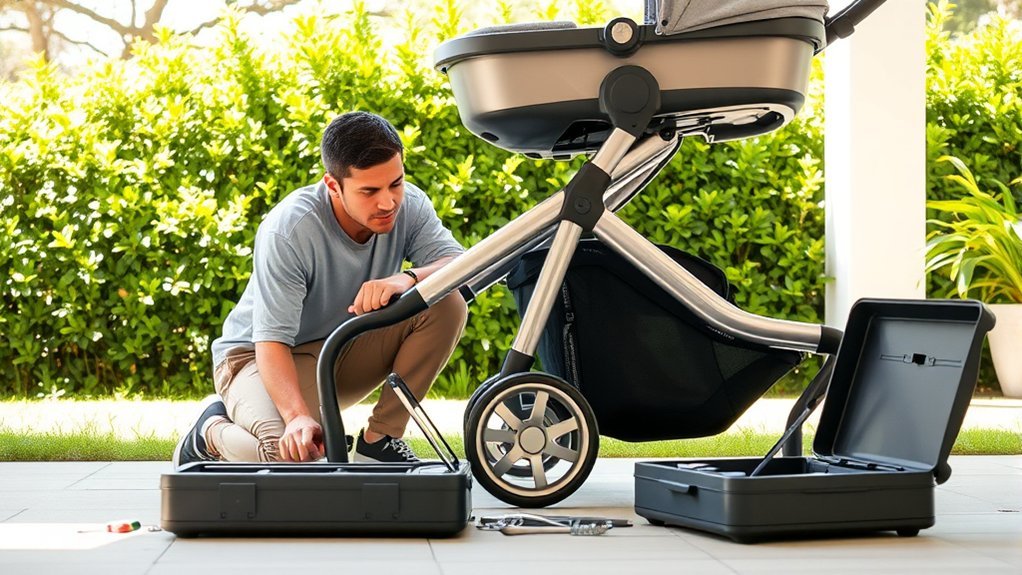
If your stroller won’t fold, do not solve the problem by pressing harder. A half-released latch, incorrect wheel position, trapped strap, attached accessory, dirty joint, or damaged frame can stop the folding sequence. Remove your child and cargo first, find the manual for your exact model, and work through the checks below in order.
Quick Answer
If your stroller won’t fold, remove your child and cargo, place it in the model-specific folding configuration, and follow the manual’s release sequence. Check every latch, wheel, brake, accessory, strap, and hinge for obstruction or damage. Never force the frame. Stop using it if it will not lock open securely.
Last updated: July 14, 2026
Key Takeaways
- Remove your child, bags, blankets, and loose accessories before touching the folding mechanism.
- Use the instructions for your exact stroller because brake, wheel, seat, and handle positions differ by model.
- Clean visible dirt before considering lubricant, and use only a product and application point approved by the manufacturer.
- Never bend the frame, bypass a latch, remove rivets, or force a mechanism through sharp resistance.
- Stop using the stroller if it does not lock fully open, has a bent or cracked frame, or has an unreliable brake, wheel, or latch.
At a Glance
| Time Required | About 10 to 20 minutes for a basic inspection |
| Difficulty | Easy inspection; repairs should be left to the manufacturer or a qualified technician |
| Tools Needed | Stroller manual, flashlight, soft cloth, and a soft brush; lubricant only if the manual specifies one |
| Cost | Usually no cost for inspection and basic cleaning; parts and professional service vary by model and warranty |
Warning: Keep children away from the stroller while opening or folding it. Never place fingers near hinges, force the frame, or continue using a stroller that does not lock fully open. U.S. stroller requirements address latching mechanisms, scissoring and pinching hazards, parking brakes, and wheel assemblies under 16 CFR Part 1227 and the incorporated stroller standard.
Stroller Won’t Fold Troubleshooting Table
Use this table to identify the most likely area to inspect. It does not replace the folding instructions for your exact brand and model.
| Symptom | Possible Cause | Safe Next Step |
|---|---|---|
| The frame starts folding and stops | A release is partly engaged, or an accessory is blocking the frame | Reset the stroller, remove required accessories, and repeat the official sequence slowly |
| The fold feels gritty or uneven | Sand, crumbs, dried mud, hair, or fabric is in a joint | Brush or wipe away visible debris, let wet parts dry, and test again without force |
| One side moves before the other | Uneven latch release, trapped material, loose hardware, or frame misalignment | Stop, compare both sides, and contact the manufacturer if the frame looks uneven or damaged |
| The wheels stop the fold | Incorrect brake, swivel-lock, or wheel direction | Set the brakes and wheels exactly as the manual directs |
| The stroller folds but will not stay closed | The storage latch is obstructed, misaligned, or damaged | Clear the latch area and seek service if it will not engage normally |
| The stroller does not lock open afterward | Damaged or unreliable opening latch | Stop using the stroller and contact the manufacturer |
Before You Start: Make the Stroller Safe to Inspect
Take your child out and move other children away from the work area. Remove bags from the handle, empty the basket, and place the stroller on level ground with enough room for the frame to move.
Find the product label before troubleshooting. Record the brand, model name, model number, serial or lot number, and manufacture date. These details help you locate the correct manual and check whether a recall or service notice applies.
Read the folding instructions from beginning to end. Do not assume that another stroller from the same brand uses the same sequence. Depending on the model, the brake may need to be engaged or released, the front wheels may need to face forward, and the seat, handle, or canopy may need a specific position.
Note: If the stroller was dropped, struck by a vehicle, damaged during air travel, left in floodwater, or exposed to heavy corrosion, skip force-based troubleshooting. Contact the manufacturer because damage may extend beyond the visible folding joint.
9 Safe Fixes When Your Stroller Won’t Fold
1. Remove Your Child, Cargo, and Loose Items
Never troubleshoot with a child in the seat. Empty the basket and remove anything hanging from the handle. A blanket, toy, shopping bag, or changing bag can pull against the frame or become trapped as it closes.
Check beneath the seat and around both sides of the basket. Basket fabric, harness webbing, loose straps, and rain-cover fasteners can enter the hinge path without being obvious from above.
2. Set the Correct Folding Configuration
Place every adjustable part in the position required by the manual. Check the handle height, seat recline, footrest, canopy, bumper bar, parent tray, child tray, and front-wheel direction.
Some strollers can fold with the seat attached, while others require the seat to face a certain direction or be removed. Infant car seats, bassinets, second seats, glider boards, adapters, and other accessories may also need to come off first.
Do not remove a part merely because it looks inconvenient. Remove it only when it is designed to detach and the manual identifies that step.
3. Restart the Official Folding Sequence
Return the stroller to its fully open position before trying again. A partially folded frame can place uneven tension on the releases and make it harder to tell which part is still engaged.
Follow the sequence in the exact order shown by the manufacturer. A one-hand stroller may require you to slide a safety switch before squeezing a trigger. An umbrella stroller may use a foot release followed by pressure on the handles. Other models use two buttons, a seat strap, or a handlebar control.
Use slow, even pressure. Stop if the frame reaches a hard stop, twists, or makes a cracking sound.
Pro Tip: Compare your movements with the manufacturer’s official video or illustrated manual. A small safety slide or secondary release is easy to miss when you rely on memory.
4. Release Every Folding Lock Completely
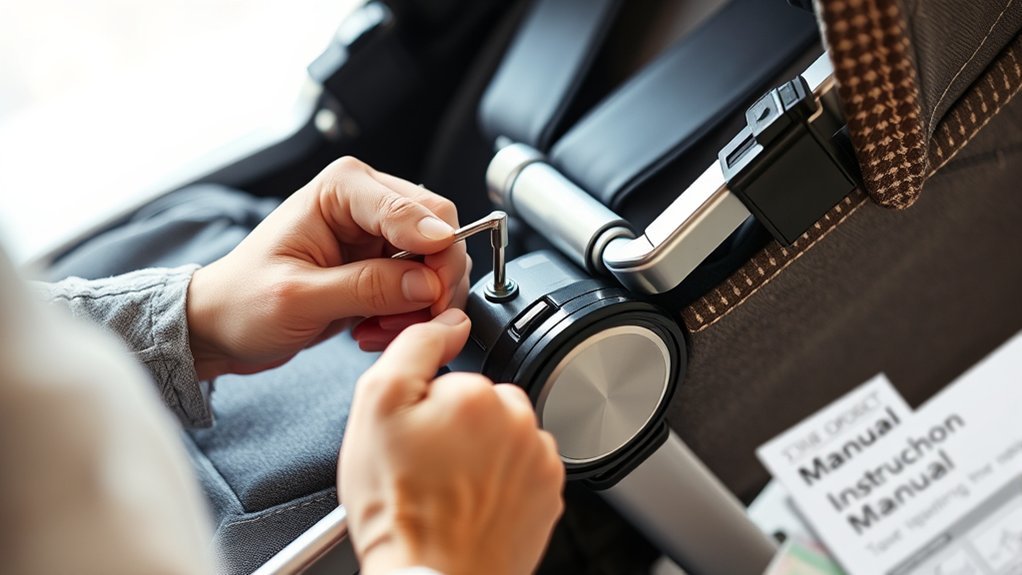
Folding locks prevent the frame from collapsing during normal use. Your stroller may have a lower-frame release, upper-frame release, safety slide, trigger, button, lever, or pull strap.
Activate each control through its full intended range. A release that moves halfway can leave one side attached. If a button does not return normally, or a lever feels loose, cracked, or disconnected, stop and contact the manufacturer.
Do not tie back a release, file a catch, remove a spring, or hold a safety button permanently open. Those changes can prevent the stroller from locking safely during the next use.
Signs a Lock Is Still Engaged
- The frame moves a few inches and then stops sharply.
- One side begins to close while the other remains rigid.
- You hear or feel only one release click.
- The handle stays rigid after you operate the folding control.
- The stroller springs open when you reduce pressure.
- A button, trigger, or lever does not travel as far as usual.
5. Inspect the Frame, Hinges, and Hardware
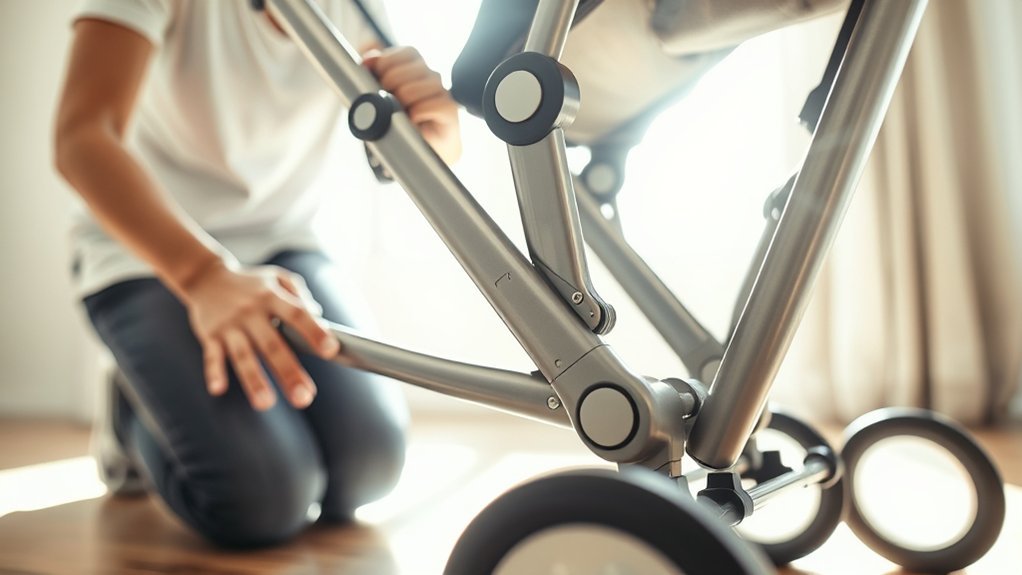
Use a flashlight to inspect both sides of the stroller. Compare the left and right frame rails, hinges, and gaps. They should look reasonably symmetrical unless the stroller’s design is intentionally different on each side.
- Look for bent, cracked, warped, dented, or corroded tubes.
- Check for loose screws, missing rivets, shifted covers, or exposed sharp edges.
- Inspect joints for stones, dried mud, crumbs, fabric, or small toys.
- Check whether a canopy stay, footrest, recline part, or basket support has moved into the folding path.
- Look for stress marks or whitening around plastic latch housings.
- Stop if a hinge has an uneven gap or one frame rail sits at a different angle.
Do not bend a bar back into position or tighten structural hardware unless the manufacturer provides a specific procedure. Rivets, enclosed latches, and load-bearing joints are not suitable for trial-and-error home repair.
6. Check the Wheels, Brakes, and Swivel Locks
A wheel can block the frame when it faces the wrong direction, does not swivel freely, or contains packed debris. The parking brake can also affect the folding sequence on some models.
- Set the parking brake to the position required by the manual.
- Check whether the front swivel locks should be on or off.
- Turn the front wheels to the required direction.
- Remove hair, string, mud, stones, and other visible debris from the wheel area.
- Confirm that removable wheels are fully seated and do not wobble.
- Remove a detachable wheel only when the manual includes that step.
A loose wheel, damaged brake, bent axle, or wheel that will not stay attached needs manufacturer service or an approved replacement part.
7. Clean the Joints Before Considering Lubricant
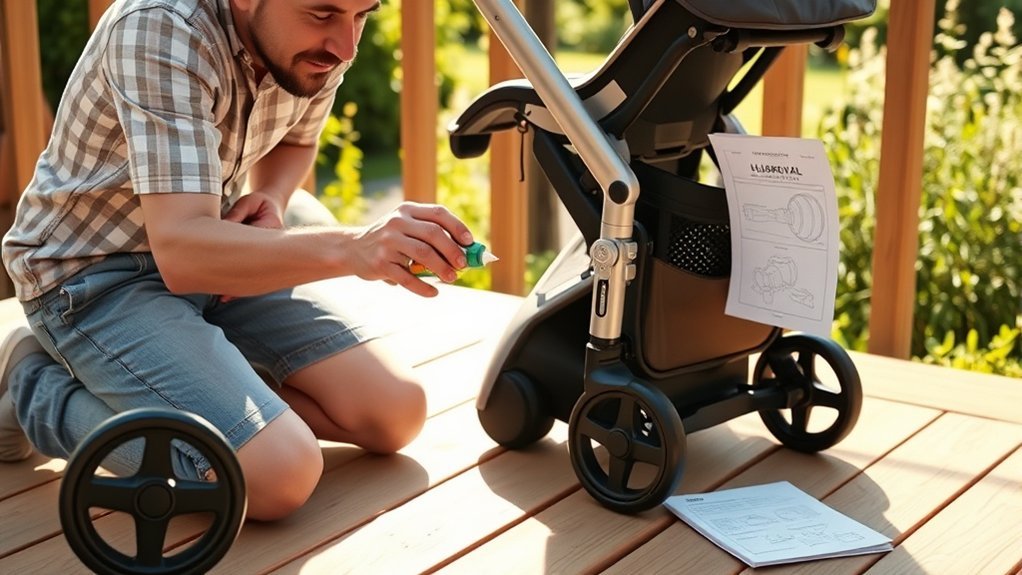
Dirt often creates the dry or gritty feeling that people mistake for a lack of lubricant. Use a soft, dry brush or cloth to remove visible debris. Follow the manufacturer’s cleaning instructions if a damp cloth or mild soap is allowed, and let the stroller dry before testing it.
Do not spray a product into an enclosed latch simply to see whether it helps. Overspray can reach fabric, hand grips, brake parts, tires, or surfaces your child touches.
If the manual identifies a lubricant, use only the named product type, amount, and application point. Wipe away excess and keep it away from areas excluded by the instructions.
| Product or Method | When It Is Appropriate | Important Limit |
|---|---|---|
| Dry cloth or soft brush | Removing loose sand, crumbs, hair, and surface dirt | Do not push debris deeper into an enclosed mechanism |
| Damp cloth or mild cleaner | Only when the care instructions allow it | Keep water out of enclosed joints and let the stroller dry fully |
| Silicone, dry PTFE, graphite, or grease | Only when the exact manual or manufacturer specifies that product type | These products are not universally interchangeable or approved for every stroller |
| WD-40 or another general-purpose spray | Only if the manufacturer approves that exact product and location | Do not assume a household spray is suitable for a folding latch, brake, tire, or plastic joint |
8. Check the Storage Latch and Trapped Material
Some strollers use an automatic hook, clip, or carry latch to keep the folded frame closed. A jammed storage latch may prevent the final part of the fold or make the stroller reopen immediately.
Inspect the latch for dirt, fabric, straps, or misalignment. Do not pull it sideways, enlarge its opening, or remove its spring. If it does not engage with ordinary hand pressure after cleaning, contact the manufacturer.
Also check the seat fabric, harness, basket, canopy, and accessory straps. Material caught between two frame sections can create resistance and may be damaged if you continue pressing.
9. Test the Stroller Empty and Know When to Stop
After correcting a simple obstruction or configuration error, test the stroller without a child. Open it fully on level ground and confirm that every opening latch engages. Apply light pressure to the handle in the normal pushing direction. The frame should remain rigid and should not begin folding.
Operate the brake and inspect the wheels before completing one slow folding and unfolding cycle. Stop if you notice sharp resistance, uneven movement, a cracking sound, loose hardware, or an unreliable latch.
Contact the manufacturer or a qualified stroller technician if the problem remains. Do not keep repeating the fold in the hope that a damaged part will free itself.
Why One Side May Fold Before the Other
One-sided movement commonly points to an uneven release or an obstruction on the side that remains rigid. It can also indicate loose hardware, impact damage, or frame misalignment.
Return the stroller to its open position and compare both sides. Check the releases, hinge gaps, frame angles, wheel position, and nearby fabric. Stop if one side appears bent or if the same side sticks after cleaning and resetting the sequence.
Do not twist the handle to force both sides together. Twisting can place additional stress on the crossbars and latching parts.
Common Folding Mistakes
Many folding problems happen because the stroller looks ready before every component is in the required position. Use this reference before applying more pressure.
| Common Mistake | What to Do Instead |
|---|---|
| Forcing the stroller | Stop at sharp resistance and inspect releases, accessories, wheels, and joints |
| Operating only one release | Complete every safety-slide, button, trigger, lever, or foot-release step in order |
| Ignoring wheel position | Set the brake, swivel locks, and wheel direction according to the manual |
| Folding with a full basket | Remove bags, blankets, toys, and large objects first |
| Leaving accessories attached | Check whether the car seat, bassinet, tray, adapter, second seat, or board must be removed |
| Adding lubricant before cleaning | Remove visible debris first and use lubricant only when the manufacturer approves it |
| Bending or dismantling parts | Stop and request approved service for bent, cracked, riveted, or enclosed components |
Regular Maintenance Tips
Routine cleaning and inspection can prevent grit, corrosion, loose wheels, and trapped material from turning into folding problems. Follow the maintenance schedule in your manual rather than using one universal interval.
- Wipe the frame, hinges, and wheel areas after dirty or wet outings.
- Remove hair, thread, mud, and stones from wheels and axles.
- Allow the stroller to dry before long-term storage.
- Inspect bars, joints, covers, brakes, wheels, and latches for damage.
- Test the folding and opening locks with the stroller empty.
- Use only manufacturer-approved replacement parts and maintenance products.
- Store the stroller where it is protected from standing water, heavy humidity, salt, and extreme heat.
Check the CPSC recalls and product safety warnings database when a stroller develops a repeated brake, frame, wheel, or folding problem. Search with the brand, model name, model number, and manufacture date from the product label.
Register the stroller with its manufacturer when registration is available. Durable infant and toddler product registration is designed to help manufacturers contact owners about recalls or other safety information.
When to Seek Professional Help
Stop troubleshooting and contact the manufacturer or an approved repair provider when the problem involves a structural or safety-critical component.
- The folding mechanism remains stuck after the correct sequence and safe cleaning.
- The stroller will not lock fully open.
- A latch, trigger, button, or release feels loose, cracked, or disconnected.
- The frame is bent, cracked, warped, heavily corroded, or uneven.
- A wheel assembly, axle, swivel lock, or brake feels loose or unreliable.
- The storage latch will not engage without excessive pressure.
- The mechanism makes a cracking, grinding, or snapping sound.
- The stroller was damaged by a drop, collision, airline handling, or floodwater.
- The model appears in a recall or safety notice.
The manufacturer can determine whether the stroller needs an approved replacement part, warranty service, repair kit, or complete replacement. Do not substitute generic hardware for a structural fastener unless the manufacturer authorizes it.
What to Check Before Contacting the Manufacturer
Collect the following information so the support team can identify the correct model and problem:
- Brand and model name
- Model, serial, product, or lot number
- Manufacture date shown on the frame label
- Purchase date and proof of purchase, when available
- Clear photos of the entire stroller and the affected latch, hinge, frame, brake, or wheel
- A short video showing where the official folding sequence stops
- A description of any drop, impact, travel damage, water exposure, or previous repair
- Details about attached seats, adapters, trays, or other accessories
If the stroller is secondhand, ask the previous owner about repairs and missing parts. Compare the stroller with the manual’s parts list, search the recall database, and avoid using it until you confirm that every opening latch, brake, wheel, and restraint component works correctly.
You can also use SaferProducts.gov to search public product-safety reports or report a potentially unsafe consumer product.
Frequently Asked Questions
Why won’t my stroller fold?
Common causes include a partly engaged release, incorrect wheel or brake position, an attached accessory, cargo in the basket, fabric caught in the frame, debris in a joint, or damaged hardware. Reset the stroller to its fully open position and follow the manual’s sequence from the beginning.
Is it safe to force a stroller closed?
No. Force can bend the frame, damage a latch, trap fabric, or hide a fault that prevents the stroller from locking open later. Stop when you feel sharp resistance and inspect the releases, accessories, wheels, hinges, and frame.
Can I use WD-40 on a stroller folding mechanism?
Use it only if the stroller manual or manufacturer approves that exact product for the specific part. Do not assume a general-purpose spray is suitable for a folding latch, plastic joint, tire, or brake. Clean visible dirt first and ask the manufacturer when the instructions are unclear.
How often should I lubricate stroller hinges?
No universal schedule applies to every stroller. Follow the care instructions for your model. Inspect and clean moving areas after sand, mud, rain, salt, or heavy use, but add lubricant only when the manufacturer recommends a product, amount, location, and interval.
What should I do if the stroller is still under warranty?
Stop forcing the mechanism and contact the manufacturer before disassembling or modifying anything. Record the model information, take photos or a short video, and keep the proof of purchase. Unauthorized repairs may affect warranty coverage.
Do different stroller models use different folding techniques?
Yes. Umbrella strollers, jogging strollers, travel systems, compact strollers, and convertible models may use different releases, brake positions, wheel directions, seat positions, and accessory-removal steps. Use the manual for the exact model and configuration.
Can weather make a stroller harder to fold?
Moisture, grit, mud, road salt, beach sand, and cold conditions can affect how moving parts feel. Wipe away contamination, let wet parts dry, and store the stroller in a protected area. Seek service if corrosion or stiffness remains.
Should the stroller wheels be locked before folding?
It depends on the model. Some instructions require the parking brake to be engaged, while others use a different position. Front swivel locks and wheel direction may also matter. Follow the folding section of the manual rather than guessing.
Why does one side of my stroller fold before the other?
One release may have moved before the other, or the rigid side may contain debris, trapped fabric, loose hardware, or frame damage. Return the stroller to its open position, compare both sides, and stop if the frame appears bent or uneven.
When should I stop using a stroller that won’t fold?
Stop using it when the frame is bent or cracked, a wheel or brake is loose, a latch repeatedly sticks, the mechanism makes a cracking sound, or the stroller does not lock fully open. These conditions require manufacturer guidance or qualified repair before the stroller carries a child again.
Conclusion
A stroller that will not fold usually needs a careful configuration, release, accessory, wheel, hinge, or frame check. Remove your child and cargo, find the exact manual, reset the stroller to its open position, and complete each step in the official sequence.
Clean visible debris before considering lubricant, and apply only a product approved for your model and the named service point. Never bend the frame, bypass a latch, dismantle enclosed mechanisms, or push through sharp resistance.
If the stroller still will not fold, or it does not lock open securely afterward, stop using it. Record the model information, check for recalls, and contact the manufacturer or an approved repair provider before your next outing.
Sources
- U.S. Consumer Product Safety Commission: Carriages and Strollers Business Guidance — federal standard, latching, pinching, brake, wheel, labeling, and registration requirements.
- Electronic Code of Federal Regulations: 16 CFR Part 1227 — current federal safety standard for carriages and strollers.
- CPSC Recalls and Product Safety Warnings — official recall search resource.
- CPSC Durable Infant or Toddler Product Registration Guidance — explains registration systems used for recall and safety communications.
- SaferProducts.gov — official database for searching and reporting potentially unsafe consumer products.


[…] a stroller and infant car seat that work together can eat up hours of research and still leave you […]
[…] your specific stroller manual for exact age and weight […]