
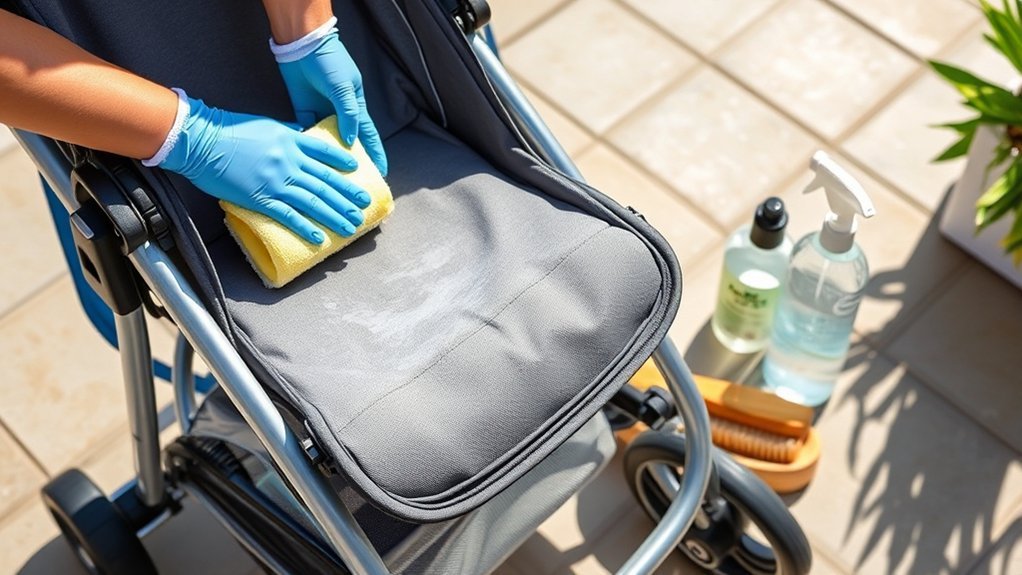
Learning how to deep clean a stroller helps remove crumbs, stains, mud, and odors while keeping its moving parts in good condition. You don’t need special equipment, but you do need to follow your stroller’s care instructions. I’ll walk you through cleaning the fabric, frame, wheels, and safety components without damaging them.
Quick Answer
To deep clean a stroller, vacuum loose debris, remove washable fabric parts, and clean them according to their care labels. Wipe the frame and wheels with mild soapy water, then inspect the brakes, harness, and moving parts. Lubricate only where the manufacturer recommends. Let everything dry completely before reassembling and using the stroller.
At a Glance
| Difficulty | Beginner-friendly for routine cleaning; repairs may require professional help |
| Tools Needed | Stroller manual, vacuum, mild detergent, soft brush, sponge, clean cloths, and water |
How to Deep Clean a Stroller: Gather Your Supplies

Start by gathering your cleaning supplies and finding your stroller’s instruction manual. Having everything ready makes the job easier and reduces the chance of using a cleaner that damages the fabric or frame.
Your manual is especially useful because cleaning instructions vary by model. Some strollers have removable, machine-washable covers, while others require hand washing or spot cleaning.
What Supplies Do You Need?
Gather these basic items before you begin:
- Stroller manual: For fabric care, disassembly, and maintenance instructions.
- Handheld vacuum: For crumbs, dust, and loose debris.
- Mild dish soap or laundry detergent: Use whichever cleaner your stroller manufacturer allows.
- Soft toothbrush or cleaning brush: For seams, wheel crevices, and small gaps.
- Soft sponge: For gently cleaning fabric and plastic surfaces.
- Microfiber cloths or clean rags: For wiping, rinsing, and drying.
- Small bowl or bucket: For mixing mild soapy water.
- Clean towels: For absorbing excess moisture.
- Silicone-based lubricant: Only if your stroller’s maintenance instructions recommend it.
Food-grade distilled vinegar is sometimes suggested as an eco-friendly cleaner. However, do not assume vinegar, baking soda, or other household products are suitable for every stroller material.
Use them only if the manufacturer permits them, and never mix cleaning chemicals. A gentle detergent approved for your stroller is a safer starting point than an untested homemade solution.
Step 2: Prepare the Stroller and Remove Washable Parts

Choose a well-ventilated workspace with enough room to open the stroller fully. Remove your child’s belongings and make sure the stroller is empty before cleaning.
Wear old clothes if you’re dealing with muddy wheels or stubborn stains. Then follow these preparation steps.
- Lock the stroller brakes. Place the stroller on a stable surface before removing any parts.
- Remove accessories. Take off detachable snack trays, cup holders, liners, and storage accessories according to the manual.
- Detach approved fabric components. Remove seat covers, canopy fabric, and other textile pieces only if they are designed to come off.
- Check the fabric. Look for tears, loose stitching, broken fasteners, mildew, and damaged padding.
- Inspect the chassis. Check the frame, folding joints, wheel attachments, screws, and push buttons for wear or corrosion.
- Separate removable hard inserts. Take out backboards, support ribs, or stiffeners only where the care instructions allow.
Inspect the stroller before cleaning. Finding damaged fabric, loose components, or faulty locks early helps you decide whether cleaning is enough or repairs are needed.
Do not pry rusted push buttons apart with a butter knife or force stuck mechanisms. You could damage the locking system or injure yourself.
Likewise, avoid spraying WD-40 or another lubricant directly onto zippers, buckles, or fabric without manufacturer approval. These products can leave residue and may not suit the component.
If a safety-related part is stuck, corroded, or damaged, contact the stroller manufacturer or an authorized repair service.
Step 3: Wash Stroller Textiles and Treat Mildew

Wash removable stroller fabric using the method specified on its care label. Some covers tolerate a gentle machine cycle, while others must be washed by hand.
Cleaning mildew also requires care because moisture can penetrate padded materials. Start with the least aggressive method approved for your stroller.
Prepare Stroller Fabric Before Washing
Remove loose debris before getting the fabric wet. This prevents dirt from spreading through the material during washing.
- Shake removable fabric outdoors to release crumbs and loose dirt.
- Vacuum seams, folds, pockets, and padded areas.
- Remove detachable foam inserts, backboards, and support pieces only as instructed.
- Check each fabric care label for washing restrictions.
- Spot-test an approved mild cleaner on a hidden area.
- Gently treat visible food stains before washing.
For machine-washable fabrics, use the approved cycle and detergent. For example, Bugaboo’s stroller cleaning instructions recommend a delicate cycle at a maximum of 30°C (86°F) for compatible fabrics, while identifying components that should not go in the washing machine.
That temperature is a manufacturer-specific example, not a universal setting for every stroller.
Hand-wash-only fabrics should be cleaned gently with the recommended detergent. Avoid aggressive scrubbing, twisting, or wringing padded sections.
How Do You Remove Mildew From Stroller Fabric?
For minor surface mildew, follow the fabric manufacturer’s cleaning instructions and dry the material thoroughly. However, deeply affected foam or padding may not be suitable for continued use.
The EPA’s mold cleanup guidance explains that mold can be difficult or impossible to remove completely from porous materials.
If you find mildew, follow these precautions:
- Move the stroller to a ventilated area. Keep your child away from affected parts during cleaning.
- Inspect the affected material. Check whether growth is limited to a washable surface or has reached the padding.
- Use approved cleaning products. Follow the stroller’s fabric care instructions rather than applying an improvised bleach mixture.
- Remove detergent residue. Rinse or wipe the material as directed by the care label.
- Dry the fabric completely. Check seams and padding for trapped moisture.
- Inspect again. If visible growth or a musty odor remains, stop using the affected component and ask the manufacturer about replacement.
Warning: Do not routinely use diluted chlorine bleach on stroller fabrics. Many manufacturers specifically prohibit bleach because it can damage materials. Never mix bleach with vinegar, ammonia, or other cleaning products. If mold has penetrated padding or cannot be fully removed, replacement may be safer than repeated cleaning.
If you’re unsure whether a mold-affected seat or liner can be restored, contact the manufacturer before putting your child back in the stroller.
How Should You Dry Stroller Textiles?
Air drying is generally the preferred method for stroller fabrics. It helps reduce the risk of heat damage, shrinkage, and distorted padding.
I learned the hard way that using a dryer can leave stroller cushions misshapen. That’s why I recommend checking the care label before applying heat.
For effective drying:
- Gently remove excess water with a clean towel.
- Lay fabric flat or hang it, depending on the manufacturer’s instructions.
- Choose a well-ventilated, shaded location.
- Keep delicate fabrics away from radiators and other direct heat sources.
- Check thick padding, seams, and folds for remaining moisture.
- Wait until every component is completely dry before storage or use.
Leaving damp fabric folded inside a stroller can encourage mildew growth. If the weather is humid, give the material enough ventilation to dry fully.
Step 4: Clean the Stroller Frame and Remove Stubborn Dirt
Clean the stroller chassis with a soft cloth, mild detergent, and water. Focus on dirt around joints, wheel mounts, handles, and folding mechanisms without soaking the frame.
Start by removing sand and grit with a soft brush. Then wipe the metal and plastic surfaces with a damp cloth.
- Remove loose dirt. Brush sand and dried mud away from exposed frame surfaces.
- Wipe the chassis. Use a cloth dampened with mild soapy water.
- Clean tight spaces. Use a soft toothbrush around wheel mountings and small crevices, brushing dirt away from sliding joints.
- Remove oily residue. Wipe affected surfaces with a clean cloth and a manufacturer-approved cleaner.
- Treat scuff marks gently. Try a soft, damp cloth before considering another approved cleaning method.
- Dry the frame. Wipe all accessible metal and plastic surfaces with a clean towel.
Avoid directing a strong hose spray into bearings, joints, brakes, or enclosed mechanisms unless your manual specifically allows it.
How Do You Handle Rust on a Stroller Frame?
Rust requires a different approach from ordinary dirt. Light surface discoloration may be cosmetic, but corrosion around locks, fasteners, wheel mounts, or load-bearing parts needs careful inspection.
Avoid using abrasive sponges, aluminum foil, strong acidic pastes, or metal scraping tools without approval. They may scratch protective finishes and expose more metal to moisture.
The UPPAbaby cleaning and maintenance guidance recommends mild detergent, thorough drying, and prompt attention to worn or damaged components.
It also advises rinsing saltwater exposure with fresh water to reduce corrosion.
If rust affects a structural component or moving safety mechanism, don’t rely on cleaning alone. Have the affected part assessed and replaced if necessary.
Step 5: Inspect and Lubricate the Stroller Chassis
Regular chassis maintenance helps the stroller fold, steer, and roll as intended. After cleaning, inspect its moving components and apply lubricant only where the manufacturer recommends it.
Start by checking the frame for loose fasteners, cracks, worn joints, and damaged locking mechanisms.
Inspect the Frame and Moving Parts
Look for the following problems:
- Loose or missing screws and fasteners.
- Cracked, bent, or corroded frame components.
- Folding mechanisms that stick or fail to lock securely.
- Unusual wheel movement or excessive wobbling.
- Damaged brake mechanisms or release buttons.
- Worn harness attachments and loose connections.
Tighten only user-serviceable fasteners according to the manual. Do not attempt to repair rivets, structural joints, or damaged locks with household tools.
What Lubricant Should You Use?
Some stroller manufacturers recommend a light application of silicone-based lubricant to approved moving parts.
For example, Chicco’s stroller maintenance guidance advises lubricating moving parts only when necessary and keeping the mechanisms free of dust and sand.
To lubricate approved parts safely:
- Clean dirt and grit from the moving component.
- Let the area dry before applying lubricant.
- Use the lubricant specified in your stroller manual.
- Apply a small amount to the permitted location.
- Move the component gently to check its operation.
- Wipe away excess lubricant with a clean cloth.
Keep lubricants away from brakes, fabric, harness straps, buckles, and surfaces your child may touch.
Avoid applying thick grease or general-purpose oil unless the manufacturer specifically calls for it. Excess lubricant can collect dirt and interfere with moving parts.
Pro Tip: If a stroller wheel or joint starts squeaking, remove trapped sand and hair before adding lubricant. Dirt buildup may be the problem, and lubrication alone will not remove it.
Step 6: Clean Fixed Fabric, Harness Straps, and Buckles
Not every stroller fabric component can be removed or machine-washed. Fixed seat covers, canopies, harness straps, and padded sections often need careful spot cleaning.
Use a soft cloth or sponge with mild soapy water and avoid soaking the material.
How to Spot-Clean Non-Removable Fabric
- Vacuum loose crumbs and dust from the fabric.
- Mix a small amount of approved mild detergent with water.
- Test the solution on an inconspicuous area.
- Gently clean stains with a sponge or soft brush.
- Remove soap residue with a clean, damp cloth.
- Allow the fabric to air dry completely.
For example, Britax’s stroller cleaning instructions recommend gently cleaning seating fabric with mild soap and water rather than removing it for machine washing.
Cleaning Harness Straps and Buckles
Harness straps and buckles are safety components, so they need gentle treatment. Harsh chemicals, excessive soaking, or improper reassembly may affect their performance.
For routine cleaning:
- Wipe harness straps with a damp cloth and approved mild soap.
- Use a soft brush to remove surface dirt around strap guides.
- Clean buckle surfaces according to the manual.
- Remove loose crumbs from accessible buckle openings without forcing objects inside.
- Avoid bleach, strong solvents, and unapproved fabric treatments.
- Let the straps dry completely before using the stroller.
Do not soak or lubricate buckles unless the manufacturer specifically instructs you to do so.
After cleaning, check that the buckle clicks securely into place and releases normally. Replace damaged straps, buckles, or related parts using the manufacturer’s approved components.
Step 7: Clean Stroller Wheels and Check Their Movement
Stroller wheels collect mud, sand, hair, and small debris during everyday use. Cleaning them helps maintain smooth rolling and makes wheel problems easier to spot.
Use a damp cloth and soft brush to remove dirt from the tire surfaces, spokes, wheel hubs, and exposed axle areas.
How to Maintain Stroller Wheels
Inspect stroller wheels after muddy, sandy, or wet outings. Pay attention to debris wrapped around axles and dirt trapped near the wheel mounts.
- Lock the brakes. Keep the stroller stable before working on the wheels.
- Remove loose debris. Brush away dried mud, gravel, and sand.
- Wipe each wheel. Clean the tire surface, spokes, and accessible crevices.
- Inspect the axle area. Remove visible hair and dirt without damaging seals or bearings.
- Detach removable wheels if needed. Follow the manufacturer’s wheel-removal procedure.
- Check wheel condition. Look for cracks, flat spots, loose attachments, and excessive wear.
- Dry the components. Remove moisture before reinstalling detachable wheels.
If your stroller has air-filled tires, check their condition and inflation against the pressure specified for that model.
For wheels that swivel, confirm they turn freely after cleaning. A wheel that repeatedly jams or wobbles may need repair or replacement.
How to Lubricate Stroller Wheel Axles
Wheel lubrication can reduce squeaking and friction on models designed for it. However, not every wheel assembly requires lubrication.
Follow these steps only if your stroller’s manual permits axle lubrication:
- Remove dirt from the axle and surrounding area.
- Make sure the wheel assembly is dry.
- Apply a light amount of the recommended lubricant to the specified point.
- Rotate the wheel to confirm smooth movement.
- Wipe away excess product.
- Check that the wheel remains securely attached.
Do not spray lubricant onto brake contact surfaces or apply excessive amounts to enclosed bearings.
If cleaning and approved lubrication do not resolve sticking or squeaking, inspect the assembly for wear rather than repeatedly adding more lubricant.
Step 8: Air Dry and Reassemble the Stroller
Let all stroller components dry completely before reassembly. Moisture trapped beneath seat covers, inside padding, or around metal connections can encourage mildew and corrosion.
Spread removable fabric pieces in a ventilated area, following their care labels. Keep the frame open until its joints and hidden surfaces are dry.
How to Reassemble the Stroller Safely
Once the parts are dry, follow the manufacturer’s assembly instructions in the correct order.
- Confirm that all washable fabric components are completely dry.
- Reinstall removable support boards, ribs, and padding as instructed.
- Secure the seat fabric and canopy to their original attachment points.
- Reattach any wheels removed for cleaning.
- Reconnect approved accessories and storage components.
- Check that the harness straps are routed correctly and are not twisted.
- Confirm that all required locks and attachments engage securely.
Final Stroller Safety Checklist
Cleaning is also a good opportunity to check the stroller’s essential safety features.
The American Academy of Pediatrics’ stroller safety recommendations emphasize proper brake use, secure folding locks, and correctly fitted harnesses.
Before putting your child in the stroller, check that:
- The stroller opens fully and locks into position.
- The parking brake engages and releases correctly.
- The wheels roll freely and remain securely attached.
- The harness fastens and adjusts correctly.
- The folding mechanism operates without unexpected movement.
- No screws, fasteners, or safety components are loose or missing.
- No cleaning residue or excess lubricant remains on accessible surfaces.
- No damp fabric or padding remains inside the stroller.
Keep your child away from folding hinges while opening or closing the stroller. Do not use it if the frame, brakes, harness, or locking system is damaged.
Store your clean stroller in a cool, dry, well-ventilated place. Avoid damp storage areas and folding the stroller while it is still wet.
When Should You Consider Professional Stroller Cleaning?
Professional stroller cleaning may be useful for stubborn stains, persistent odors, or extensive dirt buildup. It can also help when you lack the space or equipment for a thorough cleaning.
However, professional cleaning is not a substitute for repairing damaged safety components or replacing deeply mold-affected padding.
Here’s how different cleaning services compare:
| Service Type | Benefits | Considerations |
|---|---|---|
| Local Cleaning Service | May offer general stroller deep cleaning and stain removal | Confirm experience with baby gear and check customer reviews |
| Specialized Service | May handle difficult stains, odors, and detailed cleaning | Ask about fabric care, safety components, and manufacturer compatibility |
| Eco-Friendly Options | May offer mild or lower-odor cleaning products | Eco-friendly labels alone do not guarantee compatibility or safety |
| In-home Services | Convenient cleaning without transporting the stroller | Availability, equipment, and drying arrangements can vary |
Before hiring a provider, ask which cleaning products they use, whether they follow the stroller manufacturer’s instructions, and how they handle removable fabric, harnesses, and buckles.
For serious corrosion, damaged folding mechanisms, broken brakes, or structural problems, contact the manufacturer or an authorized repair specialist instead.
Note: If you cannot confidently restore a stroller’s safety features after cleaning, stop using it until the manufacturer or a qualified repair professional has assessed the problem. A clean stroller is not necessarily a safe stroller if its structural or restraint components are damaged.
Key Takeaways
- Removable stroller fabrics are not automatically machine-washable. Always follow the care label for each component.
- Mild soap and a soft cloth are appropriate starting points for many frame and fabric surfaces, while abrasive cleaners can cause damage.
- Mold that has penetrated padded material may require component replacement rather than repeated washing.
- Silicone lubrication should be used sparingly and only on moving parts approved by the stroller manufacturer.
- Check the brakes, folding locks, wheel attachments, and harness after reassembly, before your child uses the stroller.
Frequently Asked Questions
How Often Should I Deep Clean My Stroller?
Deep clean your stroller whenever dirt, stains, or odors build up. Once a month can be a practical reminder for frequently used strollers, but it is not a universal manufacturer requirement. Clean spills promptly and wipe down heavily soiled wheels after outings.
Can I Use Bleach on All Stroller Fabrics?
No, bleach is not suitable for all stroller fabrics. Many manufacturers specifically prohibit it because it can damage material and finishes. Use an approved mild detergent instead. Vinegar and baking soda are not automatically safe substitutes; check the care instructions before applying them.
What Should I Do if My Stroller Has a Strong Odor?
Remove the source of the odor by cleaning food residue, washing approved fabric components, and allowing everything to dry completely. Baking soda or vinegar should only be used if permitted by the care instructions. Avoid masking persistent musty odors with fabric fresheners, especially if hidden mold may be present.
Is It Safe to Machine Wash Stroller Frames?
No, stroller frames should not be placed in a washing machine. Clean the chassis with a soft cloth, mild detergent, and water as directed by the manufacturer. Dry metal components thoroughly and avoid forcing water into wheel bearings, brakes, or folding mechanisms.
How Can I Prevent Mold Growth on My Stroller?
Keep your stroller dry and store it in a well-ventilated location. Clean spills promptly and allow damp fabric, padding, and frame components to dry before folding. Avoid storing the stroller wet or sealing damp materials inside airtight covers.
How Do I Clean Stroller Harness Straps and Buckles?
Clean harness straps and buckle surfaces gently using the method approved in your stroller manual. Mild soap and a damp cloth are commonly recommended for straps. Avoid harsh chemicals and unapproved soaking or lubrication. After drying, check that every buckle fastens and releases properly.
Conclusion
Deep cleaning your stroller doesn’t have to be complicated. With mild cleaning products, careful fabric washing, and regular wheel maintenance, you can keep it fresh and comfortable for everyday outings.
The most important steps are following your stroller’s manual, drying every component completely, and checking that the brakes, harness, and folding locks work correctly.
Make cleaning part of your regular stroller maintenance, and you’ll spend less time tackling stubborn messes and more time enjoying outings with your little one.
Sources
- Bugaboo — How to Clean Your Stroller: Removable fabric care, washing temperatures, cleaning steps, and drying guidance.
- US Environmental Protection Agency — Basic Mold Cleanup Steps: Mold removal, moisture control, and limitations of cleaning porous materials.
- UPPAbaby — Cleaning and Care: Frame cleaning, corrosion prevention, fabric maintenance, and replacement of damaged components.
- Chicco — Product Care Resources: Manufacturer-specific stroller maintenance and silicone-based lubrication recommendations.
- American Academy of Pediatrics — How to Choose a Safe Baby Stroller: Brake operation, folding locks, harnesses, and stroller safety precautions.
- Britax — How to Clean a Stroller: Fixed fabric cleaning, stroller frame care, wheel inspection, and proper storage.


