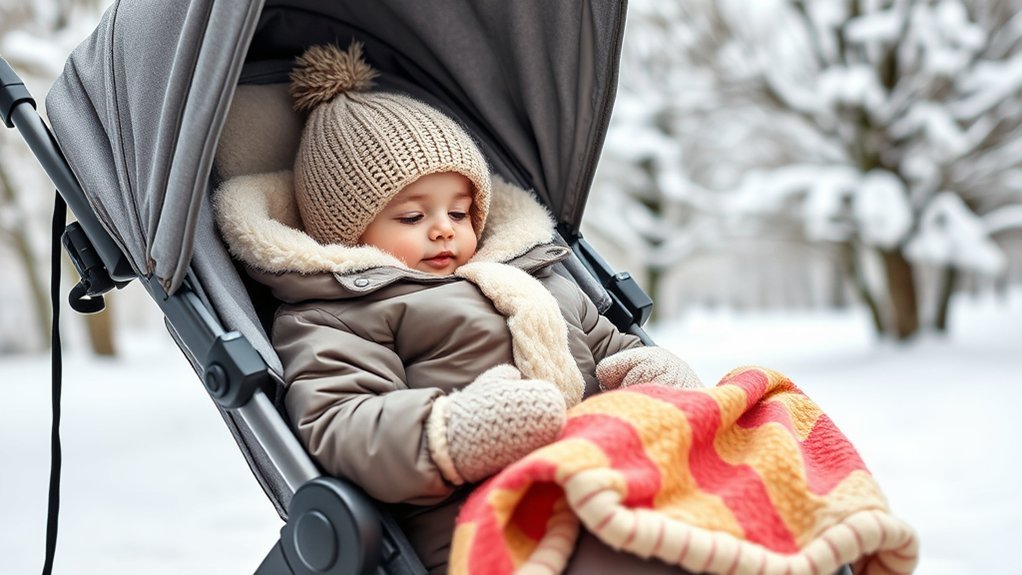
Dressing your baby for winter stroller outings is all about layers! Start with a moisture-wicking base layer, add an insulating fleece, and finish with a waterproof outer layer. Make sure all layers fit snugly but aren’t restrictive. Always check their chest or back for warmth, and adjust layers if needed. Keep an eye on signs of discomfort like fussiness or sweating. Want more tips on ensuring your little one stays cozy and safe? There’s so much more to uncover!
Understanding Baby Temperature Regulation
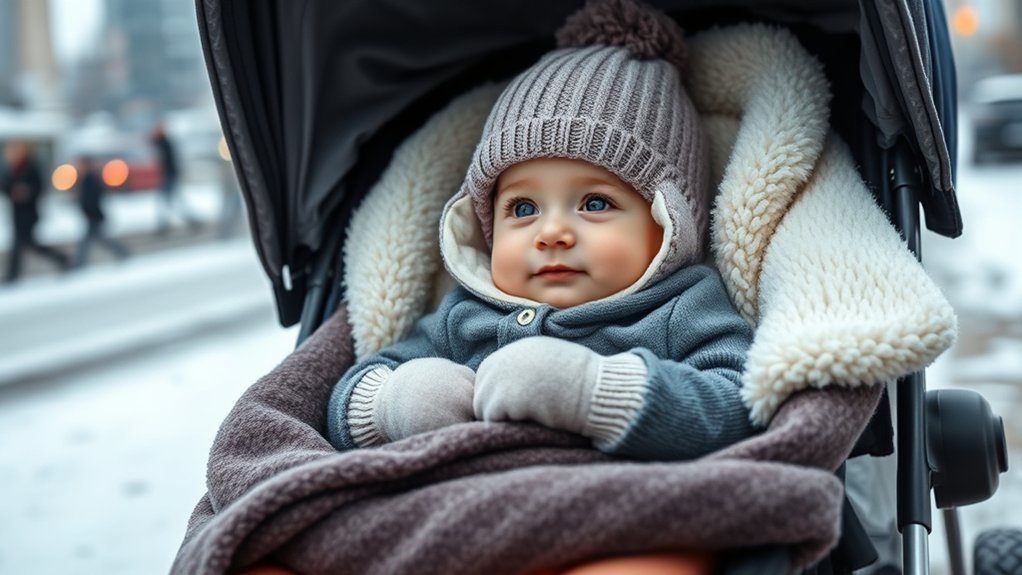
When it comes to keeping your baby warm in winter, understanding their temperature regulation is vital.
Newborns have underdeveloped thermal regulation systems, making them more vulnerable to heat loss. With their higher surface-area-to-weight ratio, they lose warmth rapidly compared to adults.
Since babies can’t shiver to generate heat in those first weeks, they rely heavily on the layers you provide for insulation. Cold stress can hinder their growth, while overheating poses risks like Sudden Infant Death Syndrome (SIDS).
Additionally, cold air can irritate their airways, complicating breathing. So, being mindful of their temperature sensitivity is significant.
Essential Layering Techniques for Winter
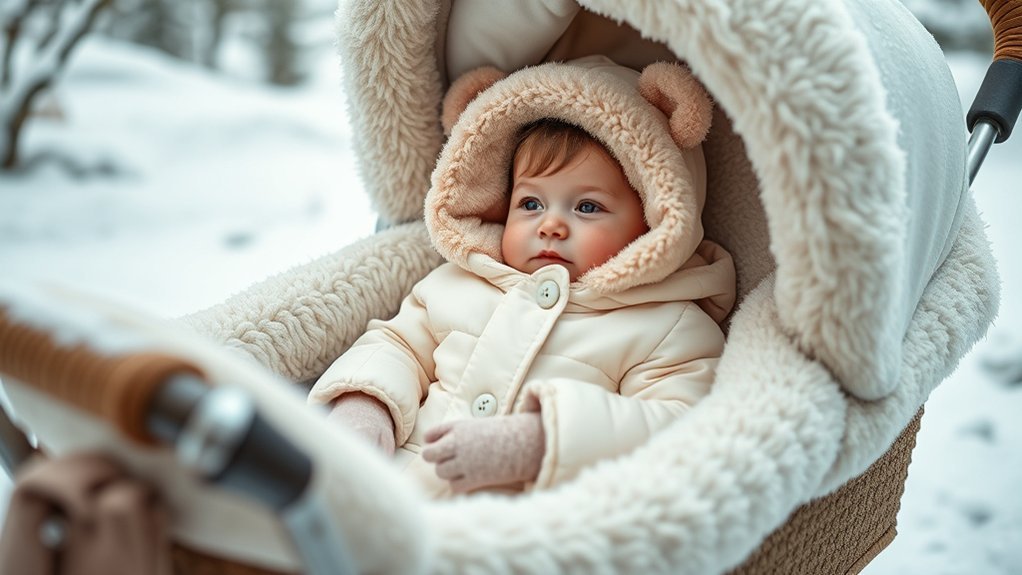
When dressing your baby for winter outings in a stroller, layering is key to keeping them cozy and comfortable.
Start with a moisture-wicking base layer to keep their skin dry, then add an insulating middle layer for warmth.
Finally, top it off with a waterproof outer layer to shield against the elements, ensuring your little one stays snug in any weather.
Base Layer Essentials
Dressing your baby for winter outings in a stroller starts with choosing the right base layer, as it plays a crucial role in keeping them warm and comfortable.
Opt for soft, breathable base layer fabrics like moisture-wicking materials that keep your baby’s skin dry. A snug base layer fit is necessary; it traps warmth while allowing easy movement.
Remember, your little one should wear one more layer than you do in similar temperatures to guarantee they stay cozy.
If you’re planning an extended outdoor adventure, steer clear of cotton as it retains moisture, which can lead to chills.
Layering smartly with breathable base layers helps regulate body temperature, making those winter outings enjoyable for both of you!
Middle Layer Options
To keep your baby warm during winter strolls, selecting the right middle layer is key. Fleece options and knit fabrics offer excellent insulation while allowing breathability, making them ideal for chilly weather.
Choose slightly looser-fitting sweaters or hoodies to trap heat and enable easy movement beneath the outer layer. This flexibility is especially useful when adjusting to indoor warmth, so make sure these layers are easy to remove if needed.
For peak comfort, consider footed pajamas or fleece sleepers as effective middle layer choices. They provide warmth and ease as you navigate changing temperatures.
Layering with these materials not only retains heat but also empowers you to adapt your baby’s outfit based on the weather, guaranteeing cozy outings all winter long.
Outer Layer Protection
After guaranteeing your baby has a cozy middle layer, it’s time to focus on the outer layer, which acts as the first line of defense against winter’s chill.
Look for outerwear options made from windproof and waterproof materials, like insulated snowsuits or jackets, to keep your little one snug. Choose pieces that fit securely around the stroller harness to guarantee safety without the bulk.
Features like adjustable cuffs and hoods add extra coverage and adaptability to changing temperatures. Don’t forget winter accessories like mittens and hats to protect those tiny extremities!
Regularly check your baby’s temperature by feeling their chest or neck, confirming the outer layer provides warmth without overheating.
Keep your baby cozy and safe this winter!
Choosing the Right Materials for Baby Clothing
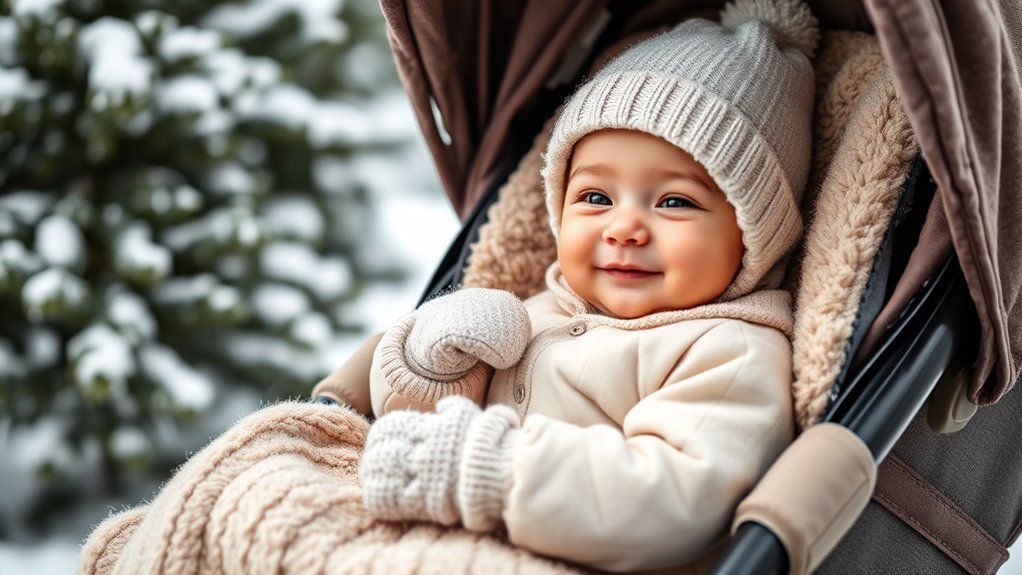
When dressing your baby for winter, the choice of fabric can make all the difference.
You’ll want to balance breathability and insulation, so consider both natural and synthetic options to keep your little one cozy and dry.
Let’s explore how the right materials can keep your baby comfortable during those chilly stroller rides.
Natural vs. Synthetic Fabrics
Choosing the right materials for your baby’s winter clothing can make a significant difference in their comfort and warmth.
Natural fabrics like cotton, merino wool, and bamboo offer great fabric benefits, being breathable and gentle on your baby’s sensitive skin. Merino wool excels in temperature control, keeping your little one warm without the risk of overheating.
On the other hand, synthetic fabrics like polyester and nylon are durable and quick-drying, perfect for outer layers like snowsuits that guard against wind and water. While they may be budget-friendly and moisture-wicking, they often lack the comfort of natural fibers.
For the best winter experience, opt for natural materials for base layers and synthetic options for outer layers.
Breathability and Insulation Balance
To keep your baby comfortable during winter outings, it’s essential to find the right balance between breathability and insulation in their clothing.
Start with breathable fabrics like merino wool or bamboo for base layers; they help regulate moisture and keep your baby’s skin dry. For middle layers, choose insulation types like fleece, which provide warmth without bulk, ensuring mobility.
Don’t forget an outer layer that’s windproof and water-resistant to shield against harsh elements while remaining easy to remove indoors to prevent overheating.
Avoid cotton for outdoor base layers, as it retains moisture, leading to discomfort.
Layering these materials effectively allows for temperature regulation, making adjustments based on changing weather a breeze.
Happy winter strolling!
Age-Specific Dressing Tips for Winter
Dressing your baby for winter can feel like a challenging task, especially with their ever-changing needs at different ages. Here are some age-specific tips to keep your little one cozy and safe in their stroller:
- Newborns (0-3 months): Use soft cotton bodysuits topped with fleece sleepers and a warm knit hat. This helps retain heat and guarantees comfort.
- Infants (3-12 months): Opt for easy-snap or zippered outfits for quick diaper changes, along with insulated footmuffs and waterproof mittens as essential winter accessories.
- Older Babies (12 months+): Dress them in layers—moisture-wicking base, insulating fleece, and a water-resistant outer layer—ensuring snug fit for stroller safety without bulkiness.
Always check their temperature by feeling their chest or back to adjust layers as needed!
Preparing Your Stroller for Cold Weather
As the temperatures drop, preparing your stroller for cold weather becomes essential for keeping your baby warm and comfortable during outings.
Start by equipping your stroller with a weather shield to guard against wind, rain, and snow, ensuring a cozy environment for your little one.
Pre-warming the stroller indoors helps ease the shift from the warmth of home to the chilly outdoors.
Don’t forget to add stroller accessories like a fleece-lined footmuff or bunting bag that fits securely around the harness system for added insulation.
Layer your baby’s clothing wisely, beginning with moisture-wicking base layers and finishing with a waterproof outer layer.
Regularly check your baby’s chest and neck to make sure they’re just the right temperature.
Monitoring Your Baby’s Comfort During Outings
Once you’ve prepared your stroller for the cold, keeping an eye on your baby’s comfort during outings is vital. Monitoring baby signals can help you guarantee they’re cozy. Here are some tips to gauge their comfort:
- Check Their Chest or Neck: Regularly feel these areas to assess if they’re too hot or too cold.
- Watch for Temperature Cues: Cold hands or feet mean more layers are needed, while flushed cheeks or sweating suggest it’s time to remove one.
- Look for Skin Irritation: In extreme cold, be vigilant for any signs of distress or irritation from cold exposure.
Limiting outdoor time is essential, especially for infants, to prevent frostbite or hypothermia.
Stay attentive and adjust layers as needed!
Post-Walk Care for Your Baby
After a chilly winter stroll, taking care of your baby as they shift back indoors is essential.
Start your post-walk routine by removing their outer layers—unzip the snowsuit and take off hats and mittens to prevent overheating. Check your baby’s chest and neck to confirm their temperature is warm but not too hot. This helps them adjust comfortably to the indoor climate.
Afterward, it’s time for a feeding to help replenish energy and maintain warmth. Instead of a hot bath, gradually warm up their skin with lighter layers to ease the change.
Keep a close eye on your baby’s comfort, watching for any signs of overheating or discomfort as they adapt to their cozy environment.
Frequently Asked Questions
Can I Use a Regular Blanket Instead of a Stroller Blanket?
You can use a regular blanket, but choose one made from soft, breathable materials to guarantee baby comfort. Just make sure it’s warm enough for the winter chill while allowing for easy movement and breathability.
How Can I Tell if My Baby Is Too Cold?
You can tell your baby’s too cold by checking their temperature and looking for cold signs, like shivering, pale skin, or a fussy demeanor. Trust your instincts; keeping them cozy is essential for their comfort.
Is It Safe to Use a Car Seat Cover in the Stroller?
Yes, you can use a car seat cover in a stroller, but make certain it doesn’t interfere with car seat safety features. Always check that ventilation remains adequate for your baby’s comfort during stroller use.
Should I Dress My Baby Differently for Sunny Winter Days?
On sunny winter days, dress your baby in lightweight layers. Think breathable fabrics to keep them comfy. You want them cozy but not overheating—it’s the perfect balance for those glorious, sunlit winter strolls!
How Often Should I Check My Baby’s Temperature During Outings?
You should check your baby’s temperature every 30 minutes during outings. Regular baby temperature checks help guarantee comfort and safety, keeping your little one cozy and happy. Stay attentive and adjust clothing as needed for ideal warmth.
Conclusion
Dressing your baby for winter strolls doesn’t have to be a challenge! By layering properly and choosing the right materials, you can keep your little one cozy while you both enjoy the fresh air. Imagine this: you head out with your bundled-up baby, only to find a snowflake landing on their nose, sparking giggles that warm your heart. With the right preparation and attention, winter walks can become your favorite bonding experience. So, grab that stroller and embrace the chill!