
If you’re planning to take a stroller to the beach, opt for one designed for sand, like an all-terrain model or a dedicated beach stroller. Look for wide, large wheels (12-16 inches) and low-pressure tires to navigate soft sand easily. Features like a canopy with UPF protection and ample storage for gear are essential. Remember to prioritize comfort and safety for your little one. To discover more tips and tricks for beach outings, keep exploring!
Understanding Beach-Friendly Strollers
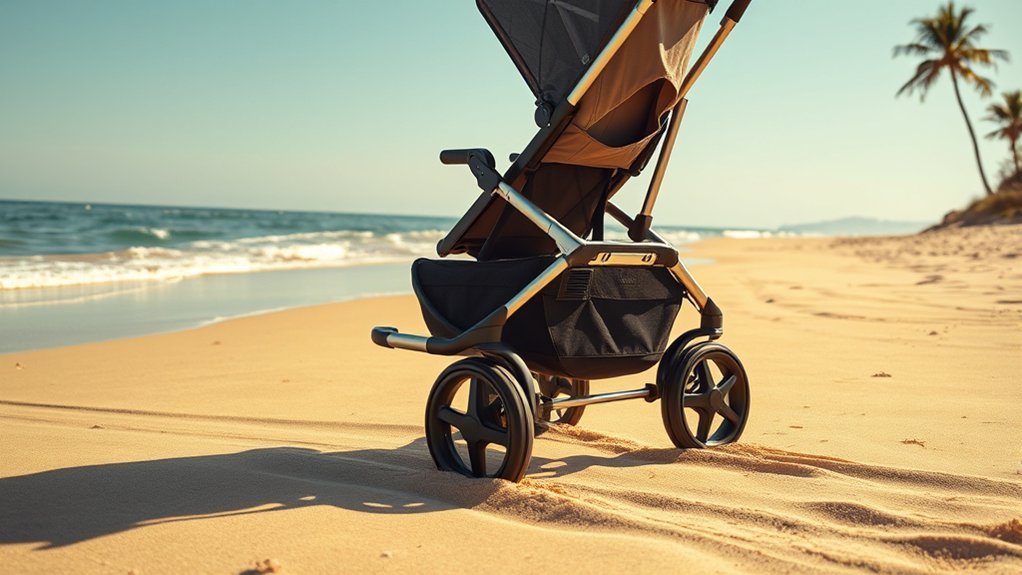
When you’re planning a day at the beach, understanding beach-friendly strollers can make all the difference in your experience. Regular strollers just can’t handle sand; their small, narrow wheels sink, making it tough to maneuver.
Instead, look for beach stroller types like dedicated beach strollers or all-terrain models. The DeBug Baby Bug, for instance, features low-pressure balloon tires that glide over soft sand, while all-terrain strollers have large, air-filled tires for ideal traction.
Look for dedicated beach strollers or all-terrain models with balloon tires for easy sand navigation.
Stroller material considerations are also essential; corrosion-resistant materials resist saltwater damage. Plus, don’t forget about comfort—ventilation features and UPF-rated canopies keep your little ones cool.
With ample storage options, you can easily haul all your beach gear, ensuring a fun-filled day by the ocean.
Choosing the Right Beach Stroller
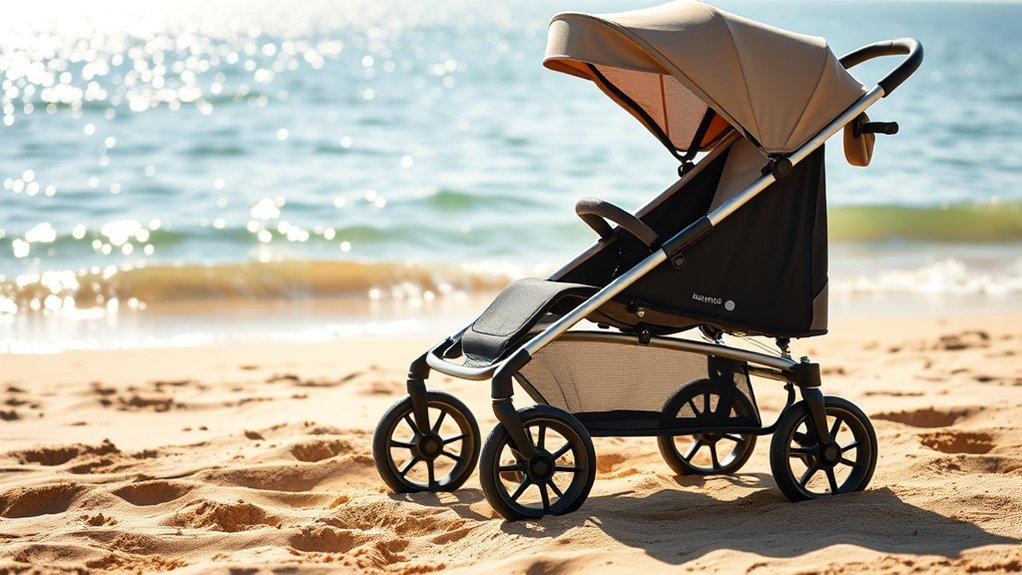
Choosing the right beach stroller can transform your seaside outings into enjoyable adventures. Start by exploring different beach stroller types; those with large, wide wheels (12-16 inches) and air-filled tires excel on soft sand.
For dedicated beach days, consider models like the DeBug Baby Bug, designed with balloon tires and corrosion-resistant materials. If versatility is key, all-terrain strollers such as the BOB Gear Revolution Flex 3.0 handle both beach and pavement effortlessly.
For families with multiple kids, stroller wagons like the Veer Cruiser XL offer higher weight capacity and ease of use on sand.
Finally, always weigh stroller weight considerations alongside your beach routine to guarantee it’s easy to maneuver during short strolls or longer treks.
Best Beach Strollers to Consider

Finding the perfect beach stroller can make all the difference in how much you enjoy your time at the shore. Here are some top picks to evaluate, based on beach stroller reviews and stroller weight limits:
Choosing the right beach stroller can significantly enhance your seaside experience.
- BOB Gear Revolution Flex 3.0: With large, air-filled tires, it handles sand effortlessly and supports kids up to 75 pounds.
- DeBug Baby Bug: This dedicated beach stroller features low-pressure balloon wheels, floating over soft sand for children up to 40 pounds.
- Veer Cruiser XL: Ideal for family outings, it accommodates multiple toddlers and gear, with a generous weight limit of 220 pounds.
- UPPAbaby Minu V2: Lightweight and travel-friendly, it weighs just 17 pounds, perfect for packed sand near the water.
Choose wisely, and enjoy your beach adventures!
Challenges of Using a Stroller on Sand
Using a stroller on sand can be tougher than you might think, especially if you have narrow wheels that sink into the loose terrain.
Shifting from a paved path to soft sand can turn into a workout, as many strollers aren’t built for that kind of change.
To make your beach trips easier, consider the importance of wheel design and opt for strollers that can handle those sandy challenges.
Wheel Design Matters
When you head to the beach with a stroller, wheel design plays an essential role in your experience. Choosing the right wheel size and type can make all the difference in stroller stability and ease of navigation through sand.
Consider these key factors:
- Larger Wheels (12-16 inches): Better traction and floatation on sandy surfaces.
- Wide, Air-Filled Tires: Distribute weight evenly, reducing the effort needed to push.
- Three-Wheel Design: Enhanced maneuverability, especially on uneven beach terrain.
- Corrosion-Resistant Materials: Protects your stroller from salt and sand buildup, ensuring longevity.
Opting for an all-terrain stroller can liberate you from the hassle of sinking wheels, allowing you to enjoy your beach day with ease!
Transitioning Surfaces Challenge
Maneuvering the shift from a sturdy boardwalk to loose sand can be frustrating, especially with a stroller in tow. To conquer this change, consider stroller adaptations that enhance sand navigation.
Opt for strollers with wide wheels; they glide more easily over soft surfaces compared to their thinner counterparts, which tend to sink. Heavier strollers can offer stability on uneven terrain, but don’t forget that lighter models are easier to transport.
Air-filled tires are a game-changer for smooth rides, though they require regular maintenance to avoid punctures. Remember, pushing a stroller through soft sand can be labor-intensive, so plan ahead.
With the right gear, you can enjoy beach outings without the hassle of struggling against the sand.
Essential Features for Beach Strollers
Choosing the right beach stroller can make all the difference in your seaside adventures.
Selecting the perfect beach stroller is crucial for an enjoyable and hassle-free day at the shore.
You’ll want a stroller that’s not just stylish, but also functional and safe. Here are essential features to look for:
- Large, Wide Wheels: Opt for 12-16 inch wheels with real tread for better grip on sand.
- Air-Filled Tires: These provide superior cushioning and traction compared to foam-filled options.
- Safety Features: A five-point harness and reliable brakes are non-negotiable for your child’s security.
- Canopy with UPF 50+: Guarantee protection from the sun, while ventilation panels keep things breezy.
Maintenance Tips for Beach Strollers
To keep your beach stroller in top shape, regular maintenance is key, especially after a day of fun in the sand and surf.
Start with stroller cleaning—rinse it thoroughly to wash away salt and sand, which can cause corrosion over time. Check the wheel bearings and brake linkages for any salt intrusion, ensuring everything operates smoothly.
Dry your stroller completely, paying special attention to wheels and metal joints to prevent rust. Store it in a dry place to avoid mildew, and consider using protective covers when it’s not in use.
Opt for strollers with aluminum frames or stainless-steel hardware, as they’re more resistant to the harsh beach environment.
Enjoy those sunny days worry-free!
Baby Beach Essentials for a Successful Outing
When you’re heading to the beach with your baby, having the right essentials can make all the difference.
You’ll want to pack sun-safe clothing, effective sun protection, and gear that keeps your little one comfortable.
Let’s explore the must-haves that will guarantee a fun and safe outing for both of you!
Essential Beach Clothing Items
As you prepare for a day at the beach with your little one, having the right clothing items can make all the difference in ensuring a fun and safe outing.
Focus on these essential beach attire pieces to promote water safety and comfort:
- UV-Protective Swimsuit: Choose lightweight, breathable fabrics that block up to 98% of harmful rays.
- Wide-Brimmed Sun Hat: A hat with UPF protection shields your baby’s face and neck from direct sunlight.
- Swim Diapers: These are a must for containing messes and keeping your baby comfortable in the water.
- Baby Sun Tent: Set up a shaded area for naps and play, providing protection from the sun and wind.
With these essentials, you’re all set for a memorable beach day!
Sun Protection Must-Haves
After dressing your little one in the right beach attire, it’s time to focus on keeping them protected from the sun’s harsh rays.
Start with sun safety strategies like using a stroller that features a large canopy made from UPF-rated fabric, ideally with a UPF of 50+.
Apply a water-resistant, reef-safe sunscreen on exposed skin, reapplying every two hours or after swimming.
Lightweight, breathable clothing with long sleeves and a wide-brimmed hat offers added defense.
Consider beach shade solutions like a baby sun tent for extra protection while your little one rests away from direct sunlight.
Don’t forget swim diapers for mess-free water play—ensuring you both enjoy a stress-free beach outing!
Gear for Comfort
To guarantee a comfortable and enjoyable beach outing with your little one, having the right gear is essential. Investing in baby comfort guarantees everyone has a great time.
Here are four must-have items:
- UV-resistant clothing: Dress your baby in lightweight, breathable fabrics and a wide-brimmed hat to shield them from the sun.
- Water-resistant sunscreen: Apply reef-safe sunscreen on exposed skin, reapplying every two hours, especially after swimming.
- Baby sun tent: This provides a shaded area for your little one to relax and play, keeping them cool.
- Swim diapers: These prevent leaks, guaranteeing a worry-free experience while enjoying beach activities.
Don’t forget to pack lightweight toys to keep your baby entertained while using stroller accessories for added convenience!
Frequently Asked Questions
Can I Use a Regular Stroller on Sand?
You can use a regular stroller on sand, but it’s tough. Consider beach stroller alternatives with sand-resistant features for better maneuverability, making your outing more enjoyable and freeing you to explore without frustration.
How Do I Clean Sand off My Stroller?
To clean sand off your stroller, shake it out like a beach towel, then wipe surfaces with a damp cloth. Regular maintenance keeps it in shape, freeing you from the hassle of stubborn sand buildup.
What Weight Limit Should I Consider for Beach Strollers?
When choosing a beach stroller, consider toddler weight specifications; typically, most beach strollers support up to 50 pounds. Always check the manufacturer’s guidelines to guarantee safety and comfort for your little adventurer.
Are There Strollers Designed Specifically for Infants on Sand?
Yes, some strollers are designed specifically for infants on sand. Look for beach stroller features like larger wheels and enhanced suspension. Always prioritize infant safety considerations to guarantee your little one enjoys a smooth ride.
How Can I Secure My Stroller in Windy Conditions?
To secure your stroller in windy environments, use wheel locks for added stability, and consider placing a heavy bag or backpack in the storage area. This’ll help you enjoy your outing without worrying about strong gusts.
Conclusion
With the right beach stroller in hand, you can turn sandy outings into memorable adventures. By understanding the essential features and challenges, you’ll be well-equipped to navigate the dunes with ease. Remember, a little preparation goes a long way—like packing sunscreen for yourself and your little one. So, grab your gear, hit the beach, and let the waves of joy wash over you as you create lasting memories together!


