To sanitize a secondhand stroller, start with a full safety check, then remove loose crumbs, dust, and all detachable fabric parts. Wash fabric only according to the stroller manual, clean straps by hand if they are not removable, and wipe hard surfaces with mild soap and water before disinfecting high-touch areas. Let every part dry completely before reassembling the stroller so mold, mildew, and trapped moisture do not become a new problem.
Quick Answer
Sanitize a secondhand stroller by inspecting it for damage, checking for recalls, vacuuming debris, washing removable fabrics, wiping the frame and wheels with mild soap, disinfecting high-touch areas, and air-drying everything fully before use. Avoid bleach, harsh sprays on fabric, and soaking buckles, straps, or moving parts.
Key Takeaways
- Always inspect a used stroller and check for recalls before cleaning or using it.
- Clean first, then disinfect. Dirt, food, and sticky residue can reduce how well disinfectants work.
- Wash removable fabric only if the manual allows machine washing.
- Use mild soap and water for most parts, then disinfect high-touch plastic areas after cleaning.
- Let the stroller dry fully before reassembly to prevent mold, mildew, and odor.
At a Glance
| Time Required | 45 minutes to 2 hours, plus drying time |
| Difficulty | Easy to moderate |
| Tools Needed | Vacuum, soft brush, microfiber cloths, mild soap, warm water, baby-safe disinfectant, towels, and the stroller manual |
| Cost | Usually low if you already have basic cleaning supplies |
Preparation for Sanitizing Your Stroller
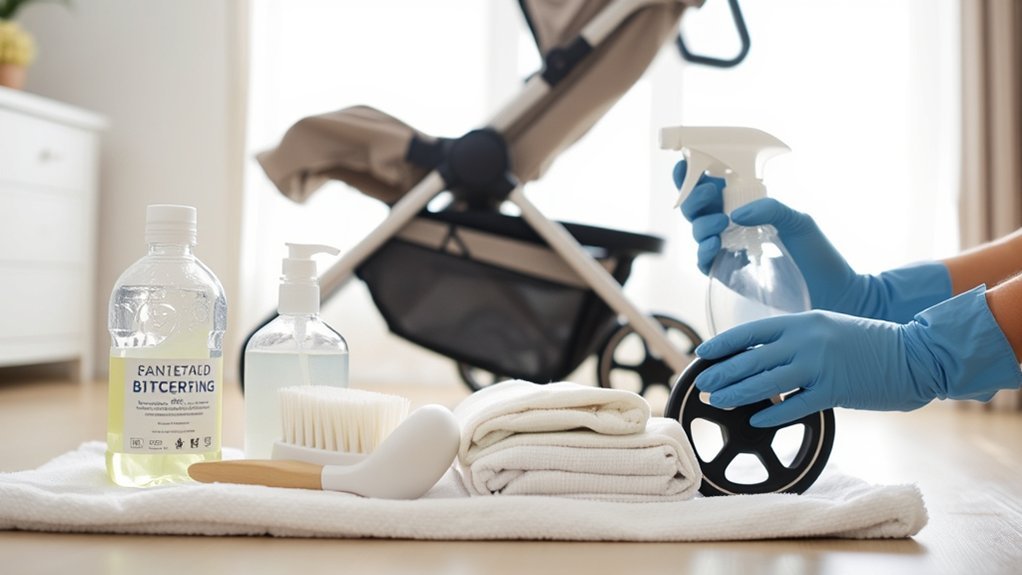
Before you plunge into sanitizing your secondhand stroller, prepare properly so the process is safe, thorough, and effective.
Start with a thorough stroller inspection. Look for broken wheels, cracked plastic, missing screws, loose rivets, weak brakes, torn fabric, frayed harness straps, rust, sharp edges, or a frame that does not lock firmly into place.
Next, find the stroller brand, model name, model number, and manufacture date. These details are usually printed on a label under the seat, on the frame, or near the rear wheel area. Use them to check the manual and look for any safety recalls before placing your child in the stroller.
Gather your cleaning supplies, including a vacuum, soft brush, microfiber cloths, gentle soap, warm water, baby-safe disinfectant spray, disinfectant wipes, and clean towels. These tools will help you clean every part of the stroller without using harsh chemicals.
Don’t forget to remove any detachable fabric components and check if they are machine washable. Remove toys, cup holders, snack trays, inserts, storage items, crumbs, and old accessories before you begin.
Finally, take a few pictures before removing parts. This makes reassembly easier and helps you remember where straps, pads, clips, and covers belong.
Warning: Do not use a secondhand stroller if the frame is bent, the brakes fail, the harness is damaged, the stroller has missing parts, or the model has an unresolved safety recall. Cleaning cannot fix structural safety problems.
Check the Manual and Recall Status First
A secondhand stroller may look clean but still have a hidden safety issue. Before deep cleaning, check the manufacturer’s manual for washing limits, fabric care, and any warnings about disinfectants, steam, bleach, or machine drying.
You should also check stroller recalls through the U.S. Consumer Product Safety Commission recall database. Search by brand and model number, not just the stroller name, because many brands sell several similar models.
If the stroller came with a car seat attachment, bassinet, or travel system component, check those items separately. A stroller frame may be fine while an attached car seat, adapter, or bassinet has different care rules or safety notices.
Note: If you cannot identify the model number or confirm the stroller’s recall status, be extra cautious. A clean stroller is not automatically a safe stroller.
Remove Loose Dirt, Crumbs, and Debris
Before adding water or disinfectant, remove dry debris. Use a vacuum with a crevice tool to clean the seat seams, storage basket, canopy folds, snack tray corners, wheel wells, and footrest area.
Use a soft brush to loosen dried mud, sand, pet hair, and crumbs. This step matters because wet cleaning can turn dry dirt into a sticky mess and push grime deeper into fabric seams.
Shake out removable pads and baskets outside if possible. Then wipe the stroller with a dry cloth so you can clearly see stains, sticky spots, and areas that need deeper cleaning.
Cleaning Fabric Components
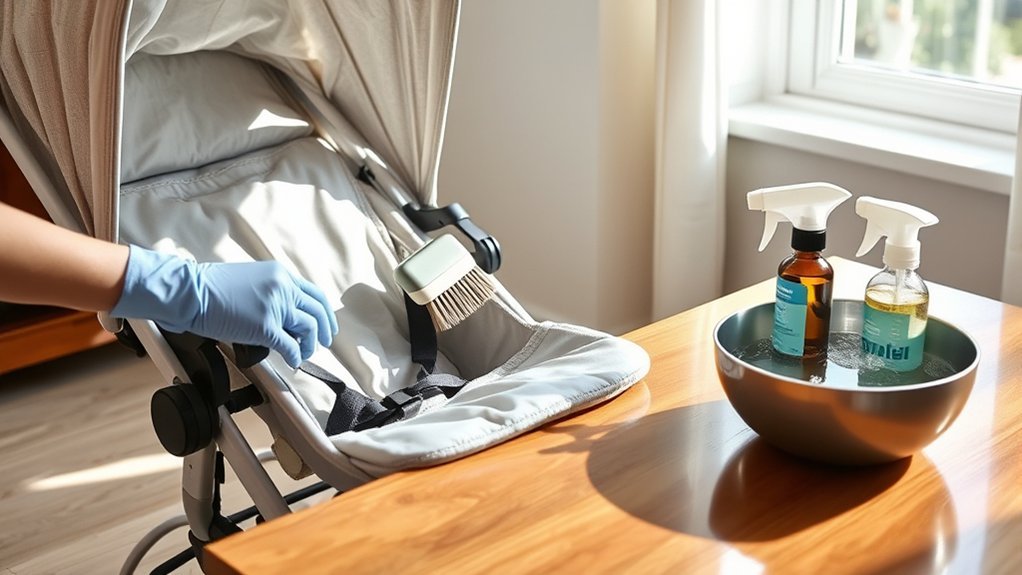
Now that you’ve prepared your stroller for a thorough cleaning, focus on the fabric components.
First, check the stroller’s manual to see if the fabrics are machine-washable. If the manual allows machine washing, use a gentle cycle, mild detergent, and cold or warm water based on the care label.
Avoid fabric softener, strong fragrance, and heavy detergent. These can leave residue that may irritate a baby’s skin or attract more dirt.
If the fabric is not machine-washable, mix a gentle solution of mild dish soap and warm water. Apply it with a washcloth or soft sponge and avoid oversaturating the padding.
For visible stains, use baby-safe stain removers and focus on food spills, milk residue, mud, and bodily fluids. Blot first, then gently scrub. Avoid aggressive rubbing because it can weaken fabric or spread the stain.
To refresh and sanitize, use a disinfectant made for children’s items only if the fabric label and stroller manual allow it. Spray lightly and evenly, then follow the product’s directions for contact time and drying.
Finally, air dry all fabric components completely before reattaching them to the stroller. Drying in direct heat, a hot dryer, or strong sunlight may shrink fabric, warp inserts, or weaken elastic.
This step prevents mildew or mold growth and keeps your stroller safer for your little one.
Pro Tip: Clean fabric on a dry, breezy day when possible. Good airflow helps the seat, canopy, and padding dry faster and reduces the chance of a musty smell.
Clean the Harness Straps and Buckles Carefully
Harness straps need special care because they help secure your child. Do not soak them unless the stroller manual clearly says it is safe. Soaking, harsh chemicals, or machine washing may weaken some straps.
Wipe straps with a damp cloth and mild soap. Work slowly along both sides of each strap, especially around shoulder pads, crotch straps, and areas where food or drool collects.
Clean buckles with a damp cloth or cotton swab. If crumbs are trapped inside, turn the buckle downward and gently shake or brush debris out. Avoid filling the buckle with water because moisture can stay inside and affect how it clicks or releases.
After cleaning, let the harness air dry fully. Then test the buckle several times to make sure it clicks, locks, and releases properly.
Sanitizing Plastic Parts
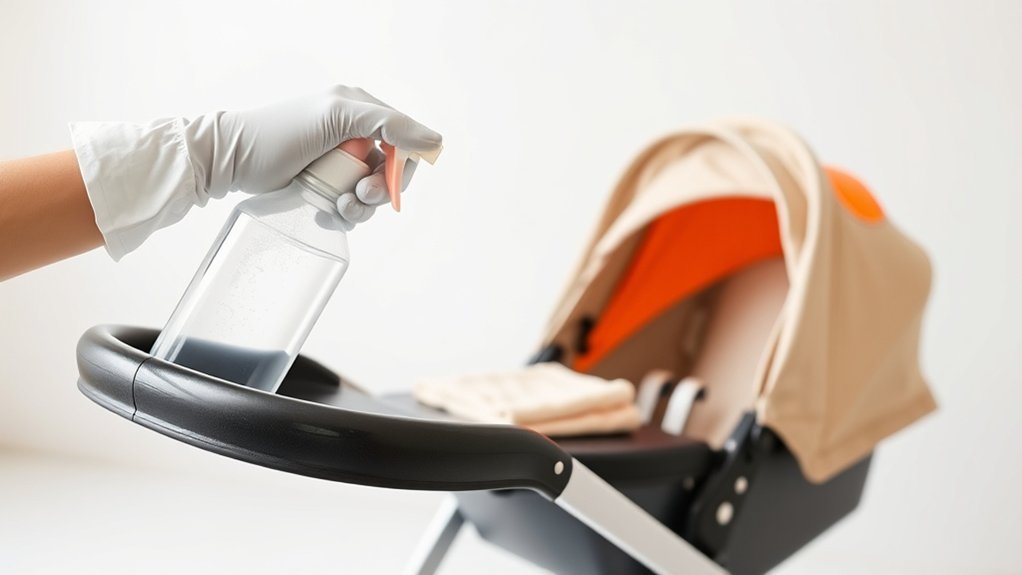
To effectively sanitize the plastic parts of your secondhand stroller, clean the surface first with mild soap and water. Disinfecting works best after visible dirt, sticky food, and grime are removed.
You can wipe plastic parts with a damp cloth and a mild soap solution. For a simple deodorizing wipe-down, mix equal parts water and white vinegar. Vinegar can help with odor and light residue, but it should not be treated as a full replacement for a registered disinfectant when you need germ-killing protection.
First, verify all plastic components are free of electronic parts to avoid moisture damage. Do not spray liquid directly into buttons, lights, speakers, battery areas, or folding joints.
Grab your cleaning tools, such as a damp cloth or sponge, and wipe down all plastic surfaces. Focus on high-touch areas like handles, snack trays, cup holders, arm bars, footrests, brake levers, folding buttons, and bumper bars.
For an extra layer of protection, consider using Lysol® Disinfecting Wipes or a multi-purpose cleaner safe for baby equipment. Follow the label directions, including how long the surface should stay wet and whether rinsing is needed before a child touches the area.
After you’ve cleaned and disinfected, allow the plastic parts to air dry completely to prevent mold and mildew growth during storage.
This simple sanitizing method helps make your stroller cleaner and safer for everyday use.
Cleaning the Wheels, Brakes, and Frame
The wheels and lower frame often carry the most dirt because they touch sidewalks, parks, parking lots, and public floors. Turn the stroller upside down or lay it on a towel so you can reach the wheels safely.
Brush away dried mud and stones from the tire tread. Wipe the wheels with warm soapy water, then clean around the axle area with a cloth or small brush. Avoid forcing water into bearings or moving joints.
Wipe the metal frame with a damp cloth and mild soap. Dry metal parts right away to reduce the chance of rust. If the stroller has squeaky wheels or stiff folding joints, check the manual before adding any lubricant.
Test the brakes after cleaning. Lock and unlock them several times and gently push the stroller to confirm the brakes hold properly.
Warning: Never use a stroller if the brakes slip, one wheel wobbles badly, or the frame does not lock open. These are safety problems, not cleaning problems.
How to Remove Odors From a Used Stroller
Secondhand strollers can hold odors from spilled milk, snacks, smoke, pets, damp storage, or old fabric. Start with vacuuming and regular fabric cleaning first. Many smells improve once crumbs and residue are gone.
If odor remains, sprinkle a small amount of baking soda on removable dry fabric parts, let it sit for a short period, then vacuum it thoroughly. Do not leave powder where your child can touch, breathe, or eat it.
Air the stroller outdoors in shade or a well-ventilated area. Avoid heavy perfumes or scented sprays because they may cover odor without removing the source and may bother sensitive babies.
What to Do if the Stroller Has Mold or Mildew
If you see mold, handle the stroller carefully. Wear gloves, clean it outdoors if possible, and keep children away during cleaning.
For light surface mildew on washable fabric, remove the fabric if the manual allows it and wash it according to care instructions. For non-removable fabric, gently clean the affected area with mild soap and water, then dry it fully in a well-ventilated place.
For plastic or hard surfaces, clean the visible mold with soap and water first, then use a disinfectant that is safe for the material. Follow the product label and dry the stroller completely.
If mold is deep inside padding, the stroller smells strongly musty after cleaning, or the fabric cannot dry fully, it may not be safe or practical to keep using that stroller.
Reassembling Your Stroller
Once all the plastic parts of your secondhand stroller are sanitized and completely dry, you can begin reassembling it.
Use the pictures you took during disassembly as reassembly tips to make certain each component goes back in the correct order.
Verify that all parts are dry to prevent mold and mildew growth. Check seams, padding, strap slots, canopy folds, cup holders, and the storage basket because these areas can hold hidden moisture.
As you reassemble, make sure all locking mechanisms and safety features are securely engaged for ideal stroller safety.
Also, double-check that all fabric components are aligned and attached properly to make certain your child’s comfort.
Reconnect the harness correctly. Pull each strap gently to confirm it is secure, then test the buckle and brake system before placing your child in the stroller.
Finally, perform a thorough inspection to confirm no parts are missing or damaged.
This diligence helps create a safe and enjoyable experience for both you and your little one.
Final Safety Check Before Use
Before the first ride, do a full function test. Open and close the stroller, lock the frame, apply the brakes, swivel the wheels, recline the seat, adjust the canopy, and test the harness.
Place gentle pressure on the handlebar and seat to check for wobbling or loose parts. Make sure the stroller does not collapse, tilt unevenly, or make unusual cracking sounds.
If the stroller has accessories such as a snack tray, cup holder, car seat adapter, bassinet, or rain cover, confirm each piece attaches securely and belongs to that exact stroller model.
Tips for Ongoing Maintenance
Maintaining your secondhand stroller is essential for ensuring its longevity and safety. Regularly vacuum the fabric and basket to eliminate crumbs and dirt, creating a clean environment for your child.
Spot clean stains promptly with baby-safe products to prevent them from setting. After each use, wipe down the stroller frame and wheels with disinfectant wipes or an all-purpose cleaner to maintain hygiene.
Store your stroller in a cool, dry place to avoid mold or mildew, especially if it has been exposed to moisture. Do not fold and store the stroller while the fabric is still damp.
Establish a cleaning schedule, aiming for a light clean weekly if you use the stroller often and a deep clean every few months. Clean sooner after illness, diaper leaks, food spills, beach trips, muddy walks, or storage in a garage.
With these tips, you’ll keep your stroller in top condition for your family’s adventures.
Common Cleaning Mistakes to Avoid
- Using bleach on fabric: It can discolor fabric, weaken fibers, and leave harsh residue.
- Soaking straps and buckles: Too much water may affect safety parts and make drying harder.
- Skipping the manual: Strollers vary, and some fabrics, inserts, and accessories need special care.
- Disinfecting before cleaning: Remove dirt first so disinfectant can work better on the surface.
- Reassembling while damp: Trapped moisture can lead to mold, mildew, and odor.
- Using strong fragrance sprays: These may irritate a child and do not truly clean the stroller.
Frequently Asked Questions
How often should I sanitize a secondhand stroller?
Sanitize a secondhand stroller before the first use, after illness, after diaper leaks or food spills, and after exposure to public places where the tray, handle, or seat may have picked up germs. For regular use, a light weekly wipe-down and a deeper clean every few months works well for many families.
Can I use bleach to clean the stroller?
You should not use bleach unless the stroller manual or care label clearly says it is safe. Bleach can damage fabric, discolor parts, weaken some materials, and leave strong residue. Mild soap, warm water, and a baby-safe disinfectant are safer choices for most stroller parts.
Are there specific products I should avoid?
Avoid bleach, ammonia, strong solvents, abrasive cleaners, heavy fragrance sprays, and any disinfectant not meant for child-contact surfaces. Also avoid spraying liquid into brakes, buckles, folding joints, batteries, or electronic parts.
How do I check for safety recalls on strollers?
Find the stroller’s brand, model number, and manufacture date on the frame label. Then search the CPSC recall database and the stroller manufacturer’s website. Check accessories separately, including car seat adapters, bassinets, and travel system parts.
What should I do if the stroller has mold?
For light surface mold, clean outdoors if possible, wear gloves, wash removable fabric according to the manual, and clean hard parts with soap and water before disinfecting. If mold is deep in the padding, keeps returning, or leaves a strong musty smell after cleaning, it may be safer to replace the stroller.
Can I pressure wash a stroller?
Pressure washing is usually not a good idea. Strong water pressure can push moisture into bearings, joints, padding, buckles, and hidden frame areas. It may also damage fabric or loosen labels. A cloth, soft brush, mild soap, and careful rinsing are safer.
How long should a stroller dry after cleaning?
Let the stroller dry until every fabric fold, strap slot, basket corner, and frame joint is fully dry. Depending on the fabric thickness and weather, this may take several hours or overnight. Do not fold or store the stroller while damp.
Sources
- U.S. Consumer Product Safety Commission Recalls — used for stroller recall-checking guidance.
- CDC Cleaning and Disinfecting Guidance — supports the clean-first, then-disinfect approach.
- EPA Pesticide Product Labels — supports following disinfectant label directions and contact time.
Conclusion
By following these straightforward steps, you can turn a secondhand stroller into a cleaner, fresher, and more comfortable space for your little one. Start with safety, check the manual and recall status, clean away dirt, wash fabric carefully, disinfect high-touch areas, and let everything dry fully before use.
Just as a gardener tends to their plants, nurturing them back to health, you’ve given your stroller a new lease on life. Regular maintenance will help it stay in tip-top shape, ready for walks, errands, and family adventures ahead. So, buckle up and enjoy the journey, knowing you’ve created a safe and sanitized haven for your child.