Navigating airport layovers with young children can be demanding, but using the right stroller transforms a chaotic connection into a manageable, comfortable journey. Beyond keeping your child rested and safe in crowded terminals, a well-chosen stroller doubles as an essential gear hauler during long waits between flights.
Quick Answer
Using a lightweight compact stroller (under 15–20 lbs) during airport layovers allows you to navigate terminals effortlessly, keep your child secure, and haul carry-on bags. Ultra-compact models meeting IATA dimensions (22 x 14 x 9 inches) fit in overhead bins, while larger strollers can be gate-checked for free right at the jet bridge.
Key Takeaways
- Choose Overhead-Compliant Strollers: Compact models folding under 22 x 14 x 9 inches eliminate baggage claim delays by fitting directly into overhead bins.
- Master TSA Screening: Collapse strollers before approaching X-ray belts; infant liquids (formula/breast milk) bypass standard 3-1-1 rules but require explicit declaration.
- Understand Gate-Check Nuances: Most airlines gate-check strollers for free, but international layovers may route gate-checked items straight to your final destination.
- Prioritize Terminal Safety: Always use terminal elevators instead of escalators when pushing a child in a stroller.
At a Glance: Layover Stroller Planning
| Target Stroller Weight | Under 15–20 lbs (6.8–9 kg) for effortless folding and transport |
| TSA Screening Time | 5–10 additional minutes for manual inspection or X-ray collapse |
| Key Requirements | 5-point harness, one-handed fold, baggage ID tag, protective gate-check bag |
| Cost | Free gate-checking on virtually all major domestic and international airlines |
Benefits of Using a Stroller During Airport Layovers
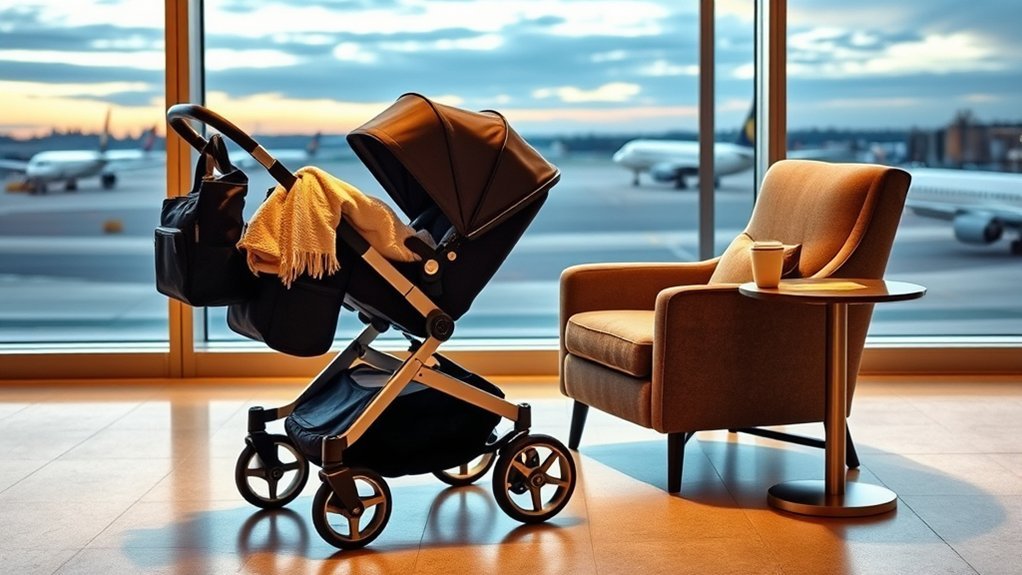
When you’re maneuvering a busy airport during an extended layover, using a stroller can greatly enhance your overall travel experience. It provides a familiar, cozy space for your little one to rest, nap, or recharge, helping to stave off irritability, sensory overload, and exhaustion during long waits between flights.
Plus, compact travel strollers are typically gate-checked for free by major carriers under standard U.S. Department of Transportation passenger guidelines. This gives you immediate access to your stroller right upon landing at your connecting gate—avoiding baggage claim hassles during layovers. Built-in accessories, like under-seat storage baskets, cup holders, and diaper bag hooks, also make managing baby travel essentials a breeze while keeping your hands free for boarding passes and passports.
With a reliable stroller, you glide through crowded terminals with ease, transforming a potentially chaotic connection into a smooth, organized journey. Embracing stroller travel grants you mobility and freedom throughout the terminal.
Choosing the Right Stroller for Travel
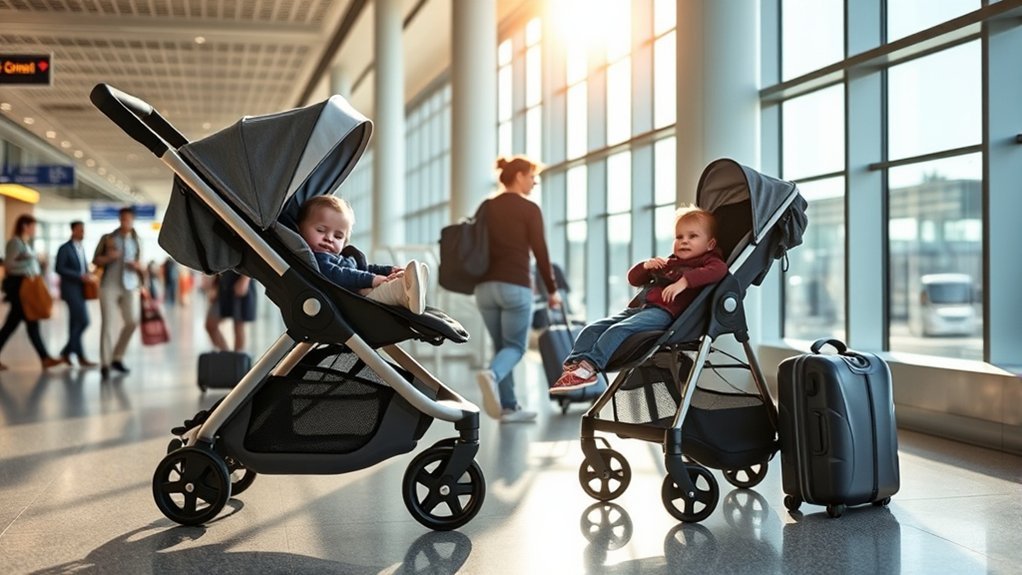
When selecting a stroller specifically for air travel and layovers, compact travel models outshine traditional full-size strollers in convenience, weight, and maneuverability.
You’ll want a lightweight option that folds quickly with one hand and meets airline carry-on size limits, ensuring you breeze through security checkpoints and airplane boarding lanes without delay.
Key safety features—such as robust five-point harnesses, reliable foot brakes, and smooth swivel wheels—are paramount for keeping your child secure across slick airport flooring.
Compact vs. Full-size Strollers
Selecting the ideal stroller for flight connections dramatically impacts your airport navigation. Compact travel strollers—typically weighing under 15 to 20 pounds and folding down to approximately 22 x 14 x 9 inches—offer massive logistical advantages. They fit directly into airplane overhead compartments on major aircraft, allowing seamless terminal transfers.
For example, modern cabin-approved strollers like the Stokke YOYO3, Ergobaby Metro+, or Bugaboo Butterfly fold compact enough to qualify as overhead carry-on baggage. This grants you immediate access the moment the cabin door opens—completely eliminating waiting on the jet bridge for gate-checked gear.
Conversely, full-size strollers present significant travel hurdles. While they offer superior suspension and large storage baskets, their bulk can complicate airport transit. Many airlines enforce strict weight limits (such as American Airlines’ 20 lb threshold) for gate-checked items; heavy full-size strollers exceeding these limits must be checked at the main ticket counter during initial check-in.
Key Features to Consider
Finding the right travel stroller goes beyond brand reputation; it centers on specific physical specs engineered for transit safety:
- Dimensions & Weight: Target ultra-lightweight frames under 18 lbs that comply with standard cabin overhead requirements (22 x 18 x 10 inches max).
- One-Hand Fold Mechanism: Essential for quickly collapsing the frame at TSA security or while holding your child on a crowded shuttle bus.
- Harness System: A secure, adjustable five-point safety harness prevents climbing or sliding during fast-paced walking.
- Wheel System & Brakes: Dual front swivel wheels and one-touch link brakes handle carpeted terminals, tile, and jet bridge inclines cleanly.
- Canopy & Recline: A deep UPF 50+ canopy shields your child from bright airport lighting, while a lie-flat recline allows restful terminal napping.
Preparing Your Stroller for Security Screening
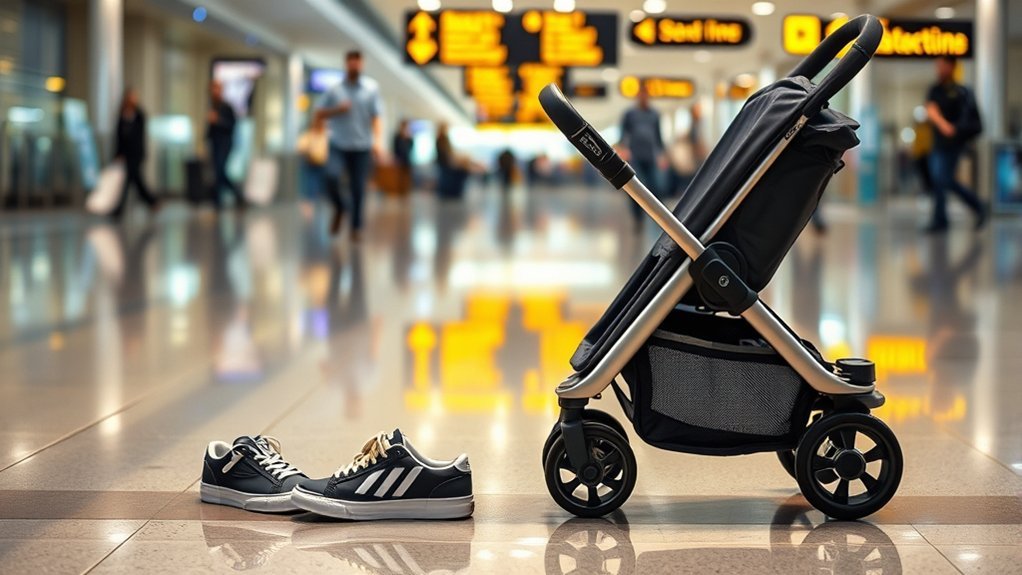
Navigating airport security with a stroller requires careful preparation to prevent delays. Under TSA Traveling with Children procedures, all strollers must undergo screening. Small compact strollers that fold down completely can be placed directly on the X-ray belt, while larger frames require visual and physical inspection by officers.
Ensure your stroller basket is fully emptied before reaching the front of the line. Remove all toys, blankets, and personal items, placing them into screening bins along with your carry-on luggage.
Pro Tip: Practice folding and unfolding your stroller with one hand at home prior to your trip. Being able to quickly collapse your frame while holding your child keeps you calm and speeds up the security line.
Inform TSA officers immediately if you are carrying infant liquids such as formula, breast milk, or juice. These items are exempt from standard 3-1-1 liquid volume restrictions but must be declared for separate testing.
Navigating the Airport Efficiently With a Stroller
Efficient terminal navigation keeps layovers low-stress. Choosing a lightweight stroller allows you to maneuver through crowded gates, food courts, and inter-terminal trains with ease.
Understanding the operational trade-offs between gate-checking your stroller and carrying it into the airplane cabin ensures a smoother layover experience.
Choosing Lightweight Strollers
When moving through expansive airport hubs, a lightweight stroller serves as your command center. Keep these tactical recommendations in mind:
- Target Low Mass: Select strollers weighing between 11 and 16 lbs for manageable lifting into overhead bins or shuttle buses.
- Elevator Safety First: Never use escalators while pushing a child in a stroller. Always locate terminal elevators to prevent tip-overs and sudden stops.
- Single-Step Foot Brake: Ensure foot brakes lock securely when pausing at boarding gates or inside train cars.
- Protective Travel Bags: Use a padded travel sleeve when gate-checking to protect fabric and wheels from grease and rough handling.
Gate-Checking vs. Cabin Storage
Deciding whether to gate-check your stroller or store it in the cabin depends on your stroller’s folded dimensions and flight itinerary.
Gate-Checking: Allows you to push your child all the way to the airplane boarding door. Upon arrival at the jet bridge, you tag the stroller and leave it for crew members to stow in the cargo hold. Upon landing, airport staff retrieve it and return it to the jet bridge.
Warning: On international layovers, gate-checked strollers are frequently checked through to your final destination rather than returned on the jet bridge at your connecting hub. Always ask your gate agent at initial check-in whether your stroller will be delivered during your layover!
Cabin Storage: Ultra-compact strollers meeting overhead dimensions bypass cargo handling entirely. This guarantees your stroller stays clean, undamaged, and immediately usable during your layover.
Strategies for Keeping Your Child Entertained
Turn tedious layover hours into engaging playtime by utilizing smart entertainment tactics within terminal spaces:
- Curate a Dedicated Travel Toy Kit: Pack compact, mess-free items like suction-cup window toys, reusable sticker pads, and coloring books in your stroller bag.
- Utilize Airport Family Play Zones: Many major airports feature gated children’s play areas where kids can burn off physical energy before the next flight leg.
- Interactive Snack Breaks: Use stroller tray attachments or portable boosters to serve snacks safely while watching planes taxi on the tarmac.
- Pre-Load Digital Media: Download educational apps or favorite videos to tablet devices equipped with child-safe volume-limiting headphones.
Tips for Checking In and Gate-Checking Your Stroller
Review your airline’s specific baggage policy before departing. Most domestic carriers adhere to standard FAA child safety suggestions and permit one stroller and one car seat to be checked free of charge per child.
Obtain a gate-check claim tag from the customer service desk at your departure gate *before* general boarding begins. Attach the bright tag securely to the stroller handle, remove all loose accessories (such as cup holders or organizers), collapse the frame, and place it in a durable travel cover right on the jet bridge.
Note: Always label your stroller frame and travel bag with a permanent luggage tag containing your name, phone number, and final destination address.
Post-Flight Considerations for Strollers and Kids
Once your flight lands at your connecting or final destination, follow these steps to retrieve your gear efficiently:
- Deplane and Wait Safely: Step to the side of the jet bridge out of passenger traffic while waiting for gate-checked strollers to be brought up from the cargo hold.
- Inspect Frame for Damage: Examine wheels, locking clips, and fabric immediately. Report any transit damage to the airline’s baggage service desk before exiting the airport.
- Keep a Secondary Carrier Ready: Carry a compact baby sling or soft-structured baby carrier in your daypack in case gate-checked items are delayed.
- Wipe Down Handles: Use antibacterial wipes to clean handlebar grips and tray surfaces after terminal use.
Frequently Asked Questions
Can I Bring a Stroller on the Plane as Carry-On Luggage?
Yes, provided the stroller is ultra-compact and folds within your airline’s maximum carry-on overhead bin dimensions (typically 22 x 14 x 9 inches). Models like the Stokke YOYO3 or Ergobaby Metro+ are designed specifically to fit standard overhead compartments.
What Size Stroller Is Best for Fitting Through Security Checks?
Lightweight umbrella or compact folding strollers that collapse completely under 10 inches high fit best on airport X-ray belts. Larger jogging or full-size strollers that cannot fit through standard conveyor belts require visual and manual inspection by TSA personnel.
Are There Restrictions on Stroller Brands or Models at Airports?
Airports do not restrict stroller brands or specific models. However, individual airlines enforce weight limits (often capping gate-checked items at 20 lbs) and folded size limits for cabin storage. Heavy strollers over weight caps must be checked at the main counter.
How Do I Clean My Stroller After a Long Travel Day?
Wipe down hard plastic frame parts, handlebars, and tray tables with disinfectant wipes or mild soapy water. Remove washable fabric seat covers according to manufacturer instructions, vacuum out crumbs from crevices, and sanitize wheel treads.
What Should I Do if My Stroller Gets Damaged During Travel?
Document the damage immediately by taking clear photos on the jet bridge or at baggage claim. File a formal Property Irregularity Report (PIR) with your airline’s baggage customer service agent before leaving the airport terminal, and retain all repair receipts or claim numbers.
Conclusion
During long airport layovers, a reliable stroller is one of the single most effective tools for keeping your child comfortable and your hands free. By choosing a lightweight, compact stroller that fits cabin overhead bins or meets gate-check requirements, you transform potentially chaotic connections into a smooth, organized journey. Prepare thoroughly for security screening, follow airline gate-check policies, and prioritize child safety in crowded terminals to enjoy a stress-free travel experience from takeoff to landing!
Sources
- Transportation Security Administration (TSA) — Official guidelines for traveling with children, strollers, and infant liquid screening rules.
- Federal Aviation Administration (FAA) — Safety regulations and recommendations for child restraint systems and air travel with infants.
- U.S. Department of Transportation — Consumer information on airline baggage policies and gate-check procedures.