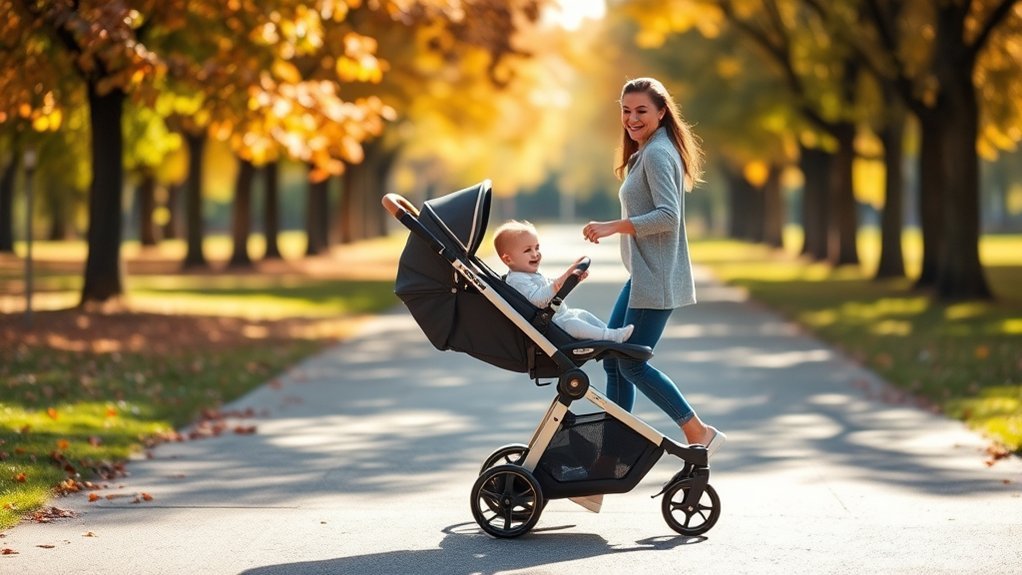
To guarantee stroller rain cover safety, choose a high-quality cover made from transparent, waterproof, non-toxic materials. Secure the cover properly to your stroller, making sure it fits snugly and doesn’t obstruct harness systems. Regularly inspect for damage, clean it after each use, and monitor your child’s comfort to prevent overheating. Opt for covers with ventilation and visibility features. By following these tips, you can keep your child safe and comfortable during wet weather; there’s more to discover on ideal usage.
Understanding Stroller Rain Covers
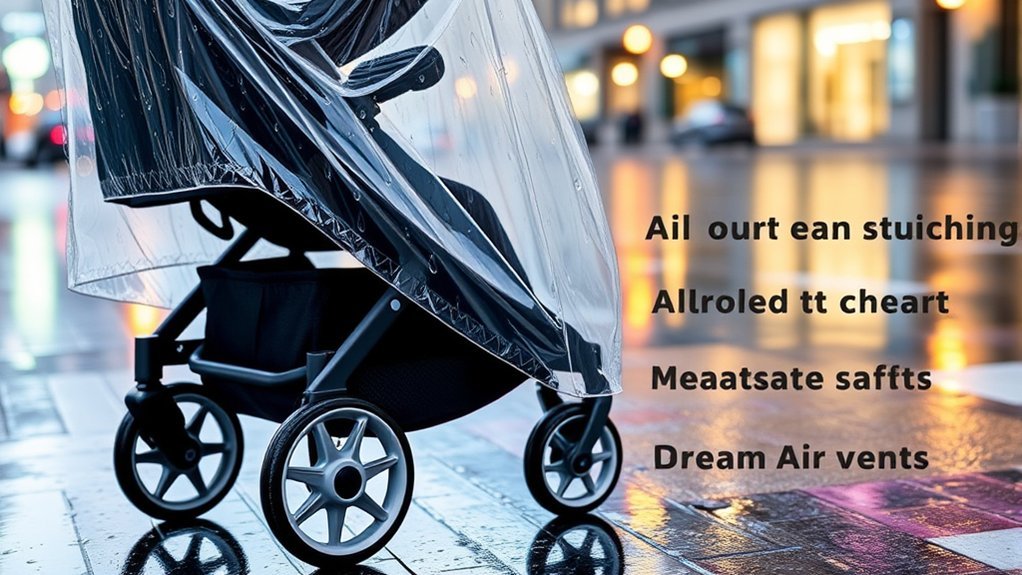
When you’re out with your child, stroller rain covers serve as essential gear, protecting them from inclement weather.
These covers come in various types, including universal fit and custom-fit options, allowing you to choose one that meets your needs.
When selecting a cover, consider usage guidelines, such as ensuring it’s made from transparent, waterproof materials that allow visibility for monitoring.
Look for covers with proper ventilation holes to prevent overheating and condensation buildup.
Opt for high-quality, non-toxic, BPA-free materials for your child’s safety.
Installation and removal should be user-friendly, enabling quick access when necessary.
Regularly inspect your rain cover for wear and tear to maintain its protective function, ensuring your child stays safe and comfortable during rainy outings.
Rain Cover Safety Concerns

When choosing a stroller rain cover, it’s essential to prioritize both ventilation and material safety.
Look for covers made from non-toxic, BPA-free materials to guarantee your child’s health, while also choosing designs with ventilation holes to prevent overheating.
Regularly check the cover’s condition to maintain safety and comfort during use.
Ventilation Importance
Although stroller rain covers provide essential protection from the elements, maintaining proper ventilation is critical to your child’s comfort and safety.
Without adequate airflow, the cover can trap heat, leading to overheating, especially in warm weather. Here are some key ventilation benefits and airflow techniques to keep in mind:
- Choose covers with mesh panels or ventilation holes for ideal airflow.
- Regularly monitor your child’s temperature to prevent overheating.
- Verify ventilation openings are clear and unobstructed to avoid condensation buildup.
- Remember that securely fastened covers shouldn’t completely enclose the stroller; they need to allow for active airflow.
Material Safety Standards
Maintaining proper ventilation is just one aspect of stroller rain cover safety; material safety standards are equally important. When choosing a rain cover, prioritize options made from non-toxic, BPA-free materials to minimize material toxicity concerns.
Look for covers that are PVC-free and phthalate-free, as these substances can be harmful to your child’s health. Additionally, verify that the rain cover has safety certifications, ensuring it meets industry standards.
Regularly inspect the cover for wear and tear, as compromised materials can increase the risk of suffocation or injury. Finally, opt for covers with secure fastening mechanisms to prevent drifting, which can obstruct stroller wheels or brakes and lead to accidents.
Your child’s safety depends on these critical choices.
Key Features to Look For

Choosing the right stroller rain cover is essential for guaranteeing your child’s comfort and safety during wet outings.
Selecting the perfect stroller rain cover is crucial for ensuring your child’s comfort and safety during rainy adventures.
When selecting a cover, consider these key features:
- Ventilation: Look for mesh panels or adjustable vents that promote airflow and prevent overheating.
- Material Safety: Confirm it’s made from non-toxic, BPA-free materials to prioritize your child’s health.
- Secure Fastenings: Check for snug fastening mechanisms that minimize risks of suffocation or exposure to the elements.
- Visibility: Opt for covers with clear, undistorted windows, allowing you to easily monitor your child while they enjoy the view.
Proper Installation and Fit
To guarantee your stroller rain cover offers maximum protection, it’s essential to install it correctly and achieve a proper fit.
Start by confirming the cover securely fits over the stroller, extending below the footrest to prevent water from splashing inside. Use effective installation techniques to check that all attachment points are fastened, eliminating any gaps that could let in wind or rain. This enhances the cover’s effectiveness during inclement weather.
Importantly, make sure the cover doesn’t obstruct the stroller’s harness or safety features, keeping your child securely strapped in. Regularly inspect the fit for any wear or damage.
Practicing the installation at home ensures you can deploy it quickly when unexpected weather hits.
Maintaining Airflow and Ventilation
Maintaining proper airflow in stroller rain covers is essential to keep your child comfortable and safe.
Look for covers with ventilation holes that allow air to circulate while protecting against rain and wind.
Always monitor your child’s temperature during use, especially on warm days, to prevent overheating in the enclosed space.
Importance of Ventilation Holes
While stroller rain covers are designed to protect your child from the elements, incorporating ventilation holes is crucial for maintaining comfort and safety.
Proper airflow management through these openings offers several ventilation benefits that enhance your child’s experience:
- Prevents condensation buildup, keeping the environment dry.
- Regulates temperature, reducing the risk of overheating on warm days.
- Allows unobstructed airflow, guaranteeing your child stays cool.
- Guarantees ventilation features align with airflow paths to minimize suffocation risks.
Regularly check that these ventilation openings are clear and unobstructed.
By facilitating effective airflow, you can make certain your child remains comfortable, making every ride a safer and more enjoyable experience.
Prioritize ventilation holes for peace of mind during your stroller outings.
Monitoring Temperature Inside Cover
Though stroller rain covers are essential for shielding your child from rain and wind, it’s important to monitor the temperature inside the cover to secure their comfort and safety.
Always choose covers with adequate ventilation openings or mesh panels to enhance airflow and prevent overheating. Regularly check the temperature, especially on sunny days, as enclosed spaces can heat up quickly. If it exceeds a comfortable level—around 75°F (24°C)—remove the cover to protect your child’s well-being.
Position ventilation openings correctly to maintain a steady exchange of air while keeping rain out. Always supervise your child, making necessary adjustments based on temperature monitoring and humidity levels to safeguard their comfort during rides.
Regular Inspection and Care
To guarantee your stroller rain cover remains effective, it’s essential to conduct regular inspections and care.
This diligent stroller maintenance not only assures safety but also enhances cover longevity.
Here are some practical tips to keep in mind:
- Inspect for cracks or holes to maintain protective qualities.
- Clean the cover after each use with mild soap; let it air dry completely.
- Check ventilation features to avoid overheating and condensation.
- Verify that all attachment points are secure for a snug fit.
Choosing the Right Cover for Your Needs
How can you guarantee your child stays dry and comfortable during outings? Start by selecting a rain cover specifically designed for your stroller model to guarantee proper stroller compatibility. This snug fit minimizes gaps that let rain or wind in.
Choose covers made from non-toxic, BPA-free materials like EVA for safety. Pay attention to ventilation features, such as mesh panels or adjustable vents, which help prevent condensation and maintain airflow.
Opt for rain covers crafted from non-toxic, BPA-free materials like EVA, ensuring safety and effective airflow with ventilation features.
Ease of installation is also key; opt for a cover that’s quick to deploy and allows easy access to your child. Finally, consider your budget: universal covers range from $8.99 to $25.99, while custom-fit options go from $24.99 to $54.99.
Research reputable cover brands to find quality options that meet your needs.
Real-World Safety Tips for Parents
When you venture out with your child, prioritizing safety is essential, especially in unpredictable weather. Here are some real-world tips to enhance your parental experiences:
- Securely fasten stroller rain covers to prevent suffocation risks or them blowing away in strong winds.
- Choose covers with adequate ventilation holes or mesh panels to guarantee airflow and prevent overheating.
- Regularly inspect for wear or damage; compromised materials can pose safety risks.
- Monitor your child’s comfort and temperature, adjusting the cover as needed, particularly on sunny days.
Frequently Asked Questions
Can I Use a Rain Cover in Hot Weather?
You shouldn’t use a rain cover in hot weather. Heat safety is essential, and proper ventilation is important. Strollers can trap heat, risking your child’s comfort and safety, so opt for alternatives instead.
How Do I Clean My Stroller Rain Cover?
Think of your stroller rain cover as a shield. To clean it, use gentle soap and water, then air dry. Regular maintenance tips include checking for tears and ensuring zippers function properly. Keep it your trusty protector!
Are There Age Restrictions for Using a Rain Cover?
There aren’t strict age restrictions for using a rain cover, but following age recommendations from manufacturers and adhering to safety guidelines guarantees your child stays protected and comfortable during outings in varying weather conditions.
Can I Use a Rain Cover With All Stroller Types?
You can’t use just any rain cover with every stroller type. Confirm compatibility by checking the specific rain cover types designed for your model, allowing you to keep your child dry and comfortable on every adventure.
What Should I Do if My Rain Cover Tears?
If your rain cover tears, consider repair options like patch kits specifically designed for waterproof materials. Make certain safety concerns are addressed; a damaged cover can compromise protection, so replacing it might be the safest choice.
Conclusion
In the dance of raindrops against your stroller’s cover, safety shouldn’t take a backseat. By prioritizing ventilation, ensuring a secure fit, and regularly inspecting your cover, you can turn a dreary day into a cozy adventure. Remember, the right rain cover not only shields your little one from the elements but also offers peace of mind. So gear up, step out, and embrace those rainy strolls with confidence, knowing you’ve taken the steps to keep your child safe.