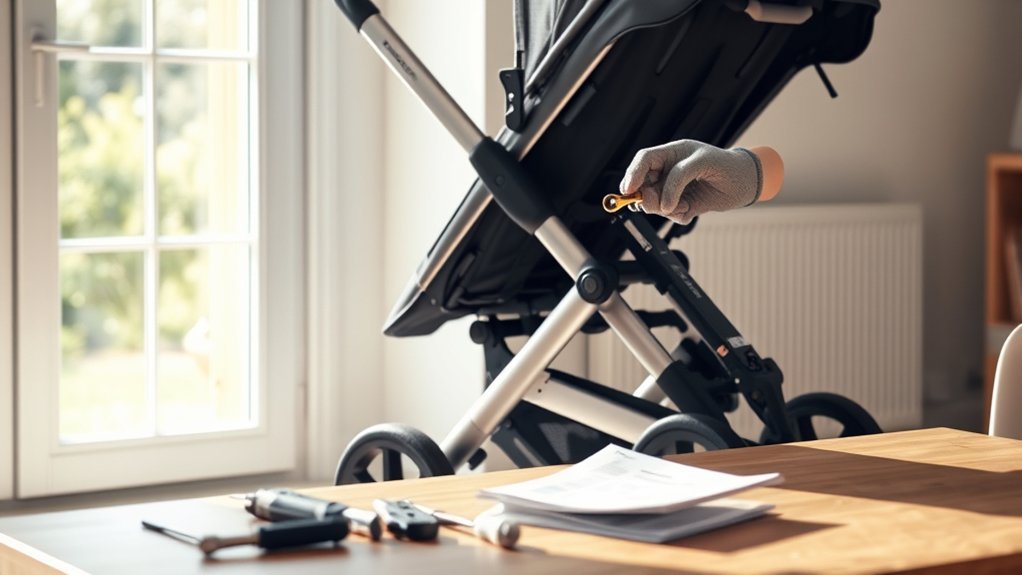
Taking the time to properly sanitize a used stroller ensures your secondhand gear is hygienic, safe, and free from germs, mold, and allergens before your child ever takes a seat. Whether you purchased a pre-owned stroller or received a hand-me-down from family, deep cleaning involves systematically disassembling removable fabrics, scrubbing touchpoints, treating frame surfaces, and servicing the wheels.
Quick Answer
To sanitize a used stroller, start by checking for safety recalls and vacuuming loose debris. Machine-wash removable seat fabrics on a cold, gentle cycle with mild detergent and air-dry. Spot-clean harness straps using warm water and gentle soap—never submerge them. Disinfect hard frame surfaces and wipe food contact areas with a damp, water-only cloth to remove chemical residue. Finish by cleaning and lubricating the wheels.
Key Takeaways
- Always Check Recalls First: Verify the stroller’s model number against the CPSC Recall Database before cleaning.
- Protect Harness Straps: Never machine-wash, submerge, or spray bleach on harness webbing, as moisture and harsh chemicals weaken fiber strength.
- Rinse Child Touchpoints: Wipe snack trays and bumper bars with clean water after using disinfectant wipes to eliminate chemical residues.
- Air-Dry Completely: Reassemble fabrics only when 100% dry to prevent mold and mildew growth inside padding.
At a Glance
| Time Required | 1.5 to 2 hours (plus 12–24 hours air-drying time) |
| Skill Level | Beginner / Easy |
| Tools & Supplies Needed | Vacuum with crevice tool, mild baby laundry detergent, gentle dish soap, disinfectant wipes, white vinegar, microfiber cloths, soft-bristle brush, silicone lubricant spray |
| Estimated Cost | $5 – $15 (using common household supplies) |
Preparing to Clean Your Stroller
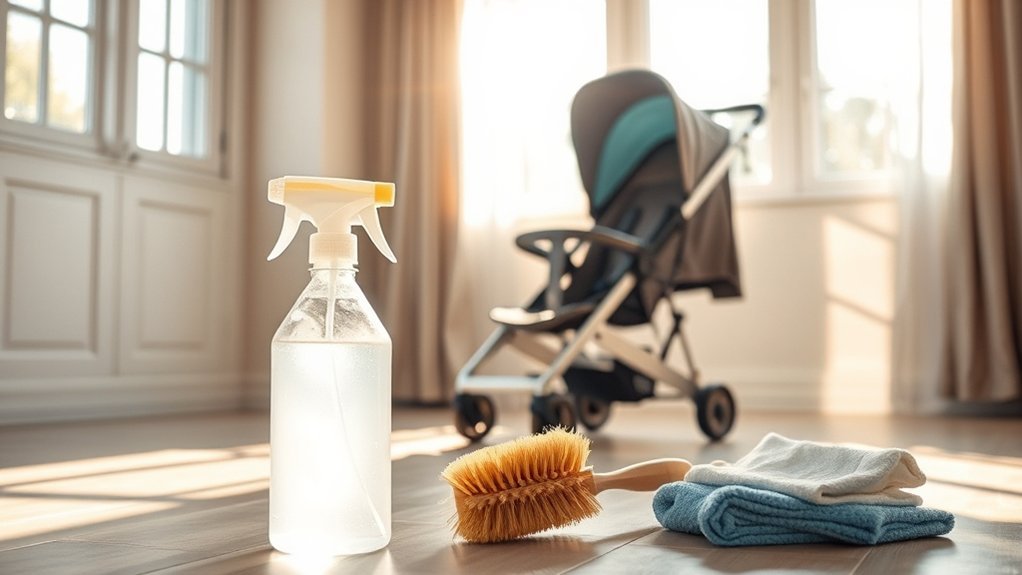
Before jumping straight into scrubbing, proper preparation ensures a seamless process and prevents accidental damage to stroller components.
Proper preparation before cleaning a secondhand stroller guarantees thorough sanitization, protects structural integrity, and ensures maximum safety for your child.
Start by executing these foundational preparation steps:
- Perform a Safety and Recall Check: Locate the stroller’s manufacturing label (usually on the lower rear frame) and cross-reference the model number and manufacture date with official safety databases. According to the American Academy of Pediatrics (AAP) stroller guidelines, secondhand gear must be thoroughly inspected for missing safety locks, worn brakes, or active safety recalls before use.
- Gather Essential Supplies: Collect a vacuum cleaner with a crevice attachment, mild baby-friendly laundry detergent, delicate dish soap, EPA-registered disinfectant wipes, distilled white vinegar, microfiber cloths, a soft brush, and silicone spray lubricant.
- Consult the Owner’s Manual: Check the official manufacturer manual (or download a PDF copy online from brands like UPPAbaby, Bugaboo, Chicco, or Graco) to confirm specific fabric washing instructions and frame care warnings.
- Empty All Compartments: Clear out under-seat storage baskets, seat pockets, organizer caddies, and parent consoles.
- Photograph the Disassembly: Snap clear photos of fabric attachments, strap configurations, canopy snaps, and buckle routing prior to removal. This visual reference makes reassembly simple and error-free.
Pro Tip: Take extra photographs of the harness strap threading behind the seat frame. Correct harness reinstallation is vital for your child’s security.
Step-by-Step Guide to Cleaning

Deep cleaning a used stroller requires a systematic approach to tackle embedded dirt, invisible bacteria, and mechanical grime on moving parts.
Essential Cleaning Supplies Needed
Equipping yourself with non-toxic, child-safe cleaning agents guarantees effective sanitization without exposing sensitive young skin to harsh chemical residues.
| Supply | Purpose | Safety Guidelines |
|---|---|---|
| Vacuum with Crevice Tool | Remove loose dirt, food crumbs, and dust from seams | Safe for all components |
| Gentle Baby Detergent | Launder removable seat covers and fabric inserts | Use fragrance-free, hypoallergenic formulas |
| Disinfectant Wipes / Spray | Sanitize hard chassis, handle grips, and plastics | Rinse child touchpoints with water after application |
| Distilled White Vinegar | Eliminate mildew spores and neutralize stubborn odors | Mix 1:1 with water; test on hidden fabric first |
| Soft Nylon Scrub Brush | Scrub heavy fabric stains and textured tire treads | Avoid hard wire brushes that scratch aluminum frames |
Effective Cleaning Techniques Explained
Executing your clean in the correct order prevents re-contaminating freshly scrubbed areas:
- Dry Vacuuming: Thoroughly vacuum every inch of the stroller, paying close attention to deep seat crevices, canopy folds, under-seat storage baskets, and harness buckle pockets where crumbs accumulate.
- Fabric Spot-Cleaning & Washing: Treat noticeable spots with mild soap or an enzyme-based stain remover, then wash removable covers according to label instructions.
- Frame Sanitization: Wipe down metal frames, plastic hinges, brake pedals, and handlebars using an EPA-registered disinfectant. Per CDC environmental cleaning guidelines, ensure surfaces remain visibly wet for the full contact time listed on the product label (usually 2 to 4 minutes) to effectively kill bacteria and viruses.
- Wheel & Axle Servicing: Remove wheels if equipped with quick-release buttons. Wipe away accumulated hair, grit, and mud from the axles using damp cloths and a stiff brush.
- Complete Drying: Allow all soft goods and hard surfaces to dry completely in a well-ventilated, sunny location. UV rays from sunlight provide natural antimicrobial benefits while eliminating residual dampness.
Cleaning Fabric Components

Stroller fabrics absorb sweat, food spills, milk dribbles, and environmental dirt. Restoring soft goods requires careful handling to protect waterproof coatings and structural seams.
Machine Wash Guidelines
If your stroller’s care tag confirms the seat padding and canopy fabric are machine-washable, follow these steps:
- Unfasten all zippers, snaps, rigid support boards, and metal wire frames from the fabric covers.
- Place small fabric items and shoulder pads inside a mesh laundry bag to prevent snagging during agitation.
- Select a gentle or delicate cold water cycle using a clear, fragrance-free baby detergent.
- Avoid using chlorine bleach, fabric softeners, or harsh stain removers containing solvents, which break down water-repellent fabric coatings.
- Always Air-Dry: Never place stroller fabrics inside a hot tumble dryer. High heat shrinks synthetic fabrics, warps plastic attachment clips, and degrades internal foam padding. Re-hang fabrics outdoors or lay them flat on a clean drying rack.
Warning: Never Machine-Wash Harness Straps! Submerging safety harness webbing in a washing machine or soaking it in hot water breaks down the high-tensile polyester fibers and washes away fire-retardant treatments. Leading manufacturers like UPPAbaby explicitly instruct parents to spot-clean harness webbing using warm water and mild dish soap only.
Spot-Cleaning Techniques
For non-removable fabrics, spot-cleaning is the safest and most effective method:
Mix 1 teaspoon of gentle baby detergent or mild dish soap into 2 cups of warm water. Dip a soft microfiber cloth or sponge into the solution, wring out excess liquid, and gently scrub stained areas using circular motions. Avoid oversaturating internal seat foam, as trapped moisture creates a breeding ground for mold and mildew. Wipe away soap suds with a fresh cloth dampened with clean water.
Note on Mold & Mildew Removal: If the secondhand stroller exhibits dark mold spots or a musty odor from storage, spray the affected fabric with a 1:1 mixture of distilled white vinegar and water. Let it sit for 30 minutes, scrub gently with a soft brush, and rinse with a clean damp cloth before sun-drying.
Disinfecting Hard Surfaces
Chassis frames, handlebars, bumper bars, and snack trays harbour high concentrations of bacteria and viral particles. Disinfecting these hard non-porous surfaces requires methodical cleaning.
Disinfecting hard stroller surfaces creates a hygienic barrier, protecting your baby from harmful surface pathogens while extending the equipment’s operational life.
Follow these steps to sanitize non-fabric components safely:
- Clean Before Disinfecting: Wipe away dirt and oil grime using a warm, soapy cloth first. Disinfectants cannot kill microbes embedded beneath thick layers of grease or dried food.
- Apply Baby-Safe Disinfectants: Use alcohol-free disinfectant wipes or a mild bleach-free multi-purpose spray across aluminum tubing, plastic joint housings, and footrests.
- Target High-Touch Points: Thoroughly wipe parent handlebars, child bumper bars, canopy adjustment levers, and recline latches.
- Rinse Food and Mouth Contact Areas: After allowing the disinfectant to dry for the specified contact time, wipe down child snack trays, bumper bars, and cup holders using a cloth saturated with clean potable water to remove lingering chemical residues.
- Detail and Lubricate Wheels: Spray a small amount of 100% silicone spray lubricant into wheel bearings and swivel locks to restore smooth rolling action. Avoid petroleum-based lubricants (like standard WD-40), which attract dirt and degrade plastic wheel hubs.
Tips for Maintaining Your Stroller
Maintaining clean stroller components through routine inspection protects performance, retains resale value, and ensures ongoing child safety.
| Maintenance Task | Recommended Frequency | Key Action Steps |
|---|---|---|
| Inspect Safety Hardware | Weekly | Check 5-point buckle click lock, brake responsiveness, and frame rivets |
| Crumb Vacuum & Surface Wipe | After every major trip | Clear snack residue to prevent pest attraction and deep fabric stains |
| Deep Wash & Chassis Service | Every 3 Months | Launder removable covers, flush wheel housings, and lubricate axles |
| Climate-Controlled Storage | When not in daily use | Store in dry indoor areas; avoid damp basements or hot vehicle trunks |
| Safety Recall Verification | Bi-annually | Check manufacturer safety updates and CPSC consumer notices |
When to Seek Professional Help
While home sanitization handles everyday dirt and surface grime, certain severe conditions call for professional stroller cleaning and restoration services.
Consider hiring a specialized gear cleaning service under these circumstances:
- Biohazard Contamination: Exposure to significant bodily fluids (vomit, diaper blowouts, viral illness residue) that require commercial steam extraction and hospital-grade non-toxic bio-sanitization.
- Extensive Mold & Black Mildew Growth: When mold spores penetrate deep into multi-layer foam padding beneath the fabric surface.
- Mechanical Malfunctions: Stiff folding mechanisms, jammed brake lines, or bent frame components requiring specialized tool calibration or factory replacement parts.
- Time Constraints Before Storage: When prepping expensive luxury strollers (like Bugaboo, UPPAbaby, or Nuna) for long-term storage or re-sale and lacking time for meticulous disassembly.
Frequently Asked Questions
Can I use bleach to sanitize my stroller?
No, you should never use chlorine bleach on a stroller. Bleach severely weakens synthetic fabric fibers, strips waterproof coatings, discolors seat covers, and degrades high-tensile harness webbing. Additionally, bleach fumes and residues pose respiratory risks to young children. Instead, use mild soap, diluted white vinegar for mold, or EPA-registered alcohol-free disinfectant wipes.
How often should I clean my stroller?
Perform light maintenance—such as shaking out crumbs and wiping down the snack tray—after every outing. Perform a full sanitization and deep clean every 3 months. If your child eats frequently in the stroller or if you travel in high-traffic public environments like airports or theme parks, deep clean on a monthly basis.
What cleaning products are safe for stroller surfaces?
Safe cleaning products include gentle, fragrance-free baby laundry detergents, mild liquid dish soap, a 1:1 solution of water and distilled white vinegar, and bleach-free disinfectant wipes. Always rinse food contact surfaces with clean water after sanitizing.
Is it necessary to sanitize a stroller before gifting or selling it?
Yes, thoroughly sanitizing a stroller before gifting or selling is essential. It ensures the gear is hygienic, eliminates lingering allergens or mold spores, improves visual presentation, and guarantees all mechanical parts and safety harnesses are fully operational for the next family.
Can I machine wash stroller fabric components?
Most fabric seat covers and canopies can be machine washed on a gentle, cold water cycle if confirmed by the manufacturer’s care tag. However, never machine wash safety harness straps or canopy pieces containing rigid plastic or metal frames. Always air-dry stroller fabrics completely to avoid shrinkage and material damage.
Conclusion
Deep cleaning and sanitizing a used stroller restores secondhand gear into a fresh, safe, and comfortable ride for your child. By following a structured approach—checking for recalls, laundering fabrics safely, protecting harness webbing, and rinsing hard surface touchpoints—you eliminate health risks while preserving the stroller’s durability. Establishing a regular maintenance schedule ensures your stroller remains reliable, hygienic, and ready for everyday family outings.
Sources
- U.S. Consumer Product Safety Commission (CPSC) — Official recall database and baby product safety standards
- American Academy of Pediatrics (HealthyChildren.org) — Stroller selection, harness safety, and maintenance guidelines
- Centers for Disease Control and Prevention (CDC) — Home hygiene, surface sanitization, and contact times
- UPPAbaby Official Care & Maintenance Guide — Manufacturer fabric care, harness safety, and chassis lubrication protocols