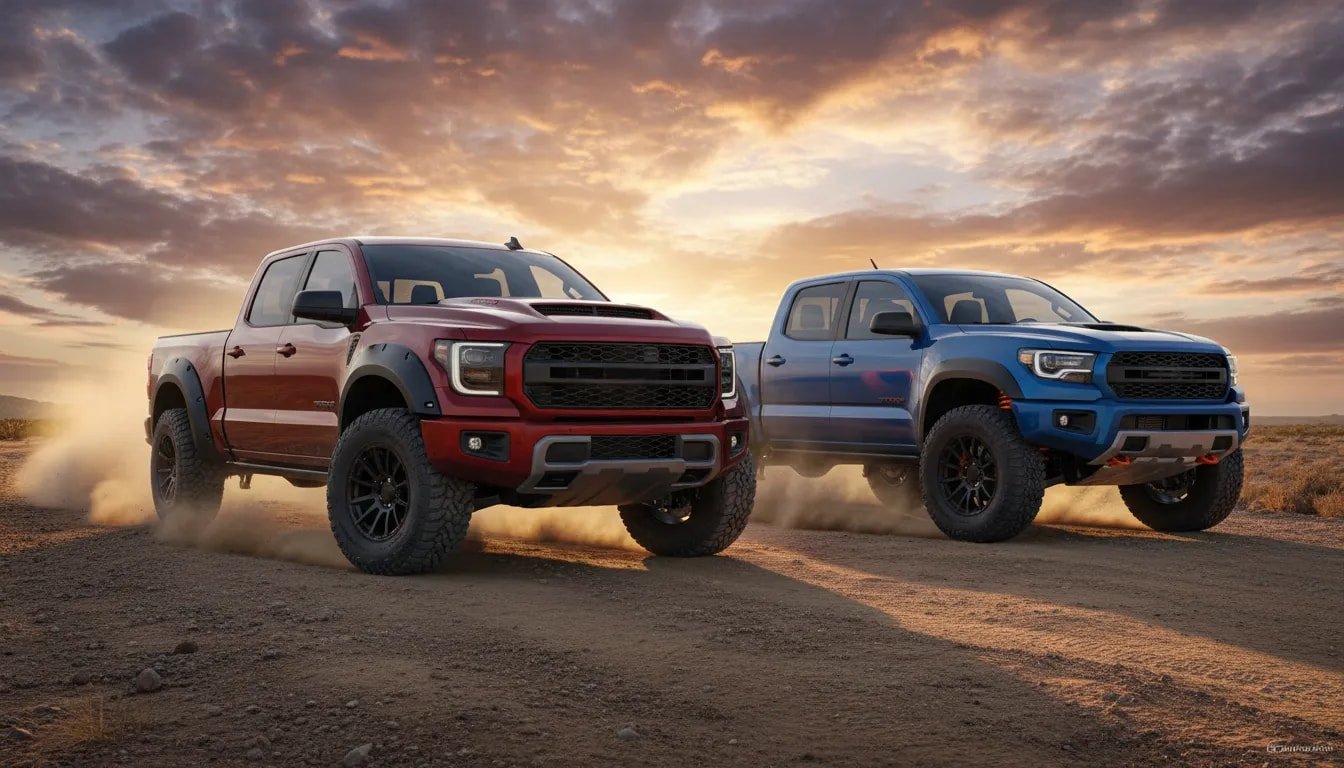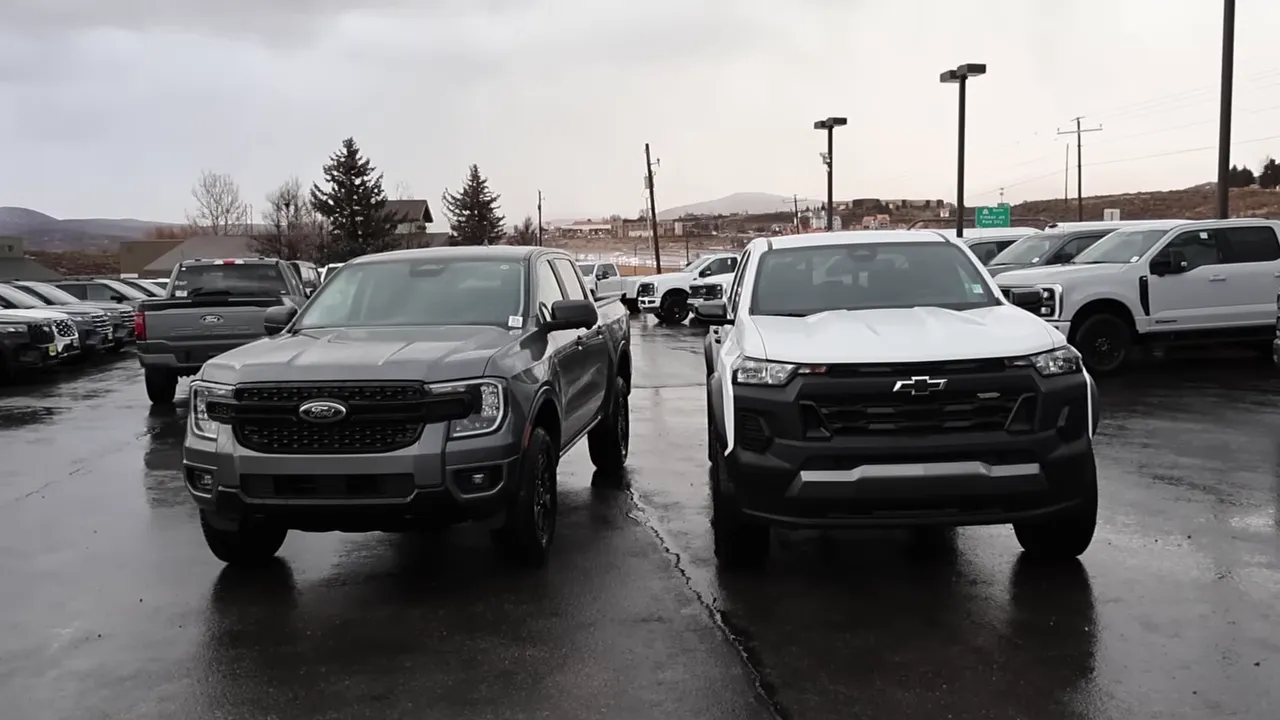
The 2026 Chevrolet Colorado Trail Boss and the 2026 Ford Ranger XLT with the FX4 Off-Road Package target similar midsize-truck buyers, but they are not exact trim-for-trim rivals. Trail Boss is a Colorado trim, while FX4 is an option package added to the Ranger XLT. That distinction changes the engine, camera, comfort, towing, and price comparison.
Quick Answer
Choose the Colorado Trail Boss for standard 430 lb-ft torque, a 2-inch factory lift, 32-inch all-terrain tires, and a rugged factory setup. Choose the Ranger XLT FX4 for its electronic-locking rear differential, off-road shocks, documented 2.3-liter fuel economy, and flexible option packages. Compare window stickers because several comfort and camera features are optional.
Last updated: July 14, 2026
The Colorado leans into low-speed torque and a lifted stance. The Ranger emphasizes a balanced daily-driving package and gives you a choice between the standard 2.3-liter EcoBoost and an available 2.7-liter EcoBoost V6. Both can tow and haul well when correctly equipped, but neither truck’s advertised maximum replaces the payload label on the driver-side door jamb.
Editor’s pick: The Ranger XLT FX4 is the more flexible all-around choice because you can tailor its engine, cameras, towing equipment, and comfort options. The Colorado Trail Boss is the more straightforward choice if you want its high-torque engine and lifted off-road stance without building a long options list.
Quick Comparison: Colorado Trail Boss vs Ranger XLT FX4
| Category | 2026 Chevrolet Colorado Trail Boss | 2026 Ford Ranger XLT FX4 |
|---|---|---|
| Standard engine | 2.7L TurboMax four-cylinder | 2.3L EcoBoost four-cylinder |
| Standard output | 310 hp and 430 lb-ft | 270 hp and 310 lb-ft |
| Optional engine | No alternate engine listed for Trail Boss | Available 2.7L EcoBoost V6, 315 hp and 400 lb-ft |
| Transmission | 8-speed automatic | 10-speed automatic |
| Maximum towing | Up to 7,700 lb when properly equipped | Up to 7,500 lb with the available Trailer Tow Package |
| Core off-road hardware | 2-inch lift, 32-inch all-terrain tires, four drive modes, 2-speed auto transfer case and shield | Electronic-locking rear differential, off-road shocks, bash plate, all-terrain tires and Trail Control |
| Best fit | Standard torque, lifted stance and simple factory capability | Configurable daily use, technical trail tools and engine choice |
Note: FX4 does not replace the XLT trim. It adds off-road equipment to an XLT, and other packages may add cameras, towing technology, heated seats, or a larger display. Compare the exact window stickers rather than assuming every XLT FX4 has the same equipment.
How This Comparison Was Made
This comparison uses current manufacturer specifications, EPA fuel-economy information where a current figure is published, and equipment visible in the source walkaround. It separates standard features from available packages and avoids treating a test vehicle as representative of every truck on a dealer lot.
Final capability changes with the engine, axle, tires, wheels, towing package, passengers, cargo, dealer accessories, and regional equipment. Before towing or hauling, check the window sticker, owner’s manual, hitch rating, and driver-door payload label.
Exterior and Stance
Both trucks use distinct styling to communicate capability. The Colorado Trail Boss has a wider, more aggressive look with matte cladding, recovery points, and a factory lift. Unpainted lower trim can also hide minor trail and gravel marks better than painted trim.
The Ranger XLT FX4 has a cleaner front end with blacked-out details, fog lights, all-terrain tires, and visible underbody protection. Its appearance is less lifted than the Colorado’s, but the FX4 package adds meaningful hardware rather than only cosmetic changes.
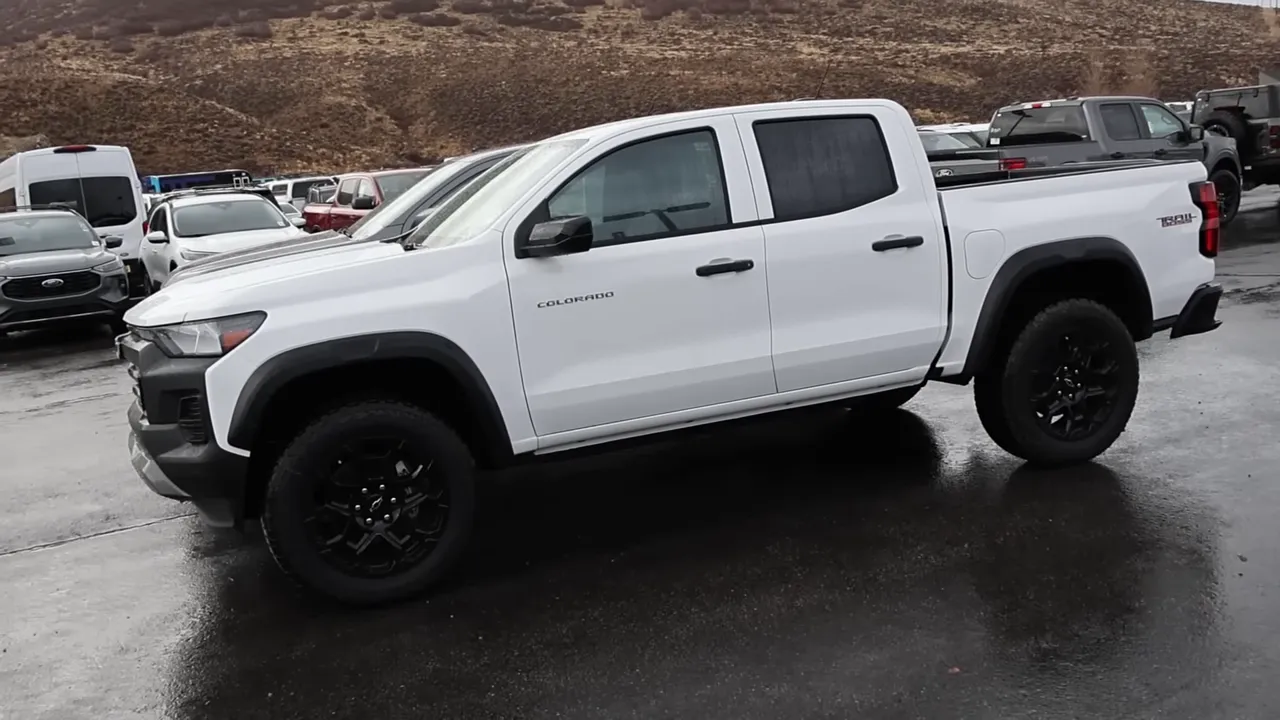
The Colorado wins the stance comparison if you want a visibly lifted truck from the factory. The Ranger may suit you better if you prefer a tidier daily-driver look with an electronic-locking rear differential and off-road suspension underneath.
Warning: A maximum tow rating is not the amount every truck can safely tow. Trailer tongue weight, passengers, tools, accessories, and cargo all consume payload. Use the lowest applicable limit shown by the truck, hitch, trailer, tires, and door-jamb labels.
Bed, Payload, and Practicality
Real pickup buyers spend a lot of time with the bed. Both trucks offer factory bed protection, tie-down points, and available power or storage features. The Ranger bed shown in the walkaround has a liner and a tailgate that appears easy to raise.
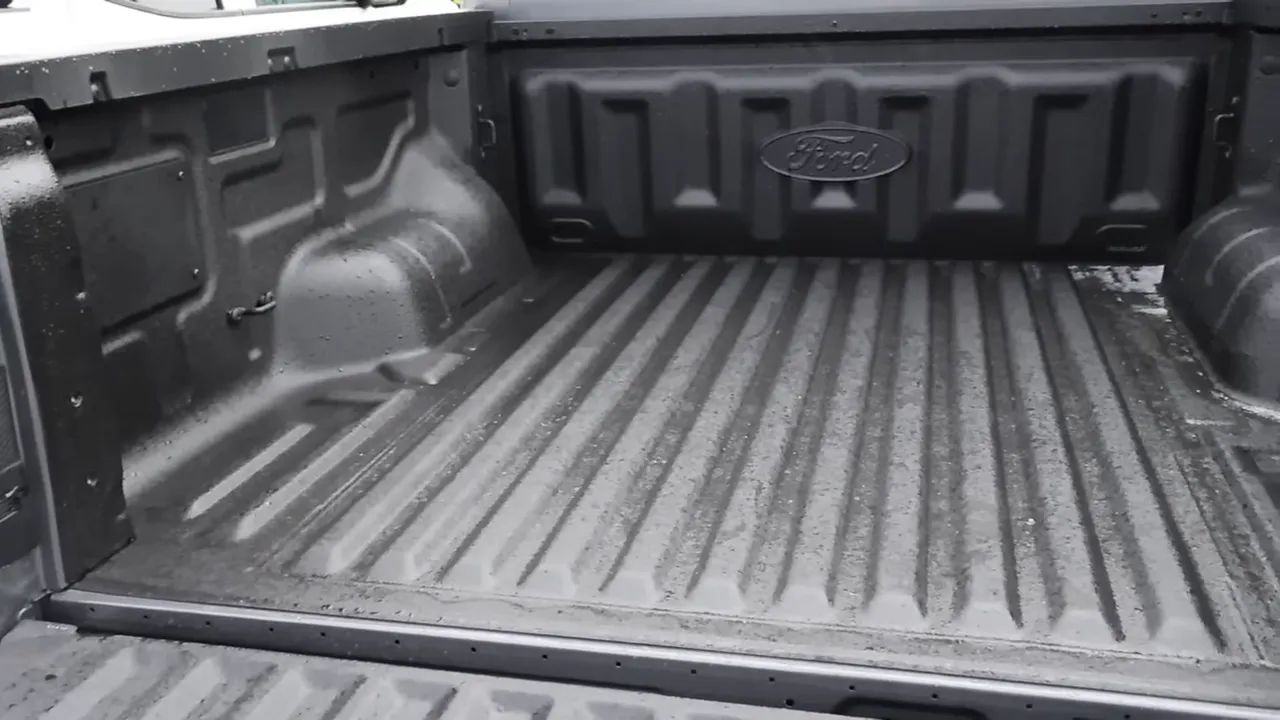
Ford lists a 59.6-inch bed length, 48.2 inches between the wheelhouses, and 43.5 cubic feet of cargo volume for the Ranger. Chevrolet highlights up to 17 available tie-downs, an available StowFlex tailgate storage compartment, a mid-position tailgate rated to support 500 pounds, and an available 120-volt bed outlet on the Colorado. Compare drainable storage, tailgate rulers, rear USB ports, outlets, tie-down access, liner coverage, and tailgate effort on the exact trucks because these conveniences vary by equipment.
Published payload figures can help you narrow the field, but the yellow-and-white Tire and Loading Information label controls your actual truck. Ford lists a maximum payload of 1,763 pounds for a 2.3-liter 4×4 Ranger configuration and 1,513 pounds for a 2.7-liter 4×4 configuration. Options can reduce those numbers. Check the Colorado Trail Boss label the same way because cab, equipment, tires, and accessories change its available payload.
Pro Tip: Photograph each truck’s payload label and window sticker during your test drive. Then subtract occupants, cargo, aftermarket equipment, and estimated trailer tongue weight before comparing towing suitability.
Interior, Seats, and Daily Comfort
The Ranger XLT cabin is practical and comfortable. Cloth seating is standard, and the source vehicle offered reasonable rear legroom for a midsize pickup. The walkaround truck used a traditional key-start ignition, although equipment can change by package and production configuration.
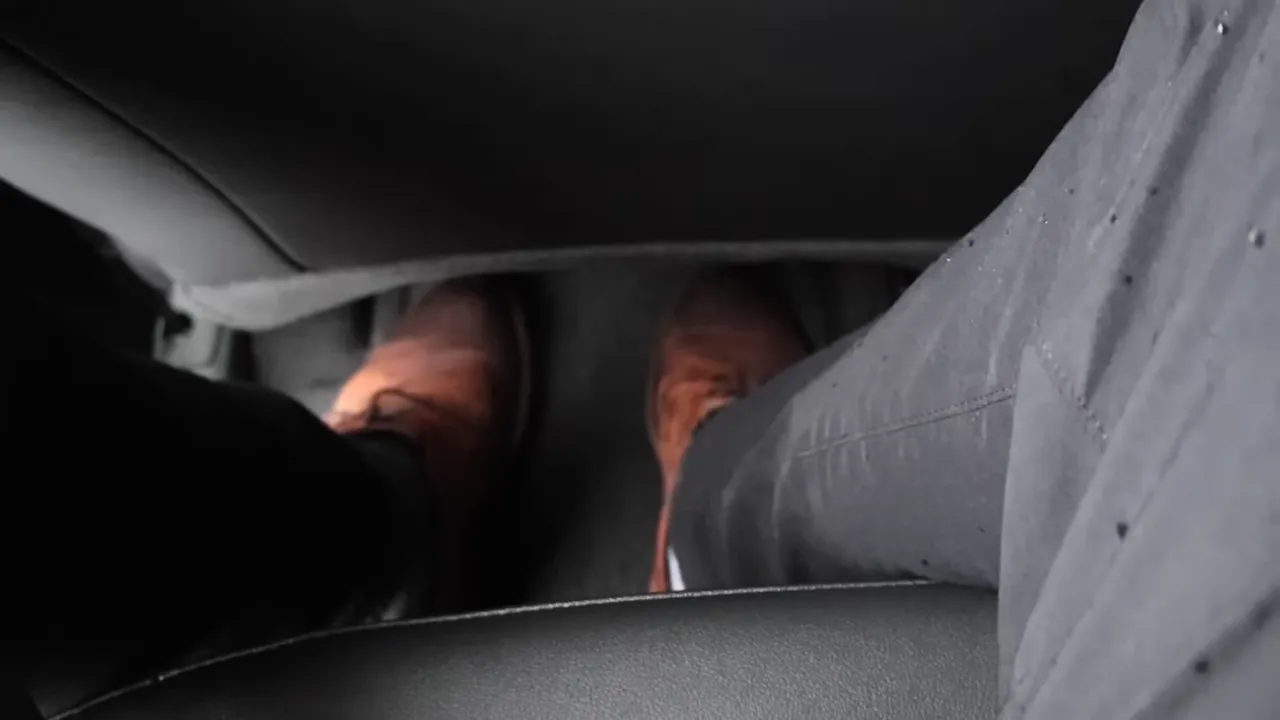
The Colorado shown in the source walkaround appeared to have upgraded seat trim, power adjustment, lumbar support, and cold-weather comfort equipment. It also showed an opening rear glass, while the Ranger in that video had fixed glass. Do not treat those details as standard differences. Verify heated seats, steering-wheel heat, upholstery, rear vents, power-seat controls, and sliding rear glass on the exact window sticker.

The best cabin is not the one with the longest feature list. It is the one whose seat, visibility, controls, and storage still feel natural after an hour behind the wheel.
The Ranger XLT can be equipped with power heated front seats and a sliding rear window. The Colorado’s comfort equipment also varies by package. Test both trucks with your usual coat, work boots, child seat, or driving gloves because small ergonomic differences matter more than brochure language.
Technology and Driver Aids
Technology creates one of the easiest places to make a bad comparison. The Ranger in the source walkaround had a 360-degree camera, but that feature is not part of the FX4 package by itself. Ford lists the 360-degree camera as available equipment, while FX4 focuses on trail hardware.
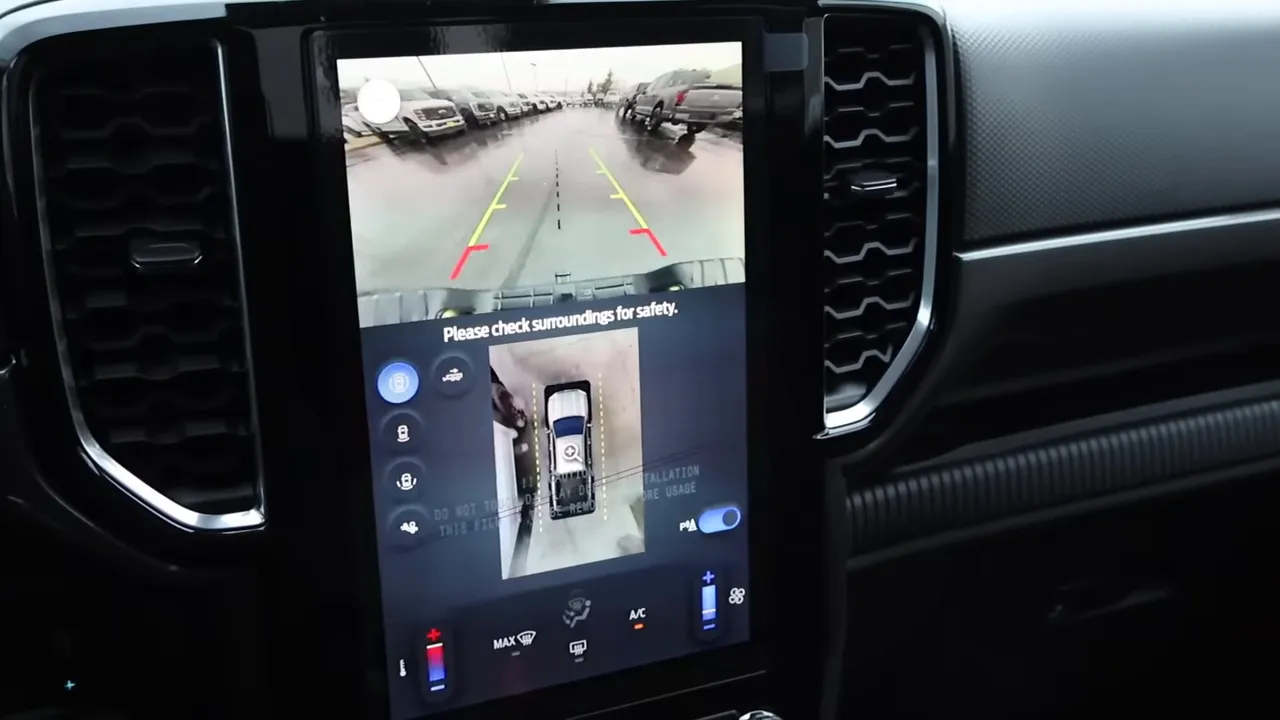
The Colorado shown in the walkaround lacked a 360-degree view, but that does not mean the model cannot offer one. Chevrolet advertises up to 10 available camera views on the 2026 Colorado. Camera coverage depends on packages and the exact vehicle.
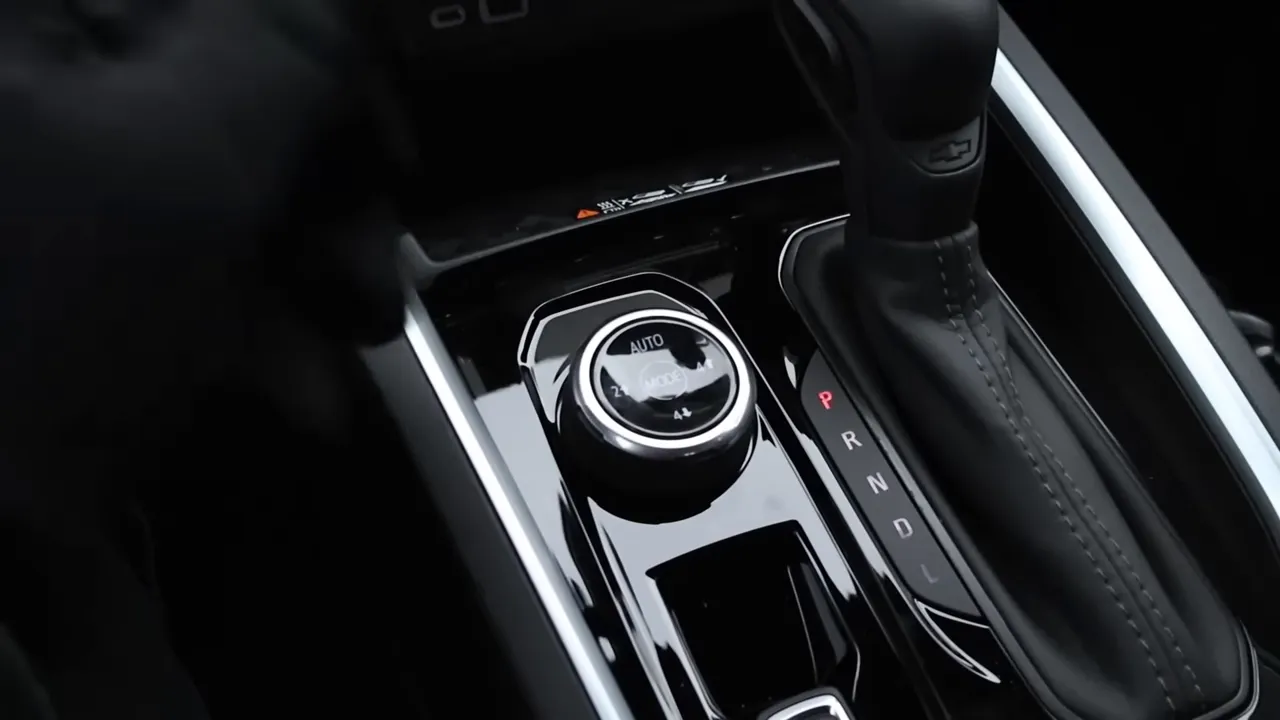
The Colorado uses an 11.3-inch center touchscreen and an 11-inch driver information display. It also offers Google built-in compatibility, wireless smartphone integration, selectable drive modes, and an auto setting in its four-wheel-drive system. Ranger screen size and camera functions vary by package, so confirm the display and controls in the truck you are pricing.
Buyer note: During the test drive, operate the camera views, climate controls, headlights, drive modes, trailer settings, and phone connection. A specification sheet cannot show whether a buried touchscreen control will annoy you every day.
Powertrains and Performance Numbers
The standard-engine comparison clearly favors the Colorado for torque. However, the original two-engine comparison was incomplete because the 2026 Ranger XLT also offers a 2.7-liter EcoBoost V6.
| Configuration | Horsepower | Torque | Transmission |
|---|---|---|---|
| Colorado Trail Boss 2.7L TurboMax | 310 hp | 430 lb-ft | 8-speed automatic |
| Ranger XLT 2.3L EcoBoost | 270 hp | 310 lb-ft | 10-speed automatic |
| Ranger XLT 2.7L EcoBoost V6 | 315 hp | 400 lb-ft | 10-speed automatic |
The Colorado has the most torque in either comparison and should feel strong at low engine speeds. The standard 2.3-liter Ranger gives up output but offers the better documented EPA fuel-economy result. The optional Ranger V6 adds horsepower and closes much of the torque gap, but it also reduces the published payload and fuel-economy figures for comparable 4×4 configurations.
Fuel Economy and Everyday Running
Ford publishes an EPA estimate of 19 mpg city, 24 mpg highway, and 21 mpg combined for the 2.3-liter Ranger 4×4. The optional 2.7-liter Ranger 4×4 is listed at 18 city, 23 highway, and 20 combined. Chevrolet’s consumer page does not present one universal Trail Boss rating because configuration affects the result, so use the EPA label on the exact truck rather than relying on a broad web figure.
Real-world mileage changes with speed, temperature, all-terrain tires, elevation, idling, payload, towing, and driving style. Estimate your annual fuel use with your own mileage and local fuel price instead of choosing solely from a one-mpg difference.
Drivetrains and Off-Road Readiness
Both are body-on-frame pickups with independent front suspension and a solid rear axle. Their off-road strategies differ more than their basic architecture.
| Off-road area | Colorado Trail Boss | Ranger XLT FX4 |
|---|---|---|
| Ride height and tires | 2-inch factory lift and 32-inch all-terrain tires | All-terrain tires and off-road-tuned shocks |
| Traction tools | Four selectable drive modes and 2-speed automatic transfer case | Electronic-locking rear differential and Trail Control |
| Protection | Transfer-case shield and recovery-focused stance | Exposed steel bash plate and FX4 graphics |
| Character | Lift, tire clearance and strong low-speed torque | Selectable locker, controlled low-speed driving and technical trail tools |
The Ranger has the stronger case for drivers who specifically want a driver-selected rear locker and Trail Control. The Colorado has the stronger case if you value its standard torque, larger factory tire setup, and lifted clearance. Camera systems can help on tight trails, but their availability must be evaluated separately from the off-road package.
On-Road Impressions
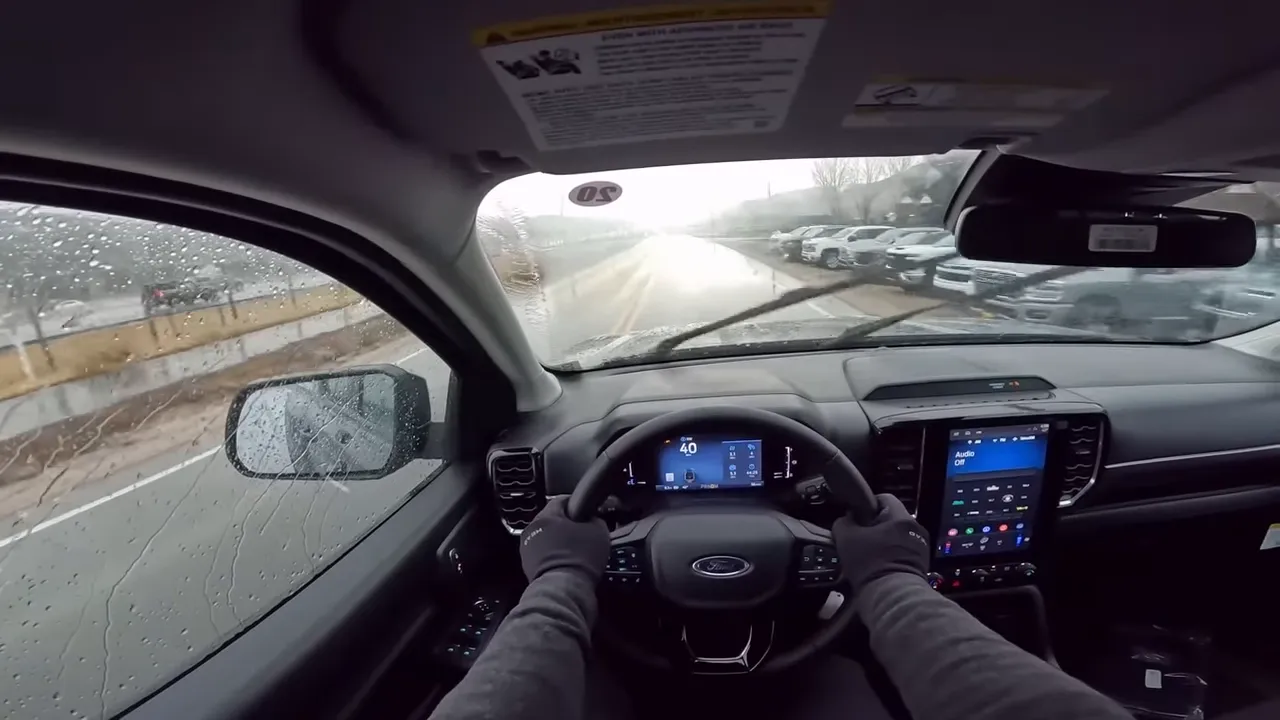
Real-world driving decides whether a truck feels like a keeper. In the source walkaround, the Ranger felt quiet, comfortable, and easy to place on the road. Its steering and power delivery suited commuting, errands, and longer stretches.
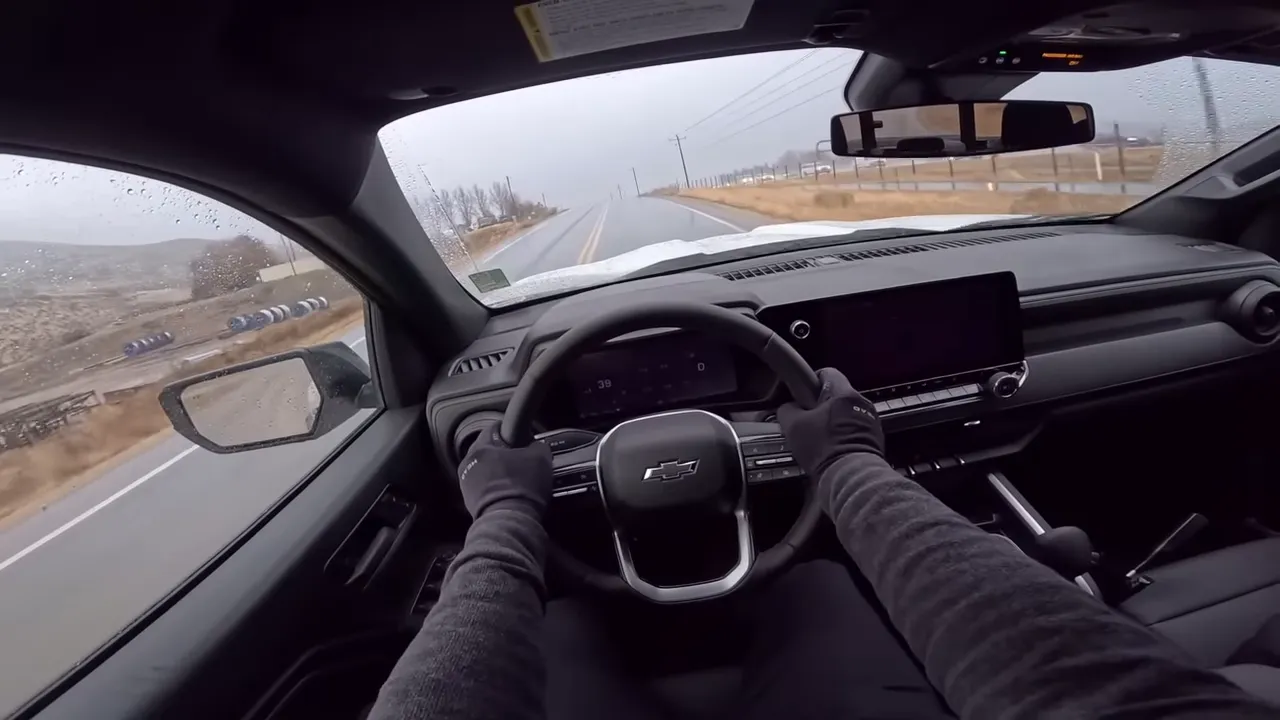
The Colorado felt stronger when the driver leaned into the throttle. Its suspension had a soft, rolling response over bumps, while the touchscreen-heavy interface required more attention for some common controls.
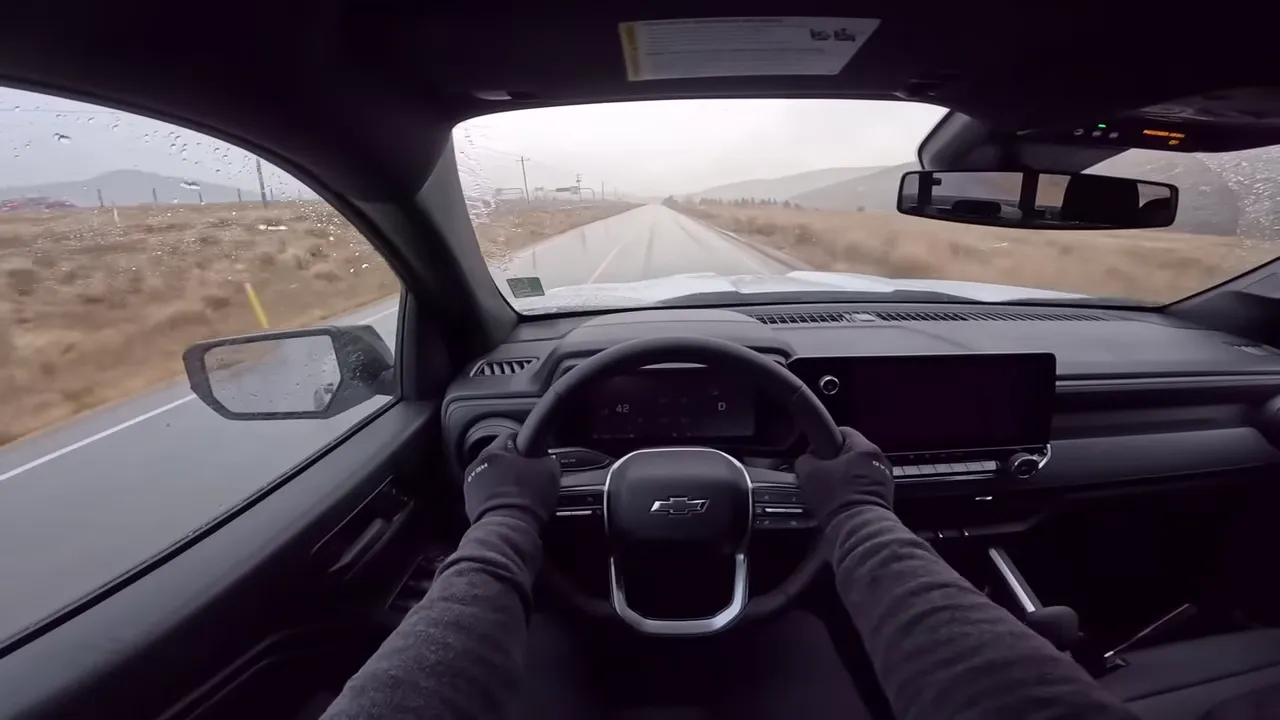
Both turbocharged engines reward smooth throttle inputs. The Colorado’s extra torque may feel effortless at lower speeds, while the Ranger’s 10-speed transmission and engine choices give buyers more ways to balance response and efficiency. Tire pressure, wheel size, all-terrain tread, and payload can noticeably change ride quality and road noise.
Safety and Driver-Assistance Equipment
The Colorado includes Chevy Safety Assist, which bundles automatic emergency braking, forward collision alert, front pedestrian braking, lane-keep assist with lane-departure warning, a following-distance indicator, and automatic high beams. Ranger XLT includes Ford Co-Pilot360 features, but the exact functions and optional towing aids vary by package.
Do not choose between the trucks from a brand-level safety list alone. Confirm blind-spot coverage for a trailer, rear cross-traffic alert, adaptive cruise control, parking sensors, camera views, and trailer-brake equipment on the exact VIN. You can also check open recalls by VIN through the National Highway Traffic Safety Administration before purchase.
Price and Value
Chevrolet lists the 2026 Colorado Trail Boss from $40,500 before destination, taxes, fees, accessories, and options. Ranger XLT pricing changes when you add FX4, the optional V6, camera technology, towing equipment, heated seats, a sliding rear window, or appearance packages.
Do not compare only the base MSRP. Compare the final window sticker, destination charge, engine, drivetrain, payload, towing package, wheel and tire package, cameras, seat equipment, dealer add-ons, financing, and insurance. A lower-priced truck can be the poorer value if it lacks the feature you use every day.
Who Should Buy the Ranger XLT FX4?
- You want a balanced midsize truck for commuting and weekend use.
- You value the FX4 electronic-locking rear differential, off-road shocks, bash plate, and Trail Control.
- You want the standard 2.3-liter engine’s documented 19/24/21 mpg rating.
- You want the option of a stronger 2.7-liter V6.
- You are willing to select packages carefully for cameras, towing tools, heated seats, and other comfort features.
Who Should Buy the Colorado Trail Boss?
- You want 430 lb-ft of torque without upgrading the engine.
- You value a 2-inch factory lift and 32-inch all-terrain tires.
- You want a 2-speed automatic transfer case and four selectable drive modes.
- You prefer the Colorado’s more aggressive factory stance.
- You want up to a 7,700-pound tow rating when properly equipped and your payload label supports the load.
Common Buyer Objections Answered
Is the Standard Ranger Too Underpowered Compared With the Colorado?
No, not for ordinary commuting, light hauling, and weekend use. The Colorado has a clear torque advantage over the standard 2.3-liter Ranger. Buyers who want more Ranger output can consider the available 315-hp, 400-lb-ft 2.7-liter V6.
Is the Colorado’s Touchscreen Control Layout a Deal-Breaker?
It depends on your habits. Test the headlights, drive settings, cameras, climate controls, and phone connection while parked. Drivers who prefer dedicated switches may find some screen-based functions less convenient.
Which Truck Should You Choose for Towing?
The Colorado has the higher published maximum at 7,700 pounds, while the Ranger reaches 7,500 pounds with the Trailer Tow Package. Your usable limit may be lower because payload, tongue weight, passengers, cargo, hitch ratings, and trailer-brake requirements all matter.
Which Truck Is Easier to Live With Every Day?
The Ranger may be easier to tailor because it offers two engines and several technology and comfort packages. The Colorado may be easier to choose if you want strong standard torque and a lifted off-road setup without building a complex configuration.
Which One Should You Choose?
Both are capable midsize pickups, but your priorities decide the winner.
- Choose the Ranger XLT FX4 if you want a selectable rear locker, off-road shocks, Trail Control, a documented efficiency advantage with the 2.3-liter engine, or the option of a 2.7-liter V6.
- Choose the Colorado Trail Boss if you want 430 lb-ft of standard torque, a 2-inch factory lift, 32-inch all-terrain tires, and the slightly higher published maximum tow rating.
My practical verdict leans toward the Ranger XLT FX4 for buyers who enjoy configuring a truck around daily driving, towing technology, and technical trail tools. The Colorado Trail Boss is the stronger value proposition for buyers who prioritize torque and a lifted stance as standard equipment. The final decision should come from two similarly priced window stickers, not two trim names.
Frequently Asked Questions
Which truck has more horsepower and torque?
The Colorado Trail Boss makes 310 hp and 430 lb-ft. The standard 2.3-liter Ranger makes 270 hp and 310 lb-ft. The Ranger’s available 2.7-liter V6 makes 315 hp and 400 lb-ft, so it has five more horsepower than the Colorado but 30 lb-ft less torque.
Which truck gets better fuel economy?
The 2.3-liter Ranger 4×4 has an EPA estimate of 19 mpg city, 24 highway, and 21 combined. The 2.7-liter Ranger 4×4 is listed at 18/23/20. Check the Colorado Trail Boss window sticker for its exact rating because wheel, tire, and configuration choices can affect the label.
Does the Ranger XLT FX4 include a 360-degree camera?
Not simply because it has FX4. Ford lists the 360-degree camera as available equipment, while the FX4 package centers on off-road shocks, a bash plate, all-terrain tires, Trail Control, and an electronic-locking rear differential.
Can the Colorado Trail Boss have surround-view cameras?
Chevrolet advertises up to 10 available camera views for the 2026 Colorado. The exact views depend on packages and equipment, so a Trail Boss without surround-view hardware does not represent every available configuration.
Which truck is better off-road?
The Ranger FX4 is compelling for its selectable rear locker, Trail Control, shocks, and bash plate. The Colorado Trail Boss counters with a factory lift, 32-inch all-terrain tires, strong torque, and selectable drive modes. Your terrain and driving style determine the better setup.
Which truck is better for towing?
The Colorado’s maximum published rating is 7,700 pounds, and the Ranger’s is 7,500 pounds with the proper package. The safer choice is the truck whose payload label, hitch, axle, tires, passengers, cargo, and trailer tongue weight support your actual loaded trailer.
How do the cabins compare for daily comfort?
Both can be comfortable, but equipment varies. Ranger XLT offers available power heated front seats and a sliding rear window. Confirm the Colorado’s seat trim, power adjustment, heat features, and rear amenities on the exact window sticker rather than assuming they are standard.
Are the Colorado Trail Boss and Ranger XLT FX4 similarly priced?
They can overlap after options, but the comparison changes with the Ranger engine, FX4 package, camera and towing packages, destination charges, dealer accessories, and incentives. Compare full window stickers with similar equipment.
Key Takeaways
- The comparison is trim versus package. Trail Boss is a Colorado trim, while FX4 is added to Ranger XLT.
- Colorado leads in standard torque. Its TurboMax engine makes 430 lb-ft and pairs with a factory lift and 32-inch all-terrain tires.
- Ranger offers more configuration choice. You can choose a 2.3-liter four-cylinder or a 2.7-liter V6, then add camera, towing, and comfort equipment.
- Maximum towing is only a headline. Payload, tongue weight, passengers, cargo, and the exact door label determine your usable limit.
- Compare matched window stickers. Camera systems, heated seats, displays, and towing tools are package-sensitive on both trucks.
If you are comparing these trucks at a dealer, sit in both, test the infotainment flow, inspect the payload labels, check the tires and underbody hardware, and compare window stickers line by line. Decide whether you value the Colorado’s standard torque and lift or the Ranger’s configurable powertrains and FX4 trail tools.
Sources
- Chevrolet: 2026 Colorado — engine output, Trail Boss hardware, towing, bed features, camera views, displays, and safety equipment.
- Ford: 2026 Ranger — Ranger engines, FX4 equipment, towing, payload, bed dimensions, fuel economy, cameras, and XLT options.
- U.S. Environmental Protection Agency: Fuel Economy Label — how to read and compare official vehicle fuel-economy labels.
- National Highway Traffic Safety Administration: VIN Recall Lookup — checking a specific truck for unrepaired safety recalls.