
The best baby strollers for travel and everyday use in 2026 prioritize light weight, compact folding, secure harnesses, and practical storage. Top options include the Ingenuity 3D Mini, Graco Modes Pramette, Kolcraft Cloud Plus, Evenflo Pivot NXT, Graco Ready2Jet, Dream On Me Aero, Evenflo Shyft DualRide, Doona, and Dream On Me Coast Rider. Families should compare child weight limits, recline, canopy coverage, terrain suitability, and car-seat compatibility. The quick comparison table and buying factors below help narrow the right fit.
As an Amazon Associate, we earn from qualifying purchases made through links in this article.
| Stroller | Weight | Age / Weight Limit | Fold Type | Best For |
|---|---|---|---|---|
| Ingenuity 3D Mini | 11 lb | Up to 45 lb | Compact umbrella fold | Budget-friendly everyday travel |
| Graco Modes Pramette | Full-size (3-in-1) | Birth to 50 lb (toddler seat) | One-hand fold | Long-term newborn-to-toddler system |
| Kolcraft Cloud Plus | 13 lb | Up to 50 lb | One-hand, self-standing fold | Growing toddlers |
| Evenflo Pivot NXT | ~21.9 lb (stroller) | 3–50 lb | Self-standing trigger fold | Full-featured everyday travel system |
| Graco Ready2Jet | 13.2 lb | Up to 50 lb | One-hand automatic fold | Frequent air travel |
| Dream On Me Aero | 7.2 lb | 6–36 months, up to 33 lb | One-hand fold | Ultra-lightweight short trips |
| Evenflo Shyft DualRide | ~29 lb assembled | 3–30 lb | One-step car seat-to-stroller | Newborns and preemies |
| Doona | 17.2 lb | 4–35 lb | One-click car seat/stroller | All-in-one car seat and stroller |
| Dream On Me Coast Rider | 13.5 lb | 6–48 months, up to 45 lb | Quick book-fold | Theme parks and cruises |
Ingenuity 3D Mini Lightweight Travel Stroller, Gray
Best Budget-Friendly Pick
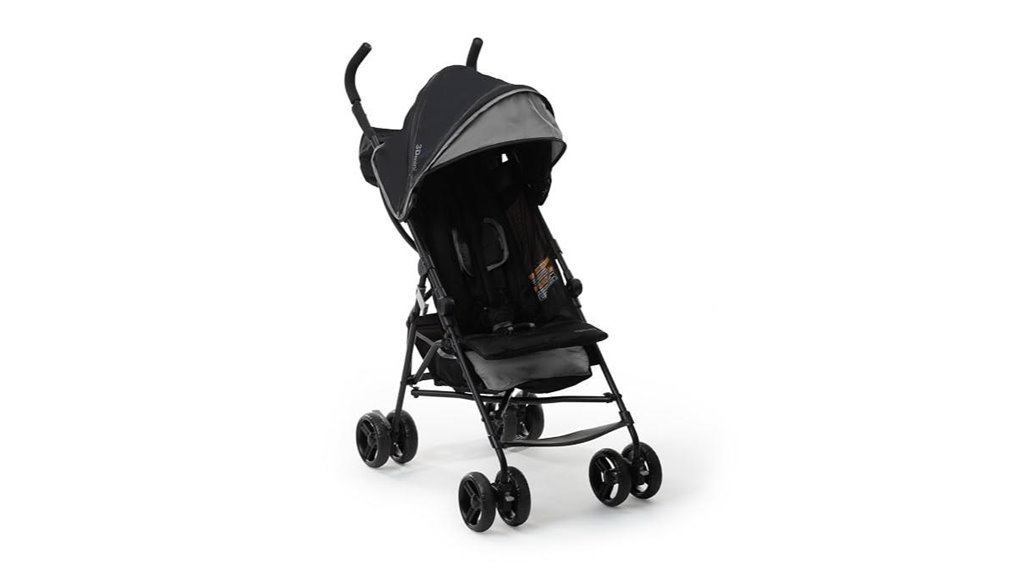
The Ingenuity 3D Mini Convenience Stroller is a practical choice for families who need a lightweight travel stroller for airport trips, vacations, and daily errands. Weighing 11 pounds, this umbrella-style model has a durable steel frame, compact fold, and a 45-pound capacity. Its full-sized padded seat offers multi-position recline, while a padded five-point harness supports secure rides. Anti-shock front wheels and lockable rear wheels improve handling and stability. A pop-out sun visor adds canopy coverage. Parents also receive useful storage through a basket, rear pocket, and two cup holders. Made with 100% polyester, the stroller has been third-party safety tested and approved.
Best For: Parents seeking a lightweight, compact umbrella stroller for travel, airport use, and everyday errands with children up to 45 pounds.
Pros:
- Lightweight 11-pound design with a compact fold for easy travel and storage
- Multi-position recline, padded full-size seat, and 5-point harness support comfort and safety
- Includes practical parent conveniences such as a storage basket, rear pocket, two cup holders, and sun visor
Cons:
- Umbrella-style design may offer less cushioning and suspension than larger full-size strollers
- Steel frame may be less premium-feeling than higher-end travel stroller materials
- Limited storage capacity compared with larger stroller models
Graco Modes Pramette 3-in-1 Travel System (Stroller & Car Seat), Ellington
Best Long-Term System
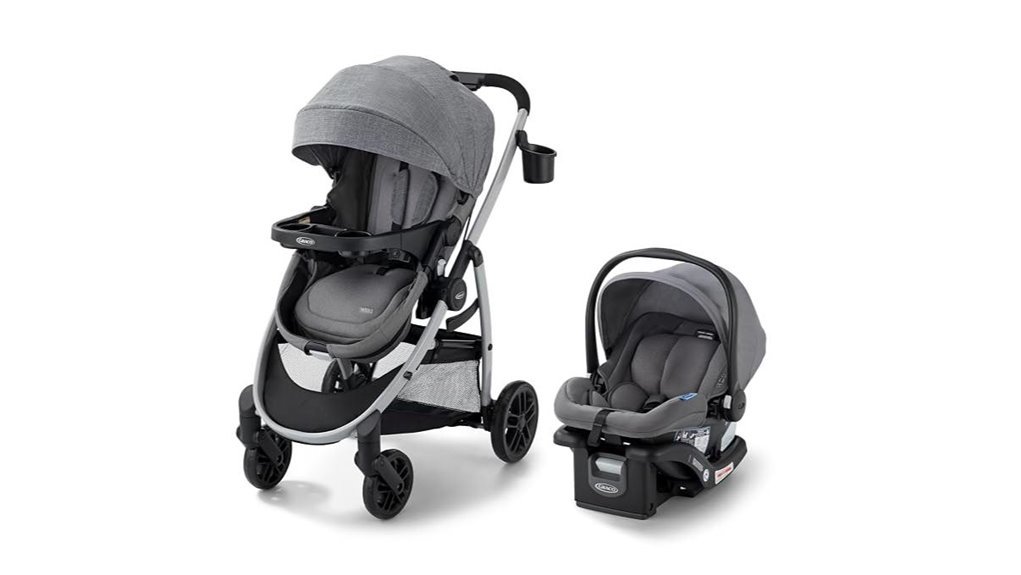
For families seeking long-term versatility, the Graco Modes Pramette 3-in-1 adapts from newborn travel system to toddler stroller. Its three configurations include an infant car seat carrier, infant pramette, and toddler stroller, helping it serve multiple developmental stages. The reversible seat can face a parent for closer supervision or face outward for a more engaging ride. The toddler seat converts into a pramette, and the system includes a Graco SnugRide infant car seat rated from birth up to 32 inches tall. Note: Graco bundles this travel system with different SnugRide models depending on colorway — the weight limit is 30 lb on some bundles and 35 lb on others — so confirm the exact infant-seat model and weight limit listed for the Ellington colorway before buying. A one-hand fold and straightforward car-to-stroller shifts add convenience for everyday outings and travel.
Best For: Families who want a versatile travel system that supports a child from newborn car rides through toddler stroller use.
Pros:
- Three configurations: infant car seat carrier, infant pramette, and toddler stroller.
- Includes a Graco SnugRide infant car seat, rated up to 32 inches tall (weight limit is 30 or 35 lb depending on the bundled model — verify for your colorway).
- Reversible seat and one-hand fold add everyday convenience.
Cons:
- May be bulkier than a lightweight, single-purpose stroller.
- Included infant car seat model — and its exact weight limit — varies by colorway, so double-check before buying.
- Multiple configurations may require a learning curve for first-time users.
Kolcraft Cloud Plus Lightweight Umbrella Stroller, Slate Gray
Best for Growing Toddlers
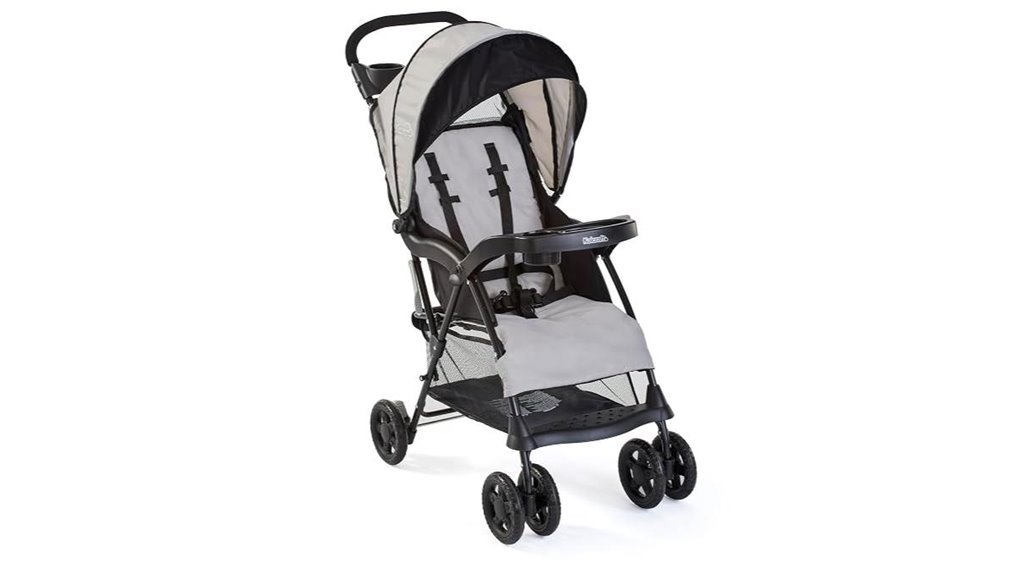
Weighing just 13 pounds, the Kolcraft Cloud Plus suits families seeking an easy-to-carry travel stroller. Its slim 18 x 12 x 34-inch folded profile stands independently, supporting convenient storage in homes, cars, and airport settings. One-hand steering helps simplify daily errands and vacation use. The extended three-tier canopy provides added UV coverage and includes a peek-a-boo window. A multi-position reclining seat supports toddlers up to 50 pounds, while the adjustable five-point harness adds security. Practical features include a large storage basket, removable child tray with cup holder, and parent tray with two bottle holders for organized outings. It is JPMA certified, meeting industry safety-testing requirements.
Best For: Families seeking a lightweight, compact stroller for travel, errands, and everyday outings with toddlers up to 50 lb.
Pros:
- Lightweight 13 lb design and self-standing compact fold simplify transport and storage.
- Extended 3-tier UV canopy, reclining seat, and 5-point harness support comfort and safety.
- Large storage basket plus child and parent trays provide convenient organization.
Cons:
- Designed for toddlers, with a 50 lb maximum weight limit.
- Umbrella-style format may offer less support than larger full-size strollers.
- Folded dimensions may still require dedicated trunk or storage space.
Evenflo Pivot NXT Travel System with LiteMax Car Seat
Best Full-Featured Travel System
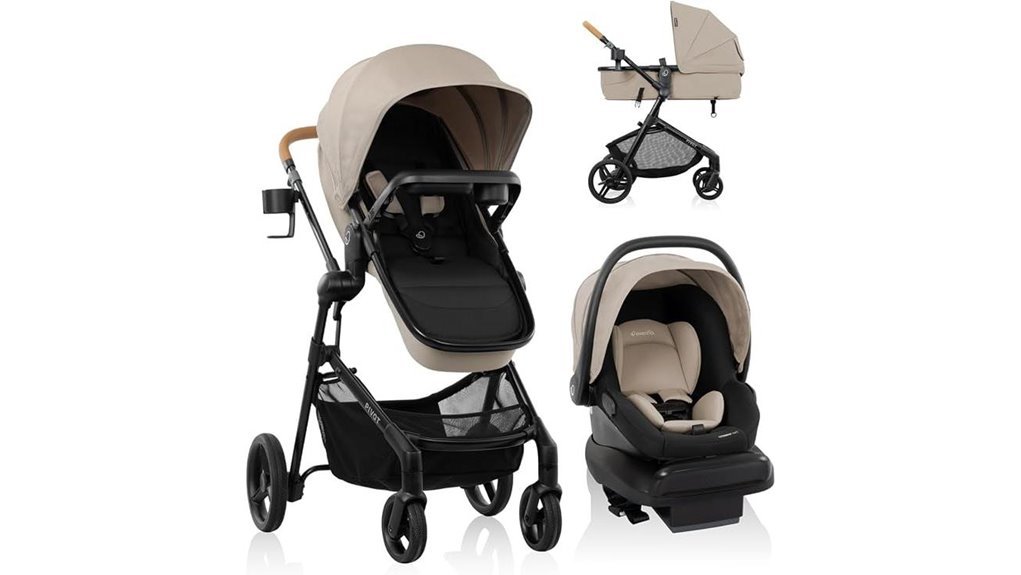
Travel-minded families will appreciate the Evenflo Pivot NXT’s 8.6-pound LiteMax infant car seat. Designed for babies weighing 3 to 30 pounds, it installs easily and clicks directly into the stroller without adapters. The modular travel system offers six configurations, while upgraded wheels help deliver a smoother ride on everyday outings. A self-standing trigger fold simplifies storage and transport. Its 20-pound-capacity basket accommodates diaper bags, toys, and other essentials. Practical extras include a leatherette handle, parent cupholder, BPA-free snack tray, and a large three-panel UPF 50+ canopy with a peek-a-boo window for checking on the child.
Best For: Travel-minded families seeking a lightweight, versatile infant travel system with easy car-to-stroller transitions and ample storage.
Pros:
- Lightweight 8.6-pound infant car seat installs easily and clicks into the stroller without adapters.
- Six modular configurations, upgraded wheels, and a self-standing trigger fold add everyday versatility.
- Large 20-pound storage basket, UPF 50+ canopy, snack tray, cupholder, and leatherette handle enhance convenience.
Cons:
- Infant car seat is limited to children weighing 3 to 30 pounds, so it will be outgrown relatively quickly.
- The included snack tray and cupholder may not replace the need for additional organization accessories.
- Larger storage basket and full-size travel-system design may take up more space than a compact stroller.
Graco Ready2Jet Lightweight Compact Travel Stroller, Kingston
Best for Air Travel
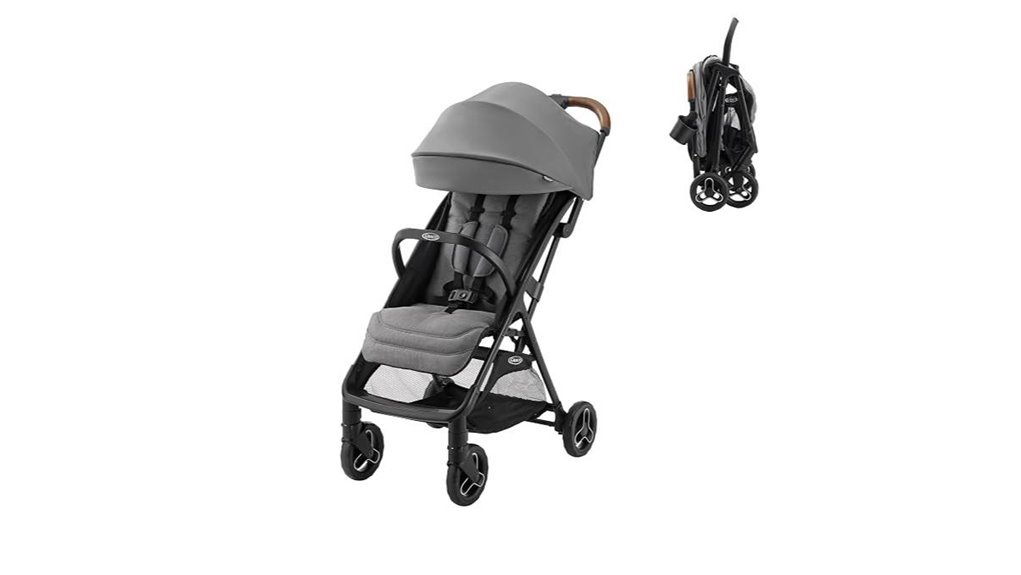
The Graco Ready2Jet suits families seeking an ultra-light, overhead-friendly stroller for frequent trips. At 13.2 pounds, it automatically folds with one-hand activation into a compact, self-standing package, although airline carry-on rules should be verified. Its multi-position recline, adjustable calf support, and convertible three- or five-point harness help accommodate growing children comfortably up to 50 pounds. All-wheel suspension supports smoother outings, while the UV 50 canopy provides sun coverage. A removable belly bar also functions as a carry handle. Practical additions include a storage basket and parent cup holder. The Kingston model finishes its streamlined travel-focused design with a modern leatherette handle.
Best For: Families who want an ultra-lightweight, compact travel stroller for frequent outings and air travel.
Pros:
- Weighs just 13.2 lb and folds automatically with one-hand activation.
- Self-standing fold, carry-handle belly bar, and overhead-friendly size improve portability.
- Includes comfort and convenience features such as recline, adjustable calf support, suspension, basket, and cup holder.
Cons:
- Airline carry-on acceptance may vary by carrier and should be confirmed before travel.
- Limited storage space compared with larger full-size strollers.
- Travel-focused lightweight design may not suit rough terrain or extended everyday use.
Dream On Me Aero Travel Umbrella Stroller, 1-Hand Fold, Lightweight, Black
Best Ultra-Lightweight Pick
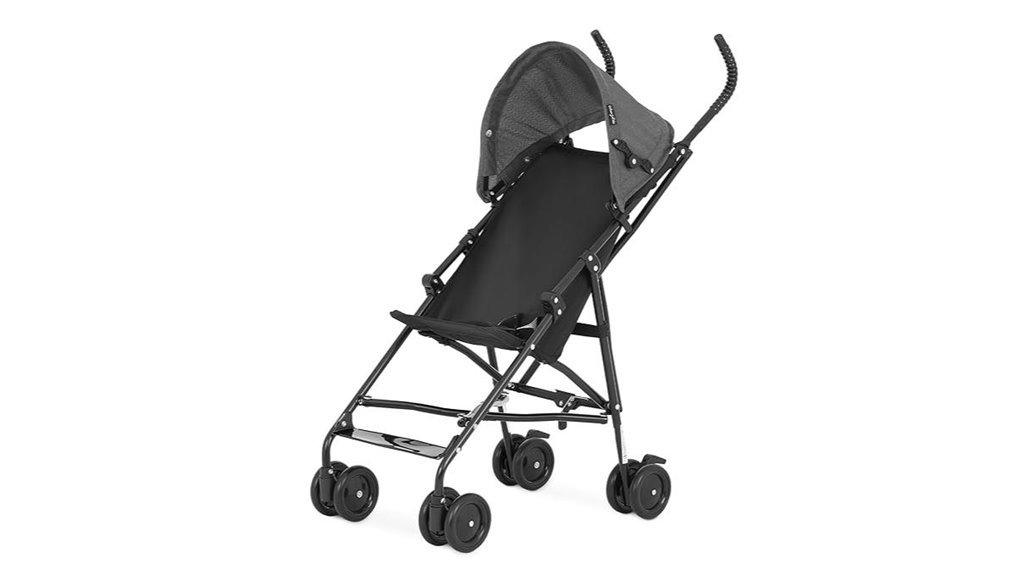
At just 7.2 pounds, the Dream On Me Aero suits families needing a simple stroller for short trips. Its compact one-hand fold and right-side latch make storage easier in apartments, vans, or other limited spaces. The steel frame and 300D polyester fabric provide practical support, while an adjustable three-point harness helps keep children secure. An adjustable, removable canopy adds shade during errands, city walks, and vacations. Rear dual brakes improve stability when parked. Designed for children ages 6 to 36 months and up to 33 pounds, the Aero is stated by the manufacturer to comply with applicable ASTM and CPSC stroller safety standards.
Best For: Families seeking an ultra-lightweight, compact stroller for short trips, travel, city errands, and small-space storage.
Pros:
- Weighs only 7.2 pounds and folds compactly with one hand for easy transport and storage.
- Adjustable, removable canopy and 3-point harness support comfortable, shaded, secure rides.
- Rear dual brakes, steel frame, and stated ASTM/CPSC safety compliance add everyday peace of mind.
Cons:
- Limited to children ages 6–36 months and up to 33 pounds.
- Three-point harness may offer less containment than a five-point harness.
- Best suited to smooth, everyday surfaces rather than rough terrain or long outings.
Evenflo Shyft DualRide Preemie and Infant Car Seat Stroller Combo
Best for Newborns & Preemies
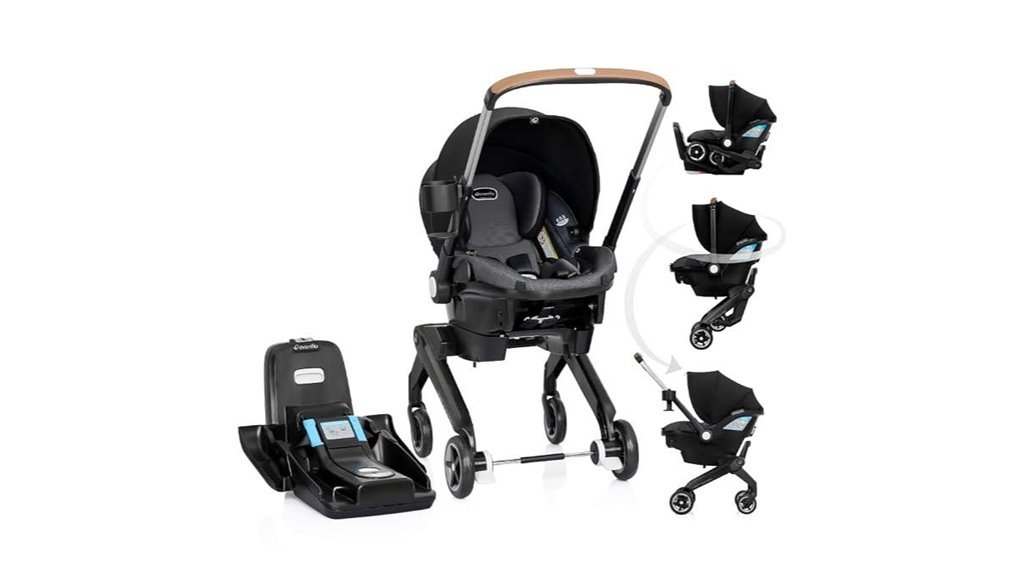
Families flying or driving with newborns will appreciate the Shyft DualRide’s one-step car seat-to-stroller conversion. Designed for babies from 3 to 30 pounds and 15.7 to 32 inches tall, it can suit preemies and infants while reducing gear transfers during trips. Its wheels may remain in the base, creating a lighter carrier for transport. LockStrong belt tensioning and Quick Connectors support secure installation, while Bluetooth SensorSafe alerts caregivers to temperature concerns, unbuckling, prolonged buckling, or an unattended child. A removable carryall, cup holder, and washable wheel wells add practical everyday convenience and help keep vehicle interiors cleaner. The carrier-and-base combination weighs approximately 29 pounds assembled.
Best For: Families with preemies or infants who travel frequently and want a car seat that converts to a stroller in one step.
Pros:
- Supports babies from 3 to 30 lb, making it suitable for many preemies and growing infants.
- One-step car seat-to-stroller conversion reduces the need to transfer sleeping babies between gear.
- Includes helpful safety and convenience features such as LockStrong installation, SensorSafe alerts, washable wheel wells, and a carryall bag.
Cons:
- Bluetooth-based SensorSafe alerts may require a compatible smartphone and reliable connectivity.
- The integrated stroller design may be less compact than a traditional standalone infant carrier.
- At roughly 29 lb assembled, it’s heavier to carry than a standalone infant car seat without its wheeled base.
Doona Car Seat & Stroller, Nitro Black – All-in-One Travel System
Best All-in-One Car Seat
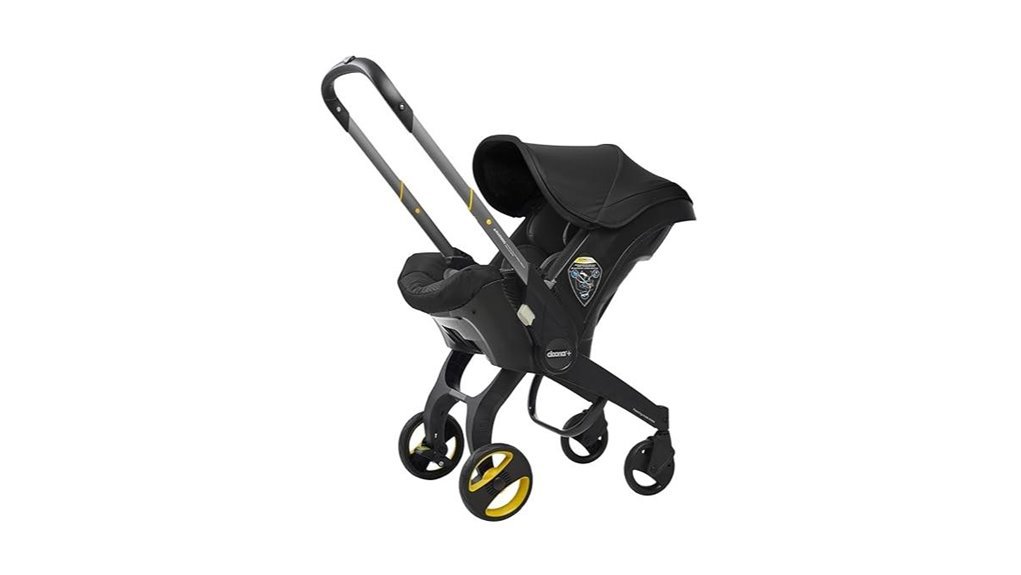
The Doona excels for travelers who need a car seat and stroller in one compact system. Its one-click mechanism converts between modes in seconds, reducing the need to carry separate gear. Certified for rear-facing car seat, stroller, and infant carrier use, it accommodates infants from 4 to 35 pounds. Safety provisions include three-layer side-impact protection, anti-rebound bar technology, and a five-point harness. The near-flat ergonomic infant insert supports newborn neck and back alignment. An adjustable handlebar and washable materials improve everyday usability. Included accessories include the LATCH base, vehicle seat protector, head support, and infant insert. The seat/stroller weighs 17.2 pounds.
Best For: Parents who travel frequently or need a space-saving, all-in-one rear-facing car seat and stroller for infants from 4 to 35 pounds.
Pros:
- Converts from car seat to stroller in seconds with a one-click mechanism.
- Includes robust safety features, including three-layer side-impact protection, anti-rebound technology, and a five-point harness.
- Comes with useful accessories, including a LATCH base, vehicle seat protector, infant insert, and head support.
Cons:
- The 17.2-pound seat/stroller may feel heavy to carry compared with a standalone infant car seat.
- Limited to rear-facing use and a 35-pound maximum child weight.
- The integrated design may not suit families who prefer a separate lightweight stroller for longer outings.
Dream On Me Coast Rider Lightweight Travel Stroller, 45 Lb Limit, Black
Best for Theme Parks
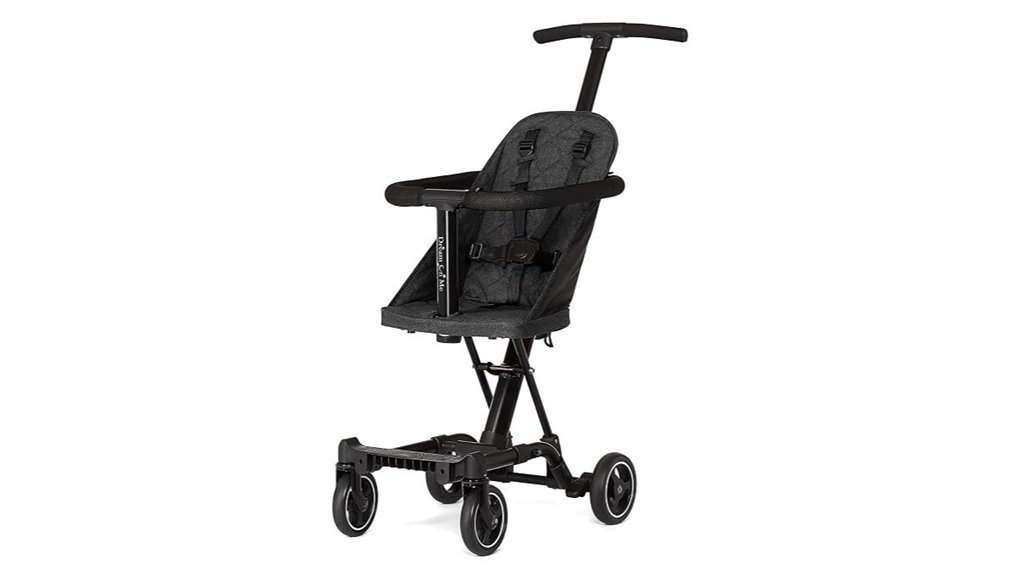
For theme-park trips, the Dream On Me Coast Rider offers a compact, park-approved travel solution. Designed for children ages 6 to 48 months, it supports riders up to 45 pounds and 37.8 inches tall. Its 3-in-1 configuration converts from a stroller into ride and scooter modes, and it carries Baby Safety Alliance certification (the organization formerly known as JPMA) along with stated ASTM and CPSC testing; it has also been recognized with a JPMA Innovation Award. A structured upright seat, adjustable five-point harness, and four soft-ride wheels support everyday mobility. The reinforced aluminum frame remains lightweight, and the adjustable handle improves pushing comfort. Its quick-fold system and storage latch simplify carrying through airports, cruise ports, Disney, Universal, and other venues.
Best For: Families traveling with children 6–48 months who want a lightweight, theme-park-approved stroller with compact folding and versatile ride modes.
Pros:
- 3-in-1 design converts between stroller, ride, and scooter modes.
- Lightweight, quick-fold frame with a storage latch is convenient for airports, cruises, and theme parks.
- Includes a structured seat, adjustable 5-point harness, soft-ride wheels, and adjustable handle.
Cons:
- Limited to children up to 45 lbs and 37.8 inches tall.
- Upright seat design may offer less recline comfort for naps than traditional strollers.
- Intended age range begins at 6 months, so it is not suitable for newborns.
Factors to Consider When Choosing a Baby Stroller 2026: Travel & Everyday Picks
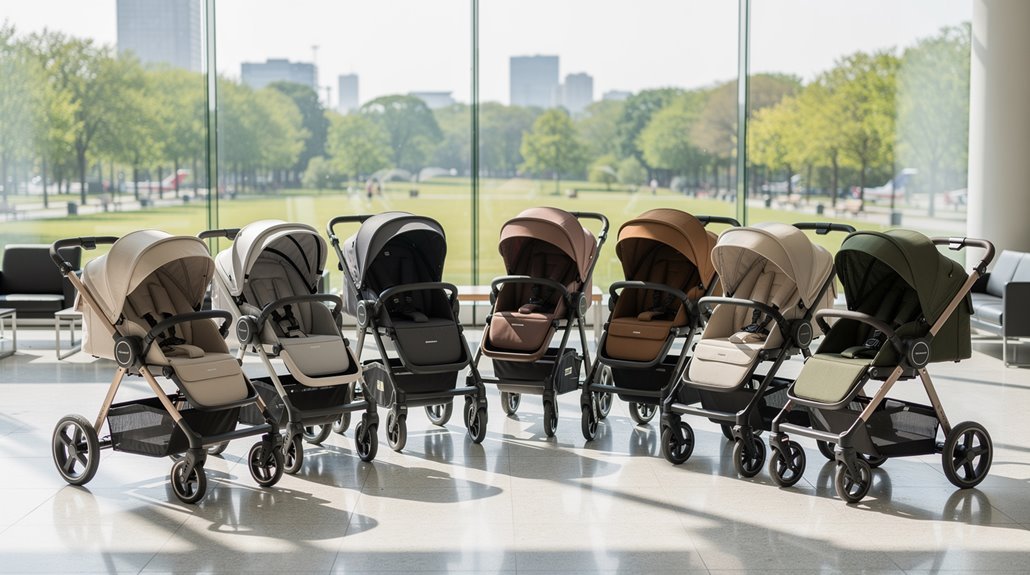
Choosing a stroller starts with matching its age and weight limits to the child’s current needs and expected growth. For travel and everyday use, stroller weight, folding ease, car seat compatibility, and recline comfort can affect convenience. A secure harness and reliable brakes remain essential safety features for every outing.
Child Age And Weight
Age and weight should guide stroller selection from the start. Most models are designed for children from newborn through toddlerhood, commonly accommodating 30 to 45 pounds, while some support up to 50 pounds. Parents should confirm both the stated weight capacity and any age-specific recommendations before purchase.
Newborns need a flat or near-flat recline for appropriate support, whereas older babies and toddlers benefit from upright seating positions. Multi-position recline allows one stroller to serve these changing needs. An adjustable harness is equally important, providing a secure fit as the child gains weight and height. Height limits also deserve attention; certain models specify a maximum child height, such as 37.8 inches, to preserve comfort and safe positioning. Convertible systems that accept infant car seats and later provide full stroller seating can accommodate development without requiring an immediate replacement.
Stroller Weight And Fold
Portability depends heavily on stroller weight and folding design. Models weighing roughly 7 to 13 pounds are generally easier to lift into storage, carry up stairs, and manage during daily errands or travel. Lower weight can reduce strain, particularly when parents or caregivers must handle the stroller repeatedly throughout the day.
A compact fold also makes a substantial difference. Strollers that collapse quickly, ideally with one hand, are convenient when holding a child or managing bags. Some lightweight options fold small enough to meet airline carry-on size requirements, simplifying family trips. The folded configuration matters as much as its dimensions: a self-standing stroller stays cleaner and occupies less usable floor space. A secure safety latch should keep the frame closed during carrying and transport, preventing unexpected opening.
Car Seat Compatibility
Car seat compatibility can make everyday transfers far easier by allowing a sleeping baby to move from the vehicle to the stroller without disruption. A matched travel system typically includes an infant car seat designed to click directly into the stroller frame, simplifying errands and airport connections. Before buying, caregivers should confirm that the specific car seat and stroller are approved for use together rather than assuming brands are interchangeable. Weight limits, dimensions, and attachment requirements should also be checked, particularly as the child grows. Some stroller models accept universal adapters, which can broaden compatibility across selected car-seat brands and provide flexibility for families using different vehicles. Regardless of the setup, the car seat should meet applicable safety standards and lock securely into place. Instructions from both manufacturers should be followed before every outing.
Recline And Comfort
Comfort should be a central consideration when choosing a travel stroller, especially for children who may spend extended periods seated during outings. A multi-position recline lets the seat adapt to different needs, supporting upright observation, relaxed breaks, and naps while away from home. Full-sized, padded seating can provide more consistent support than minimal travel-stroller seats, making longer walks, airport waits, and day trips more manageable. Adjustable calf support also helps maintain a comfortable leg position as toddlers grow, reducing the likelihood of feet dangling awkwardly during rides. Canopy design matters as well: UV-protective coverage can reduce direct sun, glare, and heat, creating a more pleasant environment in changing outdoor conditions. Parents should assess whether adjustments are smooth, practical to operate, and sufficient for the child’s usual sleep and seating habits.
Safety Harness And Brakes
Alongside seating comfort, safety hardware should be evaluated carefully before choosing a travel stroller. A secure five-point harness is generally the preferred design, holding the child snugly at the shoulders, waist, and between the legs to reduce the risk of slipping or falling. Adjustable straps are equally important, since they allow the restraint to maintain a proper fit as the child grows.
Braking performance also deserves close attention. Lockable rear wheels help keep the stroller stationary when stopped on slopes, uneven pavement, or transit platforms. Models with dual brakes can provide additional stability and more dependable control, especially in crowded spaces or during parking. Before purchase, caregivers should confirm that the stroller complies with applicable safety standards from recognized regulatory bodies, indicating that its restraint and braking systems meet established reliability requirements.
Storage And Parent Features
Convenience often depends on how well a stroller accommodates the items caregivers need throughout the day. A large under-seat basket or accessible rear pocket can hold diaper bags, snacks, wipes, and small personal items without requiring an additional bag. Parent cup holders keep beverages within reach, while removable child trays with built-in cup holders provide a designated space for drinks and snacks. These features can reduce clutter and help organize frequent stops during errands or family outings. A self-standing fold is also useful when storage space is limited, allowing the stroller to remain upright in entryways, closets, or vehicle cargo areas. Lightweight construction further improves daily handling, making it easier to lift, carry, and maneuver when loading essentials. Families should assess basket access, weight limits, tray placement, and folding controls before choosing a model.
Terrain And Travel Needs
Travel conditions should guide stroller selection, since city sidewalks, airports, parks, and uneven paths place different demands on wheels, suspension, and portability. Lightweight models around 11 to 13 pounds suit flights, public transit, and urban errands, especially when paired with a compact, quick-fold mechanism. Adjustable handles can improve maneuverability in crowded terminals and narrow store aisles while simplifying storage between trips.
For rougher paths, anti-shock front wheels and all-wheel suspension help absorb bumps, improving stability and ride comfort. A multi-position recline supports infants during longer outings, allowing rest as schedules and locations change. Outdoor-focused travel also calls for dependable sun coverage. A UV-protective canopy helps shield the child during walks, park visits, and sightseeing. Matching these features to expected terrain prevents a stroller from being either unnecessarily bulky or insufficiently capable for daily use.
Before You Buy: Quick Checklist
- Confirm the stroller’s age and weight limit against your child’s current size and expected growth over the next year.
- If buying a travel system, verify exactly which infant car seat model ships with your chosen color, since bundled seats and their weight limits can vary.
- Check the folded dimensions against your car trunk, closet space, or airline’s carry-on policy if you plan to fly.
- Look for a five-point harness and working brakes, and test the fold-and-lock mechanism before each outing.
- Confirm current price, stock status, and any manufacturer safety notices directly on the product page before purchasing, since these details change over time.
Frequently Asked Questions
Are Strollers Allowed Through Airport Security Checkpoints?
Yes, strollers are generally allowed through airport security checkpoints. Security officers typically require the stroller to be folded and placed on the X-ray belt when it fits; larger models may receive separate manual screening. Children are usually removed before screening and carried or walked through the checkpoint. Policies can vary by airport and country, so travelers should allow extra time and check the relevant airport or airline guidance before departure.
How Often Should Stroller Wheels and Brakes Be Maintained?
Stroller wheels and brakes should be checked weekly, cleaned monthly, and serviced as needed. Caregivers should inspect wheels for debris, wobbling, cracks, or reduced rolling; test brakes for reliable engagement and release; and lubricate moving parts only according to the manufacturer’s instructions. After beach trips, rain, rough terrain, or air travel, an additional inspection is advisable. Any brake failure, loose wheel, or persistent pulling warrants immediate professional repair or replacement.
Can a Stroller Be Checked for Free on Most Airlines?
Most airlines allow a stroller to be checked free of charge, either at the ticket counter or gate, especially when traveling with an infant or child. Policies vary by carrier, route, and stroller size, however. Some airlines accept only compact strollers at the gate, while larger models must be checked with baggage. Travelers should confirm allowance limits, protective-bag requirements, and collection procedures directly with the airline before departure.
What Is the Safest Way to Clean Stroller Fabric?
The safest method is to follow the manufacturer’s care label—what better guide protects both fabric and child? Removable covers should be hand-washed or machine-washed only as directed, using mild, fragrance-free detergent. Nonremovable fabric can be spot-cleaned with lukewarm water and a soft cloth. Harsh bleach, strong solvents, and abrasive brushes should be avoided. All parts should air-dry completely before reassembly to prevent mildew, odors, and moisture trapped near padding.
When Should a Baby Transition From Bassinet to Stroller Seat?
A baby should change from a bassinet to a stroller seat when they have strong head and neck control, typically around 4 to 6 months. The seat should recline sufficiently and provide secure harness support. Some babies may be ready earlier or later depending on development and manufacturer guidance. Caregivers should stop using the bassinet once weight, age, or mobility limits are reached, especially if rolling or pushing up begins.
Do I Need a Separate Car Seat, or Does a Travel Stroller Include One?
It depends on the model. A standalone lightweight or umbrella stroller — like a compact travel stroller without a bundled car seat — is not a car seat and should never be used as one in a vehicle; a separately purchased, correctly installed infant car seat is still required for car travel. A travel system pairs a stroller frame with a compatible infant car seat, letting the same seat click into the car base and the stroller. An all-in-one car seat and stroller combo goes a step further, converting the same single unit between the two uses. Always confirm which category a specific model falls into, and check age, weight, and height limits for both the stroller and any included or paired car seat before relying on it for car travel.
Conclusion
Choosing the right stroller can make daily outings and travel feel as smooth as a well-paved road. From compact umbrella models to versatile travel systems and all-in-one designs, each option offers different benefits for growing families. Weight, folding size, safety features, comfort, and car-seat compatibility remain essential considerations. By matching a stroller’s features to lifestyle needs, caregivers can find a dependable option that keeps little ones secure, comfortable, and ready for every journey.