Disclosure: As an Amazon Associate, we earn from qualifying purchases. If you click a link on this page and make a purchase, we may receive a small commission at no extra cost to you.
Getting enough live bait can take longer than fishing itself, especially when your cast net does not open evenly or sinks too slowly. The BasicGear Cast Net offers reinforced monofilament nylon, weighted edges, and several size options for freshwater and saltwater bait fishing. Its simple design and included accessories make it appealing, but reports of uneven brail lines and the weight of larger nets deserve attention. This review explains its features, casting performance, sizing choices, and limitations so you can decide if it suits your fishing needs.
Quick Verdict
Rating: Recommended with caveats
Best For: Beginners and recreational anglers catching baitfish in freshwater or calm inshore waters.
Bottom Line: The BasicGear Cast Net offers useful size choices, durable nylon mesh, and a practical accessory package. However, casting results depend on technique and proper brail-line alignment, while larger sizes can be tiring to handle.
BasicGear Cast Net Specifications
| Specification | Detail |
|---|---|
| Brand | BasicGear |
| Product | Basic Series Cast Net |
| Linked variant | 3 ft radius, 3/8-inch square mesh, zinc-iron weights |
| ASIN | B096MCMDPL |
| Series radius options | 3, 4, 5, 6, 7, 8, 10, and 12 ft |
| Common mesh options | 1/4-inch and 3/8-inch square mesh |
| Net material | Reinforced monofilament nylon |
| Basic Series sinkers | Galvanized zinc iron |
| Weight specification | Approximately 0.75 lb per foot of net radius |
| Rigging | Double lead line, stainless steel swivel, brail lines, tangle-resistant horn |
| Wrist strap | Neoprene |
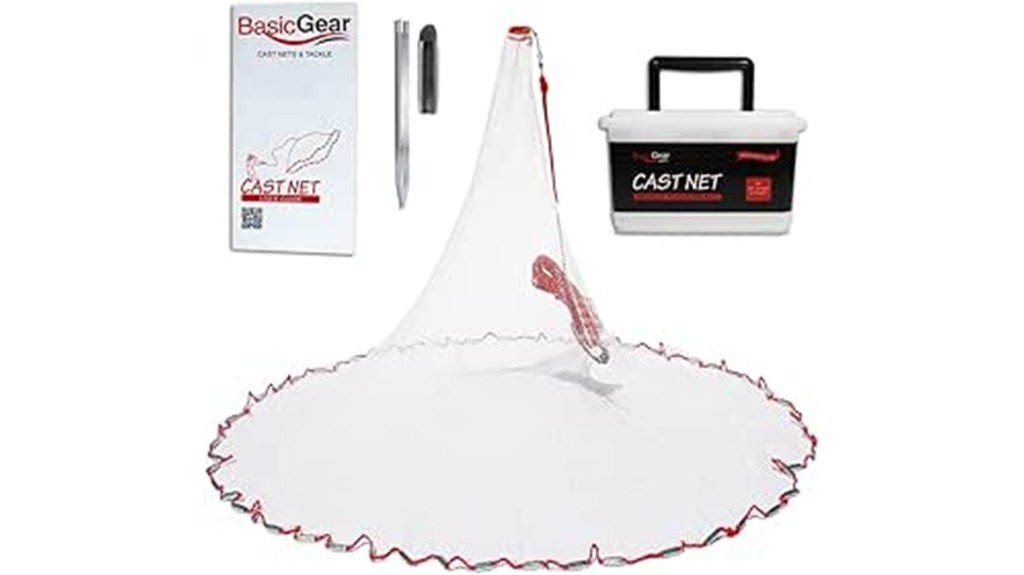
| Included items | Cast net, instructions, repair kit, and utility/storage box |
| Water use | Freshwater and saltwater |
| Care | Rinse after use, especially after saltwater exposure, and dry before storage |
| Primary use | Collecting live baitfish |
Variant note: These specifications describe the Basic Series, with the linked 3 ft, 3/8-inch zinc-iron model as the reference. Other sizes and protected-weight versions may appear as choices on the Amazon listing. Confirm the selected version before ordering.
Product Overview: What Is the BasicGear Cast Net?
The BasicGear Basic Series Cast Net is a circular throw net designed to catch small baitfish in shallow and moderate-depth fishing areas. You throw the weighted net over a school of fish, let it sink, then pull the handline to gather the catch.
Its reinforced nylon mesh, galvanized weights, double lead line, and stainless steel swivel help support repeated casting and retrieval. The manufacturer also includes a repair kit and storage container, which are useful for keeping your gear organized between fishing trips.
The main reason to consider this net is its range of sizes and mesh choices. A smaller net is easier to learn with, while a larger net covers more water when your casting technique is consistent. The right size matters more than simply buying the biggest option.
Who Should Buy It?
Best For
- Beginners who want a smaller cast net for practicing their throwing technique.
- Freshwater and inshore anglers collecting minnows, shad, mullet, or similar baitfish.
- Recreational fishers who value a repair kit, storage box, and several size options.
Skip If
- You need a very fast-sinking net for strong current or deeper water.
- You cannot comfortably throw and retrieve a weighted net.
- You need protected sinkers for regular use around a boat’s finished surfaces and are considering the uncoated Basic Series.
Features & Specs: Detailed Breakdown
Reinforced Monofilament Nylon Mesh
The net uses reinforced monofilament nylon, a common material for cast nets because it combines flexibility with strength. The mesh folds during a cast and spreads as the weighted perimeter moves outward.
Good nylon construction helps with repeated throws, but it does not make the net snag-proof. Rocks, branches, oyster beds, and other sharp underwater objects can still damage the mesh. Inspect it after fishing around rough surfaces.
Galvanized Zinc-Iron Sinkers
The linked Basic Series uses galvanized zinc-iron sinkers around the perimeter. They add the weight needed to spread the net during a cast and pull it down through the water.
BasicGear specifies approximately 0.75 lb of weighting per foot of radius for this series. That is a practical all-around setup for many bait-catching situations, although faster currents may call for a heavier design.
The galvanized coating helps resist corrosion, but these sinkers are not maintenance-free or guaranteed rustproof. Rinsing and drying the net remain important.
Double Lead Line, Swivel, and Horn
The double lead line reinforces the weighted perimeter, while the stainless steel swivel helps reduce handline twisting during retrieval. BasicGear also uses a tangle-resistant horn design to guide the brail lines through the center of the net.
These features can make handling easier, but they do not guarantee a full circular opening. Uneven brail-line tension, poor folding, or incorrect throwing technique can still cause the net to collapse or land unevenly.
Neoprene Wrist Strap and Included Accessories
The neoprene wrist strap provides a more comfortable contact point than a bare handline. You should still inspect the strap and line attachment before casting, especially when using a larger net.
The included repair kit, instructions, and utility box are practical extras. A repair kit can help with small mesh damage, while the box gives you a dedicated place to store the net and accessories.
Choosing the Right Radius and Mesh
Radius: Why Net Size Matters
A cast net is measured by radius, not diameter. A 3 ft radius net can open to about 6 ft across, while a 6 ft radius net can open to about 12 ft across.
A bigger net covers more area, but it also needs more space, better technique, and greater effort to throw. Consider these general starting points:
- 3 to 4 ft radius: Suitable for learning, tight spaces, and shorter casts.
- 5 to 6 ft radius: A practical choice for many recreational freshwater and inshore anglers.
- 7 to 8 ft radius: Better suited to anglers who already cast consistently and want wider coverage.
- 10 to 12 ft radius: Intended for experienced users who can handle the extra weight and larger throwing circle.
1/4-Inch vs. 3/8-Inch Mesh
The 1/4-inch mesh helps retain smaller baitfish that might escape through larger openings. Its tighter mesh also creates more resistance as the net sinks.
The 3/8-inch mesh is a useful general-purpose choice for larger minnows, shad, mullet, and similar baitfish. It provides a balance between bait retention and water flow.
Before You Buy: The original Amazon link points to a 3 ft radius, 3/8-inch mesh Basic Series model with zinc-iron weights. Larger sizes and protected-weight options are separate selections. Confirm the radius, mesh, and sinker type in your cart. A 6 ft radius net is 12 ft across when fully open, not 6 ft.
Pros & Cons
Pros
- Reinforced monofilament nylon provides a flexible netting material for repeated casting.
- Multiple radius and mesh choices suit different bait sizes and skill levels.
- Galvanized zinc-iron weights provide a practical all-around sinking setup.
- Stainless steel swivel and tangle-resistant horn help with line management.
- Repair kit, neoprene strap, and storage box add convenience.
Cons
- Reports of uneven brail lines suggest some nets may not open consistently.
- Larger sizes can be tiring and difficult for new users to cast.
- Standard zinc-iron weights are less suitable around delicate boat surfaces than protected weights.
How It Performs in Real Use
Cast-net performance depends on net size, mesh selection, water conditions, and throwing technique. The following scenarios explain where the BasicGear design makes sense and where its limits may become noticeable. These are practical use assessments based on product specifications and reported feedback, not claims of hands-on testing.
1. Small Freshwater Baitfish
For minnows and other small baitfish in ponds, lakes, or slow rivers, a smaller BasicGear net with 1/4-inch mesh is worth considering. The smaller openings can retain fish that might slip through 3/8-inch mesh.
The tradeoff is greater water resistance. If the net sinks too slowly, baitfish may escape before the weighted edge settles.
2. Shoreline and Inshore Saltwater Fishing
For baitfish near beaches, sheltered bays, and shorelines, the 3/8-inch mesh offers a useful balance of coverage and sinking performance. The galvanized sinkers and nylon mesh are designed for freshwater and saltwater use.
However, salt exposure makes cleaning more important. Strong tidal movement can also reduce the effectiveness of a standard-weight net.
3. Dock and Pier Fishing
From a dock or pier, a larger radius can cover more water beneath you if there is enough room to cast safely. The swivel and brail system help with repeated lowering and retrieval.
Check the depth and current first. For deep water with moving bait, a heavier cast net may reach the fish more effectively.
4. Repeated Casting During a Fishing Trip
The smaller BasicGear options are more manageable for anglers who make frequent casts. A large net may cover more water with each throw, but repeated lifting and folding takes more effort.
For long sessions, a net you can open consistently is usually more useful than one you struggle to handle. Poorly aligned brail lines can add frustration even after your casting technique improves.
How to Use the BasicGear Cast Net Correctly
Setup Tips Before First Use
- Inspect the mesh: Spread the net out and look for tears, knots, or tangled sections.
- Check the brail lines: Make sure they run freely through the horn and do not appear twisted or uneven.
- Inspect the swivel and strap: Confirm that the handline, wrist strap, and connecting hardware are secure.
- Organize the handline: Gather it neatly before making a throw so it can release without catching.
- Practice in an open area: Learn how to open the net consistently before trying larger sizes or difficult water conditions.
Common Casting Mistakes
One common mistake is choosing a net that is too large to throw properly. The added radius is not useful if the weighted edge folds inward before it reaches the water.
Another mistake is ignoring twisted brail lines or tangled mesh. If the net does not spread evenly, inspect the rigging rather than simply throwing harder.
Pro Tip: Lay the net out before your first cast and lift it slowly by the handline. Check whether the perimeter gathers evenly and the brail lines move freely. If you notice a manufacturing defect, contact the seller before cutting or modifying the lines.
Materials, Safety, and Maintenance
Safe Handling
A weighted cast net needs clear space around you. Avoid casting near people, swimmers, boats, overhead obstacles, or anything that could catch the handline. Make sure the net does not snag on rocks or underwater hazards during retrieval.
The Amazon listing includes a California Proposition 65 warning about possible exposure to lead and lead compounds. Read the current product warnings and follow the manufacturer’s handling guidance.
Cast-net regulations also vary by location. Before fishing, check local rules for permitted net size, mesh, target species, and fishing areas.
Cleaning After Freshwater or Saltwater Use
After fishing, remove bait residue, weeds, and debris from the mesh. Rinse the net with fresh water, especially after use in saltwater, and inspect the weighted perimeter and swivel.
Allow the net to dry before long-term storage. Keeping wet netting closed inside a container can cause unpleasant odors and make the next fishing trip harder to prepare for.
Repair and Storage
The supplied repair kit can help address minor netting damage. Inspect repaired areas before putting the net back into service, particularly where tension is concentrated.
Store the net with its handline organized and the mesh free from major tangles. Avoid leaving it exposed to unnecessary sunlight or sharp objects during storage.
Customer Reviews and Reported Issues
Customer feedback on the BasicGear Cast Net is generally favorable, especially for its construction and bait-catching use. At the October 2026 review check, the linked Amazon page displayed 4.4 out of 5 stars from 1,627 ratings. Ratings and review totals can change.
The source review also identifies complaints about uneven brail lines and inconsistent opening. Those reports matter because a cast net must spread properly to catch bait efficiently. They do not establish that every unit has this problem.
| Performance Aspect | Feedback and Buyer Consideration |
|---|---|
| Ease of Use | Suitable for learning, but successful casting takes practice. |
| Casting Efficiency | Mixed feedback, including reports of uneven brail lines. |
| Durability | Reinforced mesh and metal hardware are positive features; snag damage is still possible. |
| Bait Retention | Depends on choosing the right mesh for your target baitfish. |
| Design Quality | Useful accessory package and rigging, with line alignment worth checking. |
Editorial assessment: The available information supports a favorable but qualified recommendation. The net has practical features, although buyer feedback is not a substitute for controlled performance testing.
Best Use Cases & Value
The BasicGear Cast Net makes the most sense when you need a flexible, general-purpose tool for catching live bait. Smaller sizes suit learning and frequent short casts. Larger sizes suit anglers who have enough space and can handle a wider weighted perimeter.
Its included accessories also make it convenient for anglers building a basic bait-catching setup. The repair kit and storage box reduce the need to buy those items separately, although they cannot prevent normal wear or accidental damage.
Is It Worth the Price?
The BasicGear Basic Series is positioned as a value-focused cast net. Its appeal comes from a useful combination of monofilament nylon, corrosion-resistant sinkers, swivel hardware, and accessories rather than advanced professional weighting.
It is worth considering if you catch bait regularly and want several radius and mesh choices. Buying the correct size can offer better real-world value than paying for a larger net you cannot throw consistently.
Its main limitation is that the standard-weight design may not be your best option for deeper water or strong current. Compare the selected variant and current price with a heavier or protected-weight alternative before deciding.
How It Compares to Alternatives
BasicGear Sports Series: This version uses PVC-protected sinkers, making it a better option to consider when casting around finished boat surfaces. The Basic Series instead uses galvanized zinc-iron weights and focuses on general-purpose value.
BasicGear Classic Series: The Classic uses lead sinkers and offers a heavier weighting option for faster sinking in current or deeper water. The Basic Series is more suited to anglers who want a straightforward all-around net for calmer conditions.
If your main concern is learning to cast, choosing a manageable Basic Series radius is often more important than choosing a more specialized design.
Frequently Asked Questions
Is the BasicGear Cast Net good for beginners?
Yes, a smaller Basic Series net can be a practical learning option. A 3 to 6 ft radius is generally easier to handle than a large net, although you still need to practice your throwing technique.
What size BasicGear Cast Net should I buy?
For learning or confined spaces, consider a 3 to 4 ft radius. A 5 to 6 ft radius offers more coverage for recreational use, while larger sizes suit experienced casters with enough throwing space.
Should I choose 1/4-inch or 3/8-inch mesh?
Choose 1/4-inch mesh when you need to retain smaller baitfish. The 3/8-inch mesh is a versatile option for somewhat larger baitfish and allows water to pass through more freely.
Can I use this net in saltwater?
Yes. BasicGear describes its monofilament nylon nets as suitable for freshwater and saltwater. Rinse the net and hardware with fresh water after saltwater use, then let everything dry before storing it.
Why might a BasicGear Cast Net fail to open fully?
Poor throwing technique, tangled mesh, or uneven brail lines can prevent a full circular opening. Check the net’s rigging before use and contact the seller if you find a defect rather than modifying the lines yourself.
Does the BasicGear Cast Net include a repair kit?
Yes. The linked product listing includes a repair kit, usage instructions, and a utility/storage box. Check the package contents when it arrives so you can address any missing components promptly.
Are the sinkers coated to protect my boat?
The linked Basic Series variant uses galvanized zinc-iron sinkers, not PVC-protected sinkers. If you need a protective coating for boat surfaces, compare the separate protected-weight Sports Series option.
Who should choose a different cast net?
Anglers fishing strong current or deeper water may prefer a heavier net that sinks faster. You may also want a smaller radius if you struggle with the weight or throwing technique of larger nets.
The Bottom Line
The BasicGear Cast Net is recommended with caveats for beginners and recreational anglers who want flexible sizing, reinforced nylon mesh, and practical accessories for bait fishing. Its main strengths are its straightforward construction and range of options, but uneven brail lines, larger-net handling, and standard sinker weight can limit performance. Choose a different design if you need faster sinking in strong current or protected weights around your boat.