Affiliate disclosure: This article contains Amazon affiliate links. If you buy through a qualifying link, we may earn a commission at no extra cost to you.
The best all-season tire for a Nissan Altima depends first on the exact year, trim, wheel size, load index, and speed rating shown on the driver-door placard. The four options below cover different Altima generations: the 215/55R17 Lexani suits many 17-inch trims, while the 205/55R16 and 195/65R15 choices are mainly relevant to selected 1998–2001 models. Compare the sidewall code on your current tire with the placard before ordering.
Quick Verdict
- Best for many 17-inch Altima trims: Lexani LXUHP-207 215/55ZR17 98W XL.
- Best comfort-focused 16-inch option: Goodyear Assurance All-Season 205/55R16 91H.
- Best budget set for selected 2000–2001 trims: Fullway HP108 205/55R16 91V.
- Best value for selected 1998–2001 15-inch trims: STARFIRE Solarus AS 195/65R15 91H.
Fitment note: A matching rim diameter alone is not enough. Confirm the complete size, load index, speed rating, and wheel requirements. Do not substitute one of these sizes for another without approval from a qualified tire professional.
Quick Comparison
| Tire | Size | Best For | Main Limitation | Amazon |
|---|---|---|---|---|
| Fullway HP108 Set of 4 | 205/55R16 91V | Budget replacement set for selected 2000–2001 Altima trims | Not a normal fit for most newer Altimas | Check Details |
| Lexani LXUHP-207 | 215/55ZR17 98W XL | Altima trims whose placard specifies 215/55R17 | XL construction may feel firmer than a standard-load touring tire | Check Details |
| Goodyear Assurance All-Season | 205/55R16 91H | Comfort and tread-life coverage for compatible older trims | All-season traction is not a substitute for a winter tire | Check Details |
| STARFIRE Solarus AS | 195/65R15 91H | Selected 1998–2001 Altima trims with 15-inch wheels | Primarily an older-generation fitment | Check Details |
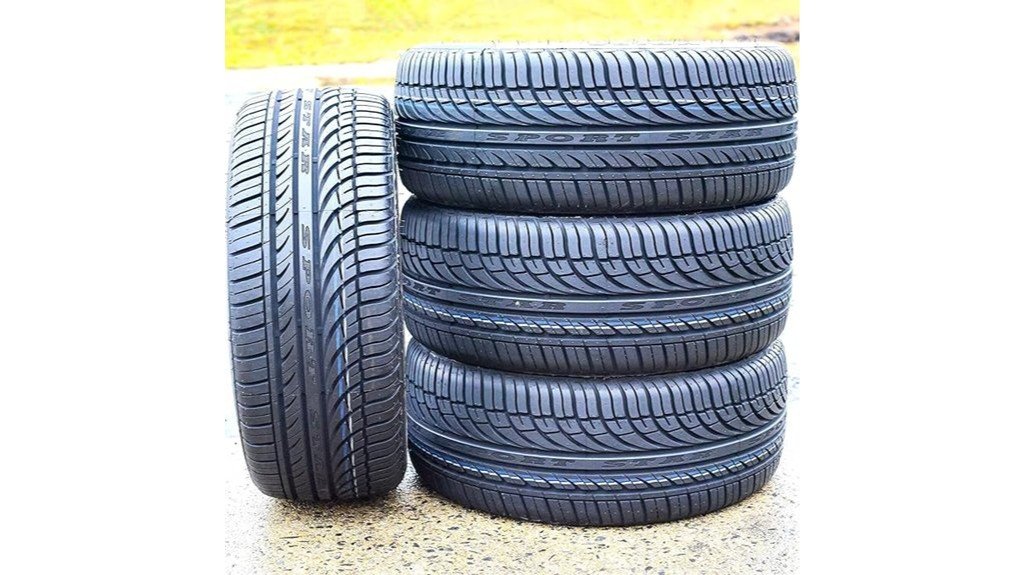
Set of 4 Fullway HP108 All-Season Passenger Car Radial Tires (205/55R16, 91V)
Best Budget Set for Selected 2000–2001 Altima Trims
The Fullway HP108 set solves a straightforward problem: replacing all four tires on an older Altima without moving into a premium price tier. Its 205/55R16 size is relevant only when the vehicle placard calls for that exact size, most notably on selected 2000–2001 Altima trims. The 91V service description, standard-load construction, and asymmetrical tread make it a practical everyday option for dry and wet commuting.
Why You’ll Like It: Buying four matching tires at once helps maintain consistent handling and tread behavior across the car. The tread design is intended for year-round road use, with channels that help move water away from the contact patch.
Best For: Owners of a compatible older Altima who need a complete, value-focused replacement set for normal commuting.
Who Should Avoid It: Drivers of newer Altimas, anyone whose placard specifies a different size or service description, and buyers who prioritize premium ride refinement or a clearly stated mileage warranty.
Pros:
- Four matching tires in one listing.
- Asymmetrical all-season tread for everyday wet and dry driving.
- 91V service description offers a useful margin for compatible older Altima applications.
Cons:
- 205/55R16 is not the standard size for most modern Altima trims.
- No dedicated severe-snow rating is stated.
- Warranty and road-hazard terms should be confirmed with the seller before purchase.
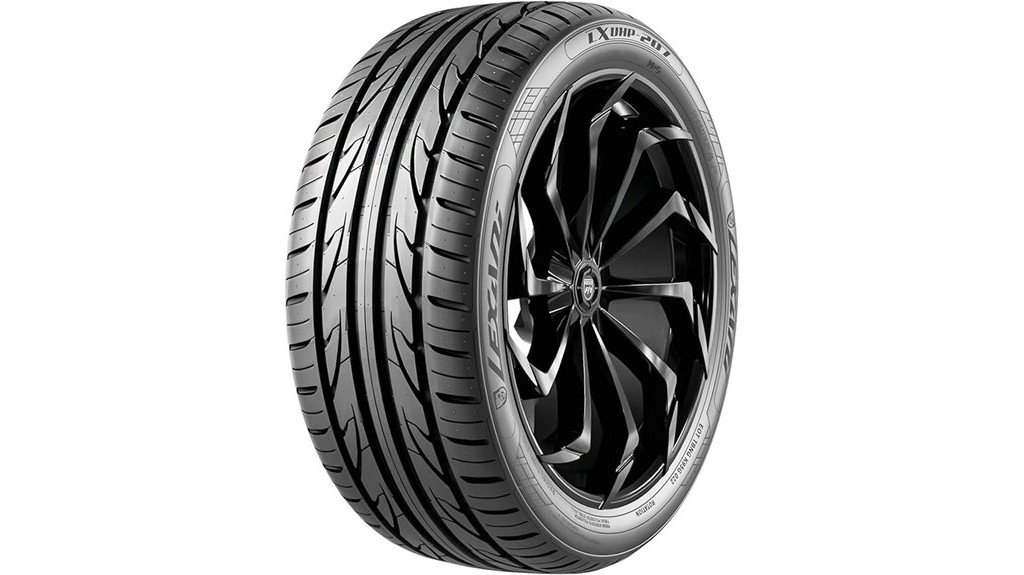
Lexani LXUHP-207 215/55ZR17 98W XL
Best Overall for Compatible 17-Inch Altima Trims
The Lexani LXUHP-207 is the strongest match in this group for many later-model Altimas because 215/55R17 is used on numerous 17-inch trims. Its directional, V-shaped tread and longitudinal grooves are designed to support wet-road drainage and responsive handling. The 98W XL service description provides a higher load index and speed rating than many original-equipment 215/55R17 Altima tires, but the full size and placard requirements still must match.
Why You’ll Like It: It offers a more performance-oriented feel than a basic touring tire while retaining all-season usability. The listed tread depth is about 10/32 inch, and the manufacturer lists a limited mileage warranty for this model, subject to its terms and exclusions.
Best For: Altima owners with 17-inch wheels who want sharper steering response and confident wet-road drainage without switching to a summer tire.
Who Should Avoid It: Drivers who prefer the softest possible ride, live in severe-winter areas, or have an Altima placard that specifies a different tire size.
Pros:
- Correct 215/55R17 size for many Altima trims across several model years.
- Directional grooves help channel water and support wet-road stability.
- 98W XL rating provides substantial load and speed capability for compatible applications.
Cons:
- XL construction can transmit more road harshness than some standard-load touring tires.
- Not a dedicated winter tire and no severe-snow certification is stated.
- Directional tires require correct mounting orientation and have more limited rotation patterns.
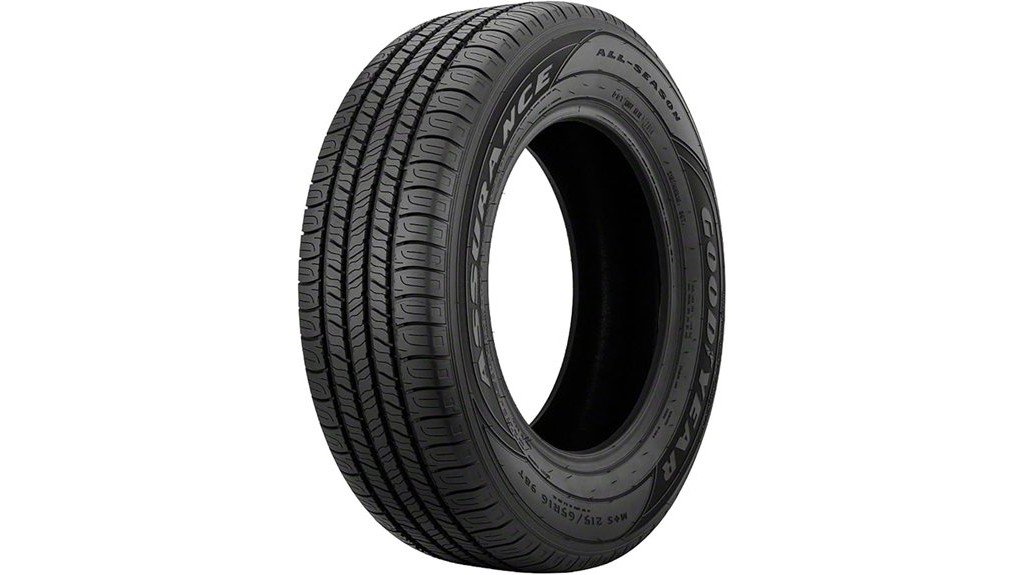
Goodyear Assurance All-Season Radial – 205/55R16 91H
Best Comfort-Focused 16-Inch Pick
The Goodyear Assurance All-Season 205/55R16 91H is a sensible choice for compatible 2000–2001 Altima trims when ride comfort, predictable all-season traction, and established warranty support matter more than sporty response. Multiple biting edges and wide grooves are designed to support traction in wet, dry, and light-snow conditions, while the tread pattern aims to keep daily road noise controlled.
Why You’ll Like It: This model carries a 65,000-mile limited tread-life warranty, subject to Goodyear’s eligibility, maintenance, rotation, and documentation requirements. That is more useful than a vague “lifetime warranty” claim and gives high-mileage drivers a clearer ownership benchmark.
Best For: Owners of an Altima whose placard specifies 205/55R16 and permits a 91H service description, especially commuters who favor comfort and predictable wear.
Who Should Avoid It: Drivers whose vehicle requires a higher speed rating, owners of newer Altimas with different factory sizes, and anyone needing dedicated ice or deep-snow performance.
Pros:
- Comfort-oriented all-season design from an established tire manufacturer.
- Wide grooves help evacuate water and slush.
- 65,000-mile limited tread-life warranty, subject to the manufacturer’s terms.
Cons:
- Fitment is limited mainly to selected older Altima trims.
- Handling response is less aggressive than an ultra-high-performance tire.
- Light-snow capability does not equal dedicated winter-tire performance.
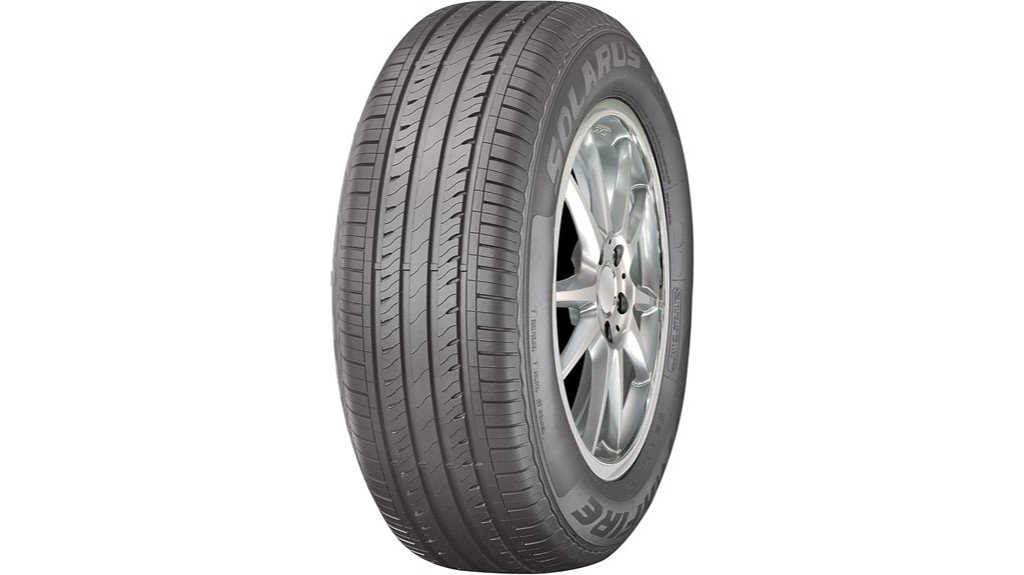
STARFIRE Solarus AS All-Season 195/65R15 91H Tire
Best Value for Selected 1998–2001 15-Inch Altimas
The STARFIRE Solarus AS 195/65R15 91H is aimed at older Altima owners who want a straightforward touring tire with a comfortable ride and manageable road noise. This size appears on selected 1998–2001 Altima trims, so it should not be treated as a universal Altima fit. Its solid center rib, shoulder design, and variable-pitch tread are intended to support stable tracking and quieter everyday driving.
Why You’ll Like It: The tire focuses on the qualities that matter most in an older daily driver: predictable handling, wet-road drainage, and a less aggressive ride than many performance-oriented designs.
Best For: Budget-conscious owners of compatible 15-inch Altima trims who mainly drive in mild weather and want a touring-oriented replacement.
Who Should Avoid It: Owners of newer Altimas, drivers whose placard specifies another size, and motorists who regularly face severe snow or ice.
Pros:
- Relevant fitment for selected 1998–2001 Altima trims.
- Touring-oriented tread design prioritizes comfort and stable tracking.
- Variable-pitch layout is intended to reduce pattern noise.
Cons:
- Primarily an older-generation fitment.
- No severe-snow certification is stated.
- Warranty, production date, and any applicable recall status should be checked before installation.
Factors to Consider When Choosing All-Season Tires for a Nissan Altima
Start with fitment, then compare wet traction, ride comfort, tread life, warranty terms, and winter capability. A highly rated tire in the wrong size is not a valid replacement.
Tire Size, Load Index, and Speed Rating
Read the full code on the driver-door placard, not just the wheel diameter. For example, 215/55R17, 205/55R16, and 195/65R15 have different widths, sidewall heights, and overall diameters. Match the placard size unless a qualified tire professional approves an alternative. The replacement tire’s load index and speed rating should meet or exceed the vehicle requirement. A higher rating does not make a wrong-size tire acceptable.
Model Year and Trim Fitment
Nissan Altima tire sizes vary considerably by generation and trim. The 215/55R17 option is relevant to many 17-inch trims from later generations, while 205/55R16 and 195/65R15 are mainly older-model fitments. Confirm the placard even when a retailer’s vehicle selector says a tire fits, because wheels may have been changed by a previous owner.
Tread Pattern and Rotation
Symmetrical touring patterns generally allow flexible rotation and often prioritize quietness. Asymmetrical tires combine different inner and outer tread functions and must be mounted with the correct side facing outward. Directional tires must rotate in the marked direction and usually require front-to-rear rotation on the same side unless they are remounted. Correct rotation supports even wear and predictable handling.
Wet Traction Performance
Look for wide circumferential grooves, lateral channels, and tread blocks that maintain stable road contact. UTQG traction grades are useful for comparing straight-line wet braking under standardized conditions, but they do not directly rate hydroplaning resistance, wet cornering, snow grip, or ice performance. Do not treat a Traction A grade as a complete wet-weather test result.
Snow and Ice Capability
All-season tires are intended for a broad range of temperatures and may handle light snow, but they are not automatically severe-snow-rated. Look for the Three-Peak Mountain Snowflake symbol when stronger winter capability is important. In regions with sustained freezing temperatures, packed snow, or ice, a dedicated winter tire is the safer seasonal choice.
Ride Comfort and Noise
Touring tires usually emphasize a quieter ride and softer impact response, while performance and XL tires may trade some comfort for sharper steering or higher load capacity. Tread pattern, sidewall construction, wheel size, inflation, alignment, and suspension condition all affect cabin noise and ride quality.
Durability and Treadwear
UTQG treadwear numbers can help compare tires from the same manufacturer, but they are not guaranteed mileage figures and are less reliable for cross-brand predictions. Actual life depends on alignment, inflation, rotation frequency, driving style, climate, and road conditions. Rotate tires on schedule and correct uneven wear early.
Warranty, Road Hazard Coverage, and Returns
Separate the manufacturer’s defect warranty, tread-life warranty, retailer road-hazard plan, and seller return policy. They are not interchangeable. Read the exclusions, rotation requirements, proof-of-purchase rules, prorating method, and installation conditions before buying. Amazon return eligibility can vary by seller and item condition, so verify the current listing instead of assuming every tire has the same return window.
DOT Date Code and Recall Check
Before installation, inspect the DOT Tire Identification Number and date code. Ask about the production date when buying older models or marketplace inventory. Use the manufacturer or NHTSA recall lookup to confirm that the tire’s exact identification number is not included in an active or historical safety campaign.
Before You Buy
- Photograph the driver-door tire placard.
- Match the complete tire size and service description.
- Confirm whether the listing is for one, two, or four tires.
- Check the production date, warranty terms, and road-hazard coverage.
- Budget for mounting, balancing, valve service, alignment inspection, and disposal fees.
- Use the placard inflation pressure, not the maximum pressure molded on the tire sidewall.
Frequently Asked Questions
Which Tire Size Fits My Nissan Altima?
The correct size depends on the year, trim, and wheel package. Use the driver-door placard and owner’s manual as the primary references. The sizes in this article are not interchangeable.
Can I Install 205/55R16 Tires on a Newer Altima?
Not unless the placard specifies that size or a qualified tire professional approves a complete wheel-and-tire conversion. Most newer Altimas use different factory sizes, so changing only the tire can alter clearance, speedometer accuracy, handling, and load capacity.
Are XL Tires Safe for an Altima?
They can be appropriate when the tire size matches and the load and speed ratings meet or exceed the placard requirement. XL does not mean you should inflate the tire to its sidewall maximum; follow the vehicle placard unless a qualified professional specifies otherwise.
Can I Mix Tire Brands on My Altima?
A matching set of four is best for consistent traction and handling. When only two tires are replaced, use the same model on each axle and ask the installer about placing the new pair on the rear. AWD Altimas require especially close matching of tire size, model, and tread depth.
Does a UTQG Traction A Grade Mean Good Snow Grip?
No. The UTQG traction grade is based mainly on straight-line wet braking tests. It does not rate snow traction, ice grip, wet cornering, or hydroplaning resistance.
Should I Use Winter Tires in Heavy Snow?
Yes. In sustained cold, heavy snow, or icy conditions, dedicated winter tires generally provide better braking and traction than standard all-season tires. Install winter tires as a complete set of four.
How Do Tire Warranties Handle Road-Hazard Damage?
Most manufacturer defect and tread-life warranties do not automatically cover potholes, nails, or impact damage. Road-hazard coverage is usually a separate retailer or dealer plan, so review its repair limits, replacement terms, fees, and prorating rules.
Do Tires Affect Fuel Economy?
Yes, but the change varies. Rolling resistance, inflation, tire weight, tread depth, alignment, and size all influence efficiency. Correct fitment and pressure usually matter more than small marketing differences between comparable tires.
Conclusion
The Lexani LXUHP-207 215/55ZR17 is the most broadly relevant option here for compatible 17-inch Altima trims and suits drivers who want a more responsive all-season tire. For selected 2000–2001 models with 205/55R16 tires, the Goodyear Assurance emphasizes comfort and warranty support, while the Fullway HP108 set offers a lower-cost way to replace all four tires together. The STARFIRE Solarus AS is the value-focused choice for selected 1998–2001 Altimas that use 195/65R15 tires.
Final recommendation: Choose by the door placard first and brand second. Confirm the complete size and service description, buy four matching tires when practical, and have the installer check alignment and tire age before the vehicle returns to service.
Product specifications and fitment guidance reviewed August 5, 2026. Seller availability, listing details, and warranty terms can change.