
Finding the best battery for a 2013 Ford F-150 starts with getting the correct size. Ford specifies a Group 65 battery, identified as Motorcraft BXT-65-750 in the owner’s manual. You should not assume a Group 94R, 48, or 47 battery will fit simply because it has enough starting power.
The five AGM batteries below offer different levels of cold-cranking power, reserve capacity, and maintenance-free convenience. However, none is a verified direct-fit Group 65 replacement for your 2013 F-150.
I’ll compare their specifications, explain their limitations, and show you what to look for in a compatible replacement. The goal is to help you avoid buying a battery that cannot be mounted or connected safely.
Important fitment warning
The 2013 Ford F-150 owner’s manual lists Motorcraft BXT-65-750, a Group 65 battery, for the 3.7L V6, 3.5L EcoBoost V6, 5.0L V8, and 6.2L V8. The products compared below use different group sizes. Do not order any of them for a stock battery tray without confirming physical dimensions, hold-down compatibility, post positions, and vehicle fitment.
2013 Ford F-150 Batteries Compared
The table compares the five remaining battery listings. Their electrical specifications may suit other vehicles, but their group sizes differ from the factory specification for the 2013 F-150.
| Product | Best for / Fitment | CCA | Reserve Capacity |
|---|---|---|---|
Group 94R alternative | Vehicles specified for Group 94R; not a confirmed stock F-150 fit | 850 | 140 minutes |
Group 94R alternative | Group 94R vehicles needing high CCA | 850 | 140 minutes |
Smaller-battery alternative | Smaller vehicles specified for Group 47 | 680 | 100 minutes |
Group 48 alternative | Group 48 vehicles needing AGM starting power | 760 | 120 minutes |
Group 48 cycling alternative | Group 48 vehicles with frequent short trips | 760 | 120 minutes |
Why These Batteries Are Not Direct Replacements
All five batteries use absorbed glass mat (AGM) technology, but none matches the Group 65 size Ford specifies for the stock 2013 F-150. Group numbers identify different battery cases and mounting arrangements, not just electrical ratings.
A Group 94R battery can have more than enough cold-cranking amps yet still have the wrong footprint or post layout. The same problem applies to Group 48 and Group 47 batteries.
Ford’s 2013 F-150 owner’s guide, page 392, identifies BXT-65-750 across the listed engines. Ford’s 2013 F-150 battery parts catalog also lists Group 65 Motorcraft battery options.
If your truck has a modified battery tray or electrical system, a different battery could be usable after a proper compatibility assessment. That does not make these options direct replacements for an unmodified truck.
1. ACDelco Gold 94RAGM
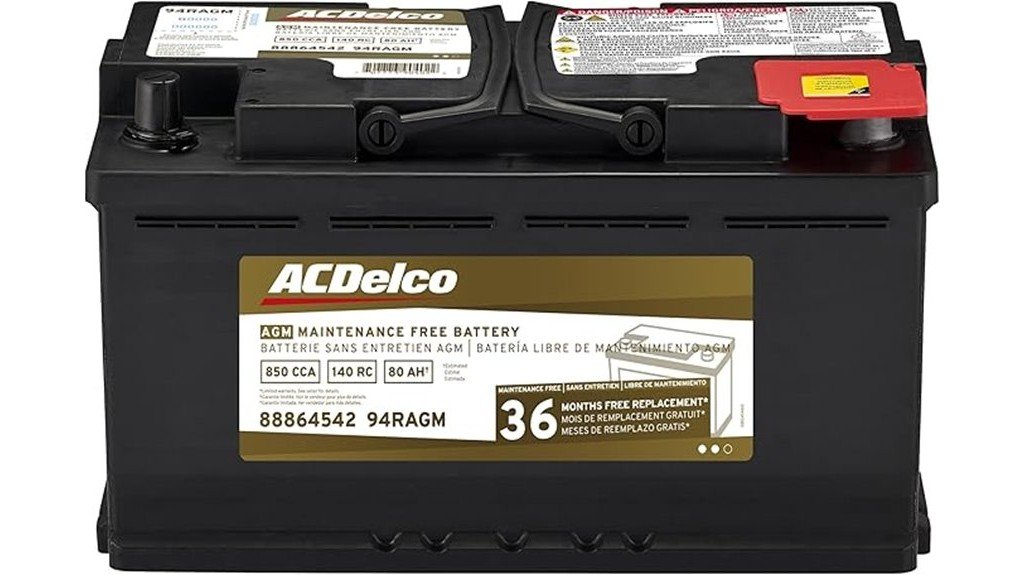
Bottom line: The ACDelco Gold 94RAGM is a powerful AGM starting battery, but its Group 94R dimensions make it an alternative for compatible vehicles, not a direct replacement for the 2013 F-150’s original Group 65 battery.
- BCI group: 94R (H7), a different size from Group 65.
- Cold-cranking amps: 850 CCA for strong cold-weather starting.
- Reserve capacity: 140 minutes at the standard test load.
- Capacity: 80 Ah, indicating stored electrical capacity.
- Dimensions: Approximately 12.4 x 6.9 x 7.5 inches.
The ACDelco 94RAGM uses sealed AGM construction to hold its electrolyte in absorbent glass mats. This reduces leakage risk and removes the need to add water during normal service.
Its high-density negative paste, silver-calcium alloy, and calcium-lead grid design support its starting and cycling performance. These features make it useful for compatible vehicles with substantial electrical demands.
At approximately 51.6 pounds, it is a heavy automotive battery. The manufacturer lists a 36-month limited warranty, but coverage remains subject to the applicable warranty terms.
Fitment caution: Its 850 CCA rating does not override the Group 65 requirement. The narrower case and different terminal arrangement can create mounting or cable problems in a stock F-150 installation.
- 850 CCA supports cold-weather engine starting.
- 140-minute reserve capacity offers useful backup power.
- Sealed AGM design requires no routine water refilling.
- 36-month manufacturer limited warranty.
- Group 94R is not the factory Group 65 size.
- Heavy construction complicates handling.
- AGM benefits do not solve a battery tray mismatch.
2. Weize Platinum AGM Group 94R
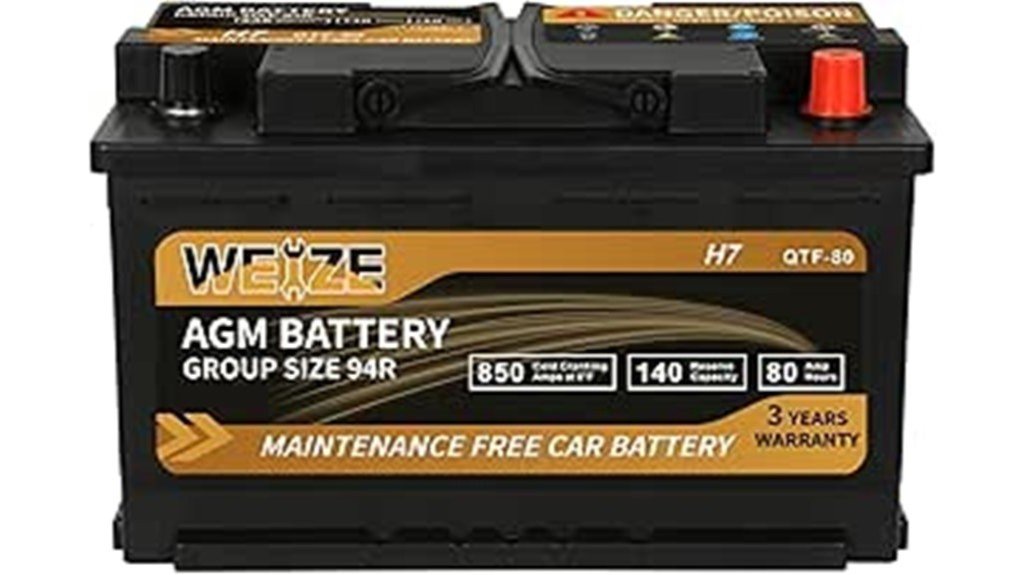
Bottom line: The Weize Platinum AGM Group 94R combines 850 CCA with a 140-minute reserve capacity. It is designed for compatible Group 94R vehicles, not for direct installation in a stock 2013 F-150.
- BCI group: 94R (H7), not the specified Group 65.
- Cold-cranking amps: 850 CCA for cold starts.
- Reserve capacity: 140 minutes for electrical backup.
- Capacity: 80 Ah for stored electrical energy.
- Dimensions: 12.4 x 6.89 x 7.48 inches.
This Weize battery uses AGM construction and is designed for vehicles with higher electrical loads or automatic start-stop systems. Its sealed design reduces maintenance, while its stated vibration resistance can benefit vehicles exposed to rough roads.
The manufacturer specifies a 36-month warranty. The battery also has tapered automotive terminals, so you must check polarity and cable reach before installation.
Its operating temperature specification covers cold and hot environments. However, those ratings describe the battery’s operating conditions, not a guarantee that it will start every engine in all temperatures.
For drivers with a vehicle that requires Group 94R, its high CCA and reserve capacity are useful strengths. For your 2013 F-150, the different group size remains the deciding limitation.
- 850 CCA supports dependable starting in compatible vehicles.
- 140-minute reserve capacity.
- Maintenance-free AGM design with vibration resistance.
- 36-month manufacturer warranty.
- Not a factory-size replacement for the 2013 F-150.
- Its heavy case requires careful handling.
- Designed as an automotive starting battery, not for regular deep discharge in solar applications.
3. Weize Platinum AGM Group 47
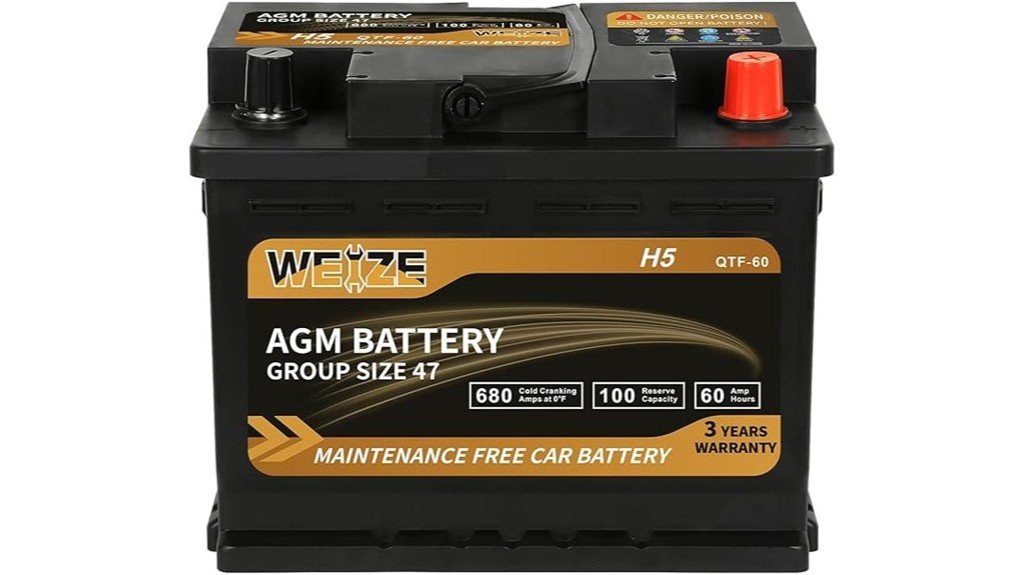
Bottom line: The Weize Platinum AGM Group 47 is a compact starting battery with 680 CCA. It is intended for vehicles specified for Group 47, not as a substitute for the larger Group 65 battery in the 2013 F-150.
- BCI group: 47 (H5), a smaller group size.
- Cold-cranking amps: 680 CCA for compatible engines.
- Reserve capacity: 100 minutes.
- Capacity: 60 Ah.
- Dimensions: Approximately 9.53 x 6.89 x 7.48 inches.
Weize uses sealed AGM construction to provide maintenance-free operation and resistance to vibration. The battery also supports compatible vehicles with automatic start-stop equipment.
Its 680 CCA rating can be adequate for many smaller vehicles. However, it has considerably less reserve capacity than the Group 94R batteries above.
For a 2013 F-150, both its physical size and original equipment requirements make it a poor direct-replacement choice. A smaller battery might not secure correctly in the tray, even when its terminals seem reachable.
The manufacturer lists a 36-month warranty. As with any battery, correct installation and the vehicle’s charging system affect long-term service life.
- Compact dimensions for vehicles requiring Group 47.
- 680 CCA starting capability.
- Sealed AGM construction with low maintenance.
- 36-month manufacturer warranty.
- Incorrect group size for a stock 2013 F-150.
- Lower reserve capacity than the larger batteries here.
- Its smaller case may not work with a Group 65 hold-down.
4. ACDelco Gold 48AGM
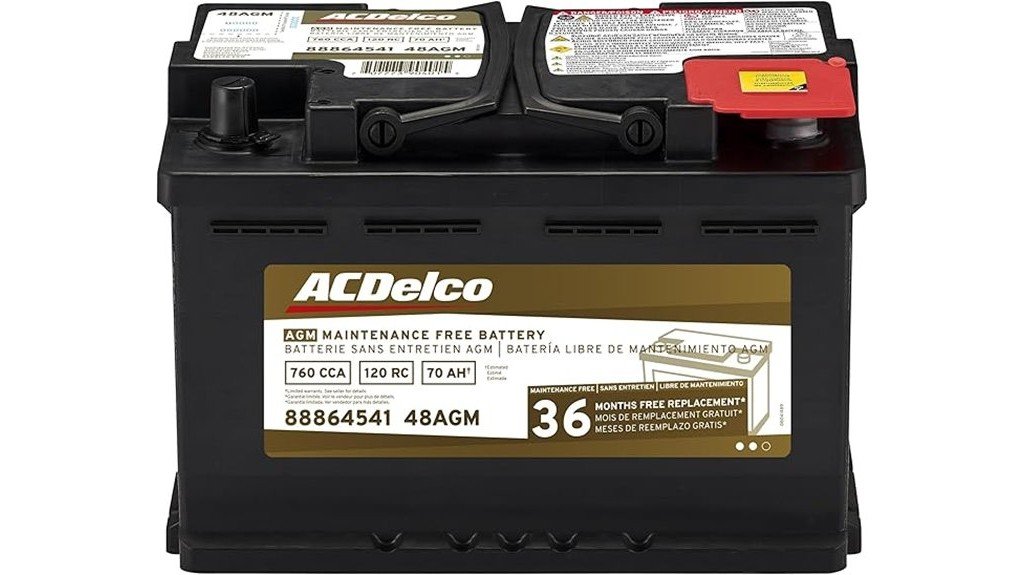
Bottom line: The ACDelco Gold 48AGM delivers 760 CCA and a 120-minute reserve capacity. It is a useful replacement for compatible Group 48 vehicles, but not a factory-size replacement for the 2013 F-150.
- BCI group: 48 (H6), not Group 65.
- Cold-cranking amps: 760 CCA.
- Reserve capacity: 120 minutes.
- Capacity: 70 Ah.
- Dimensions: Approximately 10.9 x 6.9 x 7.5 inches.
ACDelco builds this model with AGM technology, high-density negative paste, and a silver-calcium alloy. These materials support electrical performance and cycle durability.
The sealed design limits electrolyte loss and avoids routine water refilling. Its 760 CCA rating provides useful starting power for a vehicle that specifies this group size.
The manufacturer provides a 36-month limited warranty. At approximately 46.9 pounds, the battery still requires careful lifting and secure installation.
The key limitation is its case size. Even though its starting rating resembles some Group 65 replacement batteries, the Group 48 case and terminal arrangement are different.
- 760 CCA and 120-minute reserve capacity.
- AGM construction with no regular water maintenance.
- High-density paste and alloy grid construction.
- 36-month limited warranty.
- Not a direct-fit Group 65 battery.
- Heavier than many smaller flooded batteries.
- Charging compatibility and mounting must be confirmed.
5. UPLUS AGM-L70-M Group 48
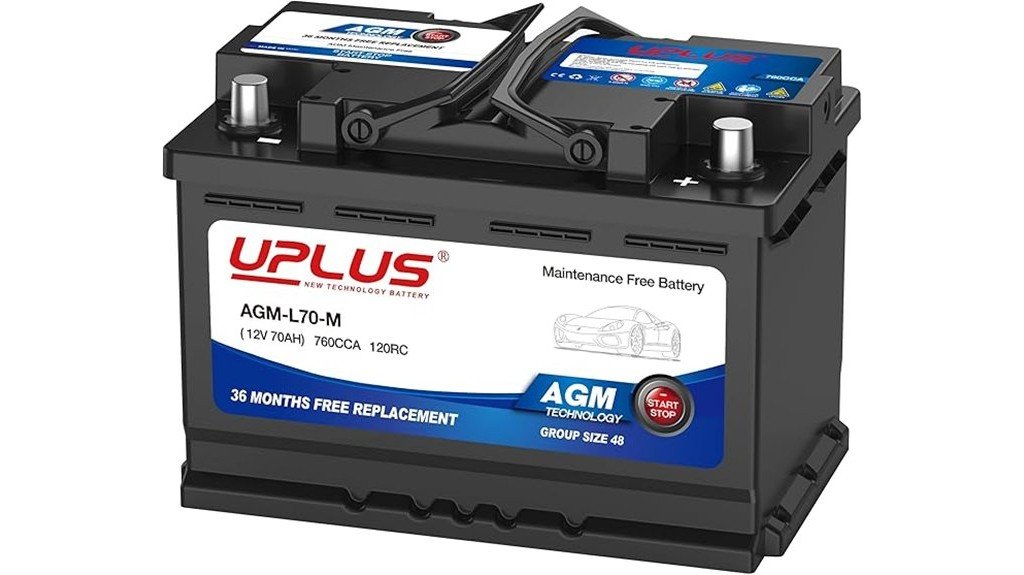
Bottom line: The UPLUS AGM-L70-M Group 48 is designed for vehicles with Group 48 battery requirements and frequent charging cycles. Its 760 CCA rating is useful, but it is not a direct-fit Group 65 battery for the 2013 F-150.
- BCI group: 48 (H6), a different fitment standard.
- Cold-cranking amps: 760 CCA.
- Reserve capacity: 120 minutes.
- Capacity: 70 Ah.
- Dimensions: Approximately 11 x 6.9 x 7.5 inches.
UPLUS uses AGM construction to support starting power and repeated discharge-recharge cycles. Its manufacturer describes the AGM line as suited to start-stop applications and vehicles with substantial accessory demands.
The sealed design resists vibration and requires no routine water maintenance. The manufacturer also promotes enhanced cycle durability compared with conventional starting batteries.
These benefits can be helpful for compatible vehicles that see frequent short trips. However, cycle-resistant does not mean unlimited deep-cycle capability; repeated heavy discharging can still shorten battery life.
UPLUS lists a three-year support period for its automotive AGM batteries. The exact coverage, replacement rules, and exclusions should be reviewed before purchase.
- 760 CCA supports strong starting performance.
- 120-minute reserve capacity.
- AGM design supports frequent charging cycles.
- Sealed, maintenance-free construction.
- Group 48 is not the 2013 F-150 factory size.
- Not intended for repeated full-depth discharges.
- Battery mounting and terminal compatibility require verification.
Which Battery Should You Buy?
For a stock 2013 Ford F-150, choose a properly specified Group 65 starting battery. The alternatives listed above should only be considered for other vehicles that require their respective group sizes or for professionally assessed custom installations.
- For your 2013 F-150: Look for Group 65 with the required terminal arrangement, secure hold-down, and appropriate CCA. Motorcraft BXT-65-750 is the original specification reference.
- For another vehicle needing high Group 94R starting power: Consider the ACDelco Gold 94RAGM.
- For a Group 94R vehicle with start-stop equipment: Consider the Weize Platinum AGM Group 94R.
- For a smaller vehicle requiring Group 47: Consider the Weize Platinum AGM Group 47.
- For a compatible Group 48 application: The ACDelco Gold 48AGM offers 760 CCA and AGM construction.
- For frequent cycling in a Group 48 vehicle: The UPLUS AGM-L70-M is another AGM starting option.
How I Evaluated These Batteries
I compared the stated specifications with the requirements of the 2013 F-150, using the manufacturer’s published information and the original product listings. This is a specifications-based comparison, not a hands-on battery test.
- Vehicle compatibility: Compared each battery group size against Ford’s original equipment specification.
- Starting performance: Checked available CCA ratings to distinguish batteries with different cold-start capabilities.
- Reserve capacity: Compared the stated 25-amp reserve ratings where available.
- Construction and durability: Considered AGM technology, cycling characteristics, terminal arrangements, and warranty terms.
- Product identity and safety: Reviewed product models and public safety information, without treating the absence of a found recall as a safety certification.
Specifications were cross-checked using ACDelco’s manufacturer information, Weize’s battery specifications, and UPLUS’s AGM battery specifications.
Factors to Consider When Choosing a Battery for a 2013 Ford F-150
The best replacement battery must fit securely, provide sufficient starting power, and work with your truck’s electrical system. Compare these requirements before choosing between flooded lead-acid and AGM construction.
Correct Group Size
The factory battery specification for the 2013 Ford F-150 is Group 65. Ford identifies Motorcraft BXT-65-750 for the 3.7L V6, 3.5L EcoBoost V6, 5.0L V8, and 6.2L V8 in its owner’s guide.
A battery’s group size helps identify its case dimensions and terminal arrangement. The correct size allows the hold-down to secure the battery and the cables to connect without strain.
If your truck has been modified, compare its current battery tray and cable arrangement with the proposed replacement. Otherwise, start with a properly rated Group 65 battery.
Cold Cranking Power
Cold-cranking amps (CCA) measure a battery’s ability to deliver starting current at 0°F (-18°C). Higher CCA can help an engine start in freezing conditions, provided the battery is correctly sized and installed.
Ford’s BXT-65-750 specification identifies a 750 CCA factory battery. A compatible Group 65 replacement should meet the relevant original equipment requirements.
A higher CCA rating can provide additional starting margin, but it does not compensate for incorrect case size or reversed terminals. Match the whole battery specification rather than choosing on CCA alone.
Reserve Capacity Needs
Reserve capacity (RC) measures how many minutes a fully charged battery can supply a 25-amp load at the standard test temperature before reaching the specified cutoff voltage.
Higher RC gives you more stored energy for situations such as running lights or electrical accessories while the engine is off. However, regularly draining a starting battery deeply can shorten its life.
Do not assume a battery with 140 minutes of RC is better for your F-150 than a properly fitted Group 65 battery with a lower rating. Fitment and the required starting specification come first.
AGM vs. Flooded Battery and Start-Stop Compatibility
The 2013 F-150 does not require an automatic start-stop AGM battery as a standard replacement. Its original battery specification is a conventional automotive starting-battery application.
AGM batteries absorb electrolyte in glass-mat separators. They offer maintenance-free construction and can handle repeated charging cycles well. Conventional flooded batteries can also be reliable and suitable when they meet the manufacturer’s specifications.
If you choose to upgrade from flooded to AGM, confirm that the battery is suitable for the truck’s charging system and mounting location.
Do not confuse driving in stop-and-go traffic with having an automatic engine start-stop system. They create different demands on a battery.
Terminal Location and Layout
Terminal placement matters just as much as battery size. A battery with the wrong post layout can leave cables too short or create a risk of incorrect connections.
Group 94R and Group 48 batteries commonly have a different positive-post arrangement from Group 65. Do not force the F-150’s cables to reach a battery that does not match the installation.
Before purchase, check the positive and negative post positions while viewing the battery from the same direction, along with terminal type and clearance around nearby components.
Vibration Resistance and Durability
Pickup trucks can expose batteries to vibration from rough roads and worksite driving. Vibration-resistant construction helps protect internal plates and electrical connections.
AGM construction can provide useful durability benefits, but the battery must still be held firmly in its tray. A poorly secured battery can shift, damage cables, or become a safety hazard.
Look for a reinforced case, appropriate hold-down design, and manufacturer-supported operating conditions. Avoid relying on unverified claims that one battery lasts a fixed number of times longer than another.
Warranty and Support
Battery warranties vary in coverage, replacement conditions, and exclusions. A 36-month limited warranty does not automatically guarantee unrestricted free replacement in every situation.
Read the manufacturer’s terms before purchasing. Check how claims are made, whether proof of purchase is required, and if coverage transfers when the vehicle changes ownership.
Choose a battery from a seller that can explain the applicable warranty and provide support if the battery develops a covered defect.
Mistakes to Avoid When Buying a 2013 Ford F-150 Battery
- Buying by CCA alone: A powerful battery can still have the wrong physical dimensions.
- Assuming all AGM batteries fit: AGM describes construction, not vehicle compatibility.
- Ignoring terminal polarity: Incorrect connections can damage electrical components.
- Using an unsecured smaller battery: The hold-down must properly restrain the case.
- Choosing by cab style alone: Use the engine, installed equipment, and original battery specifications to establish fitment.
Battery Replacement and Safety Tips
Automotive batteries contain lead and sulfuric acid and can release explosive gases under some conditions. Wear eye protection, keep sparks and flames away, and follow the vehicle’s replacement procedure.
Before disconnecting a battery, turn off the ignition and electrical accessories. When removing conventional automotive battery connections, disconnect the negative terminal first and reconnect it last, following Ford’s instructions.
Never bridge the battery terminals with a metal tool. If you find damaged cables, melted terminals, severe corrosion, or an insecure battery mount, have the installation inspected before fitting a replacement.
Return used batteries to a retailer or an approved recycling facility. The U.S. Environmental Protection Agency recommends recycling lead-acid batteries rather than placing them in household trash.
FAQs
What Battery Group Size Does a 2013 Ford F-150 Use?
The 2013 Ford F-150 uses a Group 65 battery under Ford’s published original equipment specification. The owner’s manual lists Motorcraft BXT-65-750 for its available 3.7L, 3.5L EcoBoost, 5.0L, and 6.2L engines. If the truck has a modified battery tray or electrical system, verify its present configuration before purchasing a replacement.
Can I Use a Non-AGM Battery in Cold Climates?
Yes. A properly rated flooded lead-acid starting battery can perform reliably in cold climates. Choose a battery that meets the F-150’s required group size and CCA rating. Keep the battery charged and its terminals clean. An AGM battery can offer additional cycling and maintenance benefits, but it is not automatically required for cold-weather operation.
How Long Will My Alternator Last With an AGM Battery?
An AGM battery does not determine a fixed alternator lifespan. Alternator durability depends on its condition, operating temperatures, charging demands, and the rest of the electrical system. A compatible AGM replacement should not require an alternator upgrade solely because it uses AGM construction. Have the charging system checked if you notice warning lights, repeated battery discharge, or abnormal charging voltage.
Are There Special Disposal Requirements for AGM Batteries?
Yes. AGM automotive batteries contain lead and sulfuric acid and must be handled through appropriate recycling channels. Do not discard them in household trash or mixed recycling. Return the used battery to an automotive battery retailer or approved collection facility. Keep the case upright when practical, avoid damage, and follow local transport and recycling requirements.
Do Batteries Differ for Regular vs. SuperCrew Cabs?
Battery selection is not determined by Regular Cab or SuperCrew body style alone. For the 2013 F-150, Ford identifies the same BXT-65-750 factory battery specification across its listed engines. Electrical modifications, extra accessories, and nonstandard battery installations may affect replacement decisions. Confirm the current battery and vehicle configuration before ordering.
Will Warranty Transfer if I Sell the Truck?
Battery warranty transfer depends on the manufacturer’s written policy. Some warranties are limited to the original purchaser, while others may have different transfer rules. A long warranty period does not guarantee it remains valid after a vehicle sale. Keep the purchase receipt and read the specific coverage conditions before relying on transferable protection.
Can I Install a Group 94R or 48 Battery in a 2013 F-150?
Not as a confirmed direct replacement for the stock Group 65 installation. A different group size can alter battery dimensions, mounting points, and terminal location. Even when the CCA rating is high enough, that does not establish safe compatibility. Use Group 65 unless a qualified professional confirms that a properly engineered alternative installation meets the truck’s requirements.
Does the 2013 F-150 Need a Start-Stop AGM Battery?
No. The 2013 F-150 does not have a standard factory automatic engine start-stop battery requirement. A normal Group 65 starting battery meeting Ford’s specification is appropriate for an unmodified truck. AGM may be an optional upgrade if the chosen model fits correctly and is compatible with the electrical system. Automatic start-stop capability alone is not a reason to buy a different battery group.
Final Verdict
The best battery for a 2013 Ford F-150 is one that matches Ford’s Group 65 specification, provides adequate cold-cranking power, and fits securely with the correct terminal layout.
The five AGM batteries compared here offer useful features for other compatible vehicles, but none is a confirmed direct replacement for a stock 2013 F-150. Start with the Motorcraft BXT-65-750 specification or a properly verified equivalent Group 65 battery.
Before you buy, confirm the group size, CCA, terminal arrangement, hold-down compatibility, and warranty. Correct fitment matters more than an impressive specification on a battery that was not designed for your truck.


