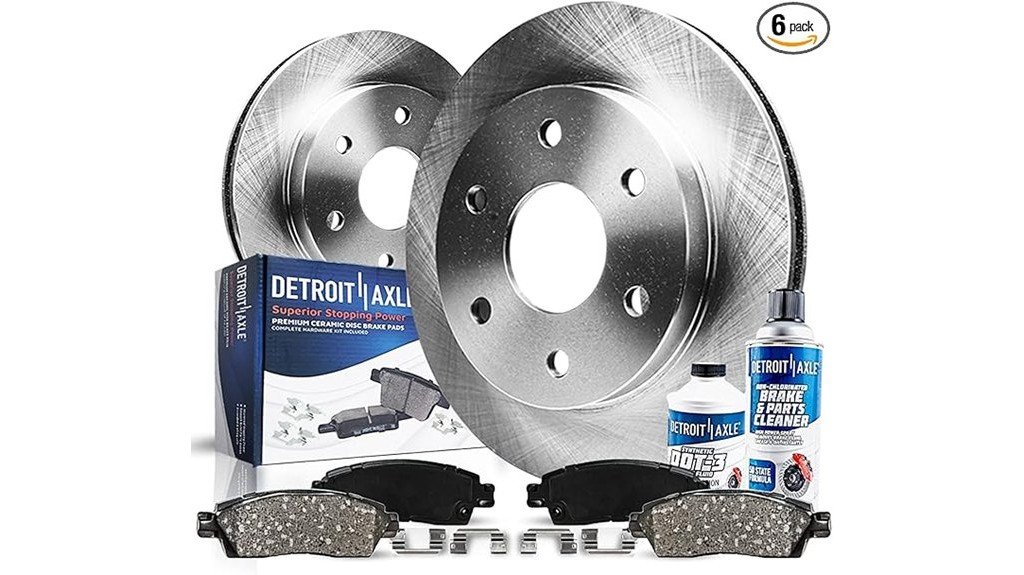
If you drive a 2016 F-150 and want brakes that last under real-world use, you’ll want reliable options that balance stopping power, noise, and dust. I’ll point out three top choices—two Bosch sets and a complete eight-piece kit—explain what each does best, and cover key factors to weigh so you can pick the right pads for your driving style and loads.
BOSCH Severe Duty Disc Brake Pad Set for Front of Select Ford and Lincoln Vehicles
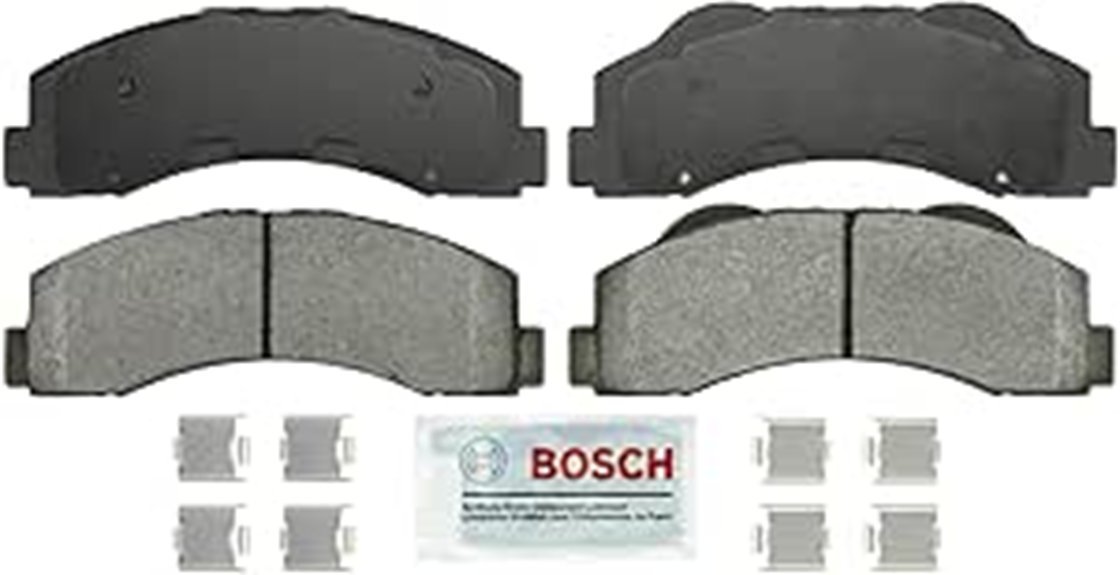
If you haul heavy loads or drive in stop-and-go conditions, the BOSCH BSD1414 Severe Duty front pads are a strong choice because they use semi‑metallic friction formulated for long life and consistent stopping power under stress. You’ll get OE-style multilayer shims, slots, and chamfers for precise fitment on select Ford Expedition, F-150, and Lincoln Navigator fronts, plus pads for one axle, synthetic lube, and hardware. Bosch’s latest friction tech aims for quiet operation and durability under frequent braking. Made and tested in North America, these pads balance robust performance with straightforward installation and manufacturer-backed support.
Best For: Drivers of select Ford Expedition, F-150, and Lincoln Navigator vehicles who frequently haul heavy loads or drive in stop‑and‑go conditions and need durable, high‑performance front brake pads.
Pros:
- Semi‑metallic formulation provides consistent stopping power and long life under heavy use.
- OE‑style multilayer shims, slots, and chamfers for quiet operation and precise fitment.
- Includes pads for one axle plus synthetic lube and hardware; engineered and tested in North America.
Cons:
- Semi‑metallic pads can produce more brake dust and slightly more rotor wear than ceramic options.
- Compatibility limited to select Ford and Lincoln front applications—ensure exact fitment before purchase.
- Manufacturer warranty requires request/registration; Amazon return limited to 30 days.
BOSCH QuietCast Premium Ceramic Disc Brake Pad Set for Rear Ford F-150
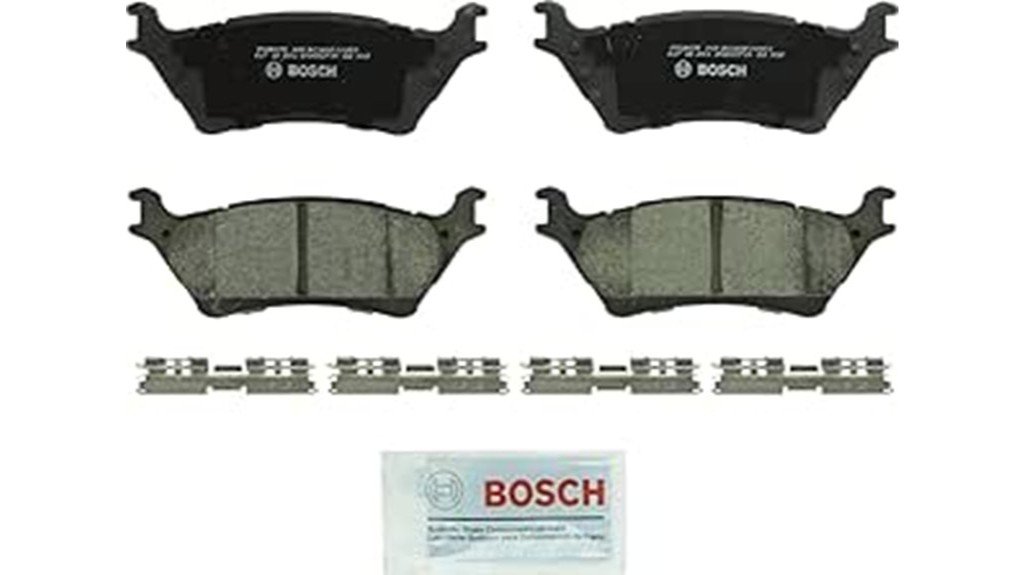
Drivers who want quiet, low-dust braking will appreciate the BOSCH QuietCast BC1602 rear pads, which pair ceramic friction material with pre-attached multilayer rubber-core shims to cut noise and maintain strong stopping power. You’ll get rear pads engineered for select 2012–2018 F-150s with slots and chamfers for consistent contact and fit. Bosch’s Molded Shim Technology and powder-coated backing plates reduce vibration and corrosion, extending pad life. The set covers one axle, includes hardware and synthetic lubricant when available, and weighs about a pound. With a 4.6-star user rating and decades of OE expertise, these pads balance silence, durability, and performance.
Best For: Drivers of select 2012–2018 Ford F-150s who prioritize quiet, low-dust braking with OEM-quality fit and long-lasting corrosion resistance.
Pros:
- Quiet operation thanks to ceramic friction material and pre-attached multilayer rubber-core shims (Molded Shim Technology).
- Low dust and strong stopping power with slots and chamfers for consistent contact and fit.
- Durable construction: powder-coated backing plates and corrosion-resistant materials; includes hardware and synthetic lubricant when available.
Cons:
- Compatibility limited to select 2012–2018 F-150 rear applications—verify fit before buying.
- Set covers one axle only (rear pads for 2 wheels), so fronts or full replacement require additional purchase.
- Availability of included hardware kit varies (“when available”), which may require buying extra installation parts.
Front and Rear Disc Brake Pads Set for Ford F-150 (8PCS, With Hardware)
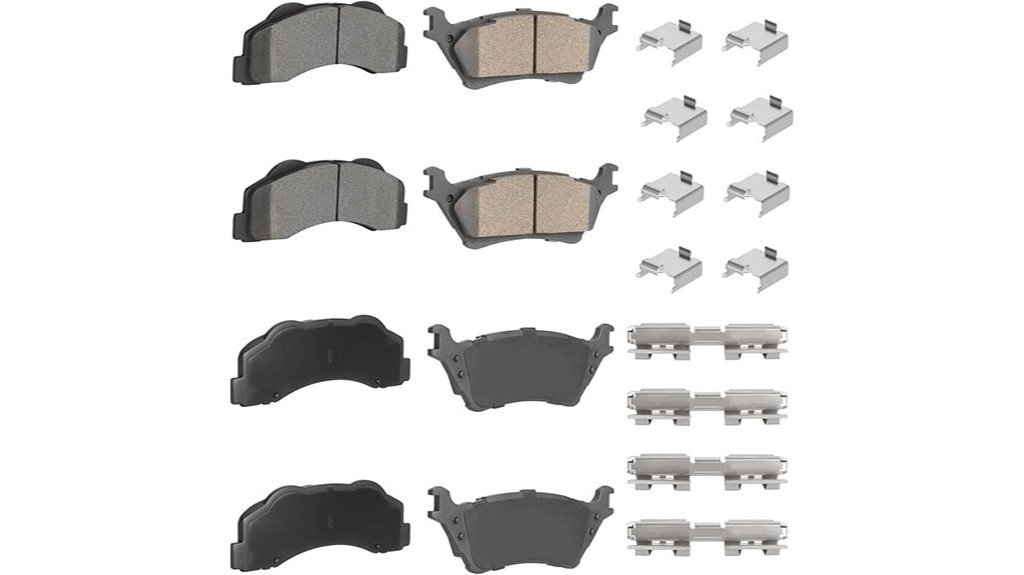
For F-150 owners looking for an all-in-one replacement, the ILONPA 8-piece front and rear disc brake pad set is a top pick because it includes both pads and hardware for 2012–2020 models, letting you complete a full axle swap without hunting for extra parts. You’ll get high-friction ceramic pads with chamfers and grooves to cut noise, vibration, and heat buildup. The multi-coated backing plate resists rust, extending service life. Tested to meet or exceed industry standards, these pads aim to minimize brake fade and deliver consistent stopping power. Check Amazon Confirm Fit and the 30-day return guarantee before buying.
Best For: F-150 owners (2012–2020, 2-door or 4-door) who want a complete front-and-rear ceramic brake pad replacement with hardware for quieter, longer-lasting stopping power.
Pros:
- High-friction ceramic formulation with chamfers and grooves reduces noise, vibration, and heat buildup.
- Includes both front and rear pads plus hardware (8 pieces) for a full axle swap without sourcing extra parts.
- Multi-coated backing plate resists rust and corrosion and is tested to meet or exceed industry standards to minimize brake fade.
Cons:
- Compatibility limited to Ford F-150 models from 2012–2020; must confirm fit (e.g., using Amazon Confirm Fit).
- Relatively few customer reviews despite a perfect rating, limiting breadth of user feedback.
- Warranty and detailed support handled through Amazon, which may require additional steps for claims or returns.
Factors to Consider When Choosing Brake Pads For 2016 Ford F150
When choosing brake pads for your 2016 F-150, you’ll want to weigh material type against your driving needs—ceramic, semi-metallic, and organic each perform differently. Check exact compatibility and fitment, plus expected noise, dust levels, and overall longevity. Don’t forget to compare warranties so you know what’s covered if performance falls short.
Material Type Choice
Although your 2016 F-150 can accept different pad materials, you’ll want to match the pad type to how you use the truck—semi‑metallic for heavy loads and towing, ceramic for quiet, low‑dust daily driving, or organic if you prioritize a softer feel and low noise at light duty. Semi‑metallic pads use metal fibers and composites to shed heat quickly and resist fade under load, so they suit frequent towing and heavy-duty work. Ceramic pads produce minimal dust and run quietly, ideal for daily urban use and longer pad life in moderate conditions. Organic pads offer a softer pedal feel and low initial noise but wear faster under stress. Pick the material that balances braking performance, noise, and longevity for your F-150.
Performance Needs Assessment
Now that you’ve matched pad materials to your driving style, you’ll want to assess specific performance needs to pick the right compound for your 2016 F‑150. Start by considering your typical driving conditions: city stop‑and‑go calls for pads tuned for low fade and strong cold bite, while highway or spirited driving benefits from high‑performance compounds that handle heat. Factor in vehicle weight and payload—regular towing or heavy loads demand pads with superior heat dissipation and structural strength. Decide how much brake noise you’ll tolerate; quieter formulations exist but may trade some bite. Check expected lifespan and wear resistance; premium pads usually last longer. Finally, think about dust generation if you want cleaner wheels and less brake maintenance.
Compatibility & Fitment
Because your 2016 F‑150 can come with different brake hardware depending on trim, axle, and towing package, you should confirm exact fitment before buying pads. Check the manufacturer’s recommended part numbers and match them to your truck’s VIN or build sheet to avoid installation and performance problems. Verify whether the pads are for the front or rear—each position can have different shapes and compounds. Use tools like Amazon Confirm Fit or ask a mechanic or parts specialist to confirm compatibility with your specific configuration. Also factor in your driving and usage—frequent towing, heavy payloads, or stop‑and‑go city driving may require pads rated for higher heat and wear resistance to maintain longevity and safe braking.
Noise & Dust Levels
When you’re picking pads for your 2016 F‑150, consider noise and dust alongside stopping power, since quieter, low‑dust pads help keep wheels cleaner and reduce cabin racket; ceramic pads generally run quieter and shed less dust than semi‑metallics, and pads with multilayer rubber‑core shims further cut vibration and squeal. You’ll want pads that balance braking performance with minimal dust so you’re not constantly cleaning wheels after city driving. High‑friction ceramic compounds usually deliver that balance, offering good bite with lower particulate output and reduced squeal. Check product specs and user reviews for reported dust levels and noise complaints, and prioritize pads with pre‑attached shims if you dislike vibration‑induced squeal during moderate to heavy stops.
Longevity & Warranty
Longevity matters more than you might think — the pad material, build quality, and installation all determine how long your F‑150’s brakes will stay effective. You’ll usually get longer life from semi‑metallic pads under heavy use compared with organic options, and severe‑duty, high‑quality pads can exceed 50,000 miles. Look for rust‑resistant backing plates and advanced friction compounds to boost durability and maintain consistent performance.
Warranty terms vary a lot; manufacturers commonly offer anywhere from 30 days to several years. You should check coverage details—what’s included, pro‑rated limits, and installation requirements—so you don’t void protection. Finally, keep up with regular maintenance and guarantee proper installation; those actions directly extend pad life and protect your warranty.
Frequently Asked Questions
Do Ceramic Pads Cause Braking Fade on Long Downhill Drives?
Ceramic pads rarely cause brake fade on long downhill drives if your cooling and technique are good, but they can fade under extreme repeated heavy braking because they dissipate heat less than some metallic pads; manage heat and use engine braking.
Can I Mix Ceramic Front and Semi-Metallic Rear Pads Safely?
Yes — you can mix ceramic front and semi‑metallic rear pads safely, and it won’t explode your truck like a cartoon. You’ll get balanced feel, but match bedding, guarantee compatible friction, and monitor pedal response.
How Often Should Rotors Be Resurfaced With New Pads?
You should resurface rotors when they’re below manufacturer minimum thickness, have deep grooves, heavy scoring, or runout beyond spec; typically every 30k–70k miles with pads, but check specs and measure thickness before deciding.
Do These Pads Affect ABS or Traction Control Performance?
No, they won’t sabotage your ABS or traction control — unless you pick junk. You’ll keep electronic systems working normally so long as you choose quality pads and install them correctly; bad pads can reduce effectiveness, though rarely disable systems.
Are Any of These Pads Covered by Roadside Assistance Warranties?
Some brands do include roadside assistance warranties, but you’ll need to check each manufacturer’s policy and retailer terms; contact the pad maker or seller before buying so you’ll know exactly what roadside coverage is provided.
Conclusion
You’ve seen three solid choices — each built for different needs — but before you decide, picture your next drive: will you tow heavy loads, crave quiet city stops, or want a complete, hassle-free swap? Think about duty, dust, and whether you want a full kit. Trust the pads that match your driving, and when you bolt them on, you’ll know you chose right — and feel the difference the moment you hit the brakes.