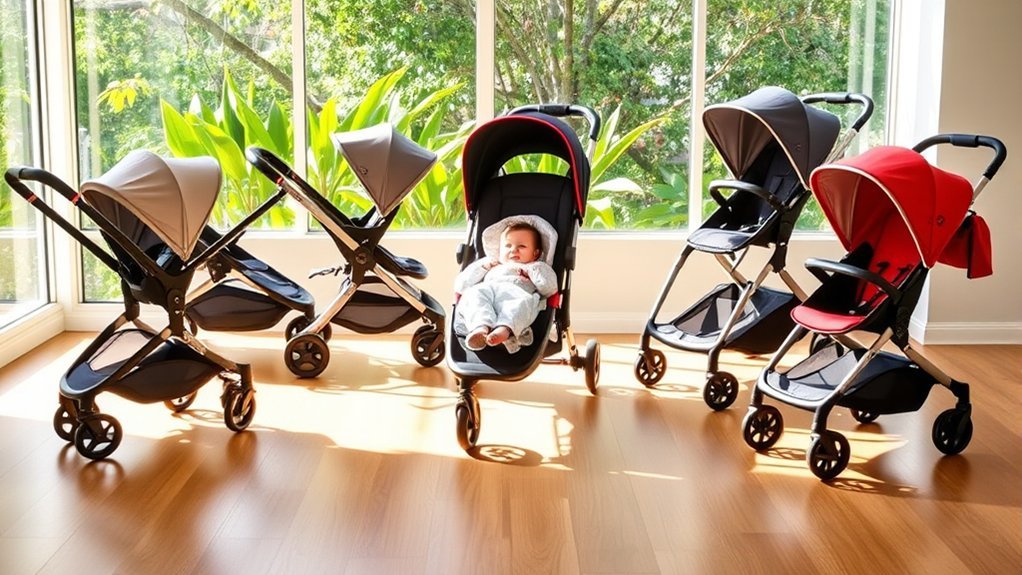
About 90% of parents say ease of use is their top factor when buying infant gear, and we get why that’s essential. We’ll walk through three top-rated car seat and stroller combos that balance safety, comfort, and convenience for newborns. Each has clear pros and a few trade-offs, so stay with us to find the best fit for your daily routine and travel needs.
Doona Car Seat & Stroller, Nitro Black – All-in-One Travel System

If you need a true grab-and-go solution, the Doona Nitro Black delivers: it converts from rear-facing car seat to stroller in seconds with a single click, so you can move a sleeping newborn (4–35 lbs) without waking them. You’ll appreciate the ergonomic support for neck and back, adjustable handlebar, washable fabrics, and water‑repellent UPF 50+ canopy. Installation’s simple with one‑click secure mechanism, 5‑point harness, anti‑rebound bar and 3‑layer side impact protection. TUV and FAA approved, it’s built from fiber‑reinforced polymers and rust‑free aluminum with durable wheels. The package includes infant insert, vehicle protector and LATCH base for straightforward travel.
Best For: Parents and caregivers who need a fast, convenient all-in-one travel solution for newborns and infants (4–35 lbs) that converts from car seat to stroller in seconds.
Pros:
- Converts car seat to stroller with a single click, ideal for moving sleeping babies without disturbance.
- Strong safety features including 3-layer side impact protection, anti-rebound bar, 5-point harness, and TUV/FAA approvals.
- Durable, easy-to-clean materials with adjustable handlebar, UPF 50+ water-repellent canopy, and included LATCH base and accessories.
Cons:
- Rear-facing only design limits use duration compared with some convertible seats that allow forward-facing later.
- Heavier than many standalone infant car seats/strollers (17.2 lbs for seat/stroller plus 9.7 lb base), which may be cumbersome for travel without wheels.
- Premium construction and features come with a higher price tag than basic car seat or stroller options.
Safety 1st Smooth Ride Travel System Stroller with OnBoard FLX Infant Car Seat (Newborn to Toddler)
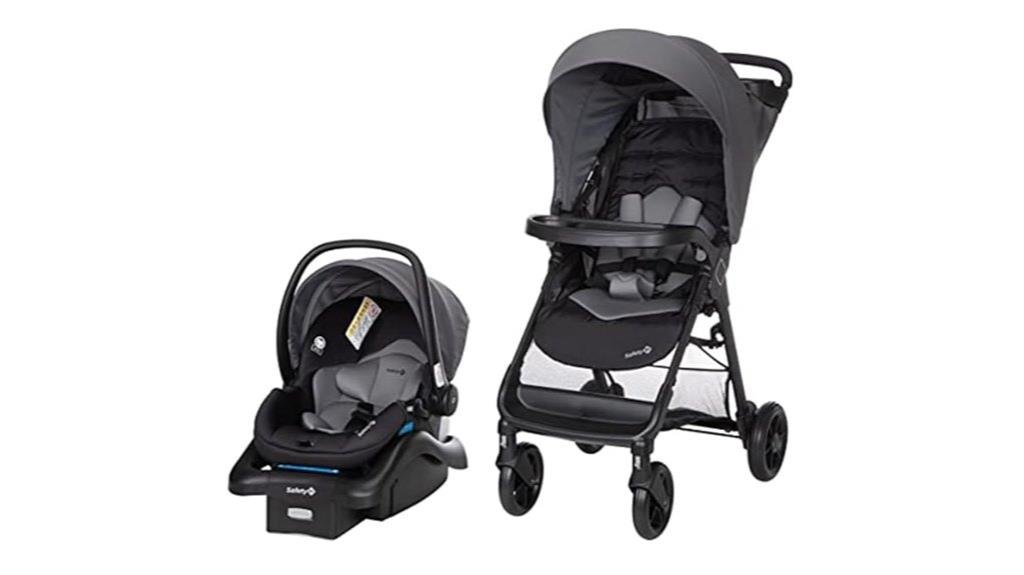
The Safety 1st Smooth Ride Travel System is a strong choice for parents who want a single, easy-to-use setup from newborn through toddlerhood—its OnBoard FLX infant car seat clicks securely into the stroller for quick transfers and rear-faces infants from 4–30 lbs. You’ll appreciate the agile wheels and flip-flop friendly brake for smooth, confident outings, plus an extra-large canopy with flip-out visor and peek-a-boo window. The stroller supports up to 50 lbs, folds with a lift-to-fold that keeps it standing, and offers ample storage and removable trays. JPMA certified, it includes supportive inserts, a 5-point harness, and machine-washable fabrics.
Best For: Parents seeking an affordable, easy-to-use travel system that transitions smoothly from newborn (4 lbs) through toddlerhood with secure car seat-to-stroller convenience.
Pros:
- Combines OnBoard FLX infant car seat and stroller for quick transfers with the secure QuickClick attachment.
- Agile wheels, flip-flop friendly brake, extra-large canopy with visor and peek-a-boo window for comfortable outings.
- Generous storage, lift-to-fold that keeps stroller standing, machine-washable fabrics, and JPMA/ASTM safety certifications.
Cons:
- Car seat rear-facing limit of 4–30 lbs may require earlier transition to a convertible seat for larger infants.
- Total system weight (32 lbs) and stroller seat weight (11.5 lbs) may be bulky for some caregivers to lift frequently.
- Limited warranty (1 year) and basic materials compared with higher-end stroller systems.
Safety 1st Grow and Go Flex 8-in-1 Travel System (Infant Car Seat & Stroller Combo)

Parents who want a single, long‑lasting travel solution will appreciate the Grow and Go Flex’s 8‑in‑1 design, which lets you use it as a carriage, infant car seat, reversible stroller, or compact folded system as your child grows. You’ll get versatile strolling options plus an extra-large basket for diaper bags and a parent tray with two cup holders. The OnBoard FLX car seat fits infants 4–30 lbs and uses cozy knit cushions to support head and torso. It meets or exceeds Federal safety standards, adds reflective trim for visibility, and folds three ways for convenient, compact storage.
Best For: Parents seeking a single, versatile travel solution that adapts from infancy through toddlerhood with multiple stroller and car-seat configurations.
Pros:
- Eight configurations (carriage, infant car seat, reversible stroller, compact folded modes) for long-term use and versatility.
- Extra-large storage basket plus parent tray and child tray with cup holders for convenience on outings.
- OnBoard FLX car seat fits 4–30 lbs with cozy knit cushions, meets/exceeds Federal safety standards, and includes reflective trim for visibility.
Cons:
- Car seat accommodates infants only up to 30 lbs, requiring a future transition to a larger seat.
- Multiple folding modes and parts may be more complex to assemble and store compared with simpler travel systems.
- Orchid Bloom color option may show wear or stains more visibly than darker fabrics.
Factors to Consider When Choosing a Car Seat and Stroller for Newborn
Let’s look at the key factors that should guide our choice of a car seat and stroller for a newborn. We’ll focus on safety standards and certifications, proper fit and compatibility with our vehicle and lifestyle, and infant support and ergonomics. We’ll also consider ease of use and the durability and materials so our picks stay safe and practical over time.
Safety Standards & Certifications
Because newborns can’t protect themselves in a crash, we’ll prioritize certified safety when choosing a car seat and stroller. We should confirm both meet or exceed Federal safety standards and seek JPMA and ASTM certifications as clear markers of compliance. For car seats, we’ll choose rear-facing models rated for newborn weights (often 4–30 lbs) and check for a 5-point harness, side-impact protection, and anti-rebound bar technology to reduce crash forces. For strollers, certification and sturdy construction matter just as much; look for labels showing materials are free from harmful substances. We’ll inspect product documentation and labels before buying, and prefer manufacturers who publish independent test results and clear safety warnings to guarantee maximum protection for our infant.
Fit and Compatibility
When we pick a car seat and stroller, we’ll prioritize fit and compatibility so transfers are secure and everyday use is simple: confirm the car seat snaps into the stroller (look for QuickClick or similar systems), verify both weight and dimensional limits fit your newborn and your vehicle, and choose adjustable harnesses and easily operated attachment mechanisms that grow with the baby and speed changes between car and stroller. We’ll check weight ratings — many infant seats start around 4 lbs up to ~30 lbs, strollers often handle 50+ lbs — and measure folded and installed dimensions to guarantee trunk and storage fit. We’ll favor systems with one‑hand or single‑action shifts so outings stay smooth and safe.
Infant Support & Ergonomics
Although we’re juggling safety and comfort, our top priority is ensuring newborns get proper neck and spine support from day one; that means picking car seats and strollers with ergonomic shaping, head and body inserts for small infants, and a 5-point harness with adjustable heights so the fit stays secure as they grow. We focus on models that cradle the natural curvature of an infant’s spine to prevent slumping and support fragile necks. Cozy knit cushions and plush fabrics add comfort without compromising positioning. Infant inserts that fit babies from about 4 to 30 lbs let us tailor support as they gain strength. For outings, travel systems that keep the same supportive shell between car and stroller maintain consistent alignment and reduce jostling during transfers.
Ease of Use
How can we make daily outings with a newborn simpler and less stressful? We prioritize systems that save time and reduce fumbles: travel systems with one-click secure mechanisms let us switch car seat to stroller quickly and confidently. Adjustable handlebars and ergonomic frames help us maintain proper alignment for the baby’s neck and back while keeping pushing comfortable. Agile wheels and a lift-to-fold design make maneuvering, storage, and transport far easier, especially on crowded sidewalks or in tight trunks. Car seats with multiple harness-height settings let us adapt fit as our child grows without complicated rethreading. Finally, choosing machine-washable fabrics keeps cleaning straightforward after spills and messes, so maintenance doesn’t become another chore.
Durability and Materials
Because we rely on car seats and strollers every day, choosing models built from premium materials matters: fiber-reinforced polymers and rust-resistant aluminum give frames lasting strength, while durable, terrain-ready wheels preserve performance over time. We should prioritize washable fabrics or easily removable covers to keep gear sanitary and extend its life. Look for products with proven safety elements — side impact protection and robust construction that meet or exceed standards — since they signal quality and durability. When considering travel systems, confirm the frame and components handle the combined weight of seat and stroller so nothing strains or deforms as your child grows. Choosing well-made materials reduces replacements, maintains safety, and keeps daily use reliable for years.
Travel and Portability
When we’re on the move with a newborn, travel and portability should drive our choice of car seat and stroller: quick-click travel systems that switch between carrier and pushchair in seconds, compact folds that fit tight trunks and crowded buses, and lightweight frames (around 17 lbs or less) make outings far easier. We should prioritize systems that fold small—measure folded width and look for under about 18 inches to improve trunk and back-seat fit. Ergonomic handles and agile wheels cut caregiver strain and help us navigate curbs, sidewalks, and transit. Weight matters for lifting and hauling; lighter models reduce fatigue. Before buying, we recommend testing the fold, carrying the folded unit, and confirming dimensions against our vehicle and storage spaces to guarantee true portability.
Storage and Accessories
Although space and convenience are often afterthoughts, we should prioritize storage and useful accessories when choosing a car seat and stroller for a newborn. We want ample storage—extra-large baskets make hauling diapers, wipes, and a change of clothes simple, while parent trays and child trays keep bottles, snacks, and phones within reach. Cup holders on parent trays are a must for hands-free sips, and child trays with holders help older siblings stay content. Car seats with small compartments for keys or pacifiers boost everyday usability. Finally, the whole setup should fold easily and compactly for trunk or closet storage and travel. Prioritizing these features saves time and stress on outings with a newborn.
Frequently Asked Questions
Can I Use a Secondhand Car Seat Safely for My Newborn?
We’d caution against using a secondhand car seat unless we can verify it was never in a crash, has its manual and expiration date, shows no visible damage, and meets current safety standards—otherwise we’d buy new.
How Do I Install a Car Seat Without LATCH Anchors?
You can install using the vehicle seat belt: we’ll thread the lap and shoulder belt through the car seat’s belt path, tighten firmly, lock the belt per vehicle manual, check minimal movement, and set the recline per instructions.
Are Stroller Fabrics Hypoallergenic and Washable?
Sometimes soft textures soothe while rough we worry — yes, many stroller fabrics are hypoallergenic and most are washable; we’ll check labels, remove covers for machine washing when allowed, and spot-treat stains to keep them fresh and safe.
When Can I Transition My Baby From Infant Insert to Regular Seat?
We’ll shift your baby once they’ve outgrown the infant insert’s weight, height, or head position limits—typically around 3–6 months—when their head control’s solid and shoulders clear the insert, following your seat’s manual for exact limits.
Do Travel Systems Meet Airline Cabin Stroller Requirements?
Mostly no — we’ve found travel systems often exceed airline cabin stroller size limits, so we can’t assume they’ll fit. Check your airline’s dimensions and consider a compact umbrella or gate-checking the travel system to avoid surprises.
Conclusion
We’ve highlighted three reliable picks — the Doona’s seamless all‑in‑one design, the Smooth Ride’s nimble convenience, and the Grow and Go Flex’s long‑term versatility — so you can picture mornings that flow instead of frazzle. If the theory is true that the right gear turns chaos into calm, imagine buckling a sleeping newborn into a seat that doubles as a stroller, clicking it into place, and knowing every outing will feel safer, softer, and more manageable.