Affiliate disclosure: As an Amazon Associate, we may earn from qualifying purchases made through links in this article, at no additional cost to you.
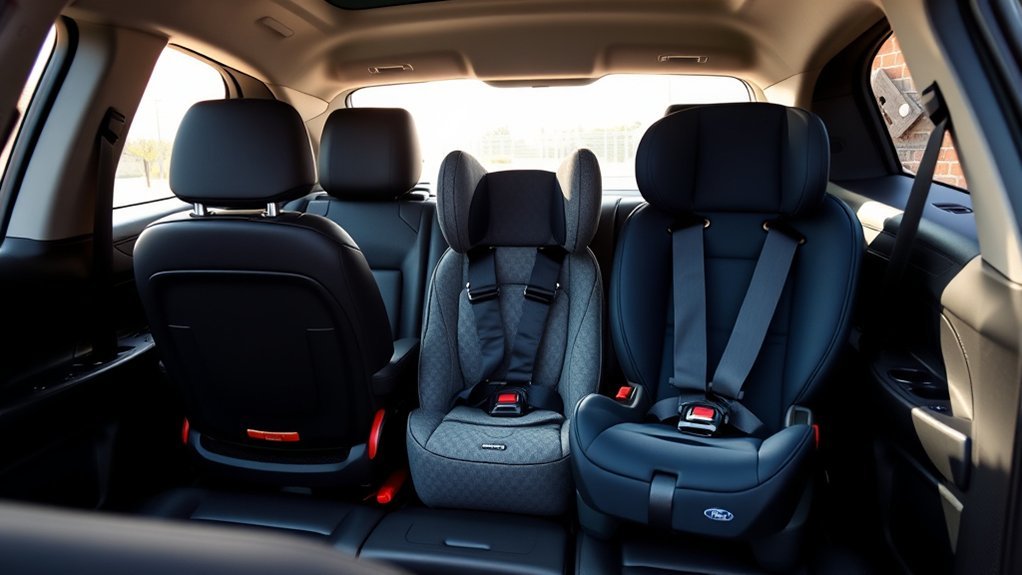
If you’re choosing a convertible car seat for a Ford Escape, the best option is the one that fits your child, your specific Escape model year, and the seating position where you plan to install it. The five relevant seats below cover different priorities, including extended rear-facing, travel, long-term booster use, straightforward harness adjustments, and space-conscious installation.
Important fit note: No car seat is guaranteed to fit every Ford Escape generation or every three-across arrangement. Before buying, compare the restraint’s dimensions with your available space, read both the car-seat and vehicle manuals, and confirm that you can obtain a secure installation without blocking adjacent buckles or forcing the front seats into an unsafe position.
Quick Verdict
- Best for extended rear-facing: Graco Extend2Fit
- Best for travel and a potentially tighter layout: Safety 1st Ellaris
- Best value all-in-one: Safety 1st Grow and Go
- Best four-stage option: Graco Grows4Me
- Best for simple harness adjustments: Safety 1st Crosstown
Quick Comparison
| Car Seat | Best For | Use Modes | Space and Fit Note |
|---|---|---|---|
| Graco Extend2Fit | Keeping a child rear-facing longer | Rear-facing 4–50 lb; forward-facing 26.5–65 lb | 19.5 inches wide; check front-seat clearance when reclined |
| Safety 1st Ellaris | Travel and space-conscious installations | Rear-facing 5–40 lb; forward-facing 30–65 lb | Manufacturer-marketed slim design; verify every three-across setup |
| Safety 1st Grow and Go | Three-stage value and easy cleaning | Rear-facing 5–40 lb; forward-facing 30–65 lb; booster 40–100 lb | About 19.25 inches wide; actual child and vehicle fit varies |
| Graco Grows4Me | Using one seat through backless-booster mode | Rear-facing 5–40 lb; forward-facing 26.5–65 lb; boosters 40–120 lb | 21.5 inches wide and 22.5 lb; not intended as a narrow three-across pick |
| Safety 1st Crosstown | One-hand harness and headrest adjustments | Rear-facing 5–40 lb; forward-facing 30–65 lb; booster 40–100 lb | 19.5 inches wide; do not rely on older 17-inch claims |
How These Seats Were Compared
The recommendations focus on published child-size limits, restraint width, rear-facing capacity, adjustment systems, installation features, cleaning requirements, booster capability, and the practical space concerns that commonly affect a compact SUV car-seat installation. The article does not claim hands-on crash testing or guarantee compatibility with a particular Ford Escape.
Graco Extend2Fit Convertible Car Seat for Infants to Toddlers

Best for extended rear-facing: The Graco Extend2Fit is the strongest option here for families who want a higher rear-facing limit. It supports rear-facing use from 4 to 50 pounds and forward-facing harness use from 26.5 to 65 pounds, subject to all height, fit, and readiness requirements in the manual.
The four-position extension panel provides up to five additional inches of rear-facing legroom. Its no-rethread harness and 10-position headrest adjust together, while the six-position recline and level indicator help parents achieve the required angle. Push-button InRight LATCH connectors provide an audible click during attachment, although a correct seat-belt installation is also an appropriate option when completed according to both manuals.
At approximately 19.5 inches wide and 19 pounds, this is not the lightest travel seat. The extension panel and rear-facing recline may also require meaningful front-to-back space, so check front-passenger clearance in your Escape before committing to the position.
Best For: Parents who prioritize a 50-pound rear-facing limit and do not need the restraint to become a booster.
Pros:
- Rear-facing limit of up to 50 pounds.
- Extension panel provides up to five inches of additional rear-facing legroom.
- No-rethread harness, 10-position headrest, six recline positions, and push-button LATCH connectors.
- Machine-washable seat pad and removable infant inserts.
Cons:
- Does not convert into a booster seat.
- Its rear-facing depth and recline may reduce front-seat room in some Escape configurations.
- At about 19 pounds, it is less convenient for frequent transfers than a lightweight travel-focused seat.
Safety 1st Ellaris 3-in-1 Convertible Car Seat (Smokey Haze)

Best for travel and space-conscious layouts: The Safety 1st Ellaris is designed for rear-facing use from 5 to 40 pounds and forward-facing use from 30 to 65 pounds. Safety 1st markets it as a slim, aircraft-ready restraint that can fit three across in many vehicles.
Its five-position headrest and harness provide basic growth adjustment, while the up-front harness control and hook-style LATCH system keep the design straightforward. Two removable cup holders are dishwasher-safe, and the seat pad is machine-washable and dryer-safe.
The Ellaris is a strong option when portability and width matter more than booster capability. However, “fits three across” is not a guarantee for every Ford Escape. The arrangement must still be independently secure, with accessible buckles and no restraint pushing another out of position.
Best For: Families seeking a travel-friendly convertible restraint or attempting a carefully measured multi-seat arrangement.
Pros:
- Manufacturer-marketed slim design intended to conserve back-seat space.
- Aircraft-ready for use in approved harness modes; verify the certification label and airline rules before travel.
- Five-position headrest and harness with up-front adjustment.
- Machine-washable, dryer-safe pad and dishwasher-safe cup holders.
Cons:
- Does not convert into a belt-positioning booster.
- Rear-facing use ends at 40 pounds rather than 50 pounds.
- Hook-style lower-anchor connectors may be less convenient than push-button connectors for frequent transfers.
Safety 1st Grow and Go All-in-One Convertible Car Seat (Black Phantom)
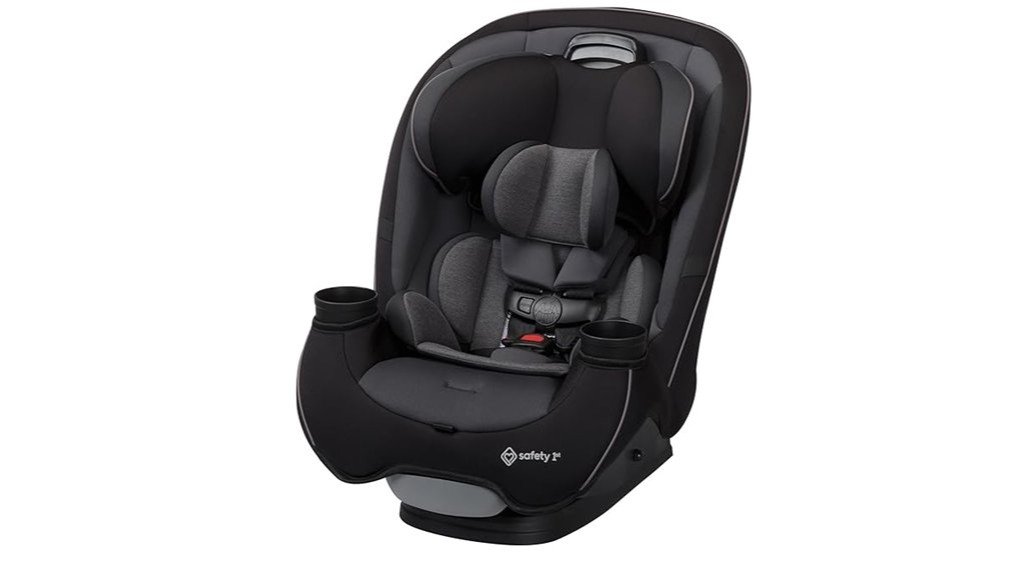
Best value all-in-one: The Safety 1st Grow and Go covers three stages: rear-facing from 5 to 40 pounds and 19 to 40 inches, forward-facing from 30 to 65 pounds and 34.4 to 49 inches, and belt-positioning booster use from 40 to 100 pounds and 43.4 to 52 inches. Every transition must also follow the child-age, fit, and maturity requirements in the manual.
The QuickFit system adjusts the harness and headrest together, reducing the need to rethread the harness as your child grows. Two removable infant pillows, three recline positions, harness holders, and two dishwasher-safe cup holders add everyday convenience. The pad removes without taking apart the harness and is machine-washable and dryer-safe.
The current listing is approximately 19.25 inches wide. That can be more space-conscious than the Grows4Me, but it is not a universal three-across guarantee. Its main advantage is providing rear-facing, forward-facing, and booster modes at a practical size.
Best For: Families who want one moderately sized restraint to cover three stages without paying primarily for premium installation hardware.
Pros:
- Rear-facing, forward-facing harness, and belt-positioning booster modes.
- QuickFit harness and headrest adjustment.
- Three-position recline and removable infant support pillows.
- Machine-washable, dryer-safe pad and dishwasher-safe cup holders.
Cons:
- Rear-facing limit stops at 40 pounds.
- Actual fit may vary before a child reaches the maximum published height or weight.
- Its approximately 19.25-inch width may still be too wide for some three-across combinations.
Graco Grows4Me 4-in-1 Convertible Car Seat (West Point)
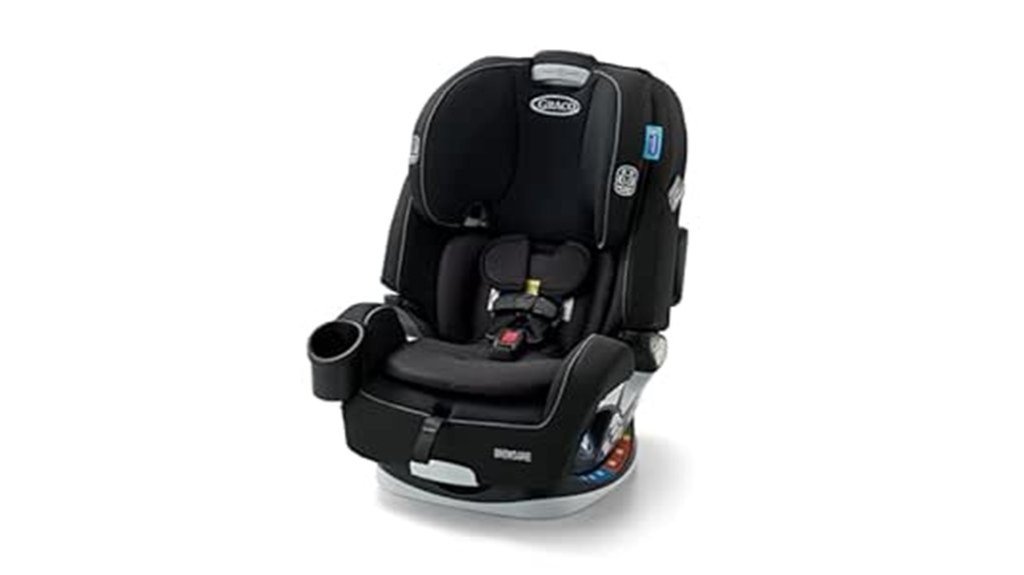
Best four-stage option: The Graco Grows4Me is designed to move from a rear-facing harness at 5 to 40 pounds to a forward-facing harness at 26.5 to 65 pounds, a high-back booster at 40 to 100 pounds, and a backless booster at 40 to 120 pounds. Booster use also has minimum age, height, belt-fit, and maturity requirements.
Graco’s Simply Safe Adjust system moves the harness and headrest together, and the seat includes a 10-position headrest, six-position recline, level indicator, steel-reinforced frame, integrated cup holder, and harness storage for booster mode.
The tradeoff is size. The current West Point model is listed at 21.5 inches wide and 22.5 pounds. It may work well as a single long-term restraint in an Escape, but it is the weakest choice in this group for a narrow three-across installation or regular movement between vehicles.
Best For: Parents who value rear-facing, forward-facing, high-back booster, and backless booster capability in one substantial seat.
Pros:
- Four modes cover harness and booster stages up to 120 pounds.
- Simply Safe Adjust no-rethread harness and 10-position headrest.
- Six recline positions and an easy-to-read level indicator.
- Integrated harness storage simplifies the transition into booster mode.
Cons:
- Its 21.5-inch width makes it poorly suited to most space-critical three-across plans.
- At 22.5 pounds, it is cumbersome to move frequently.
- Rear-facing limit is 40 pounds, lower than the Extend2Fit’s 50-pound limit.
Safety 1st Crosstown All-in-One Convertible Car Seat (Deep Sea)

Best for simple adjustments: The Safety 1st Crosstown supports rear-facing use from 5 to 40 pounds and 19 to 40 inches, forward-facing harness use from 30 to 65 pounds and 34.4 to 49 inches, and belt-positioning booster use from 40 to 100 pounds and 43.4 to 52 inches.
Its one-hand harness and eight-position headrest adjust together without rethreading. Easy-access belt paths and an adjustable base foot help when switching between rear-facing and forward-facing modes. The pad is machine-washable and dryer-safe, and both cup holders are removable and dishwasher-safe.
The current CC415 model is 19.5 inches wide, not 17 inches. It may fit an individual Ford Escape seating position, but it should not be marketed as an ultra-narrow three-across seat. Choose it for its adjustment system and three-stage use rather than for an unverified width claim.
Best For: Parents who want an all-in-one seat with uncomplicated harness-height adjustments and accessible installation paths.
Pros:
- Rear-facing, forward-facing harness, and booster modes.
- One-hand, eight-position headrest and harness adjustment.
- Accessible belt paths and adjustable base foot.
- Machine-washable, dryer-safe pad and dishwasher-safe cup holders.
Cons:
- At 19.5 inches wide, it is not as narrow as older descriptions suggest.
- Rear-facing use ends at 40 pounds.
- A three-across installation should not be assumed without an actual trial fit.
Factors to Consider When Choosing a Convertible Car Seat for a Ford Escape
Measure the Actual Installation Area
Do not rely only on the Escape’s published shoulder-room figure or the car seat’s widest measurement. Measure the usable cushion area at the planned seating position, including door contours, raised bolsters, buckle stalks, lower anchors, and the space required by any adjacent passenger or restraint. Also check the car seat at its widest point, which may be the shell, cup holders, or side-impact wings.
Check Front-to-Back Clearance
A rear-facing restraint can affect front-passenger space even when its width is manageable. Set the car seat to the recline required for your child, place the front seat in a safe usable position, and confirm whether the car-seat and vehicle manufacturers permit contact with the front seat. Never force a more upright angle than the restraint permits simply to create additional room.
Match the Seat to Your Child
Published weight ranges are only part of the fit. Check standing height, seated shoulder height, required head clearance, harness position, buckle position, and the specific mode rules in the manual. A child may outgrow a mode by height or fit before reaching its maximum weight.
Prioritize Rear-Facing Longevity
Keep your child rear-facing until reaching the maximum rear-facing height or weight allowed by the restraint, unless a more restrictive instruction applies. The Extend2Fit offers the highest rear-facing weight limit in this group at 50 pounds. The other listed seats generally reach 40 pounds rear-facing.
Choose LATCH or the Seat Belt Correctly
A correct lower-anchor installation and a correct vehicle-belt installation are both acceptable when permitted by the manuals. Use the method that gives you the best repeatable installation, and do not use both systems at the same time unless the restraint manufacturer expressly allows it. Check lower-anchor weight limits before continued use and attach the top tether whenever installing a forward-facing harnessed seat as directed.
Perform the One-Inch Test
After installation, hold the restraint at the belt path and check for movement. It should not move more than one inch side-to-side or front-to-back at that location. Movement at the top of a rear-facing seat is not measured the same way, so follow the manual rather than testing random parts of the shell.
Evaluate Three-Across Carefully
Three car seats that mathematically add up to less than the bench width may still fail to fit safely. Each restraint must be independently tight, rest in its permitted position, and allow proper buckle access. Remove the neighboring restraint and recheck the remaining installation to confirm that one seat was not holding another in place.
Consider Cleaning and Daily Use
Machine-washable pads and removable cup holders reduce maintenance, but follow the exact care instructions. Harness straps usually require surface cleaning rather than soaking or machine washing. A seat that is difficult to tighten, buckle, or clean may be used incorrectly more often, so daily usability is an important part of the buying decision.
Before You Buy
- Confirm the exact model number attached to the Amazon listing.
- Check the current manufacturer manual for limits and installation rules.
- Measure width and front-to-back space in the intended Escape seating position.
- Confirm whether you need a booster mode or only rear- and forward-facing harness modes.
- Check the manufacture date, expiration information, and recall status after receiving the seat.
- Return the restraint if you cannot obtain a secure, permitted installation.
Frequently Asked Questions
Will Every Listed Seat Fit Every Ford Escape?
No. Ford Escape interiors, anchor locations, buckle geometry, seat contours, and front-seat space vary by model year and trim. Car-seat dimensions also do not reveal every possible fit issue. Compare both manuals and complete a permitted trial installation whenever possible.
Which Option Is Best for Three Across?
The Safety 1st Ellaris is the clearest space-focused option because the manufacturer markets it for three-across use. That claim still does not guarantee a particular combination in your Escape. The Crosstown is 19.5 inches wide, and the Grows4Me is 21.5 inches wide, so neither should be treated as an ultra-narrow choice.
Which Seat Supports the Longest Rear-Facing Use?
The Graco Extend2Fit has the highest rear-facing weight limit in this group at 50 pounds. Continue rear-facing only while your child remains within every applicable height, weight, head-clearance, and fit rule in the seat’s manual.
Is LATCH Safer Than a Seat-Belt Installation?
Not inherently. Either method can provide a secure installation when allowed and completed correctly. Choose one permitted method, observe the lower-anchor weight limit, lock and route the vehicle belt correctly when using it, and use the forward-facing top tether as directed.
Can I Use Aftermarket Padding or Accessories?
Use only padding, inserts, covers, protectors, toys, or positioning accessories approved by the car-seat manufacturer for that exact model. Unapproved products can alter harness fit, installation geometry, or crash performance. The restraint manual should be the deciding source.
When Should My Child Switch to Booster Mode?
Do not switch merely because the child reaches the booster’s minimum weight. Keep the child in a forward-facing harness until reaching that mode’s maximum permitted height or weight, then use booster mode only when the child meets the restraint’s minimum requirements and can remain correctly seated for the entire trip.
Can the Ellaris Be Used on an Airplane?
Safety 1st describes the Ellaris as aircraft-ready in its harnessed modes. Before flying, verify the certification statement on the physical restraint, confirm the permitted mode in its manual, and check the airline’s seating and restraint policies. Belt-positioning booster modes cannot be used with an aircraft lap belt.
How Do I Verify the Amazon Listing Before Ordering?
Compare the listing’s model number, color, dimensions, mode limits, and included components with the current manufacturer page and manual. Product titles can retain older wording after a model revision, so the model number is more reliable than a marketing phrase such as “slim.”
Final Recommendation
Choose the Graco Extend2Fit when extended rear-facing is your main priority. Choose the Safety 1st Ellaris when travel and a potentially narrower installation matter most. The Safety 1st Grow and Go offers a practical balance of three-stage use and manageable width, while the Graco Grows4Me is better for families who value four-stage longevity more than compactness. The Safety 1st Crosstown is best considered for its adjustment system, not as a guaranteed three-across seat.
Whichever model you select, the safest choice is the one that fits your child, installs securely in your specific Ford Escape, and can be used correctly on every trip. Read both manuals, follow the restraint’s mode limits, and seek help from a certified child-passenger-safety technician if you cannot confirm the installation.