

Choosing coolant for a Dodge Charger R/T starts with one important detail: the correct coolant specification changes by model year. A coolant that is appropriate for one Charger R/T can be the wrong chemistry for another. This guide focuses on three OAT coolants that are documented for Chrysler MS-12106, making them most relevant to 2013–2014 Dodge Charger R/T models after you confirm the requirement in your owner’s manual.
If you own an earlier or later Charger R/T, do not buy by color or by the words “universal” or “American vehicle” alone. Verify the exact material standard required for your model year before topping off or refilling the cooling system.
As an Amazon Associate, we may earn a commission from qualifying purchases made through links in this article, at no extra cost to you.
Quick Compatibility Check Before You Buy
- 2006–2012 Charger R/T: These model years generally use HOAT coolant meeting Chrysler MS-9769. The three OAT products reviewed below are not selected for this range.
- 2013–2014 Charger R/T: These model years specify OAT coolant meeting Chrysler MS-12106. This is the model-year range covered by the product recommendations below.
- 2015 and newer Charger R/T: Later manuals specify OAT coolant meeting FCA MS.90032. Verify that the exact bottle you are buying explicitly meets the specification listed in your owner’s manual rather than assuming any OAT coolant is interchangeable.
Important: Do not choose coolant by color alone, and do not mix OAT and HOAT coolant. If you do not know what coolant is already in the system, a proper inspection and flush may be safer than topping it off with a different formula.
Quick Verdict
Zerex American Vehicle 50/50 is the easiest starting point for a 2013–2014 Charger R/T because it is ready to use and its formulation is listed for Chrysler MS-12106. Zerex Dex-Cool 50/50 is another ready-to-use MS-12106 option, while Zerex Dex-Cool Concentrate is better if you specifically want a concentrate and are comfortable mixing it with distilled or deionized water.
| Zerex American Vehicle 50/50 Ready-to-Use Antifreeze Coolant 1 Gallon |  | Best Overall | Formula: 50/50 Ready-to-Use | Technology: OAT | Application: Chrysler MS-12106 | CHECK PRICE ON AMAZON | Read Our Analysis |
| Zerex Dex-Cool 50/50 Ready-to-Use Antifreeze Coolant 1 Gallon | 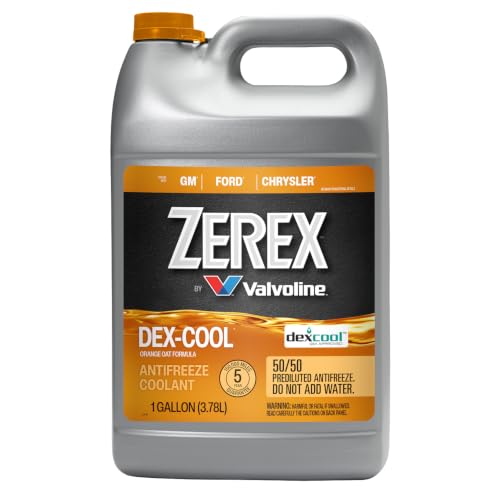 | Best Ready-to-Use Alternative | Formula: 50/50 Ready-to-Use | Technology: OAT | Application: Chrysler MS-12106 | CHECK PRICE ON AMAZON | Read Our Analysis |
| Zerex Dex-Cool Concentrate Antifreeze Coolant 1 Gallon |  | Best Concentrate | Formula: Concentrate | Technology: OAT | Application: Chrysler MS-12106 | CHECK PRICE ON AMAZON | Read Our Analysis |
More Details on Our Top Picks
Zerex American Vehicle 50/50 Ready-to-Use Antifreeze Coolant 1 Gallon
For a 2013–2014 Dodge Charger R/T that calls for Chrysler MS-12106, Zerex American Vehicle 50/50 is the easiest option in this lineup. Its OAT formulation is listed for the MS-12106 specification, and the coolant comes already mixed 50/50 with water, so there is no measuring or dilution step before use.
Why you’ll like it: The ready-to-use formula is convenient for a correctly matched top-off or refill, and the OAT chemistry is designed to resist corrosion, rust, and scale in cooling-system metals, including aluminum. At a 50/50 concentration, the manufacturer lists freeze protection to -34°F and boil protection to 265°F.
Who should buy this: Owners of a 2013–2014 Charger R/T whose manual specifies MS-12106 and who want a simple premixed coolant.
Who should avoid it: Do not select it for a 2006–2012 Charger that requires MS-9769 HOAT. For 2015-and-newer cars requiring MS.90032, verify the current bottle and your owner’s manual before buying.
- Volume:1 Gallon
- Formula:50/50 Ready-to-Use
- Technology:Organic Acid Technology (OAT)
- Specification:Fiat Chrysler MS-12106
- Freeze Protection:-34°F at the supplied 50/50 concentration
- Boil Protection:Up to 265°F at the supplied 50/50 concentration
- Mixing Required:No
- Best For:2013–2014 Charger R/T after manual verification
- Important Limitation:Do not substitute for MS-9769 HOAT
Zerex Dex-Cool 50/50 Ready-to-Use Antifreeze Coolant 1 Gallon
The Zerex Dex-Cool 50/50 name may sound GM-specific, but the formulation documentation also lists Chrysler MS-12106. That makes this ready-to-use OAT coolant a reasonable alternative for a 2013–2014 Dodge Charger R/T when your owner’s manual calls for that exact standard.
Why you’ll like it: Because it is already diluted 50/50, it removes the risk of accidentally creating the wrong water-to-coolant ratio during ordinary service. The manufacturer lists protection against freezing to -34°F and boiling to 265°F at this concentration.
Who should buy this: A 2013–2014 Charger R/T owner who has confirmed MS-12106 in the vehicle manual and prefers a premixed coolant.
Who should avoid it: Avoid choosing it solely because it is OAT or orange. Earlier Charger R/T models can require HOAT, while later models can call for a different FCA material standard.
- Volume:1 Gallon
- Formula:50/50 Ready-to-Use
- Technology:Organic Acid Technology (OAT)
- Specification:Chrysler MS-12106
- Freeze Protection:-34°F at 50/50 concentration
- Boil Protection:Up to 265°F at 50/50 concentration
- Mixing Required:No
- Best For:Convenient MS-12106 service
- Important Limitation:Verify model year and existing coolant chemistry first
Zerex Dex-Cool Concentrate Antifreeze Coolant 1 Gallon
Zerex Dex-Cool Concentrate gives you more control over the final coolant mixture while retaining the OAT formulation documented for Chrysler MS-12106. For a 2013–2014 Charger R/T, a 50/50 mixture is the normal starting point, but a concentrate requires more care than a premixed bottle.
Why you’ll like it: Concentrate can be useful during a complete coolant service when you need to account for water remaining in the system or when climate conditions call for a different concentration. For Charger service, use high-purity distilled or deionized water rather than guessing with an unknown water source.
Who should buy this: DIY owners or technicians working on a 2013–2014 Charger R/T who have confirmed MS-12106 and understand coolant dilution.
Who should avoid it: If you simply need a small top-off and the existing system already contains the correct 50/50 coolant, a ready-to-use product is easier. Do not exceed the concentration limits specified by your vehicle manufacturer.
- Volume:1 Gallon
- Formula:Concentrate
- Technology:Organic Acid Technology (OAT)
- Specification:Chrysler MS-12106
- Typical Mix:50/50 coolant and distilled or deionized water
- 50/50 Protection:Approximately -34°F freeze and 265°F boil protection
- Mixing Required:Yes
- Best For:Full service or custom dilution
- Important Limitation:Correct dilution and model-year verification are required
Factors to Consider When Choosing Coolant for a Dodge Charger R/T
The most important coolant decision is not brand, bottle color, or marketing language. It is whether the product meets the exact coolant specification required by your Charger R/T’s model year. After that, you can compare premixed versus concentrate formulas, climate protection, convenience, and maintenance needs.
Check the Model Year and Material Standard First
Start with the owner’s manual. Dodge Charger coolant chemistry changed over the years, so an R/T from one generation should not automatically use the same coolant as a newer car. For the products in this roundup, the key requirement is Chrysler MS-12106 OAT coolant used by 2013–2014 models. Earlier cars can require MS-9769 HOAT, while later cars specify MS.90032 OAT. Matching the standard is more reliable than matching coolant color.
Do Not Mix OAT and HOAT Coolant
OAT and HOAT are different coolant technologies. Mixing incompatible formulas can reduce corrosion protection and coolant life and may require the cooling system to be drained and flushed. If you bought a used Charger and do not know what is currently in the system, identify the existing coolant and vehicle specification before adding another product.
Premixed vs. Concentrate
A 50/50 premixed coolant is the easiest choice for most routine service because the water-to-coolant ratio has already been set. Concentrate gives you more control but must be diluted correctly. When mixing concentrate for a Charger, use distilled or deionized water and follow the concentration limits in your owner’s manual.
Freeze and Boil Protection
A properly prepared 50/50 ethylene-glycol coolant mixture commonly provides freeze protection to around -34°F, while the Zerex products in this guide list boil protection around 265°F under their specified test conditions. Do not assume that adding more concentrate always improves protection; excessive concentration can reduce cooling performance. Follow the vehicle and coolant manufacturer’s mixing guidance.
Coolant Color Is Not a Specification
Do not buy coolant because it looks purple, orange, red, pink, yellow, or another familiar color. Dye color is not a universal technical standard, and different manufacturers can use different colors for similar or different coolant chemistries. The material specification on the product and in your owner’s manual matters more.
Top-Off vs. Complete Refill
For a small top-off, the safest approach is to use coolant that matches both the required specification and the coolant already in the system. During a complete drain and refill, correct chemistry, dilution, system bleeding, and fill procedure become even more important. Some cooling systems can trap air if they are not filled correctly, so professional service is sensible if you are unsure of the procedure.
Coolant Service Interval
For the 2013–2014 OAT system covered by this roundup, the factory guidance allows the specified coolant to remain in service for an extended interval of up to 10 years or 150,000 miles when the correct coolant is maintained and incompatible types have not been mixed. Your actual service schedule should still follow your specific owner’s manual and the condition of the cooling system.
Coolant Safety and Disposal
Never remove a coolant pressure cap while the cooling system is hot or pressurized. Ethylene-glycol coolant should also be kept away from children and animals and disposed of through an appropriate recycling or hazardous-waste program. A bittering agent can discourage ingestion, but it does not make antifreeze safe to consume.
Before You Buy Checklist
- Confirm your Charger R/T model year.
- Check the exact coolant material standard in the owner’s manual.
- Identify whether the current system contains OAT or HOAT coolant.
- Verify the exact bottle or product data lists the required standard.
- Choose 50/50 premix for convenience or concentrate only if you can mix it correctly.
- Do not rely on coolant color as proof of compatibility.
- If incompatible coolant has already been added, consider a complete professional flush rather than adding more.
Frequently Asked Questions
Can I Mix Different Brands of Coolant in My Dodge Charger R/T?
The brand name itself is not the main issue; the coolant chemistry and required material specification are what matter. Do not mix OAT with HOAT, and do not assume two products are compatible just because their colors look similar. For a 2013–2014 Charger R/T, verify that the coolant meets MS-12106 and is compatible with what is already in the system.
How Often Should I Change the Coolant in a 2013–2014 Dodge Charger R/T?
The specified OAT coolant can have an extended service interval of up to 10 years or 150,000 miles when the system contains the correct coolant and has been properly maintained. Follow the maintenance schedule for your exact vehicle, and service the system sooner if the coolant becomes contaminated or incompatible coolant has been added.
What Color Coolant Should I Use in a Dodge Charger R/T?
Do not select coolant by color. Coolant dyes vary between manufacturers and product families. Instead, match the coolant to the material standard specified in your owner’s manual, such as MS-9769, MS-12106, or MS.90032 depending on model year.
Does Coolant Type Affect Dodge Charger R/T Engine Operation?
The correct coolant helps the engine maintain its intended operating temperature while protecting the cooling system from freezing, boiling, corrosion, and deposits. It should not be treated as a horsepower upgrade. Using the wrong coolant chemistry can instead reduce cooling-system protection and create expensive maintenance problems.
Can I Use Water Instead of Coolant in My Dodge Charger R/T?
Water alone is not a proper long-term substitute for the specified coolant because it lacks the required freeze protection and corrosion-inhibiting additive package. Use the correct premixed coolant or combine an approved concentrate with distilled or deionized water according to the required ratio.
What Coolant Does a 2006–2012 Dodge Charger R/T Use?
These earlier Charger model years generally require HOAT coolant meeting Chrysler MS-9769. The MS-12106 OAT products reviewed in this article are therefore not the right products to buy for that earlier specification unless your vehicle documentation specifically states otherwise.
What Coolant Does a 2015 or Newer Dodge Charger R/T Use?
Later Charger manuals specify OAT coolant meeting FCA MS.90032. Before buying, verify that the exact product you are considering explicitly meets the specification required by your model year. Do not assume a product is suitable simply because it is labeled OAT.
Conclusion
For a 2013–2014 Dodge Charger R/T, coolant compatibility should come before brand preference. The three products retained in this guide are OAT options documented for Chrysler MS-12106, but they should still be checked against your exact model year and current cooling-system contents before use.
Final Recommendation
If you want the simplest option, Zerex American Vehicle 50/50 is the most straightforward starting point because it is premixed and listed for MS-12106. Zerex Dex-Cool 50/50 offers similar ready-to-use convenience, while the Zerex Dex-Cool Concentrate is better suited to a complete service where you intentionally control the dilution.
Most important: verify your Charger R/T’s coolant specification before ordering. The wrong chemistry is a much bigger concern than which of these three brands or formats looks most appealing.


