If your Toyota Corolla has developed a rough idle, hesitation, sluggish throttle response, or lower fuel economy, deposits in the fuel system may be one possible cause. A quality fuel injector cleaner for a Toyota Corolla can help remove deposits when contamination is the problem, but it cannot repair a failing injector, ignition problem, vacuum leak, sensor fault, or other mechanical issue.
This guide compares three gasoline fuel-system cleaners that fit the article’s buyer intent. Each has a different strength: one is aimed at high-mileage vehicles, one offers a concentrated treatment with explicit GDI compatibility, and one is convenient for routine preventative maintenance.
Affiliate disclosure: This article contains Amazon affiliate links. If you buy through a qualifying link, we may earn a commission at no extra cost to you.
Quick Verdict
Best Overall: Red Line SI-1 — a concentrated option with manufacturer-stated compatibility with all forms of fuel injectors, including GDI.
Best for High-Mileage Corollas: Gumout High Mileage Fuel Injector Cleaner — specifically formulated for gasoline vehicles with more than 75,000 miles.
Best for Routine Maintenance: STP Complete Fuel System Cleaner — a PEA/PIBA-based formula with a straightforward approximately 4,000-mile maintenance interval.
Quick Comparison: Toyota Corolla Fuel Injector Cleaners
| Product | Best For | Key Compatibility | Typical Label Interval | Amazon |
|---|---|---|---|---|
| Gumout 510013W-6PK | High-mileage gasoline Corollas | Gasoline engines; oxygen-sensor safe | About every 3,000 miles | Check Price |
| Red Line SI-1 | Broad compatibility and concentrated cleaning | Includes GDI fuel injectors | Follow bottle directions; full bottle for initial treatment | Check Price |
| STP Complete Fuel System Cleaner | Routine fuel-system maintenance | Gasoline, direct injection, turbo and hybrid applications | About every 4,000 miles | Check Price |
How We Compared These Cleaners
We compared the products by their published engine compatibility, treatment directions, detergent information, intended mileage range, ease of use, and usefulness for common Toyota Corolla ownership scenarios. We did not assume that a cleaner can fix every rough-running engine, and we do not treat manufacturer performance claims as guaranteed results.
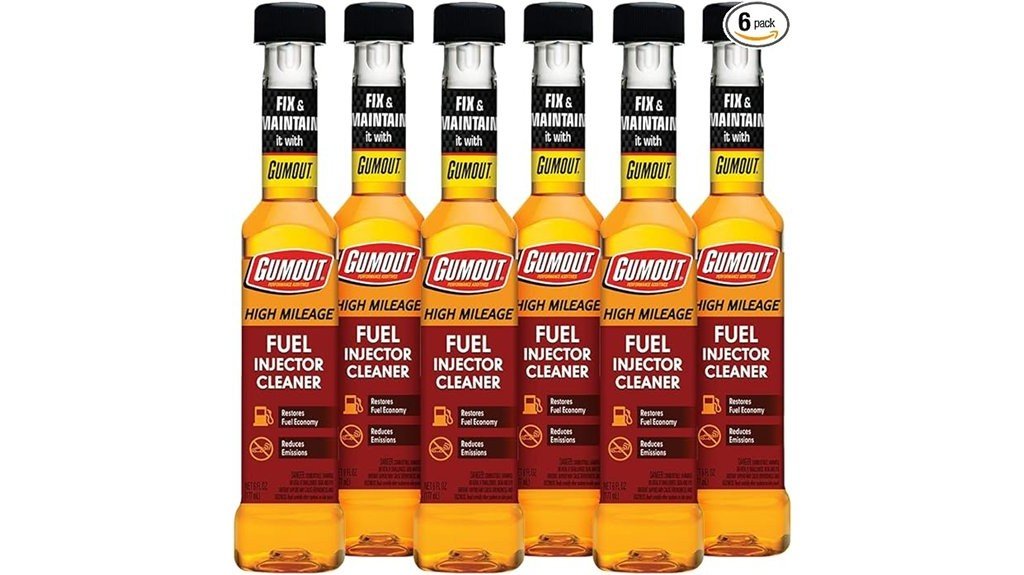
Gumout 510013W-6PK Fuel System Cleaner, 6 Pack
Best for High-Mileage Corollas
If your gasoline-powered Corolla has more than 75,000 miles, Gumout High Mileage Fuel Injector Cleaner is the most targeted option in this lineup. The 510013 formula is specifically marketed for higher-mileage vehicles and is intended to remove deposits from port/indirect fuel injectors, intake valves, and ports where the fuel actually contacts those components.
Each bottle is designed to be added to a nearly empty gasoline tank before refilling with up to 21 gallons. Gumout recommends using it approximately every 3,000 miles. The formula is also labeled oxygen-sensor safe and suitable for turbocharged or supercharged gasoline applications.
The six-pack makes the most sense if you maintain an older Corolla regularly or have multiple gasoline vehicles. If your Corolla has low mileage and no deposit-related symptoms, however, buying six treatments may be more than you need.
Best For: Corolla owners with more than 75,000 miles who want a simple pour-in cleaner intended for recurring high-mileage maintenance.
Why You’ll Like It:
- Specifically formulated for gasoline vehicles with more than 75,000 miles.
- Simple pour-in treatment with a manufacturer-recommended approximately 3,000-mile interval.
- Six-pack is convenient for repeat maintenance or households with several gasoline vehicles.
Keep in Mind:
- It is primarily positioned for high-mileage use, so a newer Corolla may not need this particular formula.
- A fuel additive cannot repair a damaged, electrically faulty, or mechanically failing injector.
- For a Corolla with direct injection, confirm the bottle label and your owner’s manual rather than assuming every intake deposit can be cleaned through the fuel tank.
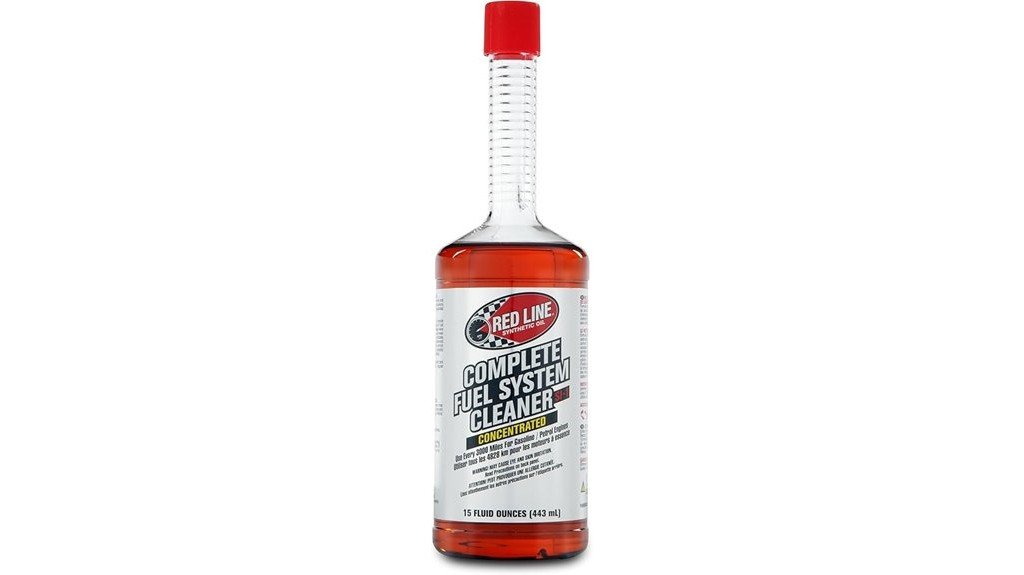
Red Line SI-1 Complete Fuel System Cleaner (15 Ounce)
Best Overall
Red Line SI-1 is the strongest all-around fit in this group for Corolla owners who want a concentrated cleaner with clearly stated compatibility across different injector designs. Red Line says SI-1 cleans fuel injectors, carburetors, valve deposits, and combustion-chamber deposits, and specifically lists compatibility with GDI fuel injectors.
The 15-ounce bottle uses a concentrated high- and low-temperature detergent blend and is also intended to reduce gum and varnish formation in gasoline. For the most aggressive initial treatment, Red Line recommends adding a full bottle to the tank according to its directions.
It is important to keep expectations realistic. Red Line makes strong cleaning-efficiency claims for SI-1, but actual improvement depends on whether deposits are causing the problem in the first place. A cleaner will not correct worn injectors, ignition faults, low compression, air leaks, or failed sensors.
Best For: Corolla owners who want a concentrated, broadly compatible fuel-system cleaner, especially when explicit GDI-injector compatibility is important.
Why You’ll Like It:
- Manufacturer specifically lists compatibility with all forms of fuel injectors, including GDI.
- Concentrated detergent blend targets injector and combustion-system deposits.
- Also helps reduce formation of gum and varnish in gasoline.
Keep in Mind:
- A concentrated formula should be used according to the bottle’s dosage instructions rather than added more frequently than recommended.
- Results depend on the amount and type of deposit already present.
- Tank-added cleaner should not be expected to solve every intake-valve deposit issue on a pure direct-injection engine.
STP Complete Fuel System Cleaner (5.25 Oz)

Best for Routine Maintenance
STP Complete Fuel System Cleaner is a convenient choice when you want a straightforward maintenance treatment rather than a high-mileage-specific product. STP identifies the formula as a blend of PEA and PIBA detergents designed to remove fuel-system deposits and inhibit corrosion.
The 5.25-fluid-ounce bottle treats up to 15 gallons of gasoline, which makes the dosage practical for a typical passenger-car fuel tank. STP recommends adding the full bottle to the gasoline tank about every 4,000 miles.
STP also markets the product as having twice the amount of cleaning agents compared with the cleaning agents found in a specified quantity of leading premium gasoline. That comparison should not be interpreted as meaning the product has twice the detergent concentration of competing fuel-system cleaners.
Best For: Corolla owners who prefer an easy approximately 4,000-mile fuel-system maintenance schedule and want a formula that specifically identifies PEA and PIBA detergents.
Why You’ll Like It:
- Uses a published blend of PEA and PIBA detergents.
- 5.25-ounce bottle treats up to 15 gallons of gasoline.
- STP lists it for gasoline engines including direct-injection, turbo, and hybrid applications.
Keep in Mind:
- Use it at the recommended interval rather than adding cleaner unnecessarily at every fill-up.
- Improved idle, acceleration, or fuel economy is possible only when removable deposits are contributing to the problem.
- It is maintenance treatment, not a substitute for diagnosis when a check-engine light or persistent drivability problem is present.
Factors to Consider When Choosing Fuel Injector Cleaner for Toyota Corolla
The best Toyota Corolla fuel injector cleaner depends on your engine design, mileage, symptoms, tank size, and the product’s recommended treatment interval. A stronger cleaner is not automatically better, and using additives more often than directed usually provides no extra benefit.
Gasoline Engine Compatibility
Start by confirming that the product is intended for gasoline engines and appropriate for your Corolla’s fuel-injection system. Corolla engine designs have changed over the years, so do not assume every model uses the same injection system.
If your Corolla uses direct injection, a cleaner that explicitly lists GDI compatibility is the more reassuring choice. Red Line SI-1 specifically states that it cleans all forms of fuel injectors including GDI, while STP lists its Complete Fuel System Cleaner for direct-injection gasoline engines. Always compare the current bottle label with your owner’s manual before use.
Detergent Chemistry
Look for a reputable formula that clearly identifies its cleaning purpose rather than relying on vague promises. PEA is commonly used in strong deposit-control formulas, while products may combine it with other detergent chemistries such as PIBA.
STP discloses a PEA/PIBA blend, while Red Line describes SI-1 as a concentrated combination of high- and low-temperature detergents. The detergent package matters, but correct dosage and realistic expectations matter just as much.
Mileage and Vehicle Condition
A higher-mileage Corolla may benefit from a product specifically intended for older fuel systems. Gumout High Mileage Fuel Injector Cleaner is designed for vehicles with more than 75,000 miles, making it the most obvious fit in this lineup for an older Corolla.
However, mileage alone does not prove that injectors are dirty. Persistent misfires, fuel leaks, hard starting, a flashing check-engine light, or severe power loss deserve proper diagnosis before relying on a bottle of cleaner.
Set Realistic Expectations
A fuel-system cleaner can help when deposits interfere with injector spray or fuel delivery. It cannot rebuild a worn injector, repair damaged wiring, correct low compression, replace a failing fuel pump, or fix an ignition problem.
For that reason, treat smoother operation or restored efficiency as a possible benefit when deposits are present, not as a guaranteed result from every treatment.
Frequency of Use
Follow the directions for the specific product rather than using one universal interval. Gumout recommends its high-mileage 510013 formula about every 3,000 miles. STP specifies about every 4,000 miles for its Complete Fuel System Cleaner. Red Line provides separate guidance for an initial full-strength treatment and subsequent maintenance use.
Adding extra cleaner more frequently than instructed is not a shortcut to better results.
Oxygen Sensors and Emissions Equipment
Choose products that clearly state compatibility with your gasoline engine and emissions equipment. Gumout identifies its 510013 high-mileage formula as oxygen-sensor safe, while Red Line states that SI-1 is suitable for modern fuel-injection applications.
Avoid assuming that terms such as “EPA registered” mean a cleaner has been endorsed or proven effective by the EPA. Registration and product-performance approval are not the same thing.
Important Note for Direct-Injection Engines
GDI limitation: In a pure gasoline-direct-injection engine, fuel is injected directly into the combustion chamber instead of flowing over the backs of the intake valves. Because of that, a cleaner poured into the fuel tank should not be assumed to remove heavy intake-valve deposits. Tank additives are primarily useful for components the treated fuel actually reaches.
Ease of Application
All three remaining products are simple pour-in treatments, which is a major advantage for routine DIY maintenance. Check how much gasoline one bottle is designed to treat and add it at the fuel level specified by the manufacturer.
Correct concentration is more important than simply pouring in more additive. Follow the current bottle instructions if they differ from older online descriptions.
Before You Buy
- Confirm that your Corolla uses gasoline and check its fuel-injection type.
- Check the cleaner’s tank-size dosage before pouring it in.
- Use a GDI-compatible product when your engine requires it.
- Do not expect a cleaner to repair failed mechanical or electrical components.
- Investigate persistent warning lights, misfires, leaks, or severe drivability problems instead of repeatedly adding cleaner.
- Follow the latest manufacturer instructions printed on the bottle.
Frequently Asked Questions
Which Fuel Injector Cleaner Is Best for a Toyota Corolla?
For broad compatibility, Red Line SI-1 is the strongest overall choice in this three-product group because the manufacturer specifically lists all forms of fuel injectors, including GDI. For a Corolla with more than 75,000 miles, Gumout High Mileage Fuel Injector Cleaner is the more targeted option. STP Complete Fuel System Cleaner is a convenient choice for routine approximately 4,000-mile maintenance.
Can Fuel Injector Cleaner Fix a Rough Idle?
It may help if injector or fuel-system deposits are contributing to the rough idle. It will not fix other common causes such as ignition problems, vacuum leaks, dirty sensors, worn engine components, low compression, or a mechanically faulty injector. Persistent symptoms should be diagnosed rather than repeatedly treated with additive.
How Often Should I Use Fuel Injector Cleaner in My Corolla?
Use the interval printed on the specific product. The products in this guide do not all have the same schedule: Gumout recommends approximately every 3,000 miles for its high-mileage formula, while STP recommends approximately every 4,000 miles for its Complete Fuel System Cleaner. Red Line provides separate initial-treatment and maintenance directions.
Does Fuel Injector Cleaner Clean GDI Intake Valves?
Not necessarily. In a pure direct-injection engine, gasoline is sprayed directly into the combustion chamber and does not continuously wash the backs of the intake valves. A tank-added cleaner therefore should not be relied on to remove heavy intake-valve deposits that the treated fuel cannot directly contact.
Can Fuel Injector Cleaners Void My Toyota Corolla Warranty?
Using an aftermarket product does not automatically cancel an entire U.S. vehicle warranty. However, warranty coverage can become an issue if an additive or its improper use causes damage. Follow Toyota’s current owner-manual guidance, use the cleaner according to its instructions, and keep maintenance records when warranty coverage is important.
Are Fuel System Cleaners EPA Approved?
Be careful with that wording. Gasoline additives sold for highway-vehicle use may be subject to EPA registration requirements, but registration does not mean the EPA has approved, endorsed, or independently confirmed a cleaner’s fuel-economy or performance claims.
Can I Use Too Much Fuel Injector Cleaner?
You should use the dosage specified by the manufacturer. Adding more product or treating the tank more often than instructed is unnecessary and can create an incorrect additive concentration. One correctly dosed treatment is preferable to guessing.
Conclusion
For most shoppers comparing fuel injector cleaners for a Toyota Corolla, the choice comes down to engine type and mileage rather than picking the strongest-sounding bottle.
Red Line SI-1 is the best overall option here when you want a concentrated cleaner with explicit GDI-injector compatibility. Gumout High Mileage Fuel Injector Cleaner makes more sense for a gasoline Corolla with over 75,000 miles, while STP Complete Fuel System Cleaner is an easy choice for regular preventative maintenance with a published PEA/PIBA detergent blend.
Final Recommendation
Choose Red Line SI-1 if you want the broadest all-around cleaner in this lineup. Choose Gumout if your Corolla is past 75,000 miles and you specifically want a high-mileage treatment. Choose STP if your priority is a straightforward routine-maintenance cleaner.
Whichever you choose, follow the bottle directions and remember that a fuel additive is most useful for deposit-related problems—not as a substitute for diagnosing a persistent mechanical or electrical fault.