We’ve tested dozens of travel systems and narrowed the field to three that balance safety, comfort, and ease of use for busy families. Each offers reliable crash protection, smooth stroller handling, and practical features for everyday outings. We’ll compare their strengths, who they suit best, and a few trade-offs so you can pick the right fit for your routine—starting with one standout option.
Evenflo Pivot Modular Travel System with LiteMax Infant Car Seat (Casual Gray)
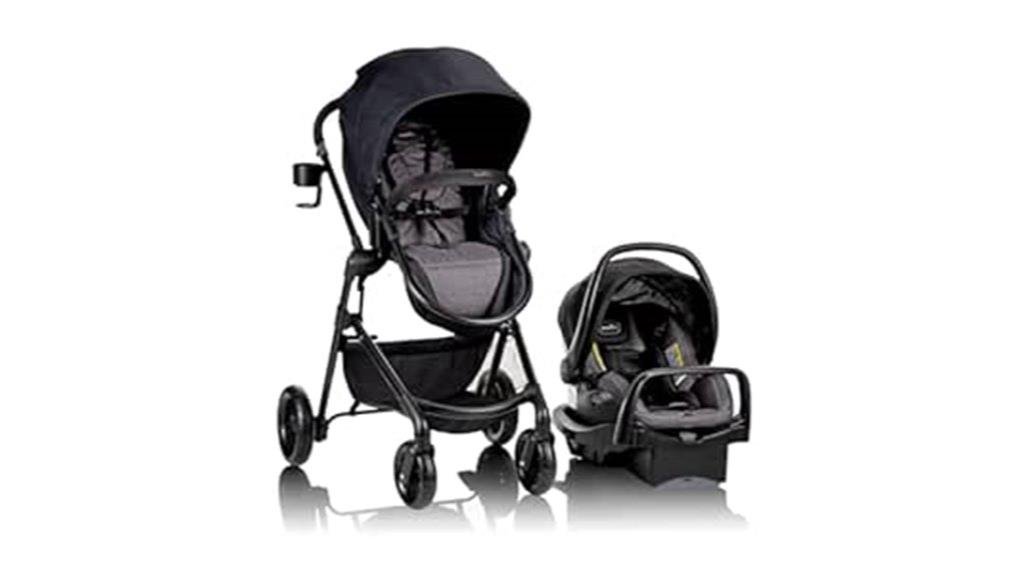
If you want a versatile travel system that grows with your child, the Evenflo Pivot Modular with the LiteMax infant seat is a smart pick — its six-mode modular frame (including a lay-flat pramette) plus a 30 lb infant car seat and a toddler seat rated to 50 lb mean you can use one system from newborn through toddlerhood with quick, secure changes. You’ll appreciate the LiteMax’s removable body pillow, stay-in-car base, and integrated belt lock-off for secure installs. The stroller self-stands when folded, has an oversized basket, durable cruiser tires, large canopy with peek-a-boo window, and a removable bumper bar.
Best For: Parents seeking a versatile, long-lasting travel system that adapts from newborn (with the LiteMax infant car seat) to toddlerhood with multiple seating modes and easy installation.
Pros:
- Modular 6-mode frame including a lay-flat pramette for newborn comfort and extended usability through toddlerhood.
- LiteMax infant car seat offers removable body pillow, stay-in-car base, and integrated belt lock-off for secure, quick installs.
- Convenient features like self-standing fold, oversized storage basket, large canopy with peek-a-boo window, and durable cruiser tires.
Cons:
- Item is relatively heavy (38.05 lb) which may make lifting or transporting cumbersome.
- Warranty is limited to 90 days, shorter than some competitors.
- Toddler seat height limit (38 in.) and car seat weight limit (30 lb) mean you’ll eventually need a separate car seat/booster as the child grows.
Baby Trend EZ Ride Travel System (Stroller and EZ-Lift Infant Car Seat)
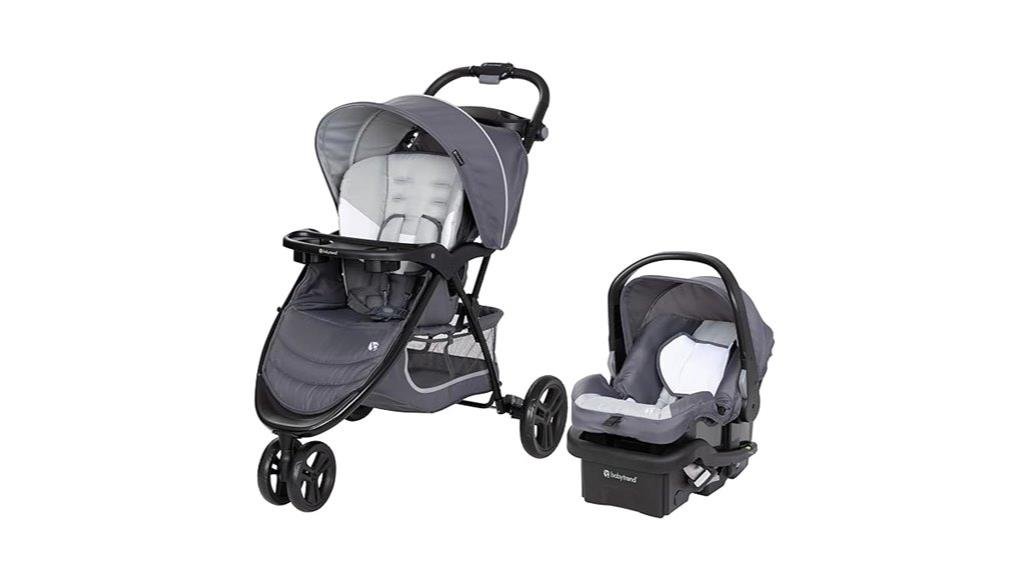
For parents who want a budget-friendly, easy-to-maneuver travel system, the Baby Trend EZ Ride pairs a 3-wheel stroller with an EZ-Lift infant car seat that fits newborns up to 30 pounds. You’ll appreciate the stroller’s padded seat with multiple reclines, height-adjustable handle, compact fold, and large rear-access storage basket. Both stroller and car seat use 5-point harnesses; the EZ-Lift adds deep side wings and EPS foam for side-impact protection. Convenience features include a deluxe parent tray, swing-away child tray, dual cup holders, and a canopy peek-a-boo window. It’s lightweight, well-rated (4.6/5), and easy to transport.
Best For: Parents seeking an affordable, easy-to-maneuver travel system that combines a compact stroller with an infant car seat suitable for newborns up to 30 pounds.
Pros:
- Comfortable and versatile: padded stroller seat with multiple recline positions and a height-adjustable handle for caregiver comfort.
- Safety-minded car seat: 5-point harness, deep side wings, and EPS foam for side-impact protection.
- Convenient features: compact fold, large rear-access storage basket, deluxe parent tray, child tray, dual cup holders, and canopy peek-a-boo window.
Cons:
- Limited weight capacity: infant car seat only supports up to 30 pounds (may require upgrade sooner than convertible seats).
- Basic suspension/ride: budget-friendly 3-wheel design may not smooth rough terrain as well as higher-end models.
- Overall build and materials reflect price point: may show wear sooner than premium travel systems.
Chicco Bravo 3-in-1 Trio Travel System with KeyFit 30 Infant Car Seat and Base (Camden/Black)

Parents who want a true grab-and-go setup will appreciate the Chicco Bravo 3-in-1 Trio, which pairs the popular KeyFit 30 infant car seat with a one-hand smart-fold stroller so you can move from car to sidewalk without waking your baby. You’ll get the Bravo Quick-Fold stroller, KeyFit 30 seat, and base in Camden/Black, with a lightweight frame carrier, full-size toddler stroller mode, and useful storage. Installation’s straightforward thanks to LATCH, SuperCinch, RideRight indicators, and ReclineSure leveling. Comfort features include multi-position recline and UPF 50+ canopy. It supports infants up to 30 lb (stroller to 50 lb), scores high in user ratings.
Best For: Parents seeking a convenient grab-and-go travel system that pairs a highly rated infant car seat with a one-hand fold stroller for easy transitions between car and sidewalk.
Pros:
- Includes the popular KeyFit 30 car seat and base for safe, easy installs with LATCH, SuperCinch, and RideRight indicators.
- One-hand smart-fold Bravo stroller that stands when folded, with multi-position recline, large UPF 50+ canopy, and good storage.
- Versatile 3-in-1 design: lightweight frame carrier, full-size toddler stroller mode, and supports up to 50 lb in stroller.
Cons:
- Car seat weight capacity limits infants to 30 lb, requiring a later transition to a larger seat as child grows.
- At 24.9 pounds and with bulk when folded, it may be heavier/bulkier than some ultra-compact travel strollers.
- Limited warranty (1-year) may be shorter than some competing brands’ coverage.
Factors to Consider When Choosing an Infant Car Seat and Stroller System
As we choose an infant car seat and stroller system, we’ll focus on the essentials that keep our baby safe and comfortable. We’ll weigh safety standards and proper fit with ease of installation, plus how the stroller and seat handle weight, portability, and adjustability. With those factors in mind, we’ll make a practical pick that works for our routine.
Safety and Standards
Because safety standards are the foundation of any infant car seat and stroller system, we should choose models that meet or exceed all applicable federal requirements and include proven protective features. We’ll prioritize a 5-point harness in both car seat and stroller for maximum restraint, and seek car seats with EPS foam and deep side wings to improve side-impact protection. We’ll verify secure installation methods—LATCH connectors or seat-belt systems with clear indicators—to reduce user error. We’ll also look for products that undergo rollover and temperature testing, since those evaluations show greater durability and protection in varying conditions. By focusing on certified standards, robust impact-absorbing materials, reliable installation, and rigorous testing, we’ll improve safety every time we travel with our child.
Fit and Compatibility
Having chosen car seats and strollers that meet safety standards, we now need to make certain the pieces actually work together—fit and compatibility will determine how safe and convenient the system is in daily use. We should confirm the infant car seat clicks securely into the stroller frame and that any advertised one‑click attachment truly locks and releases easily. Verify the stroller’s frame is built to support that specific seat; some combos need manufacturer adapters. Check weight and height limits on both components so the system protects our child as they grow. Finally, consider the stroller’s folded dimensions to ascertain it fits in our vehicle and storage spaces. These checks keep transfers smooth and reduce misuse.
Weight and Portability
When we pick a car seat and stroller system, weight and portability should shape how we’ll use it every day. We look at combined weight first: lighter systems are easier to lift into trunks and transport between destinations. Some strollers weigh as little as 24.9 pounds, which makes a real difference if we’re carrying them up stairs or onto public transit. Compact folding matters too — models that collapse to roughly 15 x 22.8 x 29 inches save space at home and in trunks. Design affects handling: three-wheel strollers often turn more easily than four-wheel versions. We also value adjustable handles and self-standing folds; those features reduce strain and make short trips and storage far more convenient for busy caregivers.
Installation Simplicity
If we want a system that won’t turn stressful trips into safety headaches, installation simplicity should be near the top of our checklist. We should prioritize infant car seats with premium LATCH connectors and easy-install systems like SuperCinch force-multiplying tighteners so fittings are secure without wrestling. Look for stay-in-car bases that let us click the seat into the stroller or vehicle quickly, avoiding repeated reinstallations. Installation indicators—bubble levels or visual cues—help confirm correct positioning at a glance. User-friendly folding mechanisms, such as one-hand smart folds, make transport and storage straightforward. Finally, favor brands that offer real-time installation support or responsive customer care so we can get help immediately if anything’s unclear. Simple installs equal safer, less stressful outings.
Comfort and Adjustability
Because our little one will spend a lot of time in the seat and stroller, we should prioritize features that let us tailor comfort and fit precisely. We look for strollers with multiple recline positions so naps stay undisturbed and outings stay cozy. An adjustable handle height matters to us too — it keeps pushing ergonomic for different caregivers. A large canopy with a peek-a-boo window gives reliable shade while letting us check on baby without interrupting sleep. For travel systems, a toddler seat that converts to a lay-flat position adds essential support for younger infants. In the car, a removable body pillow in the infant seat provides newborn head and torso support during rides, and we can remove it as baby grows.
Storage and Accessibility
Although convenience often gets overlooked, we want storage and accessibility features that make outings easier and less frantic. A large storage basket with wide rear access lets us grab diapers, snacks, and a blanket without unloading the stroller, saving time when a child needs attention. Parent trays with cup holders keep drinks and small essentials within reach, reducing stops and spills. Compact folding designs matter for families with limited space — they make transport and trunk storage straightforward. We also favor strollers that stand independently when folded so we can quickly set them down while lifting our child or retrieving bags. Prioritizing easy-access storage and practical folding behavior turns busy trips into smoother, less stressful outings.
Durability and Materials
Durability matters as much as safety, so we look closely at materials and construction when choosing a car seat and stroller system. We prioritize models tested for structural integrity, rollover resistance, and temperature extremes so performance holds up over time. High-quality builds combine plastics like polypropylene, aluminum frames, and durable polyester fabrics for strength and comfort. Heavier systems often use more robust components; if a travel system tops 30 pounds, that extra mass can mean reinforced parts. We favor energy-absorbing foam and visible reinforcement around attachment points to improve impact resistance and longevity. Finally, warranty length signals manufacturer confidence — many offer limited coverage from 90 days to a year — and we factor that into overall value and expected lifespan.
Frequently Asked Questions
Do These Car Seats Fit in Taxis or Ride-Share Vehicles?
Yes — most infant car seats fit taxis and ride-shares, but we’ll check vehicle space and seatbelt or LATCH compatibility before rides. We’ll use compact models or travel systems to guarantee safe, secure, and convenient installs.
Can the Stroller Frame Accept Other Infant Car Seat Brands?
Usually no — adapters vary by brand, so we check the stroller’s compatibility list and use manufacturer-approved adapters when available. We won’t mix seats without confirmation, and we’ll contact customer support if we’re unsure.
Are Replacement Parts and Fabric Covers Available Separately?
Yes — we can usually buy replacement parts and fabric covers separately; we’ll check the manufacturer or authorized dealers for exact pieces, warranty coverage, and compatible colors, and we’ll order originals or certified replacements when available.
Do Any of These Systems Accommodate Newborns Under 5 Pounds?
No — none of them magically fit newborns under five pounds; we won’t force it. We’ll recommend specially designed micro-preemie or NICU-approved inserts and seats instead, and we’ll always check manufacturer limits before buying or using.
What Warranty and Crash Replacement Policies Do Manufacturers Offer?
Most manufacturers offer limited warranties (usually 1–10 years) and crash-replacement policies replacing seats after a moderate or severe crash if registered or inspected; we’ll check your specific brand’s terms and guide you through claims and registration.
Conclusion
We’ve walked through three solid travel systems—the versatile Evenflo Pivot, the budget-friendly Baby Trend EZ Ride, and the easy-to-use Chicco Bravo—so you can pick what fits your family’s needs. Each balances safety, comfort, and convenience differently, like tools in a parent’s toolbox; choose the one that matches your routine and priorities. Let’s get you moving confidently, knowing your little one’s ride is safe and snug.