Disclosure: As an Amazon Associate, we earn from qualifying purchases. If you click a link on this page and make a purchase, we may receive a small commission at no extra cost to you.
Quick Answer: For most 2006 Toyota Tundra owners, the Rough Country 2.5" Lift Kit w/N3 Shocks is the strongest balanced pick because it adds useful clearance, includes shocks, and stays practical for daily driving. If you only want to level the front without changing the full setup, the KSP 2" front strut spacer kit is the simpler choice.
You want your Tundra to sit higher, clear larger tires, and still feel safe on the road. The wrong lift kit can create rubbing, poor alignment, stiff steering, or a ride that feels worse than stock.
This guide compares five lift and leveling kits that match the first-generation Toyota Tundra audience. You’ll see the best use case for each kit, key fitment warnings, installation notes, and clear Amazon check-price links so you can compare options before ordering.
How We Chose These Tundra Lift Kits
We focused on kits that match the 2000-2006 Toyota Tundra buyer intent, not newer Tundra generations. We looked for clear lift height, stated fitment, installation type, included hardware, daily ride impact, and whether the kit gives a useful reason to click beyond basic spacer claims.
Before buying, confirm your exact cab, drivetrain, suspension package, tire size goal, and Amazon fitment result. Many listings use broad year ranges, and some exclude TRD or special suspension packages.
Quick Picks: Best Lift Kits for 2006 Toyota Tundra
- Best simple front leveling kit: KSP 2" Tundra Leveling Lift Kit, Check Price on Amazon
- Best budget front and rear leveling kit: maXpeedingrods 3" front / 2" rear kit, Check Price on Amazon
- Best complete strut-style lift: Freedom Offroad 3" front strut kit, Check Price on Amazon
- Best 3" front / 2" rear spacer kit: Richeer Front and Rear Leveling Lift Kit, Check Price on Amazon
- Best balanced daily-driver lift: Rough Country 2.5" Lift Kit w/N3 Shocks, Check Price on Amazon
| Product | Best For | Lift Type | Key Caution | CTA |
|---|---|---|---|---|
| KSP 2" Tundra Leveling Lift Kit | Simple front leveling | 2" front strut spacers | Check TRD and special-package exclusions | Check Price on Amazon |
| maXpeedingrods 3" Front / 2" Rear Kit | Budget front and rear stance correction | Front spacers and rear blocks | Does not improve suspension travel | Check Price on Amazon |
| Freedom Offroad 3" Front Strut Kit | More complete bolt-on upgrade | Loaded struts, rear blocks, shocks | Confirm warranty and exact included parts | Check Price on Amazon |
| Richeer 3" Front / 2" Rear Kit | Quick spacer and block install | Front spacers and rear blocks | Final lift height can vary by geometry | Check Price on Amazon |
| Rough Country 2.5" Lift Kit w/N3 Shocks | Balanced road and trail use | Strut extensions, rear blocks, shocks | Still needs alignment after install | Check Price on Amazon |
Editor’s Pick: Rough Country 2.5" Lift Kit w/N3 Shocks
The Rough Country 2.5" Lift Kit w/N3 Shocks is the best balanced pick here for a 2000-2006 Tundra owner who wants more clearance without going too extreme. It includes shock upgrades, keeps the lift height moderate, and suits drivers who still use the truck on pavement.
KSP 2" Tundra Leveling Lift Kit (2" Front Strut Spacers) for Toyota Tundra 1999–2006
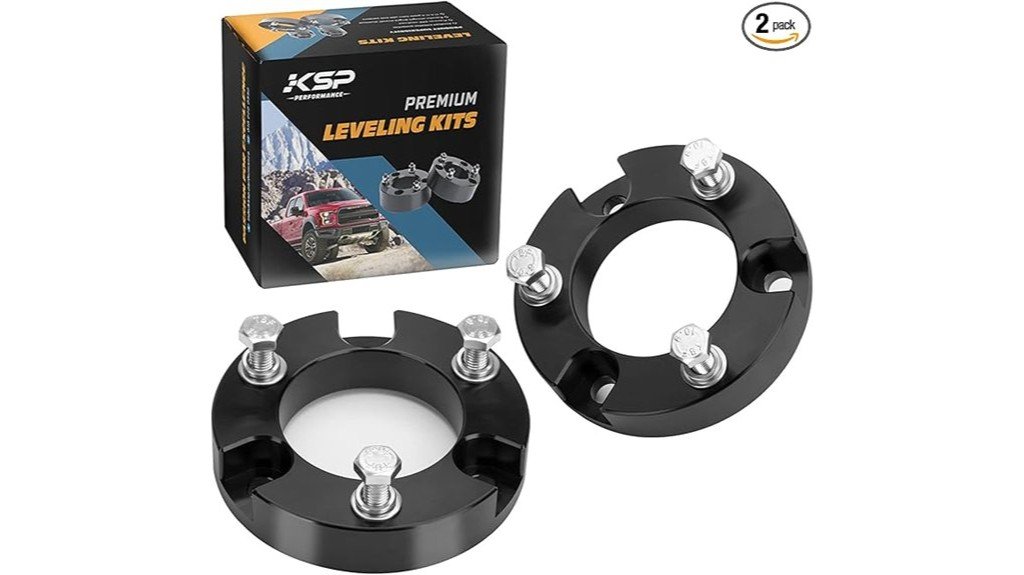
If you want a simple way to level the front of your first-generation Tundra, the KSP 2" front strut spacers make sense. This kit is aimed at 1999-2006 listing fitment for 2WD and 4WD Tundra models, but you should confirm your exact suspension package before ordering because the listing excludes some special packages.
The spacers use aluminum construction, a black powder-coated finish, and included hardware. The main benefit is stance correction and extra room for a mild tire upgrade without replacing the whole suspension. Plan on a professional alignment after installation because spacer thickness and final ride height are not always the same.
Best For: Tundra owners who want a simple front leveling kit for a cleaner stance and modest tire clearance.
Pick this if: You want a lower-cost front leveling option and you do not need new shocks or rear blocks.
Skip this if: You have a TRD or special suspension package that the Amazon listing excludes, or you want a full front and rear lift.
Pros:
- Aluminum construction with included hardware and a corrosion-resistant finish.
- Simple front leveling setup for a more aggressive stance.
- Good choice for owners who do not want to overhaul the suspension.
Cons:
- Not a full suspension lift and does not add rear height.
- May not fit every suspension package, so fitment needs careful checking.
- Requires alignment after installation to protect handling and tire wear.
maXpeedingrods Front 3" and Rear 2" Lift Leveling Kit for Toyota Tundra (1999–2006)

The maXpeedingrods 3" front / 2" rear kit fits buyers who want more than a front-only level but still want a basic spacer-and-block style setup. It raises the front and rear to reduce rake, improve stance, and create more tire clearance for a first-generation Tundra.
The kit uses solid aluminum parts with a coated finish. It is a practical option for budget-focused owners, but it does not work like a true long-travel suspension system. You gain height and stance, not extra suspension travel or a complete performance rebuild.
Best For: Truck owners who want an affordable front and rear leveling kit for stance, clearance, and mild off-road use.
Pick this if: You want a 3" front and 2" rear height change without buying loaded struts.
Skip this if: You want upgraded dampers, more suspension travel, or a premium off-road suspension system.
Pros:
- Raises the front and rear to reduce factory rake.
- Coated aluminum parts help resist rust and corrosion.
- Simple choice for budget-minded Tundra owners.
Cons:
- Spacer and block kits do not improve suspension travel.
- Fitment needs to be checked against your exact 2WD or 4WD setup.
- May need extra tire and wheel fitment checks to avoid rubbing.
Freedom Offroad 3" Lift Kit Front Struts with Rear Blocks and Shocks for 2000–2006 Toyota Tundra

The Freedom Offroad 3" kit is the strongest match here for owners who want more than basic spacers. It includes loaded front struts with springs and top mounts, rear lift blocks, extended u-bolts, and nitro twin-tube shocks, so the package feels more complete than a spacer-only kit.
This setup is aimed at 2000-2006 Tundra models and avoids strut teardown during installation. That can reduce installation hassle, but you still need to verify the exact included parts on Amazon before buying. If your truck has worn suspension parts, inspect those first so you do not install a lift over weak components.
Best For: Tundra owners who want a more complete bolt-on lift with front struts, rear blocks, and shocks in one package.
Pick this if: You want a fuller kit and prefer not to reuse old front struts.
Skip this if: You only want a low-cost leveling spacer or need a kit with clearer public warranty details.
Pros:
- Includes loaded front struts, springs, top mounts, rear blocks, shocks, and extended u-bolts.
- Direct bolt-on design avoids front strut disassembly.
- Better product fit for buyers who want a complete lift package.
Cons:
- Costs and installation effort can be higher than spacer-only kits.
- Warranty and current included parts should be checked before purchase.
- A 3" lift still needs careful tire, brake-line, and alignment checks.
Richeer Front and Rear Leveling Lift Kit for 1999-2006 Toyota Tundra (3" Front, 2" Rear)
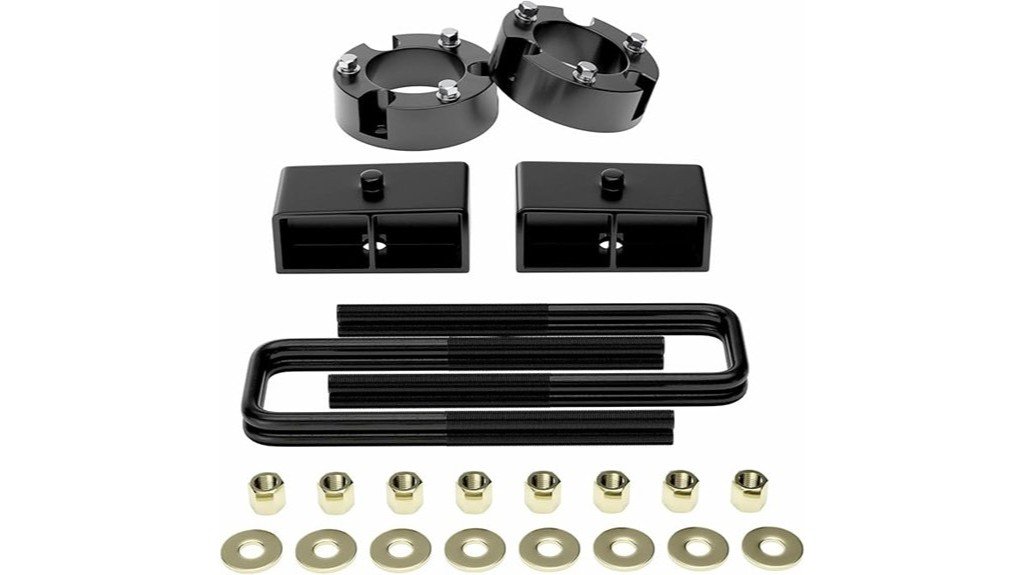
The Richeer 3" front / 2" rear leveling kit is a good match for Tundra owners who want a quick spacer-and-block lift with stronger material claims than many basic kits. It uses 6061-T6 forged aluminum, CNC processing, and heat-treated studs according to the product listing.
This kit can improve ground clearance and stance, but final ride height may vary because suspension geometry changes how spacer thickness translates into actual lift. Check your planned tire size before ordering and plan for alignment once the kit is installed.
Best For: Owners who want a 3" front and 2" rear leveling kit with aluminum spacer construction and a simple install path.
Pick this if: You want a spacer-and-block kit with stronger hardware and material details.
Skip this if: You need new shocks, upgraded control arms, or a full suspension performance kit.
Pros:
- 6061-T6 forged aluminum construction with heat-treated studs.
- Front and rear height change helps improve stance and tire clearance.
- Designed for quick installation without cutting or drilling.
Cons:
- Actual lift height can vary after installation.
- Can change steering and suspension feel, especially with larger tires.
- Does not include upgraded shocks or control arms.
Rough Country 2.5" Lift Kit w/N3 Shocks for 2000-2006 Toyota Tundra – 75030
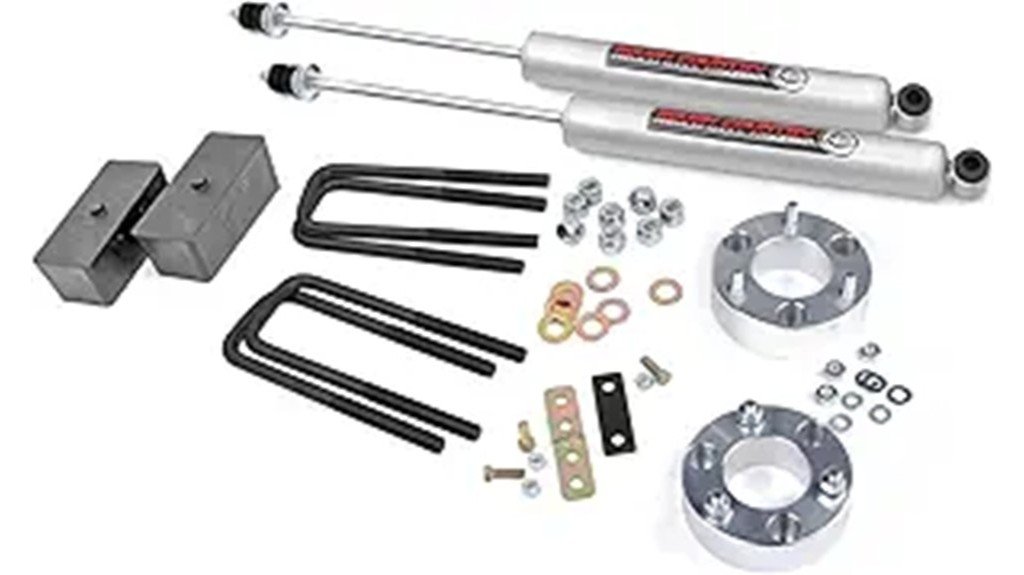
The Rough Country 2.5" Lift Kit w/N3 Shocks is the best balanced choice in this list for daily drivers that also see trail use. It gives a moderate lift, levels the front with the rear, and includes N3 shocks instead of relying only on spacer height.
The front strut extensions use T6061 billet aluminum, and the kit is designed as a bolt-on setup for 2000-2006 Tundra models. The 2.5" height is less aggressive than a 3" kit, which can help owners who want more clearance without pushing fitment too far.
Best For: Owners who want a practical lift with shocks, a balanced stance, and daily-driver comfort.
Pick this if: You want the safest middle ground between a basic spacer kit and a more involved suspension upgrade.
Skip this if: You want the tallest possible stance or plan to build an extreme off-road setup.
Pros:
- Includes N3 shocks for better value than a spacer-only kit.
- Moderate 2.5" height helps balance clearance and street use.
- Designed for bolt-on installation on 2000-2006 Tundra models.
Cons:
- Still requires professional alignment after installation.
- May not clear aggressive tire sizes without extra trimming or wheel changes.
- Fitment should be checked carefully if your truck has non-stock suspension parts.
Factors to Consider When Choosing a Lift Kit For 2006 Toyota Tundra
When choosing a lift kit for your 2006 Tundra, match lift height and geometry to your truck’s suspension. The right kit should improve stance and clearance without making steering, braking, or tire wear worse.
Check compatibility with your suspension type, cab style, drivetrain, wheel offset, and tire size. Also confirm whether the kit includes shocks, rear blocks, u-bolts, or only front spacers.
Lift Height & Geometry
Lift height changes your truck’s ground clearance, stance, steering angles, and tire clearance. For a 2006 Tundra, many owners stay around 2-3 inches because that range can add useful clearance without making the setup too extreme.
Remember that spacer thickness does not always equal final lift height. Suspension geometry affects how the truck sits after installation. Get a professional alignment after the lift to correct camber, caster, and toe.
Suspension Type Compatibility
Match the kit to your exact Tundra suspension before buying. Some kits fit standard 2WD and 4WD models but exclude TRD or special suspension packages.
Check whether the kit uses bolt-on spacers, loaded struts, rear blocks, or shock replacements. That choice affects labor time, tools, ride feel, and long-term reliability.
Material & Build Quality
Materials and build quality determine how a lift kit handles stress over time. Look for aluminum, forged alloy, or steel components where the kit carries load.
Powder coating, coated hardware, and corrosion-resistant finishes matter if you drive in rain, mud, snow, or salty areas. Strong hardware also matters because weak studs or bolts can create safety problems.
Ride Comfort & Handling
A lift can change ride quality and handling. Spacer kits usually change height and stance, but they do not add suspension travel. Kits with shocks can offer a more complete feel, especially if your current shocks are worn.
After installation, test steering, braking, and tire clearance at full lock. Then get an alignment before normal driving.
Tire & Wheel Fitment
Do not buy a lift kit only by height. Check your desired tire diameter, wheel width, offset, and backspacing before ordering.
A mild leveling kit may work with modest tire upgrades. Wider or taller tires may rub the fender liner, bumper, mud flaps, or suspension parts even after the lift.
Installation Complexity
Lift kits range from simple bolt-on spacers to heavier kits with loaded struts, shocks, rear blocks, and u-bolts. Choose a kit that matches your tools and skill level.
Read the instructions before starting. Check torque specs, lifting points, brake-line clearance, and whether you need a spring compressor. If the job involves spring tension and you are not experienced, use a professional installer.
Warranty & Support
Compare warranty length, covered parts, claim steps, and customer support before you buy. Some brands offer limited lifetime protection, while others offer shorter coverage or separate replacement terms.
Also check Amazon’s current return window and seller details. Suspension parts can be heavy, so return shipping and packaging rules matter.
Common Buyer Objections Before Buying a Tundra Lift Kit
Is a Spacer Lift Worth It for a 2006 Tundra?
A spacer lift can be worth it if your goal is stance, mild tire clearance, and a lower-cost install. It is not the best choice if you want more suspension travel or a major off-road performance upgrade.
Will a Lift Kit Make My Tundra Ride Rougher?
It can. Spacer kits may feel firmer because they change suspension angles without changing the full damping setup. A kit with quality shocks can feel more controlled, especially on older trucks with worn dampers.
What Should I Check After Installation?
Check alignment, tire clearance, brake-line tension, u-bolt torque, steering feel, and any clunking noises. Recheck fasteners after your first short drive and again after the suspension settles.
Frequently Asked Questions
Will My Factory Warranty Be Affected by Installing a Lift Kit?
Possibly. A dealer can deny a warranty claim if the lift or installation caused the problem. Keep receipts, use the correct parts, and ask your dealer for written guidance before you install the kit.
Do I Need Aftermarket Alignment After Installing These Kits?
Yes. A lift kit changes suspension geometry and toe, camber, or caster angles. Get a professional alignment to reduce uneven tire wear, steering pull, and poor handling.
Can I Use Stock Wheels and Tires With These Lift Heights?
Yes, stock wheels and tires often work with mild lifts. If you move to taller or wider tires, you may need different wheel offset, trimming, or extra clearance checks.
How Will a Lift Kit Affect Fuel Economy and Towing Capacity?
A lift kit can reduce fuel economy because the truck may create more drag and carry more rotating weight if you add larger tires. Towing feel can also change, so check your full setup before hauling heavy loads.
Are Any of These Kits Compatible With Access Cab or Double Cab Models?
Many first-generation Tundra lift kits can fit Access Cab or Double Cab models, but fitment depends on drivetrain, suspension package, and exact hardware. The CrewMax name applies to later Tundra generations, so do not use CrewMax fitment language for a 2006 Tundra listing.
Conclusion
The best lift kit for your 2006 Toyota Tundra depends on how far you want to go. Choose the KSP 2" kit if you only want a simple front level. Choose the maXpeedingrods or Richeer kits if you want a front and rear spacer-style lift. Choose the Freedom Offroad kit if you want a more complete strut package.
For the best balance of clearance, daily comfort, and included parts, the Rough Country 2.5" Lift Kit w/N3 Shocks is the top pick. Check your fitment, plan for alignment, and confirm tire clearance before you install any lift kit.