If your Toyota’s racking up miles, choosing the right oil can slow wear, stop leaks, and keep performance steady. You’ll want oils that condition seals, cut friction, and resist breakdown under heat. I’ll point out five top options that match common Toyota specs and explain what matters when picking one — so you can protect the engine that’s carried you this far.
Valvoline High Mileage MaxLife SAE 5W-30 Synthetic Blend Motor Oil (5 QT)

If your Toyota has crossed the 75,000-mile mark and you want to protect aging components without switching to a full synthetic, Valvoline High Mileage MaxLife SAE 5W-30 Synthetic Blend is a smart choice; its MaxLife Technology boosts wear protection up to 40% over industry standards while seal conditioners help stop leaks and refresh older gaskets. You’ll get detergents that cut sludge, deposits, corrosion, and rust so your engine stays cleaner internally. Friction-fighting agents improve power and efficiency, and the formula meets or exceeds ILSAC GF-6A, API SP, API SN, and API SN PLUS. It’s American made for high-mileage reliability.
Best For: Owners of Toyota (and other) vehicles with 75,000+ miles who want improved wear protection and leak prevention without switching to a full synthetic.
Pros:
- MaxLife Technology offers up to 40% better wear protection than industry standards to extend engine life.
- Seal conditioners help refresh aging seals and reduce leaks in high-mileage engines.
- Detergents and friction-fighting agents reduce sludge, deposits, corrosion, and improve power/efficiency; meets/exceeds ILSAC GF-6A, API SP, API SN, and API SN PLUS.
Cons:
- Synthetic blend may not provide the same ultimate high-temperature protection or long drain intervals as full synthetic oils.
- Specifically formulated for high-mileage engines, so benefits may be less noticeable in low-mileage or new vehicles.
- Some users may prefer brand- or spec-specific oils recommended by their vehicle manufacturer.
Castrol EDGE High Mileage 5W-30 Advanced Full Synthetic Motor Oil, 5 Quarts
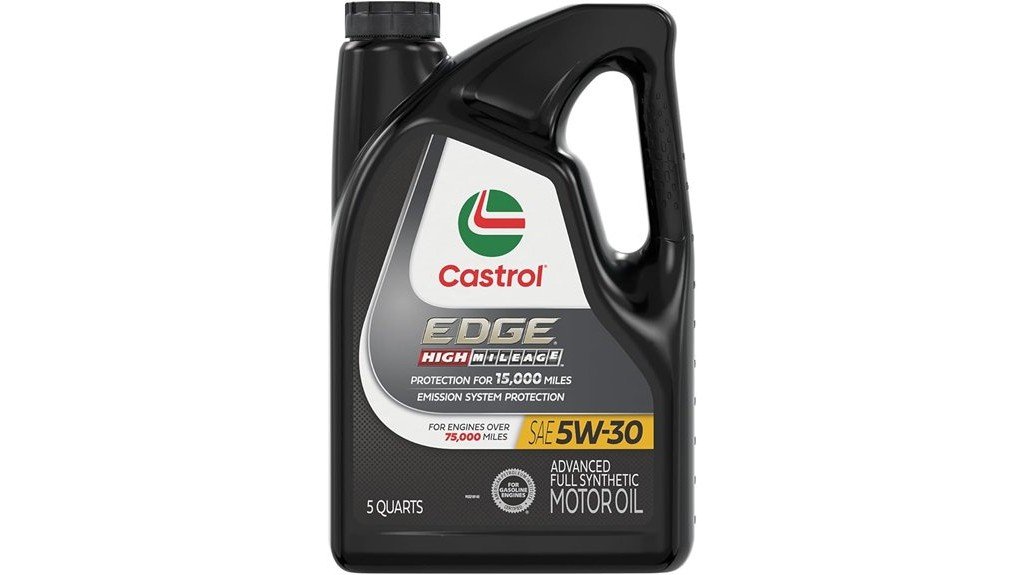
For Toyota owners with higher-mileage engines who want extended protection, Castrol EDGE High Mileage 5W-30 stands out for its Phosphorus Replacement Technology that helps preserve emission systems while reducing leaks and oil burnoff. You’ll get a full synthetic formula designed to cut power-robbing deposits and improve cleanliness, helping maintain efficiency and performance as mileage climbs. It meets API SP/SN PLUS/SN/SM and ILSAC GF-6, and complies with several Chrysler and Ford engine tests and specs. Follow your Toyota’s recommended oil change interval — Castrol suggests up to 15,000 miles or one year — and confirm vehicle compatibility before use.
Best For: Toyota owners with higher-mileage engines seeking extended protection and reduced leaks while maintaining emission system health and engine cleanliness.
Pros:
- Full synthetic 5W-30 formulation reduces power-robbing deposits and oil burnoff for improved efficiency.
- Phosphorus Replacement Technology helps preserve emission systems and extend their life.
- Meets API SP/SN PLUS/SN/SM and ILSAC GF-6 and complies with several Chrysler and Ford specs, offering broad compatibility.
Cons:
- Manufacturer-recommended oil change interval (up to 15,000 miles) may not suit all drivers or warranties—verify with your vehicle maker.
- Higher-mileage formulations can be more expensive than conventional oils.
- May not be compatible with all older engines or seals—confirm compatibility before use.
Mobil 1 High Mileage Full Synthetic Motor Oil 5W-30, 5 Quart

Owners of high-mileage Toyotas who want long drain intervals will like Mobil 1 High Mileage 5W-30 because it’s formulated to protect engines past 75,000 miles and supports up to 10,000-mile oil changes. You’ll get Mobil 1’s Triple Action Formula for performance, protection, and cleanliness, meeting ILSAC GF-6 for LSPI and timing-chain wear. It protects up to 500°F, flows at −30°F, controls oxidation, reduces deposits and sludge, and cuts friction. That helps cool your engine by over 10% versus conventional oil and can improve fuel economy. It fits modern cars, SUVs, light trucks, turbocharged and fuel-injected engines.
Best For: Owners of high-mileage Toyotas (and other modern cars, SUVs, and light trucks) who want extended 10,000‑mile drain intervals and strong protection for engines with over 75,000 miles.
Pros:
- Formulated for high‑mileage engines with Mobil 1’s Triple Action Formula to clean, protect, and enhance performance.
- Meets ILSAC GF‑6 for LSPI and timing‑chain wear, provides protection up to 500°F and flows at −30°F.
- Helps reduce deposits/sludge, lowers engine temperatures by over 10% vs. conventional oil, and can improve fuel economy.
Cons:
- Higher cost than conventional or some synthetic blend oils (common with full synthetic, high‑performance formulas).
- Extended 10,000‑mile interval may not be suitable for all vehicles or driving conditions — owner’s manual recommendations should take precedence.
- Some users may prefer a different viscosity for non‑Toyota or specialized engines (confirm 5W‑30 is appropriate for your vehicle).
Valvoline Full Synthetic High Mileage 5W-20 Motor Oil (5 Quart)
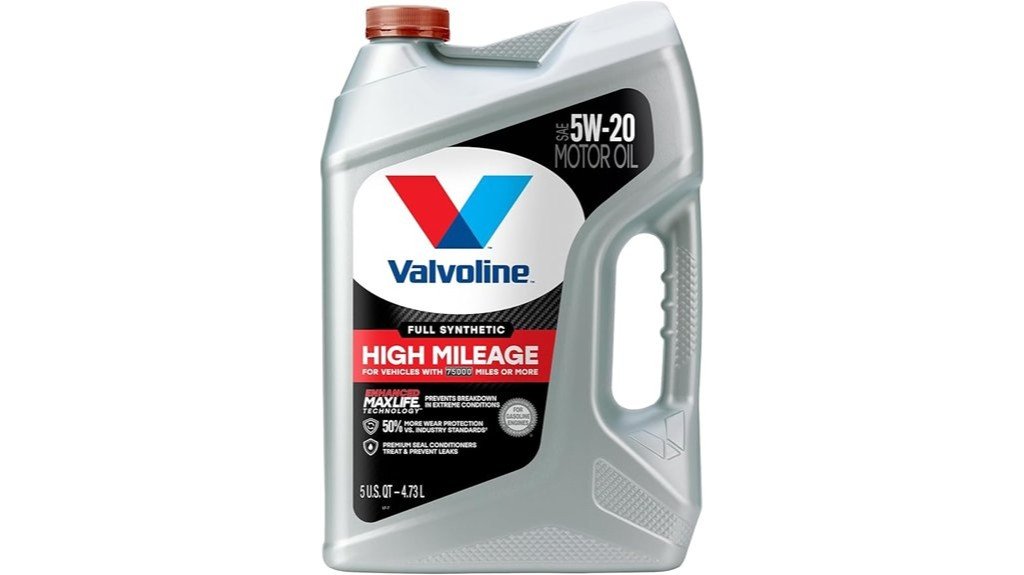
Valvoline’s Full Synthetic High Mileage 5W-20 is ideal if your Toyota has surpassed 75,000 miles and you want stronger leak protection and deposit control; its MaxLife technology adds seal conditioners to reduce oil leaks and extend engine life. You’ll get a full-synthetic 5W-20 formulated to cut wear, lower oil consumption, and resist deposits, sludge, corrosion, and rust. Lab and third-party tests back claims: 50% better wear protection, 25% extra deposit defense, and 24× stronger contaminant protection versus leading synthetics. It meets ILSAC GF-6A and API SP/SN specs, fits many vehicles, comes in a 5-quart pack, and has excellent user ratings.
Best For: Ideal for owners of high-mileage (75,000+ miles) Toyotas and other cars/trucks who want full-synthetic 5W-20 oil with enhanced leak protection and deposit control to extend engine life.
Pros:
- MaxLife technology with seal conditioners helps prevent/treat oil leaks and reduce oil consumption in aging engines.
- Lab and third-party tested claims: 50% better wear protection, 25% extra deposit/sludge/corrosion defense, and 24× stronger contaminant protection versus leading synthetics.
- Meets or exceeds ILSAC GF-6A and API SP/SN specifications and comes in a convenient 5-quart size with strong user ratings (4.8/5).
Cons:
- Designed specifically for high-mileage engines; benefits may be less noticeable on low-mileage vehicles.
- Slightly higher cost than conventional or blended oils (full synthetic premium).
- Viscosity limited to 5W-20 — not suitable for engines that require other weight grades.
Valvoline Full Synthetic High Mileage 5W-30 Motor Oil (5 Quart)
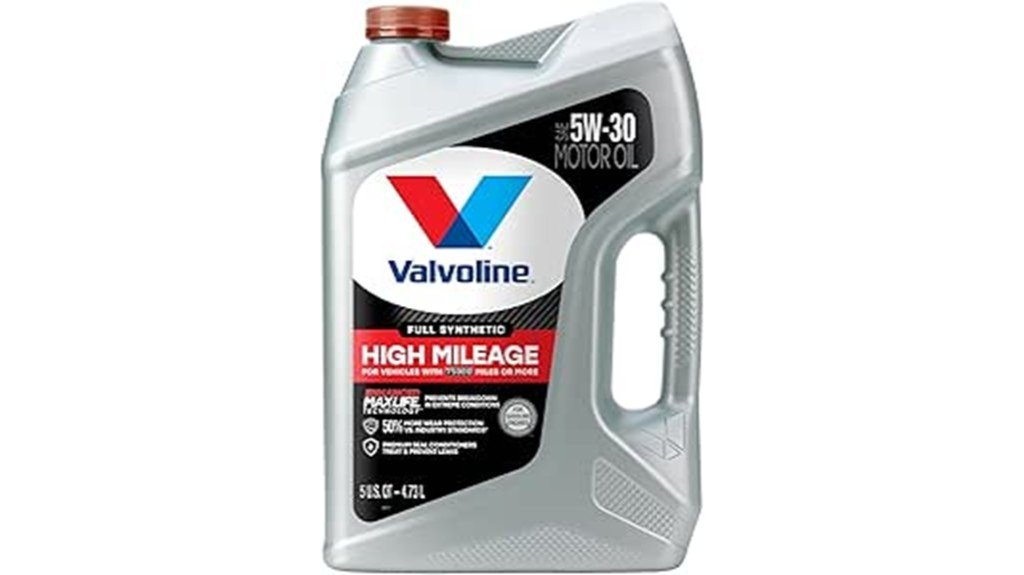
If your Toyota has crossed the 75,000-mile mark and you want to protect aging seals while cutting oil consumption, Valvoline Full Synthetic High Mileage 5W-30 is a solid choice. You’ll get a full synthetic formula with Enhanced MaxLife Technology that treats and conditions seals to reduce leaks and lower oil burn. It delivers 50% better wear protection than industry standard and 25% extra defense against deposits, sludge, corrosion, and rust, helping extend engine life. It meets or exceeds ILSAC GF-6A, API SP, and API SN specs. American-made Valvoline brings reliable, long-standing brand trust to high-mileage Toyotas.
Best For: Vehicle owners with over 75,000 miles—especially Toyota owners—seeking a full synthetic oil that conditions aging seals, reduces oil consumption, and extends engine life.
Pros:
- Full synthetic with Enhanced MaxLife Technology to treat seals and reduce leaks and oil burn.
- Provides 50% better wear protection and 25% extra defense against deposits, sludge, corrosion, and rust.
- Meets/exceeds ILSAC GF-6A, API SP, and API SN standards; American-made by a trusted brand.
Cons:
- Specifically marketed for high-mileage engines, may be unnecessary for newer low-mileage vehicles.
- Premium full-synthetic price may be higher than conventional or synthetic blend options.
- May not address mechanical leaks or issues unrelated to seal conditioning.
Factors to Consider When Choosing Motor Oil For High Mileage Toyota
When choosing oil for your high-mileage Toyota, you’ll want to check the engine mileage threshold to decide if specialized high-mileage formulas are needed. Pick the right viscosity grade for your engine’s wear and climate, and weigh synthetic versus blend options for long-term protection. Also look for oils with seal conditioners and strong wear protection ratings to prevent leaks and reduce metal-to-metal wear.
Engine Mileage Threshold
At around 75,000 miles many Toyota engines start showing the wear patterns that high‑mileage oil is designed to address, so you should consider switching once you notice increased oil consumption, leaks, or reduced performance. That threshold isn’t absolute — inspect your engine’s symptoms and service history. If you see higher oil burn, reduced compression, or persistent seepage around seals, high‑mileage formulas can help by adding seal conditioners and extra anti‑wear additives. These oils often deliver substantially better wear protection—sometimes up to roughly 50%—which can slow further degradation. Also weigh how you drive and the vehicle’s maintenance record: hard use or missed services means earlier intervention. Use high‑mileage oil as a targeted measure when age and symptoms indicate your Toyota needs extra protection.
Viscosity Grade Choice
Noting signs of wear around 75,000 miles is a good cue to rethink oil choice, and the next step is picking the right viscosity grade for your high‑mileage Toyota. Viscosity determines how oil flows cold (the “W” number) and how it holds up hot (the second number). For many high‑mileage engines, 5W‑30 offers a balance: easy cold starts and sufficient film thickness at operating temperature, helping reduce wear and prevent breakdown. High‑mileage formulations often include additives that support slightly higher effective viscosity to preserve seals and cut consumption. Still, always check your owner’s manual first — manufacturer recommendations trump general advice. Choose a grade that matches ambient conditions and the manual to maintain efficiency and engine protection.
Synthetic Vs Blend
Because your Toyota’s needs change as mileage climbs, choosing between full synthetic and a synthetic blend comes down to balancing protection, cost, and the engine’s condition. You’ll find full synthetics engineered for superior performance, better wear protection, and higher resistance to breakdown — ideal if you want improved fuel economy, high-temperature stability, and fewer deposits. Synthetic blends mix conventional and synthetic oil, giving you enhanced protection over standard oils at a lower price than full synthetics, which makes them attractive if you’re budget-conscious. To decide, consider how you drive, the current engine wear, and Toyota’s recommendations: choose full synthetic for maximum protection and longevity, or a blend for reasonable protection when cost is a bigger factor.
Seal Conditioner Presence
When your Toyota racks up miles, choose an oil with a seal conditioner if you’re seeing leaks or higher oil consumption, since these additives help swell and condition aging seals to reduce seepage and improve compression. You’ll find seal conditioners especially useful once your engine passes about 75,000 miles, when rubber and elastomers begin to harden and shrink. Using an oil formulated with conditioners helps minimize oil loss, maintain proper sealing, and preserve engine efficiency — all of which lower the risk of damage from low oil levels. Look for products backed by independent testing and industry standards so you know the conditioner actually performs. If seals are already severely cracked, conditioners may help but won’t fully replace mechanical repair.
Wear Protection Rating
Think of wear protection rating as a durability score for oil: it tells you how well a formulation will shield bearings, cam lobes, and other critical parts in a high‑mileage Toyota. You’ll want oils with higher ratings because they can offer up to 50% better wear resistance versus industry norms, which matters once your engine tops about 75,000 miles. Choose advanced formulations with dedicated antiwear additives so critical components stay lubricated and heat and friction stay down. Check product datasheets and performance tests—ratings that meet or exceed industry standards usually translate to stronger protection. Make using a high-rated oil part of your maintenance routine and you’ll reduce premature wear, improve performance, and extend the life of your Toyota’s engine.
OEM Specification Compliance
After checking wear protection, you should confirm the oil actually meets Toyota’s OEM specs—your owner’s manual lists the required API/ILSAC ratings and the recommended viscosity like 5W‑30 or 5W‑20. Always choose oils that meet or exceed those API standards (SP, SN, SN PLUS where applicable) so the formula’s detergents, antiwear agents, and friction modifiers match Toyota’s demands. For high-mileage engines pick oils labeled for high-mileage use that include seal conditioners to soften and rejuvenate aging seals, reducing leaks and preserving oil pressure. Verify the product has compatibility testing for older engines and explicit claims about preventing deposits, sludge, and wear. If labels or data sheets don’t confirm OEM compliance and compatibility, look elsewhere.
Change Interval Recommendations
For high‑mileage Toyotas, plan oil changes based on a mix of your owner’s manual guidance, driving habits, and how the oil actually looks and smells. Follow the manual first — it accounts for engine design and manufacturer testing. Typically you’ll change oil every 5,000–7,500 miles for conventional or many synthetics; some advanced full synthetics can stretch to 10,000–15,000 miles if the manufacturer approves. Check oil level and condition regularly: dark, gritty, or burnt‑smelling oil means change sooner. For high‑mileage engines, pick oils formulated to rejuvenate seals and curb consumption, which can stabilize intervals. Confirm filter recommendations too — some makers want a new filter each change, others allow longer service — and adjust your schedule accordingly.
Frequently Asked Questions
Can I Mix High-Mileage Oil With Regular Oil in Emergencies?
Yes, you can mix high‑mileage and regular oil in emergencies, but don’t make it routine; you’ll get temporary protection, yet plan a full oil change soon to restore correct additives, viscosity, and ideal engine care.
Do These Oils Affect Emissions System Lifespan?
Picture tiny mechanics in hazmat suits applauding or crying. Yes, oils can affect emissions system lifespan; you’ll prolong life with low-ash, recommended formulas and harm it with unsuitable, high-detergent blends that foul sensors and catalysts faster.
Can Oil Choice Influence Fuel Economy Noticeably?
Yes — choosing the right oil can improve fuel economy slightly; you’ll see better mileage with low-viscosity, low-friction synthetic oils, especially in high-mileage engines, though gains are usually modest rather than dramatic.
Are Oil Additives or Stop-Leak Products Recommended?
You shouldn’t rely on oil additives or stop-leak products regularly; they’ll sometimes mask issues but won’t fix worn seals or internal damage. You’d better diagnose leaks, use proper high-mileage oil, and consult a mechanic for lasting repairs.
How Often Should High-Mileage Oil Be Changed for a Turbo Toyota?
Change every 3,000–5,000 miles for conventional, every 5,000–7,500 miles for synthetic; check turbo oil cooler lines, monitor consumption, and follow your owner’s manual. Don’t delay, don’t ignore, don’t cut corners.
Conclusion
You’ve seen the top high-mileage oils that’ll help keep your Toyota running like a well-tuned clock. Pick a viscosity that matches your owner’s manual and local climate, and favor formulas with seal conditioners and wear-fighting additives. Whether you choose a synthetic blend or full synthetic, consistent oil changes and proper upkeep are the real heartbeats of a long-lived engine—treat them well, and your Toyota will repay you mile after dependable mile.