Disclosure: As an Amazon Associate, we earn from qualifying purchases. If you click a link on this page and make a purchase, we may receive a small commission at no extra cost to you.
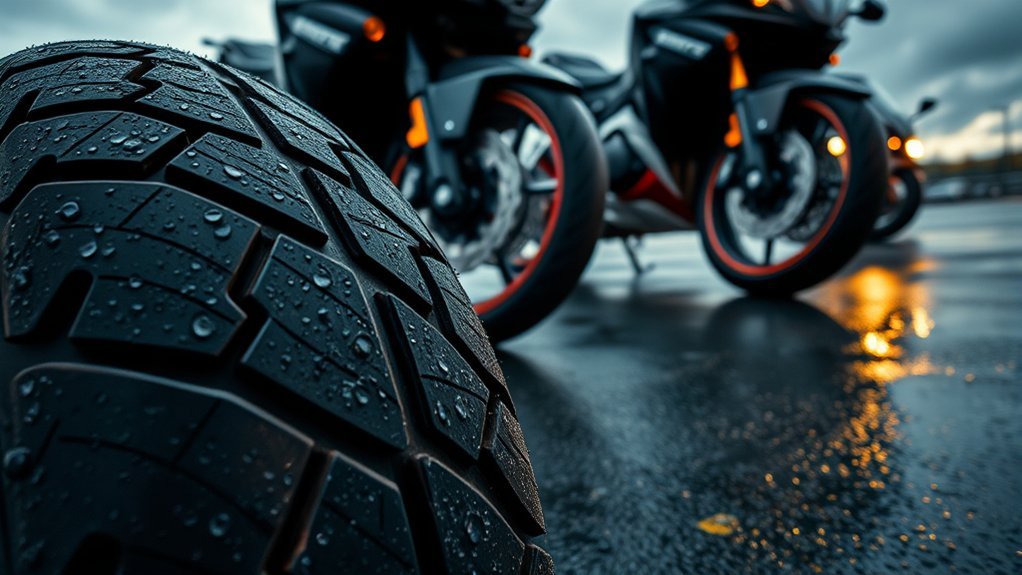
Wet roads reduce your margin for braking, cornering, and sudden corrections. The right motorcycle tire can improve water clearance and provide more predictable feedback, but only when its size, construction, load rating, speed rating, and wheel position match your bike. This guide compares three wet-weather-focused choices for different riders: a sport-touring rear tire, a matched sport-touring set, and a cruiser rear tire.
Quick verdict: Choose the MICHELIN Road 5 when wet grip is your main priority and you need the listed 180/55ZR17 rear size. Pick the Pirelli Angel ST set when your motorcycle uses both listed 17-inch sizes and you want a matched front-and-rear package. The Michelin Commander II is the cruiser-focused option for riders who need the listed 180/65B16 rear size and value mileage.
Fitment first: Do not buy by model name alone. Confirm the exact front or rear position, tire size, radial or bias construction, tube or tubeless requirement, load index, speed rating, and motorcycle manufacturer approval before ordering.
| MICHELIN Road 5 Touring Radial Tire-180/55ZR-17 73W | 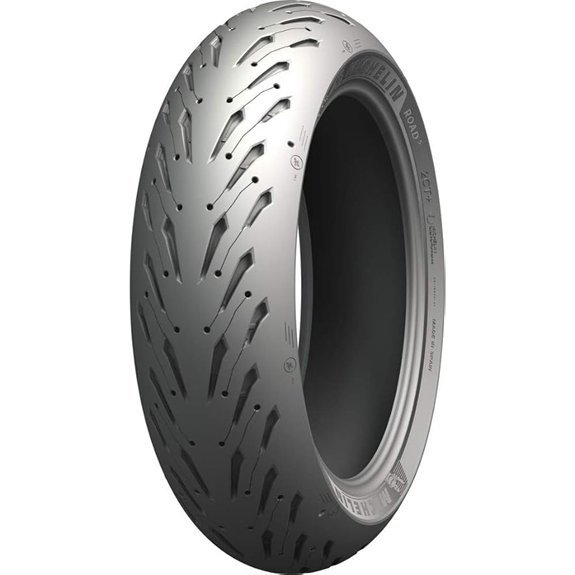 | Best Wet Grip | Best For: Sport-touring riders needing a 180/55ZR17 rear tire | Wet-Road Design: Water Evergrip siping with 2CT and 2CT+ compounds | Important Check: This listing is one rear tire, not a complete set | CHECK PRICE ON AMAZON | Read Our Analysis |
| Pirelli Angel ST Sport Touring Motorcycle Tire Set | 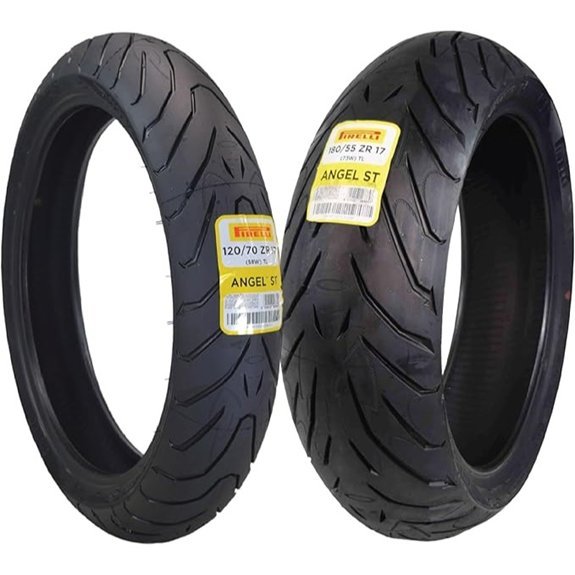 | Best Front-and-Rear Set | Best For: Sport-touring bikes using the listed 17-inch pair | Wet-Road Design: High-silica compound for wet and low-temperature grip | Important Check: Confirm both 120/70ZR17 front and 180/55ZR17 rear sizes | CHECK PRICE ON AMAZON | Read Our Analysis |
| Michelin Commander II Cruiser Bias Tire-180/65-16 81H | 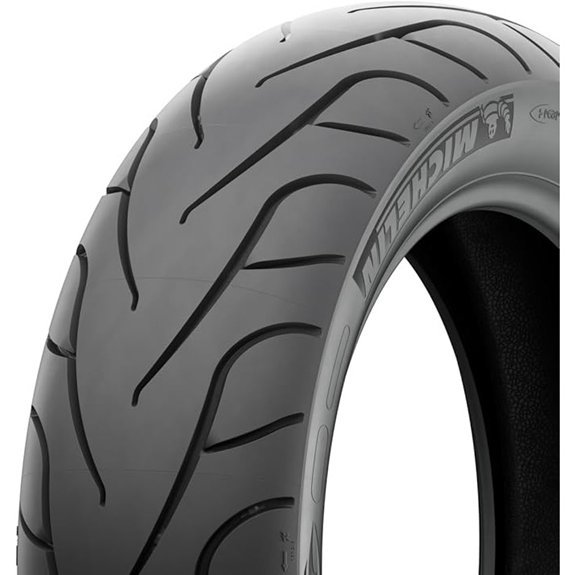 | Best for Cruisers | Best For: Cruisers needing a 180/65B16 81H rear tire | Wet-Road Design: Longitudinal grooves designed to move water away | Important Check: Bias-ply rear tire; verify construction and pairing | CHECK PRICE ON AMAZON | Read Our Analysis |
More Details on Our Top Picks
MICHELIN Road 5 Touring Radial Tire-180/55ZR-17 73W
The MICHELIN Road 5 is the strongest wet-road-focused option in this group for sport-touring riders who need the listed 180/55ZR17 rear size. Michelin combines Water Evergrip siping with 2CT and 2CT+ tread compounds to support water clearance, braking, and predictable road feedback in rain. ACT+ casing technology is designed to balance straight-line stability with cornering response.
Why you’ll like it: It focuses directly on wet braking and maintained wet performance as the tire wears. Michelin reports that a worn Road 5 used in its controlled test stopped as short on wet pavement as a new Pilot Road 4, although real-world results depend on the motorcycle, load, pressure, road, temperature, and rider input.
Best for: Commuters and sport-touring riders replacing a compatible rear tire. Skip it if: Your bike needs another size, a front tire, a GT-specific version, or a different construction approved by the motorcycle manufacturer.
- Intended Use:Road sport-touring
- Position and Size:Rear tire, 180/55ZR17 (73W)
- Wet Grip Technology:Water Evergrip siping with 2CT and 2CT+ compounds
- Handling Technology:ACT+ casing designed for stability and cornering response
- Package:One tire; a matching front tire must be selected separately
- Honest Limitation:Road 6 is the newer Michelin generation, and fitment must still be verified
- Before You Buy:Match the complete sidewall specification and approved wheel position
Pirelli Angel ST Sport Touring Motorcycle Tire Set
The Pirelli Angel ST set is the easiest package to compare when your motorcycle uses a 120/70ZR17 front and 180/55ZR17 rear. Its high-silica compound is designed for sport-touring use in wet, dry, and cooler conditions. Pirelli also uses coordinated front and rear profiles to support neutral, consistent handling during highway travel and everyday cornering.
Why you’ll like it: Buying a listed pair can reduce the uncertainty of mixing unrelated front and rear models. The tread and compound balance wet-road confidence with mileage, making this set suitable for riders who commute, tour, and ride winding roads.
Best for: Value-focused sport-touring riders whose bikes require both listed sizes. Skip it if: Either wheel uses a different size, load or speed rating, or your motorcycle calls for a different approved specification. Angel ST is an older design and the predecessor to newer Angel GT models.
- Intended Use:Road sport-touring
- Front Size:120/70ZR17 (58W)
- Rear Size:180/55ZR17 (73W)
- Wet Grip Technology:High-silica compound for wet and low-temperature performance
- Handling:Coordinated front and rear profiles for neutral road behavior
- Package:Front-and-rear set in the listed sizes
- Honest Limitation:Older-generation Angel model; newer alternatives may suit some riders better
- Before You Buy:Verify both wheel sizes and the exact OEM load and speed requirements
Michelin Commander II Cruiser Bias Tire-180/65-16 81H
The Michelin Commander II is the cruiser-specific choice in this article. This listing is for a 180/65B16 81H rear bias tire, so it is not interchangeable with the 17-inch sport-touring products above. Its longitudinal tread grooves are designed to move water through the tread, while the dense casing and aramid reinforcement support stability under cruiser loads.
Why you’ll like it: It combines rain-focused tread features with a strong mileage emphasis. Michelin’s commissioned comparison reported that the Commander II rear lasted almost twice as long as selected competing rear tires, but that result should not be treated as a guaranteed lifespan for every motorcycle or rider.
Best for: Cruiser riders who need this exact rear size and construction. Skip it if: Your motorcycle requires a radial tire, another size, a different load or speed rating, or a matched model specified by the motorcycle manufacturer.
- Intended Use:Cruiser motorcycles
- Position and Size:Rear tire, 180/65B16 81H
- Construction:Bias-ply design with aramid reinforcement
- Wet-Road Design:Longitudinal grooves for water evacuation
- Durability Focus:Designed for extended cruiser mileage
- Package:One rear tire; front tire sold separately
- Honest Limitation:Commander III is the newer Michelin cruiser generation
- Before You Buy:Do not mix radial and bias constructions unless the motorcycle maker approves it
How We Compared These Motorcycle Tires
We compared the products by wet-road tread and compound design, intended motorcycle type, front or rear position, listed size, construction, package contents, handling focus, mileage claims, and fitment risk. These tires are not universal substitutes for one another. A tire that is excellent for a sport-touring bike may be completely unsuitable for a cruiser with a different rim, construction, or load requirement.
Factors to Consider When Choosing Motorcycle Tires for Wet Roads
Start with fitment, then compare wet-road design. The correct tire must match your motorcycle before tread technology, brand, mileage, or price becomes relevant.
Fitment and Wheel Position
Match the complete tire specification in your owner’s manual or on the motorcycle’s tire-information label. Check width, aspect ratio, rim diameter, load index, speed rating, front or rear position, radial or bias construction, and tube or tubeless requirement. Also confirm whether the motorcycle manufacturer permits a different model or construction. Never assume two tires fit simply because they share one dimension.
Tread Pattern Design
A wet-road tread must move water while preserving a stable contact area. Look for grooves and channels designed to direct water away from the tread. Directional patterns, longitudinal grooves, and evolving sipes can help, but the complete tread design matters more than one feature in isolation. Choose a tire developed for your type of road riding rather than judging performance only by how aggressive the tread looks.
Compound Composition
Silica-rich and multi-compound tread formulations can help rubber remain responsive in cool or wet conditions while balancing center wear and cornering grip. Softer does not automatically mean safer, and a harder compound does not automatically mean poor in rain. Compare the manufacturer’s intended use and wet-performance technology, then balance grip priorities with mileage and riding temperature.
Water Evacuation Channels
Grooves and channels help clear water from the contact area, but more groove volume is not always better. Their direction, depth, shape, and support from the surrounding tread blocks affect stability and wear. Prioritize a road tire whose overall design is intended for wet pavement, and slow down when standing water exceeds what the tread can disperse.
Siping and Grooves
Sipes add edges and create space for water as the tire rolls through the contact patch. Some modern designs widen or expose more water-clearing space as the tread wears. Even advanced siping cannot compensate for low tread depth, incorrect pressure, contamination, or excessive speed in heavy rain. Inspect the full tread regularly rather than relying only on the center wear indicator.
Tire Profile Shape
Profile affects steering response, lean behavior, and how the contact patch changes through a turn. You should not select a flatter or rounder profile as a stand-alone wet-weather upgrade. Use the size and profile approved for your motorcycle and wheel. An unapproved change can alter handling, clearance, speedometer readings, and the way front and rear tires work together.
Pressure and Load Ratings
Check pressure when the tires are cold and use the motorcycle manufacturer’s recommended setting for your load and riding conditions. The pressure molded on a tire sidewall is not a universal target for every bike. Underinflation can increase heat, flex, and vague handling, while overinflation can reduce compliance and usable grip. Never exceed the tire’s load capacity, and follow the owner’s manual when adding a passenger or luggage.
Wear and Longevity
Wet traction generally declines as grooves become shallower and the tread loses its ability to clear water. Check tread depth, uneven wear, cracking, cuts, bulges, punctures, valve condition, and tire age. Replace a damaged or unsuitable tire even if some tread remains. When buying online, check the tire’s manufacturing date after delivery and confirm that storage age is acceptable to you and your installer.
Temperature Performance
Cold rain can make some compounds slower to reach their intended operating range. Sport-touring tires with silica-based compounds are often designed to provide useful grip across a wider range of road temperatures. Still, no street tire removes the need for smoother throttle, braking, and steering inputs when the pavement is cold, painted, oily, or covered with leaves.
Wet-road safety note: Reduce speed, increase following distance, avoid abrupt lean or braking inputs, and be cautious on painted lines, metal covers, tar strips, leaves, fuel residue, and the first minutes of rainfall. Even a highly rated rain tire cannot prevent every loss of traction.
Frequently Asked Questions
How Often Should I Check Tire Pressure in Wet Conditions?
Check both tires cold before a wet ride and as often as your motorcycle manual recommends. Recheck after a large temperature change, before carrying a passenger or luggage, and whenever steering, vibration, or ride feel changes. Use the motorcycle manufacturer’s pressure specification rather than guessing from the tire sidewall.
Can Tire Sealants Affect Wet Traction?
An internal sealant should not change tread grip when it remains inside the tire, but leaked sealant, overspray, or any contamination on the tread can make the surface slippery. Sealants may also have limits related to tire type, speed, repairability, wheel sensors, and manufacturer approval. Treat them as product-specific emergency tools, not automatic substitutes for inspection and a proper repair.
Are Motorcycle Tire Warmers Useful for Rainy Rides?
Tire warmers are mainly track equipment and are not a practical solution for normal street riding in rain. Their usefulness depends on the tire, compound, target temperature, and riding environment. For road use, correct fitment, cold pressure, tread condition, smooth inputs, and reduced speed matter more.
Do Wheel-Alignment Issues Affect Wet Handling?
Yes. Incorrect rear-wheel alignment, damaged wheels, worn bearings, suspension problems, or poor balance can cause instability and uneven tire wear. Those problems may reduce predictable grip in rain, even though they are not the same thing as hydroplaning. Have the motorcycle inspected if it pulls, wobbles, vibrates, or wears one side of a tire faster.
Can Aftermarket Rims Change Wet-Road Grip?
Yes. Rim width, diameter, offset, weight, and compatibility can change the mounted tire profile and motorcycle handling. Use only a rim and tire combination approved for the bike, and verify clearance, valve type, load capacity, balance, and any sensor requirements. A wider tire or rim is not automatically better in rain.
Can I Mix Different Front and Rear Motorcycle Tires?
Only when the motorcycle and tire manufacturers allow the combination. Front and rear tires are designed to work together through their profiles, constructions, compounds, and water-clearing behavior. Avoid mixing radial and bias tires, mismatched speed or load ratings, or unrelated performance categories unless the motorcycle manufacturer specifically approves that setup.
Final Recommendation
Choose the MICHELIN Road 5 for a compatible sport-touring rear tire with the strongest wet-grip focus in this comparison.
Choose the Pirelli Angel ST set when your motorcycle uses the listed 120/70ZR17 front and 180/55ZR17 rear sizes and you want a matched pair.
Choose the Michelin Commander II when you ride a compatible cruiser that requires the listed 180/65B16 81H rear bias tire and mileage is a major priority.
No tire is the best choice until it fits the motorcycle correctly. Confirm every sidewall specification, use the recommended cold pressure, inspect the tire before riding, and adjust your speed and following distance for rain and standing water.