This article contains Amazon affiliate links. If you buy through them, we may earn a commission at no extra cost to you.
If you own a 2000 Toyota Tundra, replacing worn shocks or front loaded strut assemblies can improve ride control, comfort, and handling. Fitment is the first priority: 2WD/RWD and 4WD versions can use different components, and lifted trucks may need different-length parts. The five options below cover complete front-and-rear replacement kits, a front-only loaded strut set, and one lift-specific setup.
Quick Verdict
- Best overall full replacement: TRQ complete front strut and rear shock kit, after confirming the linked configuration matches your drivetrain.
- Best verified 4WD complete kit: Detroit Axle front loaded struts and rear shocks.
- Best front-only replacement: Youxmoto two-piece front complete strut set.
- Best alternative 4WD complete kit: PM Auto front quick struts and rear shocks.
- Best for a 2.5-inch lifted 4WD: Rough Country 501091. This is not a normal stock-height replacement.
Before you buy: Enter your exact 2000 Tundra configuration in the retailer fitment tool and compare OEM/interchange numbers when available. Do not assume that a kit listed for 2000–2006 Tundra fits every drivetrain or suspension setup.
TRQ Front and Rear Complete Strut and Shock Absorber Kit for 2000-2006 Toyota Tundra

If you want to replace the front loaded strut assemblies and rear shocks together, the TRQ complete kit is a practical starting point. TRQ offers application-specific 2000–2006 Tundra kits with two preassembled front strut-and-spring assemblies and two rear shock absorbers. The preassembled design avoids transferring the old front springs and mounts, and TRQ states that its loaded struts are designed to restore original-style ride control and reduce body sway and vibration.
Best For: Owners who want a complete front-and-rear replacement package and are willing to verify the correct 2WD/RWD or 4WD configuration before ordering.
Why You’ll Like It: It combines the major front and rear damping components in one package, which can simplify a full suspension refresh.
Pros:
- Includes two preassembled front strut-and-spring assemblies plus two rear shocks.
- Application-specific loaded struts reduce the need to reuse old front spring and mount components.
- TRQ states that its suspension parts are fit- and road-tested for their intended applications.
Cons:
- TRQ sells different configurations for 4WD and rear-wheel-drive Tundras, so exact drivetrain fitment must be confirmed.
- This is a replacement-focused setup rather than an adjustable or lift-oriented performance system.
- A complete four-piece suspension job is more involved than replacing only one axle, even with loaded front assemblies.
Rough Country 2.5″ N3 Loaded Leveling Struts for 2000-2006 Tundra – 501091

Rough Country 501091 is the specialty choice in this roundup. It is a pair of loaded N3 front struts for 2000–2006 Toyota Tundra 4WD, but Rough Country specifically notes that it only fits models with 2.5 inches of lift and cannot be used together with a strut spacer. That makes it suitable for the intended lifted configuration, not as a standard stock-height replacement.
Best For: 2000–2006 Tundra 4WD owners whose trucks are already configured for a 2.5-inch lift and who need loaded front struts designed for that setup.
Why You’ll Like It: The pre-loaded coils avoid strut disassembly, while the nitrogen-charged N3 design uses application-specific valving for the lifted setup.
Pros:
- Pre-loaded coil assemblies simplify front strut replacement.
- Nitrogen gas charge, a 1 3/8-inch bore, and a hardened chromed piston rod are listed by Rough Country.
- Rough Country lists a 3-year limited warranty for model 501091.
Cons:
- Not for a stock-height 2000 Tundra; Rough Country says it only fits models with 2.5 inches of lift.
- Cannot be installed in conjunction with a strut spacer.
- Front struts only, so this does not refresh the rear shocks.
Front Coil Spring Strut Shock Absorber Set for Toyota Tundra (2000–2006)
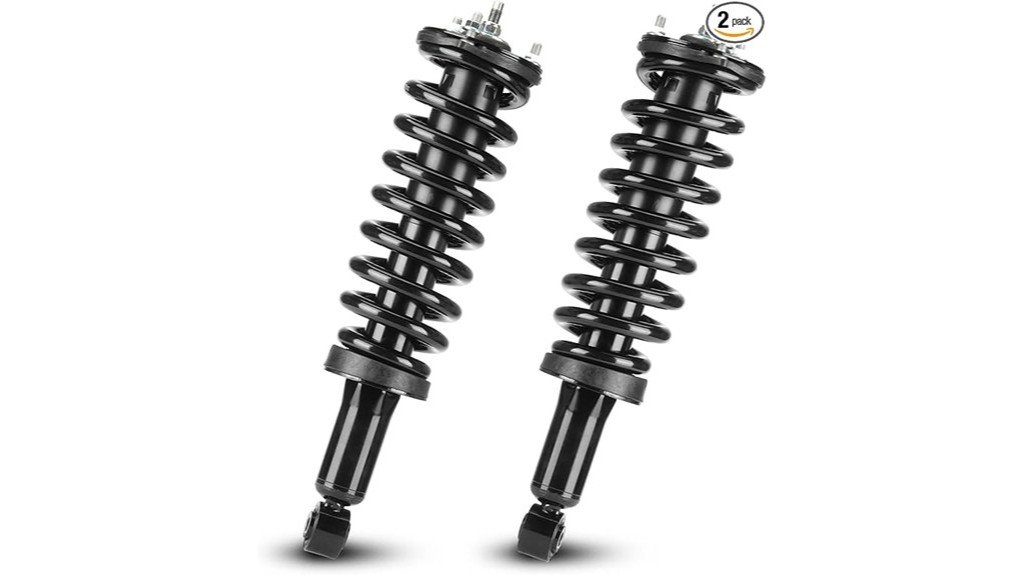
If your rear shocks are still serviceable and you only need the front assemblies, the Youxmoto set is the most focused option here. The Amazon listing identifies it as a two-piece front complete strut set for 2000–2006 Toyota Tundra and lists model/MPN YXSOK074 with OEM-equivalent numbers 171347L and 171347R. The assemblies include the strut, coil spring, and mounts, but you should still verify your exact vehicle configuration before ordering.
Best For: Owners who need a front-only loaded strut replacement rather than a full four-corner suspension kit.
Why You’ll Like It: The pair arrives as complete front assemblies, so you do not have to buy separate front springs, mounts, and struts.
Pros:
- Two-piece front complete strut set for 2000–2006 Toyota Tundra.
- Lists OEM-equivalent numbers 171347L and 171347R for fitment cross-checking.
- Preassembled format reduces the amount of component transfer compared with bare struts.
Cons:
- Front-only set; it does not replace the rear shocks.
- Seller availability and offer terms can change, so check the current Amazon offer before purchase.
- The listing itself recommends checking vehicle information before purchase, and professional installation may be appropriate for suspension work.
Detroit Axle 4WD Struts and Shock Absorbers for 2000-2006 Toyota Tundra (Complete Front Struts with Coil Springs & Rear Shocks)

For a 4WD 2000 Tundra, Detroit Axle’s four-piece kit is one of the clearest full-replacement matches in this list. It includes one front driver-side loaded strut, one front passenger-side loaded strut, and a pair of rear shocks. Detroit Axle lists the kit for 2000–2006 Tundra Limited and SR5 4WD models, with Base 4WD coverage shown for 2005–2006, so 2000 owners should verify submodel details before purchase.
Best For: 2000 Tundra 4WD owners who want a ready-to-install front-and-rear replacement kit with a clearly documented manufacturer fitment chart.
Why You’ll Like It: The manufacturer lists the component part numbers and states that the complete front strut assemblies are ready for installation without transferring the old springs.
Pros:
- Complete four-piece package with two loaded front struts and two rear shock absorbers.
- Manufacturer lists impact, wear, and fatigue testing for the suspension components.
- Detroit Axle lists a limited 10-year warranty for this kit, subject to its warranty terms.
Cons:
- Designed for specific 4WD Tundra configurations; it is not a universal first-generation Tundra kit.
- Owners of a 2000 Base trim should not assume fitment because the manufacturer chart shown for this kit lists Base coverage only for later years.
- Like other loaded strut kits, installation still requires safe lifting, proper torque procedures, and a post-install alignment check when appropriate.
PM Auto Strut and Shock Replacement Kit for 2000-2006 Toyota Tundra 4WD

The PM Auto four-piece setup is another full front-and-rear option for 2000–2006 Toyota Tundra 4WD. A PM Auto listing for part D402101 describes a set with two front quick-strut/coil-spring assemblies and two rear shocks and lists interchange numbers including 171347L, 171114R, and 554243. Because retailer catalogs can change, confirm that the Amazon ASIN linked below matches your exact truck and the same component set before ordering.
Best For: 4WD owners who want an alternative complete kit with preassembled front units rather than reusing the old front springs.
Why You’ll Like It: The set is sold as a vehicle-specific four-piece replacement package, helping you refresh the front and rear damping components together.
Pros:
- Complete front quick-strut assemblies plus rear shocks for a four-piece replacement.
- Vehicle-specific listing covers 2000–2006 Tundra 4WD.
- A PM Auto retailer listing states a limited lifetime parts warranty, subject to the seller/manufacturer terms.
Cons:
- Retailer catalogs can change, so confirm the linked Amazon ASIN still shows the same 4WD four-piece configuration before purchase.
- Warranty coverage can depend on proof of purchase, installation, use, and other exclusions.
- This is a 4WD-specific option and should not be treated as a fit for every 2000 Tundra.
Factors to Consider When Choosing Shocks And Struts For 2000 Toyota Tundra
The best shocks and struts for a 2000 Toyota Tundra depend on more than model year. Confirm drivetrain, suspension height, front-versus-rear needs, and the condition of the surrounding suspension parts before you order. A direct-fit stock replacement and a lifted strut can both be correct products for a Tundra, but they are not interchangeable.
Compatibility and Fitment
Start with your exact 2000 Tundra configuration. Check 2WD/RWD versus 4WD, trim or submodel, current ride height, and any existing lift or leveling hardware. Compare the retailer’s fitment tool with manufacturer fitment charts and OEM/interchange numbers when available. Do not rely only on a broad “2000–2006 Tundra” title because manufacturers may sell separate kits for different drivetrains or lifted applications.
Ride Quality Impact
Worn shocks and front strut assemblies can allow excessive bouncing, body motion, nose dive, or poor control over rough roads. A correctly matched replacement can restore damping and help the tires stay more consistently in contact with the road. The result may feel more controlled and comfortable, but ride quality still depends on springs, bushings, tires, alignment, load, and other suspension components.
Load and Towing Needs
If you tow or haul regularly, choose dampers designed for the way the truck is used and keep the suspension in good condition. Stronger or application-specific damping can help control body motion, but shocks and struts do not increase the truck’s payload or towing rating. Do not use replacement shocks as a substitute for correct tongue weight, proper hitch setup, healthy springs, or other load-support components when those are needed.
Durability and Materials
Look for corrosion-resistant finishes, durable seals, properly sized piston rods, and manufacturer information about testing or application-specific valving. Gas-charged designs can help control oil aeration under repeated movement, but construction quality and correct fitment matter more than a single marketing specification. For trucks exposed to road salt, mud, or off-road use, inspect shock bodies, mounts, bushings, and fasteners regularly.
Warranty and Support
Separate a manufacturer warranty from a retailer return window. A 30-day return policy is not the same as a multi-year parts warranty. Check what is covered, whether labor is excluded, whether proof of purchase is required, and what conditions can void coverage. Clear fitment support is also valuable because ordering the wrong drivetrain or lift-height version can create avoidable return and installation problems.
Before You Buy Checklist
- Confirm 2WD/RWD or 4WD.
- Confirm stock height or lifted suspension and the exact lift height.
- Decide whether you need front only or a front-and-rear kit.
- Compare OEM/interchange numbers when the listing provides them.
- Inspect springs, mounts, bushings, ball joints, control arms, and rear shocks so you do not replace one worn part and overlook another.
- Plan for safe installation and an alignment check if suspension geometry or ride height changes.
Frequently Asked Questions
Can Upgraded Shocks Improve Towing Stability on a 2000 Tundra?
They can improve body-motion control if the current shocks are worn or poorly matched to the load, but shocks do not raise the Tundra’s tow rating or payload capacity. Proper trailer loading, hitch setup, tire pressure, springs, and other suspension components still matter.
Will New Struts Affect Factory Ride Height or Ground Clearance?
Stock-height direct-fit loaded struts are intended to maintain or restore normal ride height, especially if the old springs have sagged. Lifted struts such as the Rough Country 501091 are different and are designed for a specific lifted configuration. Always match the replacement to your current suspension setup.
How Often Should I Replace Shocks and Struts on This Tundra?
There is no single mileage interval that fits every 2000 Tundra. Inspect them periodically and replace them when wear shows up through leaking, persistent bouncing, poor control, damaged mounts, uneven tire wear linked to suspension problems, or failed inspection. Trucks used for towing, rough roads, or off-road driving may need closer inspection.
Are Electronic or Adjustable Shocks Compatible With the 2000 Tundra?
Only use adjustable or electronic systems that explicitly list compatibility with your exact Tundra configuration. Do not assume a universal electronic shock will bolt in or operate correctly; electronic conversions may require dedicated wiring, controls, brackets, or other hardware. For a custom setup, verify the full kit requirements before buying.
Do Upgraded Shocks Impact Braking Distance or ABS Performance?
Healthy, correctly matched dampers help control suspension movement and tire contact, but you should not expect a guaranteed shorter stopping distance or better ABS performance simply because the shocks are “upgraded.” Braking depends on tires, brakes, road conditions, vehicle load, ABS condition, alignment, and the rest of the suspension.
Conclusion
For a 2000 Toyota Tundra, the best choice depends first on drivetrain and suspension height. TRQ is a strong full-replacement route when you select the correct drivetrain-specific kit, while Detroit Axle offers a clearly documented 4WD four-piece option. PM Auto is another 4WD full-kit alternative, and the Youxmoto set makes more sense when you only need the front assemblies. Rough Country 501091 belongs in a different use case: choose it only for the specified 2.5-inch lifted 4WD setup, not as a stock-height replacement. Verify fitment before ordering, then choose based on whether you need a full suspension refresh, front-only replacement, or lift-specific damping.