
For a Ford E350 Van, tire fitment comes before brand. The three suitable choices in this guide are the Starfire Solarus HT for highway-focused driving, the BFGoodrich All-Terrain T/A KO3 for mixed pavement and rough-road use, and the Landspider Citytraxx H/T for E350 configurations that use LT225/75R16 tires. Because E350 tire size varies by model year and configuration, match the tire size, load range, load index, and pressure instructions on your vehicle’s tire placard before ordering.
Affiliate disclosure: As an Amazon Associate, we may earn from qualifying purchases at no extra cost to you.
Fitment note: Common Ford E-350 Super Duty fitments include LT225/75R16/E and LT245/75R16/E, but not every year, body style, axle setup, or option package uses the same tire. Always follow the driver-door tire placard or Ford documentation for your exact van.
| Starfire Solarus HT All-Season LT245/75R16 120/116S Tire | 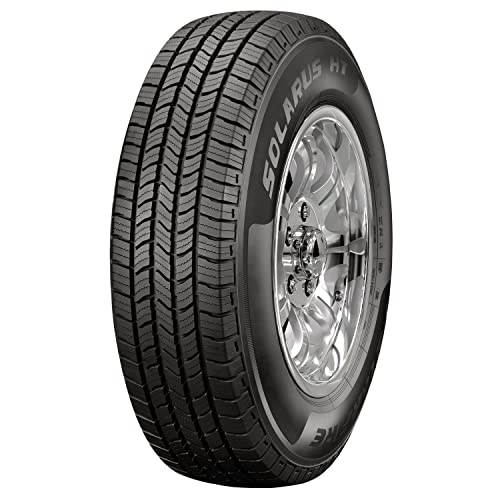 | Best Highway Comfort | Size: LT245/75R16 120/116S | Load Range: E | Best For: paved-road touring | CHECK CURRENT AMAZON AVAILABILITY | Read Our Analysis |
| BFGoodrich All-Terrain T/A KO3 Car Tire LT245/75R16 |  | Best All-Terrain | Size: LT245/75R16/E 120/116S | Load Range: E | Best For: mixed terrain | CHECK CURRENT AMAZON AVAILABILITY | Read Our Analysis |
| Landspider Citytraxx H/T All-Season Light Truck Tire |  | Best LT225 Highway Pick | Size: LT225/75R16 115/112S | Load Range: E | Best For: highway value | CHECK CURRENT AMAZON AVAILABILITY | Read Our Analysis |
More Details on Our Top Picks
Starfire Solarus HT All-Season LT245/75R16 120/116S Tire
The Starfire Solarus HT LT245/75R16 120/116S is the most road-focused option here for an E350 configuration whose placard calls for this LT245/75R16 Load Range E fitment. Its highway-oriented tread is designed for a quieter ride, even wear, and all-season traction, and the linked size carries a 120/116S service description. It also has a 50,000-mile limited treadwear warranty. Who should buy it: drivers who spend most of their time on paved roads and want a straightforward highway tire. Who should avoid it: anyone whose E350 placard specifies a different size or load rating, or drivers who need a more aggressive all-terrain tread.
- Size:LT245/75R16 120/116S
- Load Range:E
- Load Index:120/116
- Warranty:50,000-mile limited treadwear
- Maximum Pressure:80 PSI (not the vehicle target pressure)
- Construction Type:Radial
- Additional Feature:Highway-oriented all-season tread
- Additional Feature:M+S rated
- Additional Feature:Designed for quieter highway driving
BFGoodrich All-Terrain T/A KO3 Car Tire LT245/75R16
The BFGoodrich All-Terrain T/A KO3 LT245/75R16/E 120/116S is the strongest fit in this list for E350 drivers who regularly mix highway miles with gravel, job-site access roads, snow, or other rough surfaces. This linked size is a Load Range E light-truck tire with CoreGard sidewall technology, an all-terrain tread, and a 50,000-mile manufacturer’s treadwear limited warranty. Who should buy it: drivers whose E350 placard allows LT245/75R16/E and who value tougher all-terrain capability. Who should avoid it: drivers who stay almost entirely on pavement and prioritize the quietest, most efficient highway ride.
- Size:LT245/75R16/E 120/116S
- Load Range:E
- Load Index:120/116
- Warranty:50,000-mile manufacturer treadwear limited
- Maximum Pressure:80 PSI (not the vehicle target pressure)
- Construction Type:Radial
- Additional Feature:CoreGard sidewall technology
- Additional Feature:All-terrain tread for mixed surfaces
- Additional Feature:Rugged shoulder and mud/snow traction design
Landspider Citytraxx H/T All-Season Light Truck Tire
The Landspider Citytraxx H/T LT225/75R16 is the only remaining pick in this article aimed at E350 configurations that use the narrower LT225/75R16 size. The manufacturer lists the LT225/75R16 version as 115/112S, 10PR/Load Range E, with an M+S highway-terrain pattern and a 50,000-mile limited tread-wear claim. Who should buy it: E350 owners whose placard specifies LT225/75R16/E and who mainly drive on pavement. Who should avoid it: owners whose placard calls for LT245/75R16/E or another size. Confirm that the linked Amazon listing is showing the exact LT225/75R16 115/112S Load Range E variant before ordering.
- Size:LT225/75R16 115/112S
- Load Range:E
- Ply Rating:10PR
- Warranty:50,000-mile limited tread wear
- Tread Depth:12.2/32 inch (manufacturer listing)
- Construction Type:Radial
- Additional Feature:Highway-terrain tread
- Additional Feature:M+S marked
- Additional Feature:Designed for comfort and lower highway noise
Factors to Consider When Choosing Tires For Ford E350 Van
Choosing tires for a Ford E350 Van starts with exact fitment, not a generic E350 size. Model year, body style, axle configuration, and factory options can change the required tire size and pressure. Check the driver-door placard first, then compare load range, service description, highway versus all-terrain use, winter needs, noise, treadwear coverage, and current availability.
Load Capacity Requirements
Load capacity is a safety requirement, not a feature to estimate. Use a replacement tire with a load range and load index that meet the requirements on your E350’s tire placard. Do not substitute a lower-rated passenger tire just because the rim diameter matches. If your van has dual rear wheels, pay attention to the tire’s dual-load index as well as the single-load index. The tire placard and axle ratings should guide the decision, especially on heavily loaded cargo vans, cutaways, RV conversions, and towing setups.
Tire Size Specifications
Ford E350 tire size is configuration-dependent. Common E-350 Super Duty 16-inch fitments include LT225/75R16/E and LT245/75R16/E. Match all four parts that matter: tire size, Load Range E where specified, service/load index, and speed rating that meets or exceeds the vehicle requirement. Do not assume a tire is correct simply because it fits a 16-inch wheel.
Single vs. Dual Rear-Wheel Load Ratings
Many LT tires show two load indexes, such as 120/116 or 115/112. The first number is the single-tire load index; the second is the dual-tire load index. If your E350 uses dual rear wheels, verify the dual rating, matching tire size, and approved inflation pressure for that axle. Do not use the higher single-tire rating when evaluating a dual-rear-wheel position.
All-Season vs. Seasonal
All-season highway tires are convenient for mild year-round conditions, but they are not automatically equivalent to dedicated winter tires. If you drive an E350 in frequent snow, ice, or mountain winter conditions, choose a winter-capable tire in the exact required size and load rating. A 3-Peak Mountain Snowflake (3PMSF) marking provides a more meaningful severe-snow traction indication than an M+S marking alone. Use winter tires on all wheel positions when required by the tire or vehicle guidance.
Tread Pattern Design
Choose tread design around how the van is actually used. A highway-terrain pattern usually makes more sense for long paved-road trips, delivery work, and commuting because it favors comfort, stable wear, and lower noise. An all-terrain pattern can be worth the tradeoff if you regularly use gravel roads, construction sites, camp access roads, or loose surfaces. Deep grooves and siping can aid water evacuation and traction, but the correct load-rated fitment remains the first priority.
Durability and Longevity
For a heavy van, durability depends on more than a mileage number. Look for the correct LT construction, required load range, adequate tread depth, reinforced casing or sidewall features where useful, and a clearly stated treadwear warranty. Tire life also depends on axle loading, inflation, alignment, rotation, road surface, heat, and driving style. A 50,000-mile limited treadwear warranty is not a promise that every E350 will reach that mileage.
Traction Performance Ratings
For wet and winter traction, compare the tire’s intended use and recognized markings instead of relying on marketing language. Highway tires generally favor wet-road stability and quiet pavement use, while all-terrain tires trade some refinement for loose-surface grip. For severe winter conditions, look for 3PMSF where appropriate. Remember that M+S by itself is not the same as a tested severe-snow rating.
Noise Level Considerations
Road noise matters on a van that may spend hours at highway speed. Highway-terrain tires usually have the advantage for quietness, while aggressive all-terrain patterns can produce more tread noise and may affect ride feel or fuel economy. Proper inflation, wheel balance, suspension condition, and alignment also influence noise and vibration, so a noisy ride is not always the tire model alone.
Price and Warranty Options
Compare total value rather than the lowest purchase price. Check whether the exact size and load-rated variant is being sold, what the treadwear warranty actually covers, whether road-hazard coverage is separate, and whether the seller is authorized. Amazon price and seller availability can change, so the product buttons in this article are best used to check current availability and listing details rather than relying on a fixed price or review count.
Frequently Asked Questions
What Tire Pressure Should I Maintain for My Ford E350 Van?
Use the cold-tire pressure on your E350’s driver-door tire placard for the original approved tire size and axle setup. Do not inflate every E350 tire to a generic 50-80 PSI range, and do not use the maximum pressure printed on the tire sidewall as the automatic target. Front and rear pressures can differ, and dual-rear-wheel configurations may have their own requirements.
How Often Should I Rotate the Tires on My E350 Van?
Follow the Ford maintenance schedule and the tire manufacturer’s rotation guidance for your exact setup. Many tires are rotated at regular service intervals, but the correct pattern can differ for single-rear-wheel and dual-rear-wheel E350s. If the van carries uneven loads or shows irregular wear, have alignment, inflation, and suspension condition checked rather than relying on rotation alone.
What’s the Average Lifespan of Tires on a Ford E350 Van?
There is no single reliable mileage lifespan for every E350 tire. Actual life depends on load, inflation, alignment, heat, road conditions, rotation, tread compound, and whether the van is a cargo model, passenger van, cutaway, or RV conversion. Use tread depth, visible condition, age, and the tire maker’s warranty/inspection guidance instead of assuming a fixed 40,000-70,000-mile life.
Can I Use Winter Tires on My Ford E350 Van?
Yes, as long as the winter tires match the approved E350 size, load range/load index, wheel, and axle requirements. For frequent snow or ice, a properly load-rated 3PMSF winter tire can provide better cold-weather traction than a standard all-season tire. Confirm fitment for all positions, especially if the van has dual rear wheels.
Are All-Terrain Tires Suitable for City Driving With the E350 Van?
Yes, a correctly fitted all-terrain tire can be used for city driving, but it may be louder, heavier, and less efficient than a highway-terrain tire. If almost all of your E350 driving is on pavement, a highway-focused Load Range E tire is usually the more comfortable choice. Choose all-terrain tread when you genuinely need extra capability on gravel, work sites, snow, or rough access roads.
Will These Tires Fit Every Ford E350?
No. The recommendations in this article cover common LT225/75R16/E and LT245/75R16/E E350 fitments, but Ford used different specifications across years and configurations. Buy only the tire size, load range, service description, and pressure specification approved for your exact van.
Conclusion
The best tire for a Ford E350 Van is the one that matches the vehicle placard first and your driving needs second. For an E350 that specifies LT245/75R16/E, the Starfire Solarus HT is the more pavement-focused choice, while the BFGoodrich All-Terrain T/A KO3 is better suited to mixed terrain and rough-road use. For E350 configurations that specify LT225/75R16/E, the Landspider Citytraxx H/T is the matching highway-oriented option in this list. Confirm the exact size, load rating, single/dual service description, and placard pressure before you buy.