Like a trusted map on an open road, your tire choice quietly guides every mile. You want comfort for long days, confident grip in mixed conditions, and rubber that lasts through seasons. I’ll point out three Dunlop options that match those priorities and why they suit different Harley setups — so you can pick the right balance for your next ride.
Dunlop D402 Harley-Davidson Whitewall Rear Tire – MU85B-16/Wide White Wall

If you ride a Harley-Davidson touring bike and want factory-approved reliability, the Dunlop D402 Whitewall rear — MU85B-16/Wide White Wall — is built for you; it’s the only tire Harley-Davidson fully approves for touring models and delivers a computer-optimized tread that improves handling in wet and dry conditions while minimizing cupping. You’ll appreciate how the pattern stabilizes the bike through miles of varied pavement, giving predictable grip in rain or shine. Made in the U.S.A., this rear whitewall blends classic style with engineered performance. Check detailed specs to confirm fitment, load rating, and recommended pressure for your model.
Best For: Riders of Harley‑Davidson touring bikes seeking a factory‑approved rear tire that combines classic whitewall styling with reliable wet/dry handling.
Pros:
- Approved by Harley‑Davidson for touring models, ensuring OEM compatibility and fitment confidence.
- Computer‑optimized tread pattern offers improved handling in both wet and dry conditions and helps minimize cupping.
- Classic wide whitewall aesthetic made in the U.S.A., blending style with performance.
Cons:
- Whitewall finish may require extra maintenance to keep clean and presentable.
- May not fit non‑Harley or non‑touring motorcycles—confirm size, load rating, and recommended pressure for your model.
- Limited to rear application (specific MU85B‑16 size) so riders needing different sizes must look elsewhere.
Dunlop Harley Davidson D402 Whitewall Rear Tire (Wide Whitewall / MT90-16B)
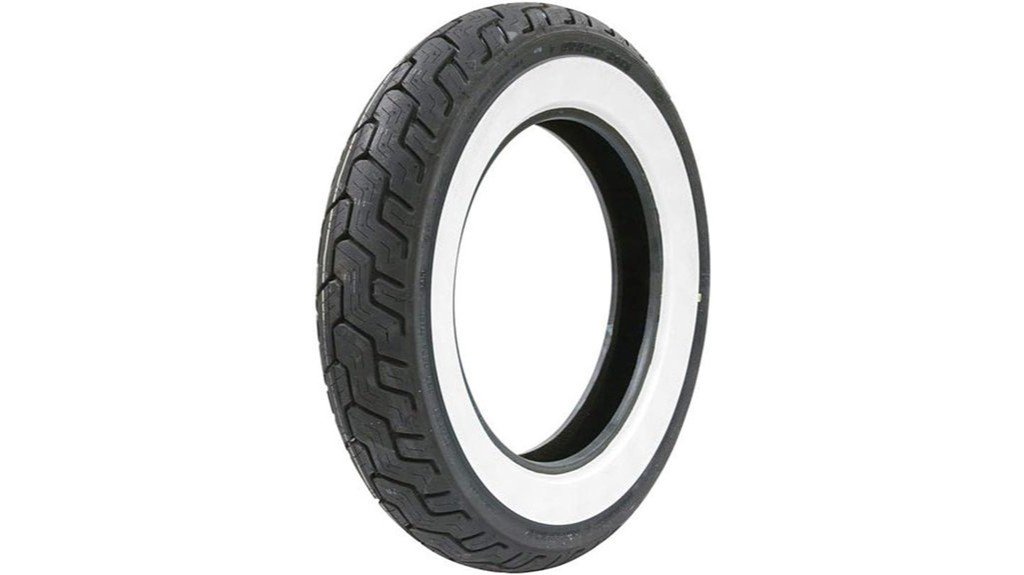
The D402 Whitewall rear tire is ideal for Harley riders who want classic looks without sacrificing touring stability — its three-ply polyester casing with two fiberglass belts keeps long-distance handling steady while the wide whitewall preserves vintage style. You’ll appreciate the tubeless, bias construction engineered with Harley-Davidson for reliable performance. The MT90-16B fits a 3.00-inch rim, measures 25.70 inches diameter and 5.20 inches width, and carries 827 pounds at 40 PSI with a 74H rating. A computer-optimized tread profile reduces cupping and improves confidence over rain grooves and steel bridges. Made in USA, UTQG 400 AA A.
Best For: Harley-Davidson riders seeking a vintage wide whitewall look combined with stable long-distance touring performance.
Pros:
- Engineered with Harley‑Davidson and made in the USA, offering brand-matched fitment and quality.
- Three-ply polyester casing with two fiberglass belts provides stability and improved handling on long rides.
- Computer-optimized tread profile reduces cupping and enhances confidence over rain grooves and steel‑grated bridges.
Cons:
- Bias construction may not match the performance characteristics of modern radial tires for some riders.
- Wide whitewall style limits aesthetic compatibility with more contemporary or sport-focused bikes.
- Item listing shows some inconsistent technical entries (e.g., maximum pressure and item weight values) that require verification before purchase.
Dunlop Harley-Davidson K591 Rear Motorcycle Tire 160/70B-17 (73V)

Riders who want predictable wet- and dry-weather handling will appreciate the Dunlop Harley-Davidson K591 Rear 160/70B-17 (73V); it’s built with a directional tread and improved compound that gives confident cornering and reliable grip. You’ll find this 160/70B-17 fits the Harley-Davidson CVO Softail Deuce FXSTDSE 2003 and joins a K591 lineup that includes a 100/90-19 front and multiple 16- and 17-inch rears. The black-sidewall design keeps a clean look while the enhanced compound balances traction and longevity across varied conditions. If you ride touring routes with mixed pavement and occasional rain, this tire delivers steady, predictable performance.
Best For: Riders of Harley-Davidson CVO Softail Deuce FXSTDSE 2003 who want a rear tire that offers predictable wet- and dry-weather handling and confident cornering for touring and mixed-condition riding.
Pros:
- Directional tread and improved compound provide reliable grip and confident cornering in both wet and dry conditions.
- Specifically sized (160/70B-17) to fit the CVO Softail Deuce FXSTDSE 2003 and available in a lineup with compatible front and rear sizes.
- Black sidewall and balanced compound offer a clean look with a compromise of traction and longevity for varied riding conditions.
Cons:
- Limited to specific Harley-Davidson models/fitments (may not suit many other bikes without checking compatibility).
- As a specialized Harley-Davidson-branded tire, it may be pricier or harder to find than generic equivalents.
- Performance-focused compound could wear faster than touring-specific long-life tires under heavy mileage.
Factors to Consider When Choosing Touring Motorcycle Tires for Harley Davidson
When you’re picking touring tires for your Harley, focus first on wet and dry grip and how the tread pattern affects water evacuation and stability. Check load and speed ratings to make certain the tire matches your bike and gear, and consider durability and wear so you don’t replace them too soon. Finally, confirm fitment and compatibility with your wheel size and OEM specifications to guarantee safe, predictable handling.
Wet and Dry Grip
Although road conditions change, you’ll want touring tires that deliver dependable wet and dry grip so your Harley handles predictably in all weather. Choose tires with computer-optimized tread compounds that maximize contact during cornering and straight-line riding, giving you consistent traction whether the pavement’s damp or dry. Directional tread designs help evacuate water quickly, cutting hydroplaning risk on rainy stretches. Look for higher UTQG traction ratings—something like a 400 AA A signals excellent wet grip and durable tread life. Prefer compounds and construction that minimize cupping so grip doesn’t degrade unevenly over time. In short, prioritize engineered compounds, effective water evacuation, strong UTQG traction scores, and anti-cupping features to keep your touring Harley stable and predictable across varying conditions.
Tread Pattern Design
Several key aspects of tread pattern design determine how your Harley handles across conditions, so pick a pattern that balances grip, water evacuation, and even wear. The tread dictates traction and stability on wet and dry surfaces, so choose patterns that resist slipping while offering predictable feedback in corners. Directional treads boost cornering grip and help you navigate rain grooves or steel-grated bridges with more confidence. Look for computer-optimized tread profiles that minimize cupping and encourage even wear to extend tire life and keep handling consistent over thousands of miles. Effective groove placement channels water away from the contact patch, cutting hydroplaning risk during rain. Touring-specific designs also prioritize comfort and stability to match the weight and dynamics of Harley touring rigs.
Load and Speed Ratings
Tread design sets how a tire grips the road, but load and speed ratings tell you what that tire can safely handle — especially on long-haul Harleys carrying a passenger or gear. Load ratings show maximum weight a tire supports; touring indexes commonly run 74–77, meaning about 827–908 pounds at specified pressures. Speed ratings indicate sustained top speed capability, with H (130 mph) and V (149 mph) typical for touring rubber to cover highway demands. You should pick tires that match or exceed your Harley’s recommended load and speed ratings to preserve stability, handling, and safety when you add luggage or a pillion. Always check manufacturer specs so tire limits align with your bike’s purpose and expected loads.
Durability and Wear
Durability and wear matter most on long rides, because you need tires that resist breakdown and keep handling predictable mile after mile. You’ll want tires with reinforced construction — think three-ply polyester casings and fiberglass belts — to maintain stability under continuous loads. Look for computer-optimized tread patterns that reduce cupping and promote even wear so the tread life stretches farther. Check load and speed ratings; they tell you whether a tire can handle your bike’s weight and the stresses of touring without premature wear. Prefer higher-quality tires with strong UTQG or equivalent wear ratings for better longevity, traction, and heat resistance. Finally, stick to regular maintenance: correct inflation and alignment checks keep wear even and extend service life.
Fitment and Compatibility
1 key step before you buy touring tires for your Harley-Davidson is confirming fitment and compatibility, because the wrong tire can compromise safety and handling. You should choose tires approved for Harley-Davidson touring models to preserve performance standards and warranty coverage. Check tire specs—load index and rim size—against your bike’s placard to verify safe capacity and proper mounting. Measure overall diameter and width; mismatched dimensions will alter gearing, ground clearance, and steering geometry. Prefer tubeless designs and directional tread patterns when appropriate, since they improve handling and water evacuation. Finally, confirm construction type—bias or radial—matches your riding style and road conditions to balance comfort, stability, and longevity. Proper fitment keeps your Harley predictable and safe.
Frequently Asked Questions
Are These Tires Tubeless or Require Inner Tubes?
They’re tubeless if the specific model and your wheel are designated tubeless; otherwise they’ll need inner tubes. You should check the tire sidewall and wheel specification, and consult the manufacturer or a trusted mechanic before fitting.
Can I Fit These Tires on Non-Harley Bikes?
Yes — you can fit those tires on non‑Harley bikes if the sizes, load ratings, and rim compatibility match; you’ll need to confirm tire dimensions, rim width, and speed/load specs, and have a shop mount and balance them properly.
How Do These Tires Perform in Heavy Rain?
They handle heavy rain reasonably well — they won’t perform miracles, but they’ll channel water and keep you confident. You’ll feel solid grip on wet pavement, though cautious speed and smooth inputs will still be necessary.
What Is the Recommended Tire Pressure for Touring Loads?
For touring loads, you should follow the bike manufacturer’s recommended pressures, usually around 36–40 psi front and 40–44 psi rear; check your owner’s manual and adjust for heavy luggage, passenger weight, and tire temperature.
Are These Tires Compatible With ABS Systems?
Yes — most modern touring tires are ABS-compatible, but you should verify the specific tire and wheel sensor clearance. You’ll check manufacturer specs and your dealer’s advice, because incorrect fitment can trigger sensor errors.
Conclusion
You’ll ride farther with comfort, brake with confident grip, and worry less about wear when you pick the right touring tire. Choose the Dunlop D402 MU85B-16 for classic style and steady handling, the D402 MT90-16B for vintage looks and long-haul stability, or the K591 160/70B-17 for directional grip in mixed conditions. Match size and load rating, check tread and compound, and you’ll enjoy smoother miles, firmer turns, and longer days on the road.