Disclosure: As an Amazon Associate, we earn from qualifying purchases. If you click a link on this page and make a purchase, we may receive a small commission at no extra cost to you.
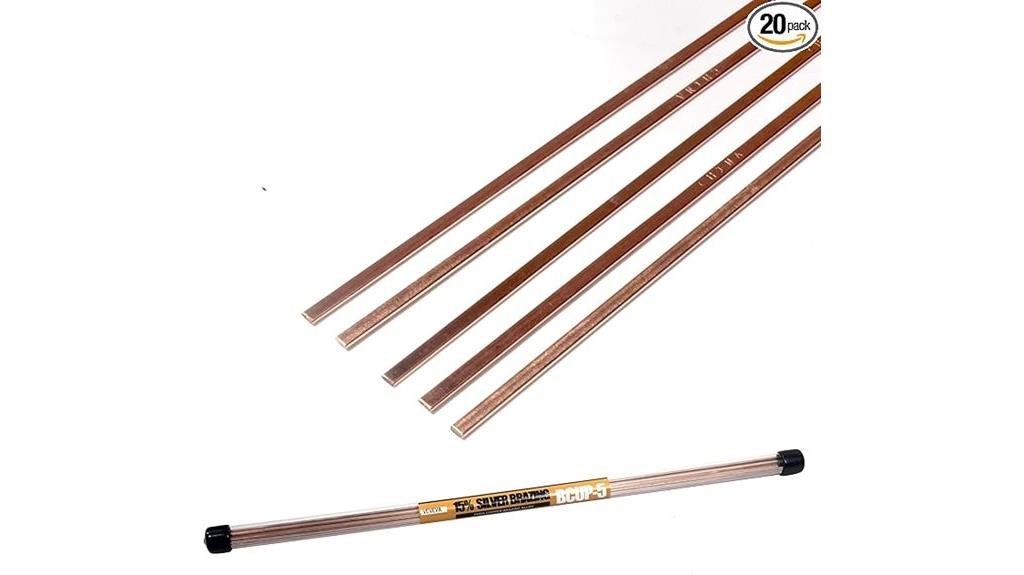
Brazing copper lines in HVAC and refrigeration systems requires a precise balance between low melting temperatures, high joint strength, and proper capillary flow. Using basic non-silver filler metals often creates rigid connections that can crack under compressor vibration. These 15% silver phosphor copper brazing rods offer a lower melting range (610–650°C) and improved joint ductility to prevent leaks in high-pressure AC and refrigeration lines. This review covers technical specifications, ideal gap clearances, and practical brazing tips to help you decide if this 15% alloy fits your service setup.
Quick Verdict
Rating: 9.2/10 (Highly Recommended for HVAC/R)
Best For: HVAC technicians and refrigeration mechanics installing line sets or replacing compressors.
Bottom Line: The 15% silver content provides excellent wetting and vibration resistance at a lower working temperature, though you must maintain tight joint clearances (0.05–0.25 mm) for optimal capillary draw.
| Specification | Detail |
|---|---|
| Alloy Composition | 15% Silver (Ag), Phosphor-Copper Base |
| Specification Class | BCuP-5 Equivalent |
| Melting Range | 610–650°C (1130–1202°F) |
| Recommended Joint Clearance | 0.05–0.25 mm (0.002–0.010 in) |
| Typical Filler Usage | 0.5–2.0 g per joint |
| Preheat Target | ~300–400°C before applying rod |
| Package Quantity | 20 Rods per storage tube |
| Base Metal Compatibility | Copper to Copper (self-fluxing), Copper to Brass/Bronze (requires flux) |
| Incompatible Materials | Aluminum, Steel, and Ferrous Metals |
| Storage Requirements | Sealed tube, 5–25°C, humidity under 50% |
What Are 15% Silver Phosphor Copper Brazing Rods?
These brazing rods combine a copper-phosphorus base alloy with a 15% addition of pure silver by weight. In brazing terminology, this formulation aligns with the industry-standard BCuP-5 specification. The phosphorus content acts as a natural deoxidizing agent when joining copper to copper, eliminating the need for flux on standard copper pipe joints.
The addition of 15% silver fundamentally alters how the metal behaves under the torch. Compared to basic phosphor copper filler metal, silver lowers the working liquidus temperature and significantly increases fluid capillary movement. This allows the liquid alloy to penetrate deep into tight fitting sockets before solidifying, creating a dense, leak-proof seal that holds up under continuous system pressure changes.
Best For
- HVAC technicians installing residential split system copper line sets
- Refrigeration mechanics working on high-vibration suction and discharge lines
- Brazing copper-to-copper and copper-to-brass fittings in tight spaces
Skip If
- You need to braze aluminum evaporator coils or steel receiver tanks
- Your joints have wide, sloppy fit gaps exceeding 0.30 mm
- You are soldering low-temperature electronic circuit components
Feature-by-Feature Review
15% Silver Content and Enhanced Fluidity
The primary advantage of this filler rod is its 15% silver content. Basic 0% or 2% silver rods flow sluggishly and require higher heat. The 15% Ag alloy flows smoothly as soon as the joint reaches its 610–650°C melting range. The silver lowers surface tension, allowing the molten alloy to wet the metal surfaces quickly and form smooth, uniform fillets without clumping.
Low Melting Range Protects Sensitive Components
Operating within an effective melting range of 610–650°C reduces total thermal exposure to nearby components. When brazing service valves, reversing valves, or expansion devices (TXVs), lower torch temperatures prevent heat from traveling up the pipe and damaging internal rubber seals or Teflon seats. This lower melting threshold cuts down on torch time and saves fuel during field installations.
Tensile Strength and Vibration Resistance
Refrigeration compressors generate continuous thermal expansion cycles and mechanical vibration. Standard phosphor copper joints can grow brittle over time, increasing the risk of stress fractures. The 15% silver addition boosts joint tensile strength by 10–20% compared to non-silver alloys, providing the ductility required to absorb system vibration without cracking.
Capillary Action and Gap Clearance
Capillary action draws the liquid filler metal into the joint gap. For optimal performance, these rods require a controlled joint gap clearance of 0.05 to 0.25 mm. When gaps fall within this window, capillary draw pulls the alloy through the full depth of the fitting socket, consuming roughly 0.5 to 2.0 grams of material per standard copper coupling.
Before You Buy: These rods are designed strictly for copper, brass, and bronze alloys. They are completely incompatible with aluminum and steel. Additionally, while copper-to-copper joints do not require flux, you must use an acid-free silver brazing flux when joining copper to brass or bronze fittings.
How It Performs in Real Use
HVAC Split System Installations
During mini-split and central AC installations, joining copper suction and liquid lines requires clean, leak-free seals. The fast wetting action of these 15% rods helps technicians close joints quickly near walls or joists where torch access is limited. The resulting joint handles high pressure refrigerants like R-410A and R-32 without weeping.
Commercial Refrigeration & Compressor Repairs
Replacing a commercial refrigeration compressor involves multiple heat cycles near sensitive line components. The lower 610–650°C working range allows technicians to make fast braze connections on compressor stubs while minimizing thermal transfer into the compressor shell.
High-Vibration Line Sets
In supermarket rack systems or transport refrigeration units, vibration is constant. Joints made with 15% silver rods maintain structural flexibility under temperature swings and mechanical shake, preventing micro-fractures over years of continuous operation.
Usage, Setup, and Handling Tips
Pro Tip: Always purge dry nitrogen at low flow (1–3 CFH) through the copper line while brazing. Nitrogen prevents internal cupric oxide flaking, which can clog expansion valves and filter driers down the line.
Joint Preparation and Preheat
Proper surface prep is critical for maximum capillary flow. Clean both the pipe exterior and fitting interior with sandcloth or a fitting brush to remove oxides and oil. Preheat the copper tubing to roughly 300–400°C using an oxy-acetylene or air-MAPP torch, sweeping the flame evenly across the joint before introducing the rod.
Torch Control During Application
Focus heat on the fitting cup rather than directly on the filler rod. Once the joint reaches 610–650°C, apply the rod to the joint seam on the side opposite the flame. Heat will pull the liquid alloy through the joint toward the torch, ensuring complete internal penetration.
Storage and Moisture Control
Phosphor copper rods can oxidize if exposed to high moisture. Keep unused rods in their original sealed tube at 5–25°C with humidity levels kept below 50%. If rods develop light surface tarnish after long storage, clean them with emery cloth prior to heating.
Pros and Cons
Pros
- 15% silver content provides superior fluidity and wetting
- Lower 610–650°C melting range reduces thermal damage to valves
- Higher joint ductility withstands compressor vibration
- Self-fluxing on clean copper-to-copper connections
- Packed in a protective tube containing 20 rods
Cons
- Higher cost per rod than 0% or 5% silver alloys
- Cannot bridge sloppy joint gaps larger than 0.25 mm
- Incompatible with aluminum, iron, and steel alloys
Is It Worth the Price?
Brazing rods with 15% silver carry a higher initial price tag than standard 0% (BCuP-2) or 5% (BCuP-3) rods due to the raw market cost of silver. However, for active HVAC and refrigeration service work, the performance benefits balance the added expense.
A single leak call-back caused by a cracked braze joint costs far more in lost time, refrigerant replacement, and labor than a pack of quality filler rods. Because these 15% rods flow fast and use only 0.5 to 2.0 grams per joint, a 20-piece tube easily covers dozens of field fittings, making them a smart investment for professional service vans.
How It Compares to Alternatives
When selecting brazing alloys, technicians generally choose between three common tiers:
- 0% to 5% Silver Rods (BCuP-2 / BCuP-3): These budget-friendly options work fine for basic plumbing, but they flow thick, require higher heat, and yield rigid joints that are more susceptible to cracking under severe vibration.
- 15% Silver Rods (BCuP-5): The middle-ground choice for HVAC/R. Offers excellent capillary draw, high joint strength, and lower melting temperatures while remaining self-fluxing on copper.
- 35% to 45% High-Silver Alloys (BAg Series): These high-silver alloys offer superior flow and work across dissimilar metals (like steel to copper). However, they cost significantly more per rod and require flux on all joints.
Frequently Asked Questions
Are these rods compatible with aluminum or steel components?
No. Phosphor-copper alloys should never be used on aluminum, steel, or ferrous metals. The phosphorus reacts with iron and aluminum to form brittle intermetallic compounds that cause joint failure. Use specialized aluminum repair rods or high-silver BAg flux-coated rods for steel joints.
Do they require flux when brazing copper joints?
Flux is not required for clean copper-to-copper connections because phosphorus acts as a natural deoxidizing agent. However, if you are joining copper to brass or bronze fittings, you must apply an appropriate silver brazing flux to prevent oxidation on the brass surface.
What gap clearance works best for capillary flow?
The recommended joint clearance for 15% silver phosphor copper rods is 0.05 to 0.25 mm (0.002 to 0.010 inches). Gaps in this range allow strong capillary force to pull the liquid alloy deep into the fitting socket.
What is the shelf life if the protective storage tube seal is broken?
Brazing rods do not expire, but exposure to humidity accelerates surface oxidation. If stored in a cool, dry place (5–25°C, humidity under 50%), opened rods remain usable for months. If light oxidation occurs, clean the rods with sandcloth before heating.
Are there hazardous fumes or special ventilation requirements?
Brazing generates oxide smoke and thermal fumes. Always work in well-ventilated areas, use local exhaust fans in confined utility spaces, and wear personal protective equipment including safety glasses, thermal gloves, and appropriate respiratory protection when needed.
Can these rods be used for soldering small electronic parts?
No. Electronics soldering requires low-temperature rosin-core tin-lead or lead-free solders operating around 180–230°C. Applying a 610–650°C brazing flame to circuit boards will instantly destroy delicate components and trace copper.
How much filler metal is typically required per joint?
Average usage ranges from 0.5 to 2.0 grams per joint depending on pipe diameter. Standard 3/8-inch to 7/8-inch refrigeration lines consume very little alloy when joint clearances are held within the recommended 0.05–0.25 mm range.
The Bottom Line
Phosphor copper brazing rods with 15% silver offer strong joint ductility, fast capillary wetting, and heat protection for sensitive HVAC components. Their 610–650°C effective melting range helps prevent burnt valves while creating leak-proof seals on copper lines. If you need reliable performance on high-vibration refrigeration systems, this 15% alloy is worth keeping on your truck.
Ready to Buy?
Check the latest price and product details before your next HVAC installation.