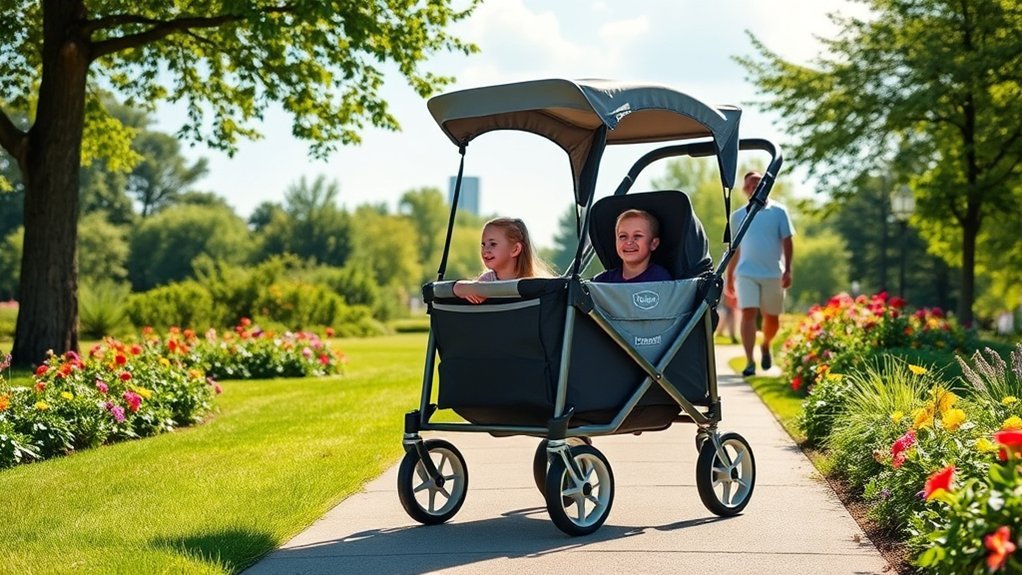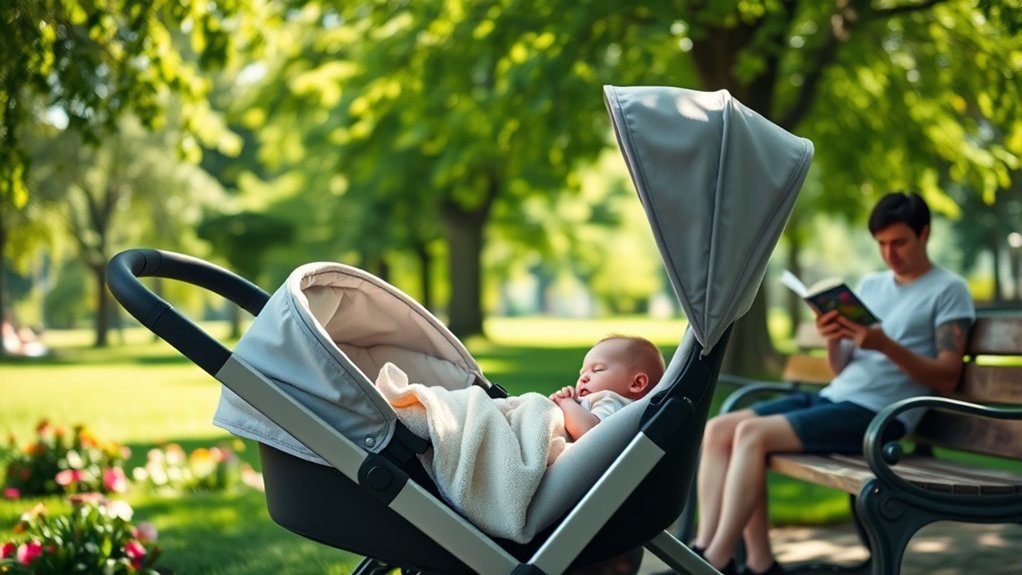
Yes, your baby can nap in a stroller, but safety is key. Always lay your baby on their back and use a five-point harness to prevent falls. Keep the stroller’s brake engaged and avoid loose blankets to reduce suffocation risks. Aim to limit naps to under two hours and shift to a firm sleep surface afterward. With a few precautions in place, stroller naps can be both convenient and safe for your little one. Explore more tips for ensuring a secure napping experience.
Understanding Safety Basics for Your Sleeping Baby

When you’re out and about with your baby, it’s natural to wonder if they can safely nap in a stroller. Understanding the safety basics is vital for your peace of mind.
Proper sleep positioning is key; always lay your baby on their back to reduce the risk of positional asphyxiation. Since newborns have limited neck control, make certain their head isn’t tilted forward, which could compromise their airway.
Supervision is essential—keep an eye on your little one to monitor their airway and guarantee it remains open.
Avoid hazards like loose blankets or toys in the stroller, as these can increase the risk of suffocation.
Are Stroller Naps Safe?
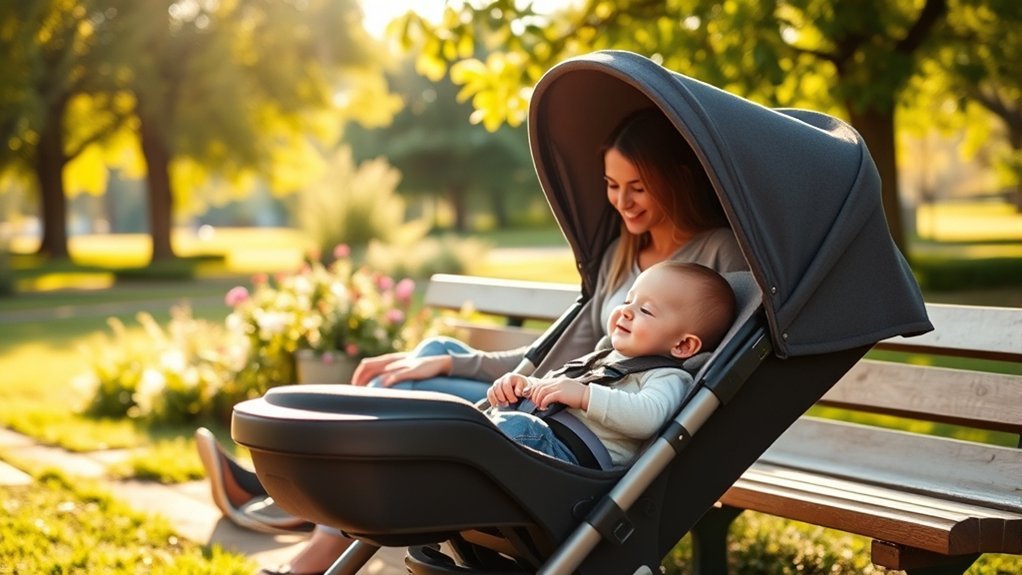
How safe are stroller naps for your little one? Stroller naps can be safe when you follow essential guidelines.
Always supervise your baby during naps and use proper harness restraints for stroller safety. The American Academy of Pediatrics recommends limiting nap duration to under 2 hours to minimize the risk of positional asphyxiation.
Always supervise your baby during stroller naps and ensure proper harness use for safety. Limit naps to under 2 hours.
For infants under six months, choose a stroller that reclines flat or nearly flat to support airway safety. Avoid draping blankets over the stroller to guarantee ventilation and visibility.
Remember, moving your baby to a firm sleep surface, like a crib or bassinet, after stroller naps is vital for securing quality sleep.
Key Takeaways for Stroller Napping
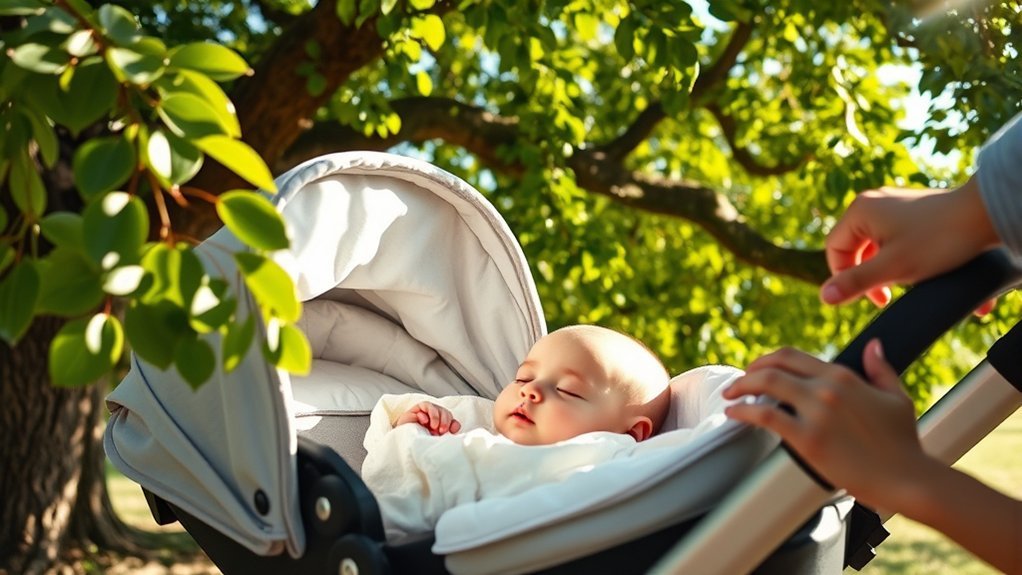
While stroller naps can be a convenient option for busy parents on the go, it’s important to keep a few key takeaways in mind to guarantee your baby’s safety and well-being. Short naps of less than two hours can be acceptable, but constant supervision is essential. Always secure your baby with a five-point harness, and remember to shift them to a firm sleep surface, like a crib, after they fall asleep. Stroller naps shouldn’t replace regular sleep routines, as the quality may vary. Avoid overnight stroller sleeping due to safety risks.
| Key Points | Recommendations | Stroller Accessories |
|---|---|---|
| Napping Duration | Limit to less than 2 hours | Use a supportive head pillow |
| Safety Precautions | Always supervise | Confirm a secure harness |
| Shifting | Move to crib afterward | Opt for a reclining feature |
| Overnight Risks | Avoid long stroller sleeps | Check for proper support |
Best Practices for Safe Stroller Napping
Guaranteeing your baby’s safety during stroller naps is essential, as it can be a convenient option for busy parents.
Always supervise your little one and secure them with a five-point harness to prevent accidents. Choose a stroller with features that allow for a flat or nearly flat recline, supporting baby comfort and reducing the risk of positional asphyxiation.
Limit stroller naps to a maximum of two hours; longer sleep should happen in a crib or bassinet for ideal rest. Dress your baby appropriately for the weather, avoiding overheating, and guarantee proper ventilation by not draping blankets over the stroller.
Finally, shift your baby to a safe sleep surface as soon as possible for the best quality sleep.
Considerations for Different Age Groups
When it comes to stroller naps, different age groups have unique needs and safety guidelines.
For newborns, a flat recline is essential to support their delicate necks, while older babies can shift to traditional seats but still need your watchful eye.
Understanding these considerations helps you create a safe and comfortable napping environment for your little one.
Newborn Safety Guidelines
As you navigate the world of stroller naps for your newborn, it’s important to prioritize their safety and comfort.
Use a bassinet-style stroller that allows for flat positioning, which is vital for proper head and neck support, especially since your little one has limited neck control.
Always make sure they’re secured with a five-point harness to prevent any rolling or slumping during sleep.
Supervision is key; never leave your newborn unattended in the stroller.
It’s also wise to limit stroller naps to under two hours, shifting them to a safe sleep environment for continued rest.
Older Baby Considerations
While your older baby may be ready to nap in a traditional stroller, it’s important to keep their safety and comfort in mind.
At this age, typically over six months, they’ve better head and neck control, making stroller naps safer. Make sure your baby is securely strapped in with a five-point harness, and aim for nap durations under two hours. This helps maintain their quality sleep and keeps established nap routines on track.
While stroller naps can be convenient, balance them with crib naps to avoid dependence on stroller movement for sleep. Always prioritize a safe sleeping position and supervise your baby closely during these stroller naps to guarantee their well-being and comfort.
The Pros and Cons of Stroller Naps
Stroller naps can be a mixed bag for you and your baby.
On one hand, the soothing motion can help your little one drift off while you’re out and about, but on the other hand, relying on the stroller too much might throw off their sleep schedule.
It’s important to weigh the benefits against the drawbacks and consider safety when deciding how often to use the stroller for naps.
Benefits of Stroller Naps
Napping in a stroller can be a game-changer for parents on the go, offering a practical solution to keep your baby’s sleep schedule on track while enjoying daily outings.
The gentle, rhythmic motion of a stroller often soothes babies, helping them drift off to sleep as it mimics the comforting sensations they felt in the womb.
Plus, outdoor naps provide fresh air and exposure to nature, which can boost both your mood and your baby’s well-being.
These stroller benefits promote a healthy balance between activity and sleep, ensuring your little one gets the rest they need while you maintain your daily routines.
Embracing stroller naps can be a liberating way to enhance your family life while staying connected to the world around you.
Drawbacks of Stroller Naps
Though stroller naps can seem like a convenient solution for busy parents, they also come with several drawbacks that can impact your baby’s sleep quality.
These naps often result in shorter sleep durations, leading to “cat naps” instead of full sleep cycles, which can disrupt your baby’s overall schedule. Additionally, relying on stroller movement for sleep can foster stroller dependency, making it harder for your little one to self-soothe or settle in a crib.
Frequent stroller naps may also interrupt established routines, causing crankiness and taking days to correct. Furthermore, there’s an increased risk of positional asphyxiation, particularly for newborns with less head and neck control.
Balancing stroller naps with a consistent sleep environment is essential for nurturing healthy sleep habits.
Safety Considerations for Napping
When considering the safety of your baby’s nap in a stroller, it’s essential to weigh both the pros and cons.
Stroller safety is paramount; short naps under two hours with proper supervision and restraint can be safe. Make certain your newborn is in a stroller with a flat recline or bassinet attachment to prevent positional asphyxiation.
While the gentle motion can soothe your baby, relying too heavily on stroller naps may disrupt sleep routines and self-soothing skills.
Keep ventilation in mind—never cover the stroller to avoid overheating. Stick to napping guidelines and monitor your baby’s visibility at all times.
Ultimately, balance the convenience of stroller naps with the need for quality sleep to support your little one’s well-being.
Creating a Comfortable Sleep Environment
Creating a comfortable sleep environment in a stroller is essential for your baby’s well-being and restful nap.
Start by ensuring the stroller seat reclines flat or nearly flat, providing proper support for your little one’s head and neck. Use a bassinet attachment or specialized inserts designed for newborns to enhance comfort and promote good sleep hygiene.
Dress your baby appropriately for the weather, avoiding over-bundling to prevent overheating. Position the stroller where you can easily monitor your baby, ensuring their safety and comfort.
Remember to limit stroller naps to under 2 hours, shifting them to a firm sleep surface like a crib afterward.
With these stroller features in mind, you’ll create a cozy space for your baby to rest peacefully.
Alternatives for On-the-Go Sleep
Finding suitable alternatives for on-the-go sleep can make outings with your baby much smoother. Here are three effective options you can consider:
Finding effective on-the-go sleep solutions can enhance your outings with your baby significantly.
- Babywearing: Embrace babywearing benefits by keeping your little one close. This not only promotes bonding but also provides a cozy environment for napping while you’re on the move.
- Portable Cribs: Consider portable crib options like Pack ‘n Plays. They’re easy to set up during visits, offering your baby a familiar and safe space for sleep.
- Sound Machines: Use sound machines or familiar items to recreate a calming atmosphere that encourages your baby to rest, even outside your home.
Remember to stay flexible and adjust your plans based on your baby’s cues for a more enjoyable outing!
Tips for Supervision and Safety
Supervising your baby while they nap in a stroller is essential for guaranteeing their safety and comfort.
Always secure your little one with the five-point harness, which prevents falls and accidents. Check that the stroller features a sturdy brake, keeping it stable while parked to avoid any rolling or tipping.
Be mindful of baby positioning; avoid placing blankets or toys in the seat, as they can pose suffocation or strangulation risks.
Regularly check on your baby to confirm they’re comfortable and not overheating, as proper ventilation is key.
With these precautions, you can enjoy your outings, knowing your baby is safe and sound while catching those precious Z’s.
Maintaining a Consistent Sleep Routine
Establishing consistent nap principles is essential for your baby’s sleep success, as it helps them recognize when it’s time to rest.
Even when you’re out and about, adjusting to new environments can be smoother with a reliable nap routine in place.
Establishing Nap Principles
Creating a consistent sleep routine is essential for your baby’s development and overall well-being. By establishing nap principles, you can enhance nap duration and guarantee your baby adapts to various environments, including strollers.
Here are three guidelines to help you:
- Follow a mini nap routine: Incorporate calming activities and familiar sleep items before stroller naps to signal sleep time.
- Aim for routine flexibility: Try to have 80% of naps in a crib or bassinet and 20% on-the-go, allowing for adaptability without compromising sleep quality.
- Monitor wake windows: Keep an eye on age-appropriate wake times to prevent overtiredness, guaranteeing successful stroller naps and maintaining a healthy sleep schedule.
Adjusting to New Environments
Adapting to new environments can be challenging for babies, but with a consistent sleep routine, you can make it easier.
Establishing a mini nap routine, even on the go, signals to your baby that it’s time to sleep, fostering adaptability in various sleep environments.
Using familiar items like a favorite blanket or small toy can provide comfort, making unfamiliar settings feel more like home.
It’s important to follow age-appropriate wake windows; younger babies may need crib naps, while older ones can adapt to stroller naps.
Regularly practicing naps in different locations enhances your baby’s flexibility and resilience, ensuring smoother changes.
With consistency and a few comforting touches, you can help your baby thrive, even while on the move.
Frequently Asked Questions
How Long Can a Baby Safely Nap in a Stroller?
Your baby can safely nap in a stroller for about 30 to 45 minutes. Prioritize stroller safety by ensuring proper recline and airflow, while keeping an eye on them to promote restful, uninterrupted nap duration.
Can Stroller Naps Affect Nighttime Sleep Quality?
Stroller naps can disrupt nighttime sleep quality; studies show 30% of infants experience this. Prioritize stroller sleep safety within your nighttime routine to guarantee restful sleep, helping your baby feel more refreshed and secure.
What Age Is Best for Stroller Napping?
The best age for stroller napping is usually around 4-6 months, when your baby can support their head. Prioritize stroller safety and watch for age milestones to guarantee they’re comfortable and secure during naps.
Should I Use a Stroller With a Reclining Feature for Naps?
You’d think all strollers are equal, but a reclining feature offers significant benefits. Not only does it enhance stroller safety, but it also promotes better naps, allowing your little one to sleep comfortably and soundly.
How Can I Tell if My Baby Is Comfortable in the Stroller?
You can tell your baby’s comfortable in the stroller by observing their signs—like relaxed body posture and soft facial expressions. Adjust the stroller for better support to enhance their comfort and overall experience.
Conclusion
In conclusion, stroller naps can be a practical solution for busy parents, but safety always comes first. Like a gentle breeze cradling a sleeping baby, you’ll want to guarantee your little one is secure and comfortable. By following best practices and considering your baby’s age, you can create a safe napping environment. Remember, maintaining a consistent sleep routine helps your child feel secure, whether they’re snoozing in a stroller or at home. Happy napping!