Disclosure: As an Amazon Associate, we earn from qualifying purchases. If you click a link on this page and make a purchase, we may receive a small commission at no extra cost to you.
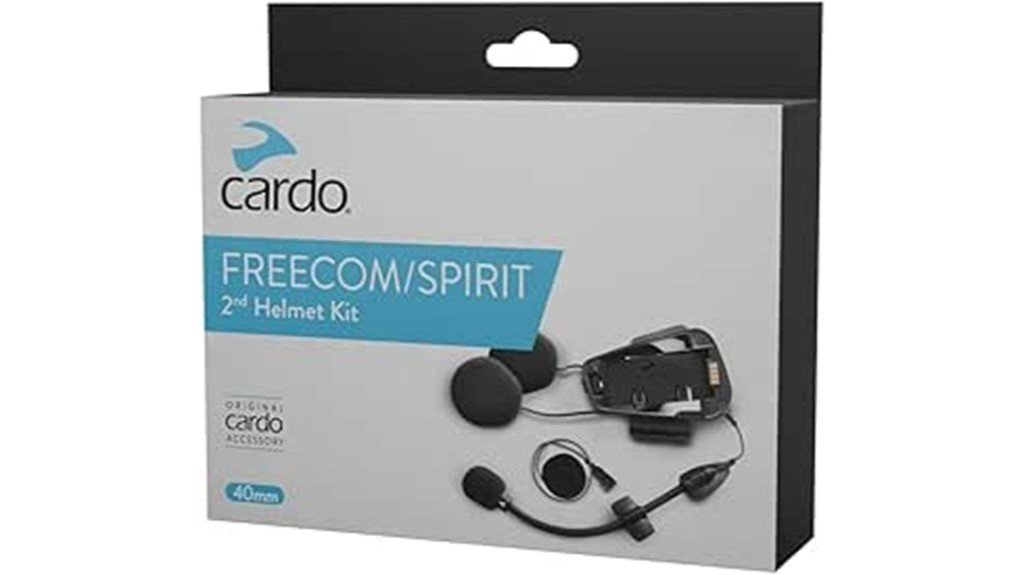
Moving one Cardo communicator between two helmets can become tedious, especially when you must remove speakers, microphones, cables, and mounting hardware each time. The Cardo FREECOM-X/Spirit 2ND Helmet KIT, model ACC00008, lets you prepare a second helmet and transfer only your compatible Cardo control unit. It includes standard 40 mm HD speakers, two microphone styles, and both clamp and adhesive mounting options. Its main limitation is equally important: this is a non-JBL accessory kit, not a complete Bluetooth communication system.
Quick Verdict
Rating: 8.4/10, Recommended for compatible Cardo owners
Best For: Riders who already own a compatible Freecom or Spirit communicator and regularly switch between two helmets.
Bottom Line: This kit gives your second helmet its own speakers, microphone, cradle, and mounting hardware, so you only need to move the Cardo control unit. It saves setup time, but it does not include a communicator or the upgraded JBL speaker system.
| Specification | Detail |
|---|---|
| Brand | Cardo |
| Model | ACC00008 |
| Product name | FREECOM-X/Spirit 2ND Helmet KIT |
| Product type | Second-helmet audio and mounting accessory kit |
| Speaker type | Standard 40 mm HD helmet speakers |
| Audio version | Non-JBL version |
| Microphones | Interchangeable boom microphone and wired microphone |
| Mounting options | Clamp mount and adhesive glue plate |
| Cradle | Included for attaching a compatible Cardo control unit |
| Compatibility | Compatible Freecom and Spirit systems; verify your exact model and cradle before ordering |
| Communicator included | No, your existing Cardo control unit must be transferred between helmets |
| Battery or Bluetooth radio | Not built into this accessory kit; those functions come from the attached Cardo unit |
| Best use | Keeping a second compatible helmet ready for the same Cardo communicator |
| Warranty note | Amazon lists a two-year manufacturer warranty; confirm coverage and seller terms before purchase |
Key Takeaways
- This is an accessory kit for a second helmet, not a complete Bluetooth intercom or standalone headset.
- You receive standard 40 mm HD speakers, a boom microphone, a wired microphone, a cradle, and clamp and adhesive mounting options.
- The kit lets you transfer only your compatible Cardo control unit instead of removing the entire installation from your first helmet.
- The included speakers are the non-JBL version, so compare the separate JBL kit if upgraded audio is a priority.
- Correct speaker and microphone placement will affect comfort and clarity more than many riders expect.
What Is the Cardo FREECOM-X/Spirit 2ND Helmet KIT?
The Cardo FREECOM-X/Spirit 2ND Helmet KIT is a replacement-style audio and mounting kit for riders who use one compatible Cardo communicator with two helmets. You install the cradle, speakers, microphone, and mounting hardware in the second helmet. When you change helmets, you move the removable Cardo control unit rather than dismantling the first installation.
Model ACC00008 includes standard 40 mm HD speakers and two microphone formats. The wired microphone is generally the cleaner choice for a full-face helmet with a fixed chin bar. The adjustable boom microphone gives you more positioning freedom in many modular and open-face helmet layouts.
This product does not add a second independent communication system. Bluetooth pairing, intercom range, battery runtime, charging, voice controls, and phone connectivity still depend on the Cardo unit you attach to the cradle.
Before You Buy: Confirm that your exact Cardo communicator uses the cradle supplied with model ACC00008. The kit does not include the removable control unit, and it is the standard non-JBL version rather than Cardo’s separate JBL second-helmet kit.
Who Should Buy It?
Best For
- Riders who already own a compatible Cardo Freecom or Spirit communicator.
- Anyone who regularly alternates between commuting, touring, modular, or full-face helmets.
- Riders who want separate speakers and microphones in each helmet without buying another complete communicator.
Skip If
- You still need the main Cardo control unit or want two helmets to operate independently at the same time.
- You specifically want Cardo’s JBL speakers and sound profiles.
- You use a half helmet that requires Cardo’s dedicated half-helmet mounting solution.
What Comes in the Kit?
The package is designed to duplicate the parts that normally stay installed inside and on the side of your helmet. It includes a compatible cradle, 40 mm HD speakers, a wired microphone, an interchangeable boom microphone, and mounting hardware.
Cardo provides both a clamp and an adhesive glue plate because helmet shell and liner designs vary. A clamp can provide a secure, removable installation when the helmet edge has enough clearance. The adhesive plate works better when the shell is too thick, tightly sealed, or shaped in a way that prevents the clamp from sitting flat.
The removable Cardo communicator is not included. After installing this kit, you detach your existing control unit from one helmet and click it into the cradle on the other helmet.
40 mm Speaker Performance
The included speakers are Cardo’s standard 40 mm HD units rather than the company’s JBL-branded upgrade. They are intended for navigation prompts, intercom speech, calls, and music once connected to your compatible Cardo communicator.
Speaker positioning has a major effect on perceived volume. A speaker can sound weak even at a high setting when it sits above, below, or too far away from your ear canal. Helmets with molded speaker pockets simplify placement, but the center of each speaker still needs to line up with your ears.
Wind noise, helmet sealing, ear protection, riding speed, and windscreen turbulence also affect what you hear. This accessory kit does not create active noise cancellation. Its speakers reproduce the audio provided by your Cardo unit, while your helmet and installation determine how much outside noise competes with it.
Boom and Wired Microphone Options
Unlike the original draft’s claim, this kit includes both an interchangeable boom microphone and a wired microphone. That gives you a practical choice for different helmet layouts.
The small wired microphone usually suits a full-face helmet because you can attach it inside the fixed chin bar near your mouth. It takes up little room and avoids having an adjustable arm inside a tightly fitted helmet.
The boom microphone can be easier to position in modular and many open-face helmets. Its arm lets you bring the microphone closer to your mouth, but you must route and secure it so it does not interfere with the liner, visor mechanism, or chin-bar movement.
For either microphone, keep the pickup surface facing your mouth and position it according to Cardo’s instructions. A microphone placed too far away may capture more wind and helmet noise, while direct contact with your lips or padding can create muffled sound.
Fit, Compatibility, and Installation Safety
Compatibility is the first detail to confirm because Cardo uses different cradles across some product families and generations. Model ACC00008 is sold for compatible Freecom and Spirit systems, including the Freecom X and Spirit families. Check your communicator’s exact model name instead of relying only on the Cardo brand.
You should also inspect your helmet before installation. Look for removable cheek pads, existing speaker recesses, a safe wire-routing path, and enough clearance for the cradle. Do not cut the impact-absorbing EPS liner or remove protective material to create space.
Keep wires away from retention straps, visor mechanisms, vents, and sharp plastic edges. After reinstalling the liner, confirm that the helmet still fits correctly and that no speaker or connector creates painful pressure around your ears.
A second-helmet kit should not weaken the helmet or prevent you from hearing important traffic sounds. Follow both Cardo’s installation instructions and the helmet manufacturer’s guidance, especially when using adhesive parts on the outer shell.
Installation and Comfort
Installation is manageable for most riders, but it is not completely universal or instant. You normally need to remove part of the comfort liner, position both speakers, choose a microphone, route the cables, and attach the external cradle.
Start with temporary placement before pressing adhesive-backed pieces firmly into place. Put the helmet on, check the speaker alignment, move your jaw, and confirm that the microphone does not touch your face. This trial step can prevent repeated liner removal later.
The two mounting choices make the kit more adaptable. Use the clamp only when it sits securely without distorting the shell edge or liner. Use the adhesive plate on a clean, dry, suitable surface when the clamp cannot fit safely.
Comfort depends more on speaker thickness and positioning than on the total package weight. A speaker pressing directly against your ear may become painful during a long ride, even though the accessory itself feels light when held in your hand.
Pro Tip: Put a small removable mark on the liner where the center of each ear sits while you are wearing the helmet. Use those marks to align the 40 mm speakers before securing the hook-and-loop pads.
What the Kit Does Not Include
This accessory does not contain its own Bluetooth radio, battery, charging port, buttons, intercom processor, or independent controls. Those parts are contained in the compatible Cardo control unit that you already own and transfer between the two helmet cradles.
For that reason, Bluetooth version, phone pairing, intercom distance, voice commands, music sharing, charging time, and battery runtime cannot be rated as features of ACC00008 itself. Those specifications vary according to the Freecom or Spirit communicator attached to it.
The same distinction applies to waterproofing and firmware support. Check the documentation for your main Cardo model when you need information about weather protection, app compatibility, updates, or communication range.
How It Performs in Real Use
Switching Between Commuting and Touring Helmets
This is the kit’s strongest use case. You can keep a lighter commuting helmet and a quieter touring helmet fully wired, then move only the Cardo control unit. That reduces repeated handling of small connectors, adhesive pads, microphones, and liner sections.
Using Full-Face and Modular Helmets
The two microphone styles make it easier to adapt the installation to different helmet designs. You can use the wired microphone inside a full-face chin bar and reserve the boom microphone for a modular helmet that needs adjustable placement.
Navigation, Calls, and Music
The 40 mm speakers can handle the same navigation, call, intercom, and music audio supplied by your Cardo communicator. Final clarity will depend on the communicator’s settings, speaker alignment, helmet noise, and riding conditions.
Long Rides
During longer rides, small fit problems become more noticeable. A few millimeters of speaker misalignment can reduce volume or create pressure near your ears. Test the installation for at least 20 to 30 minutes before relying on it for a full-day trip.
Setup Tips Before First Use
- Confirm the model: Match ACC00008 to the exact Freecom or Spirit communicator you plan to transfer.
- Choose the right microphone: Use the wired mic for a fixed full-face chin bar and the boom mic when adjustable placement is needed.
- Test the speakers first: Wear the helmet before final mounting and align each speaker with the center of your ear.
- Route cables under removable comfort padding: Keep them away from retention straps, vents, hinges, and sharp edges.
- Dry-fit the cradle: Compare the clamp and adhesive plate before committing to either mounting method.
- Check helmet operation: Confirm that the visor, sun shield, vents, and modular chin bar still move freely.
- Run an audio test: Check left and right speakers, the microphone, and the communicator connection before reinstalling every liner piece.
Pros and Cons
Pros
- Lets you prepare a second helmet without buying another complete Cardo system.
- Includes standard 40 mm HD speakers for navigation, calls, intercom speech, and music.
- Provides both boom and wired microphones for different helmet layouts.
- Includes clamp and adhesive mounting choices.
- Reduces repeated removal of speakers, wires, and helmet padding.
Cons
- The Cardo communicator is not included, so the helmet cannot operate independently without your existing unit.
- This non-JBL kit may not satisfy riders who want Cardo’s upgraded JBL speakers and sound profiles.
- Correct compatibility, speaker alignment, and cable routing require checking before installation.
Is It Worth the Price?
The Cardo FREECOM-X/Spirit 2ND Helmet KIT offers the most value when you already own a compatible communicator and use two helmets regularly. It replaces the installed speakers, microphone, cradle, and mounting hardware that you would otherwise need to move each time.
Its value is lower when you rarely change helmets or still need the main Cardo unit. In that situation, you may be paying for convenience that you will not use often.
It is worth considering for regular helmet switching, especially when the two helmets require different microphone styles. Buyers who care most about upgraded music performance should compare the JBL second-helmet kit before deciding.
How It Compares to Alternatives
Cardo’s Freecom/Spirit JBL second-helmet kit is the closest upgrade. It serves the same basic purpose but replaces the standard HD speakers with JBL-branded speakers and adds JBL-designed sound profiles. The standard ACC00008 kit makes more sense when you want the necessary mounting and audio hardware without paying extra for the JBL version.
A dedicated Cardo half-helmet kit is a better comparison for helmets that lack normal speaker pockets or require an extra-long boom microphone. Buying another complete Freecom or Spirit communicator costs more, but it allows both helmets to work independently instead of sharing one removable control unit.
Frequently Asked Questions
Is this a complete Cardo communication system?
No. ACC00008 supplies the speakers, microphones, cradle, and mounting hardware for another helmet. You must attach your existing compatible Cardo control unit to use Bluetooth, intercom, calls, navigation, or music.
Does the kit include both microphone styles?
Yes. Cardo includes an interchangeable boom microphone and a wired microphone. The wired mic normally suits a fixed full-face chin bar, while the boom mic offers more adjustment in modular and open-face layouts.
Are the included speakers made by JBL?
No. This ASIN is the non-JBL kit with standard 40 mm HD speakers. Cardo sells a separate Freecom/Spirit JBL second-helmet kit for riders who want the JBL speaker package and sound profiles.
Which Cardo models work with ACC00008?
The kit is sold for compatible Freecom and Spirit systems, including the Freecom X and Spirit families. Cardo has used different mounts across product lines, so verify the exact communicator model and cradle before ordering.
Does the kit have its own battery or Bluetooth connection?
No. The accessory kit has no independent battery, Bluetooth radio, charging port, or intercom processor. Those functions come from the Cardo control unit that you click into the included cradle.
Can you install it in any motorcycle helmet?
It can fit many full-face, modular, and open-face helmets, but helmet layouts vary. Check for speaker recesses, removable padding, safe wire routes, and room for the cradle. A dedicated half-helmet kit may be more suitable for minimal-coverage helmets.
What is the most common installation mistake?
Poor speaker alignment is one of the most common problems. Speakers placed a little too high or low can sound quiet and may create uncomfortable pressure. Test their position while wearing the helmet before securing the pads.
The Bottom Line
The Cardo FREECOM-X/Spirit 2ND Helmet KIT is a practical buy for riders who already own a compatible Cardo communicator and frequently alternate between two helmets. Its complete set of 40 mm speakers, two microphone styles, cradle, and mounting options saves repeated installation work, but the communicator and JBL audio upgrade are not included. Skip it when you need a standalone second system, a half-helmet-specific mount, or JBL speakers.
Ready to Buy?
Check the latest product details and confirm compatibility with your Cardo model before you decide.