Disclosure: As an Amazon Associate, we earn from qualifying purchases. If you click a link on this page and make a purchase, we may receive a small commission at no extra cost to you.
Finding the right motor oil means balancing long-term engine protection against realistic maintenance schedules. Castrol EDGE 10W-40 promises high-stress durability, shear resistance, and an extended drain interval of up to 20,000 miles or one year. This review evaluates its wear protection claims, API SP certification standards, and real-world performance to help you decide if it fits your vehicle’s engine requirements.
Quick Verdict
Rating: 9.1/10 (Recommended for warmer climates & high-stress driving)
Best For: Drivers in moderate to warm regions seeking strong shear stability, torque stress protection, and extended oil change intervals.
Bottom Line: Castrol EDGE 10W-40 delivers outstanding film strength under heavy torque loads and exceeds API SP standards. Severe driving conditions still require shorter change windows than the maximum 20,000-mile marketing claim.
| Specification | Detail |
|---|---|
| Brand | Castrol |
| Product Line | EDGE |
| Viscosity Grade | 10W-40 |
| Formulation | High-Performance Synthetic Formula |
| API Service Ratings | Exceeds API SP, SN PLUS, SN, SM |
| Drain Interval Claim | Up to 20,000 miles or 1 year |
| Performance Standard | 10X torque stress performance, 3X wear strength vs leading synthetics |
| Operating Temperature Range | Approximately -20°C to 120°C (-4°F to 248°F) |
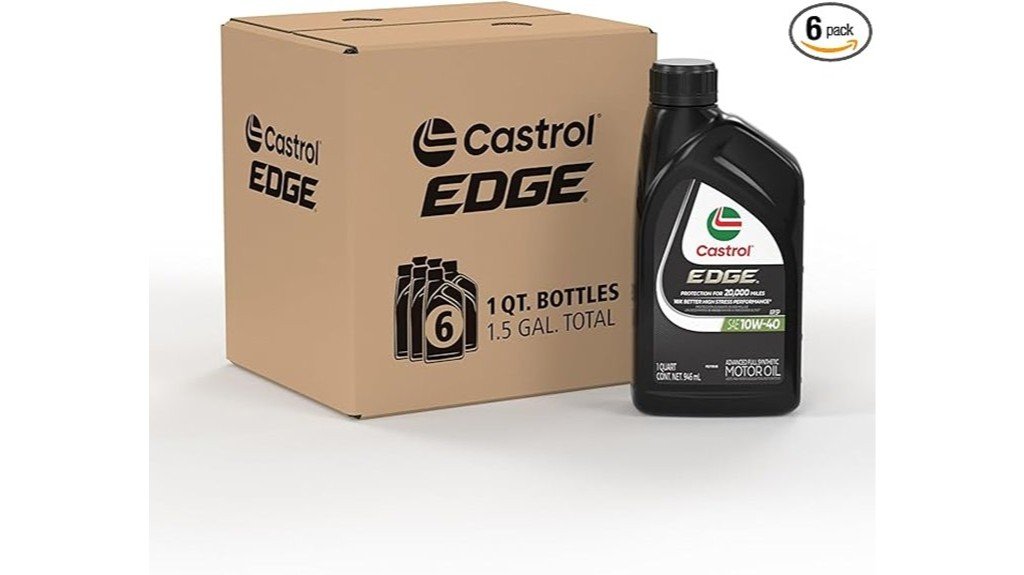
| Package Sizes | 1-Quart (Pack of 6), 5-Quart Jugs |
| Best Application | Gasoline passenger vehicles, light trucks, warm weather driving |
What Is Castrol EDGE 10W-40?
Castrol EDGE 10W-40 is a high-performance synthetic motor oil engineered to combat friction, extreme engine heat, and mechanical stress. Formulated to exceed modern API SP standards, this oil targets drivers who require durable protection under heavy loads or extended service intervals.
The 10W-40 viscosity weight provides a thicker fluid film at operating temperatures compared to lower-viscosity options like 5W-20 or 5W-30. This makes it particularly suitable for older engine designs, vehicles operating in warmer climates, or engines subject to elevated working temperatures during heavy hauling or performance driving.
Who Should Buy It?
Best For
- Drivers in moderate to hot weather regions needing high-temperature film stability.
- Vehicles specifying 10W-40 viscosity grade requiring API SP level wear protection.
- Commuters wanting extended service potential to reduce routine oil change frequency.
Skip If
- Your vehicle strictly specifies low-viscosity 0W-20, 5W-20, or 5W-30 motor oils.
- You drive a modern diesel engine fitted with a Diesel Particulate Filter (DPF).
- You operate vehicles in extreme sub-zero winter temperatures below -20°C (-4°F).
Performance and Protection Features
10X Torque Stress & Wear Resistance
Engine stress peaks during acceleration, heavy towing, and uphill driving under heavy torque loads. Castrol EDGE 10W-40 claims 10X higher performance under torque stress compared to standard industry requirements. Laboratory evaluations using Seq IX-style high-stress torque trials confirm substantial margins over basic API SP limits, helping protect critical internal engine components from premature friction wear.
Shear Stability & Viscosity Retention
Viscosity breakdown occurs when mechanical shearing splits polymer chains inside motor oil, causing the oil to thin out over time. Under Kurt Orbahn viscosity breakdown assessments, Castrol EDGE maintains an exceptionally stable protective film at 100°C operating temperatures. The multi-grade 10W-40 profile ensures rapid flow during cold starts while keeping high-temperature thickness intact under prolonged highway speeds.
API SP Standard Compliance & LSPI Protection
Meeting API SP, SN PLUS, SN, and SM standards guarantees protection against Low-Speed Pre-Ignition (LSPI), a catastrophic combustion anomaly common in modern turbocharged direct-injection engines. The additive package helps suppress deposit formation on intake valves and pistons, supporting consistent fuel economy and engine cleanliness across thousands of miles.
Pro Tip: Even high-capacity synthetic oils consume small amounts of fluid over long distances. Check your engine oil dipstick monthly and top off as needed to ensure oil levels stay within safe operating ranges throughout extended service windows.
Before You Buy: Check your vehicle owner’s manual for recommended viscosity and engine warranty requirements. Using 10W-40 in an engine designed specifically for 0W-20 can reduce fuel efficiency and cause variable valve timing errors.
How It Performs in Real Use
Hot Climate & Summer Driving
During high ambient summer temperatures, thinner oils can experience thermal thinning, leading to lower oil pressure. Castrol EDGE 10W-40 retains thick fluid cushioning between bearing surfaces, preventing metal-to-metal contact during extended highway trips or long idling periods in traffic.
High-Mileage & Older Engines
Older engines with higher mileage often develop wider internal component clearances and worn valve seals. The 10W rating provides rapid upper-valvetrain lubrication upon key turn, while the 40-weight body helps seal piston rings, reduce oil consumption, and maintain steady oil pressure.
Heavy Towing & Severe Duty Cycles
Hauling trailers or carrying heavy loads subjects motor oil to intense shearing forces and elevated sump temperatures. In severe duty scenarios, fluid shear resistance is vital. Although Castrol advertises up to 20,000 miles of longevity, severe use mandates cutting change intervals down to 5,000 to 10,000 miles to safeguard against thermal oxidation.
Extended Highway Cruising
For long-distance highway commuters, Castrol EDGE 10W-40 exhibits minimal volatility loss. Sludge formation remains low over extended runs, keeping oil passages clean and reducing overall maintenance overhead for high-mileage drivers.
Engine Safety and Maintenance Guidelines
Adopting extended oil change intervals requires proactive maintenance. Motor oil acts as both a lubricant and a detergent, carrying suspended contaminants to the oil filter. When running service windows beyond 10,000 miles, always install a high-efficiency extended-drain oil filter rated for matching mileage.
Perform visual checks on your dipstick every 1,000 miles to observe oil color and consistency. If the oil appears excessively dark, thick, or smells burnt prior to reaching your targeted change interval, perform a full oil and filter change immediately regardless of mileage claims.
Pros and Cons
Pros
- Exceeds API SP and SN PLUS requirements for deposit and LSPI protection.
- Superior shear stability and high-temperature film strength in warm climates.
- Extends potential drain intervals up to 20,000 miles or one full year.
- Demonstrates 10X better stress handling under high engine torque loads.
- Helps reduce oil consumption and seal leaks in older engine designs.
Cons
- Not suitable for modern diesel engines equipped with Diesel Particulate Filters.
- Viscosity is too heavy for engines specifying 0W-20 or 5W-20 oils.
- Severe duty cycles still require shorter oil change windows than 20,000 miles.
Check Current Price on Amazon →
Is It Worth the Price?
Castrol EDGE 10W-40 sits in the premium synthetic category, positioned slightly above standard synthetic blends and conventional motor oils. When factoring in its extended drain rating, the cost per mile can actually work out lower than cheaper oils that require service every 3,000 to 5,000 miles.
For vehicle owners who maintain their own cars, choosing a 6-pack of 1-quart bottles or 5-quart jugs offers a cost-effective way to handle routine maintenance. It offers strong value for drivers who demand maximum engine protection in high-load or warm-climate environments without paying top-tier racing oil prices.
How It Compares to Alternatives
Compared to standard conventional 10W-40 oils, Castrol EDGE provides significantly higher resistance to thermal oxidation and sludge buildup under extreme heat. Conventional oils degrade much faster, breaking down into engine deposits after 3,000 to 5,000 miles of driving.
When evaluated against lighter full synthetics like Castrol EDGE 5W-30, the 10W-40 formulation delivers a thicker protective barrier at high operating temperatures. However, 5W-30 remains the better choice for cold winter climates where low-temperature pumping speed is critical during startup.
Frequently Asked Questions
Is Castrol EDGE 10W-40 suitable for diesel engines with Diesel Particulate Filters (DPF)?
No, this oil is not recommended for diesel engines equipped with Diesel Particulate Filters. DPF systems require low-SAPS (sulfated ash, phosphorus, and sulfur) oils to prevent filter clogging. Always check your diesel manufacturer’s explicit oil specification before use.
Can I mix this oil with conventional or other synthetic motor oils?
Yes, Castrol EDGE 10W-40 is compatible with conventional and other synthetic motor oils in emergency situations. However, mixing oils dilutes the advanced additive package and reduces overall performance. It is best to perform a full oil change as soon as possible.
What is the ideal operating temperature range for this 10W-40 oil?
Castrol EDGE 10W-40 performs reliably across an operating temperature range of roughly -20°C to 120°C (-4°F to 248°F). It provides dependable startup protection in cool weather while resisting thermal viscosity breakdown under intense ambient heat.
Can I really wait 20,000 miles between oil changes?
While the oil is engineered to withstand up to 20,000 miles or one year of normal highway driving, real-world conditions vary. Frequent short trips, heavy towing, or extreme temperatures classify as severe service, requiring oil changes every 5,000 to 10,000 miles to ensure optimal protection.
Is Castrol EDGE 10W-40 available in package sizes larger than 1 quart?
Yes, Castrol EDGE 10W-40 is available in single 1-quart bottles, 6-packs of 1-quart bottles, and standard 5-quart jugs. Purchasing 5-quart jugs or multipacks typically provides better overall value per quart for DIY maintenance.
Does this oil maintain vehicle manufacturer warranty coverage?
Castrol EDGE 10W-40 exceeds API SP, SN PLUS, SN, and SM standards, making it warranty-compliant for vehicles that specify a 10W-40 oil with these API ratings. Always verify your vehicle manufacturer’s required oil specs and recommended change intervals to maintain factory warranty coverage.
The Bottom Line
Castrol EDGE 10W-40 provides exceptional high-temperature protection, shear stability, and torque stress handling for gasoline engines requiring a 10W-40 viscosity grade. Its advanced formulation resists breakdown across extended service windows while suppressing harmful internal deposits.
If you operate a passenger car or light truck in warm climates, haul heavy loads, or drive an older vehicle that benefits from thicker oil film protection, Castrol EDGE 10W-40 is a reliable, top-tier choice. Drivers with diesel DPF filters or modern engines built for 0W-20 should select a formulation matched to their OEM requirements.