Disclosure: As an Amazon Associate, we earn from qualifying purchases. If you click a link on this page and make a purchase, we may receive a small commission at no extra cost to you.
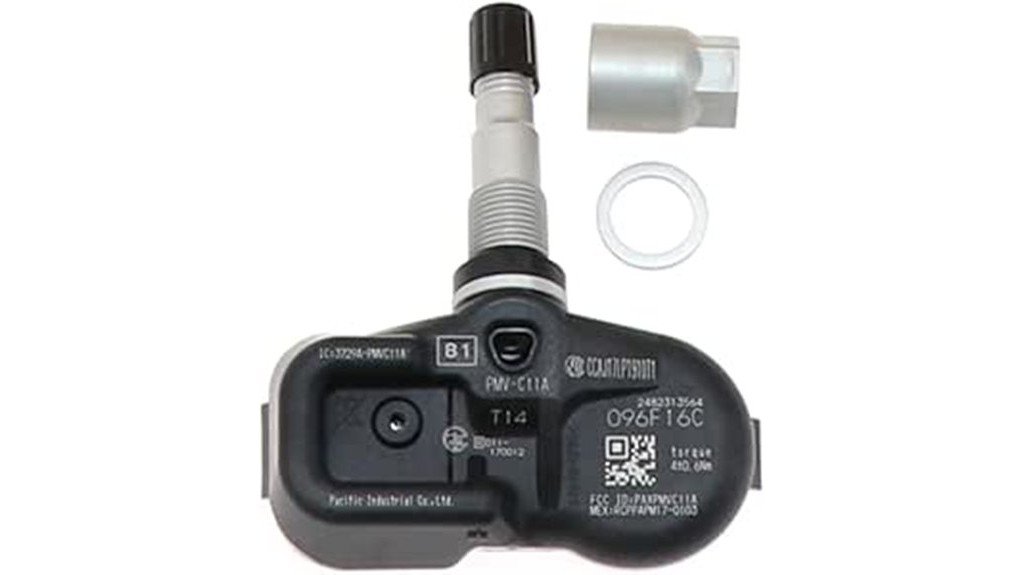
A persistent tire pressure warning light on your dashboard is a frustrating distraction, especially when caused by an aging sensor battery rather than an actual puncture. The Denso TPMS Sensor 550-0103 serves as an original equipment (OE) replacement for millions of Lexus, Toyota, Scion, and Pontiac vehicles. Engineered in Japan to match factory specifications, this 315 MHz sensor restores precise pressure monitoring without the high price tag of dealership parts. This review examines its compatibility, battery life, and installation steps to help you determine if it is the right match for your vehicle.
Quick Verdict
Rating: 9.2/10 — Recommended
Best For: Owners of compatible Toyota, Lexus, Scion, and Pontiac vehicles who want factory-grade pressure monitoring reliability without paying dealer markups.
Bottom Line: The Denso 550-0103 delivers exceptional Japanese build quality and comes pre-programmed for quick physical installation. Keep in mind that your vehicle will still require an OBD-II relearn procedure to sync the new sensor ID to your engine control unit (ECU).
Key Specifications
| Specification | Detail |
|---|---|
| Brand | Denso |
| Part Number / Model | 550-0103 |
| Product Type | Direct-Fit TPMS Sensor |
| Country of Origin | Japan |
| Operating Frequency | 315 MHz |
| Item Weight | 1.76 Ounces |
| Dimensions | 3.25 x 3.25 x 1.25 Inches |
| Vehicle Coverage | ~80% coverage for target Toyota/Lexus/Scion/Pontiac platforms |
| Expected Battery Life | 5 to 10 years (OE Comparable) |
| Programming Status | Pre-programmed (Requires vehicle ECU relearn) |
What Is the Denso TPMS Sensor 550-0103?
The Denso 550-0103 is a direct-fit tire pressure monitoring sensor manufactured by Denso, the primary original equipment component supplier for Toyota Motor Corporation. Unlike universal aftermarket sensors that require blank-slate programming using specialized electronic tools before installation, the 550-0103 comes pre-programmed with vehicle-specific protocol software right out of the box.
Designed under Denso’s First Time Fit line, this sensor fits directly into standard factory wheel valve stem holes. It houses a long-life lithium battery, an integrated pressure transducer, and a 315 MHz RF transmitter inside a lightweight 1.76-ounce sealed enclosure. It provides real-time pressure tracking to support factory dashboard pressure warnings, auto-locate functions, and tire fill-assist systems on compatible vehicles.
Who Should Buy It?
Best For
- Toyota, Lexus, Scion, and Pontiac Vibe owners replacing aging factory TPMS sensors.
- Drivers who prefer Japanese-manufactured OE parts over budget generic sensors.
- Vehicle owners scheduling tire replacements who want to swap sensors simultaneously to save on labor costs.
Skip If
- You drive a vehicle outside the Toyota/Lexus/Scion/Pontiac ecosystem.
- You lack access to an OBD-II TPMS relearn tool or do not plan to visit a tire shop for ECU registration.
- Your vehicle uses a 433 MHz TPMS frequency system rather than the 315 MHz standard.
Feature Breakdown and Performance
OE Quality and Japanese Manufacturing
TPMS sensors endure intense centrifugal force, rotational vibration, extreme temperature fluctuations, and road moisture. The Denso 550-0103 is built in Japan using corrosion-resistant materials and robust internal sealants. By maintaining the exact weight (1.76 ounces) and balance profiles of original factory sensors, it avoids disrupting wheel balance when mounted onto alloy or steel rims.
Signal Precision and Frequency Support
Operating on the standard 315 MHz broadcast frequency, this sensor continuously measures internal tire air pressure and transmits data to the vehicle body control module. Pressure readings remain stable within typical OEM tolerances (around +/- 1 PSI), preventing false dashboard warning lights triggered by slight elevation changes or ambient temperature swings.
Direct-Fit Hardware and Valve Stem Sealing
The sensor features a standard valve stem assembly designed for simple mounting through factory wheel stem apertures. The 3.25 x 3.25 x 1.25 inch casing fits comfortably inside rim beds without interference during tire bead mounting or dismounting. Proper grommet sealing prevents micro-leaks around the valve stem hole, which is a common failure point in low-grade aftermarket alternatives.
How It Performs in Real Use
Daily Commuting and Highway Driving
Under standard daily driving conditions, the Denso 550-0103 functions identically to your vehicle’s original factory sensors. Once registered to the ECU, dashboard pressure indicators clear immediately, and real-time warnings fire promptly if a tire suffers a puncture or rapid pressure drop on the highway.
Cold Weather and Rapid Temperature Changes
Winter conditions cause ambient air inside tires to contract, frequently triggering nuisance low-pressure warnings on lower-quality sensors. The Denso unit maintains accurate transducer calibration across severe freezing temperatures down to sub-zero levels, providing reliable alerts only when genuine pressure loss occurs.
Seasonal Tire Swaps and Wheel Rotations
For drivers who rotate tires regularly or switch between summer and winter wheel sets, the pre-programmed 550-0103 simplifies maintenance. While rotating wheels on certain Toyota/Lexus models may require a quick ECU position reset, the sensor retains its core identity programming permanently without requiring re-flashing.
Long-Term Battery Lifespan
TPMS batteries are permanently sealed inside the sensor body and cannot be replaced individually. Denso integrates high-grade internal lithium batteries engineered for an expected operational life of 5 to 10 years (or roughly 50,000 to 100,000 miles), matching original factory longevity expectations.
Before You Buy: Pre-programmed does not mean self-registering. Physical installation is straightforward, but your vehicle’s ECU will not recognize the new sensor until an OBD-II relearn procedure is completed using a TPMS scan tool.
Installation, Relearn, and Maintenance Tips
Installing a TPMS sensor requires unseating the tire bead from the wheel rim, making it best to replace sensors during routine tire swaps or balancing. Follow these practical tips for a smooth installation:
- Relearn vs. Programming: The 550-0103 arrives pre-programmed with Toyota protocol code, so you do not need a programming tool to clone a code. However, you MUST perform an OBD-II relearn so your vehicle’s computer registers the unique 7-digit ID printed on the sensor body.
- Record Sensor IDs: Before the tire technician mounts the tire over the wheel, write down or take a photo of the 7-digit hexadecimal sensor ID printed on the casing. This saves significant time if manual entry into a diagnostic tool is required later.
- Replace in Sets: TPMS sensor batteries age at identical rates. If one sensor battery fails on a 7-year-old vehicle, the remaining three are likely near the end of their lifespan. Replacing all four sensors during a single tire change saves on duplicate dismounting and balancing labor charges.
- Inspect Rims and Valve Holes: Clean any corrosion, dirt, or rubber residue from the wheel valve hole before inserting the new sensor stem to guarantee an airtight seal.
Pro Tip: Most local tire shops (such as Discount Tire, Firestone, or local independent garages) will perform the OBD-II relearn procedure for a small fee or even free of charge if you buy your tires through them.
Pros and Cons
Pros
- Japanese manufacturing offers genuine OE build quality and long-term durability.
- Pre-programmed factory protocols eliminate the need for complex tool programming.
- Exact 1.76 oz weight matches original wheel balance parameters.
- Reliable 5 to 10 year battery lifespan matches original equipment performance.
- Broad fitment across popular Toyota, Lexus, Scion, and Pontiac Vibe models.
Cons
- Requires an OBD-II relearn tool or professional shop visit to pair with the vehicle ECU.
- Requires dismounting the tire bead for physical installation and valve stem insertion.
- Vehicle coverage is limited primarily to Toyota family platforms (not a universal multi-brand sensor).
Check Latest Price on Amazon →
Is It Worth the Price?
Dealerships frequently charge anywhere from $80 to $130 for a single OEM TPMS sensor, not including mounting, balancing, and diagnostic labor fees. The Denso 550-0103 provides the exact same Japanese-built hardware at a fraction of the dealership retail price.
While generic white-label sensors imported online might cost slightly less up front, they frequently suffer from high battery failure rates, signal dropouts, and plastic housing degradation. Investing in Denso OE hardware ensures you will not have to pay a tire shop to dismount tires a second time due to premature sensor failure.
When factor in the high labor cost of breaking tire beads and rebalancing wheels, choosing a proven OE sensor like the Denso 550-0103 offers the strongest long-term value for your money.
How It Compares to Alternatives
When shopping for replacement TPMS sensors, vehicle owners generally evaluate three distinct options:
- Denso 550-0103 (OE Replacement): Pre-programmed specifically for Toyota/Lexus protocols. Offers factory-tier reliability, zero cloning setup, and standard OBD-II relearn compatibility. The top choice for compatible vehicles.
- Universal Programmable Sensors (e.g., Autel MX-Sensor): Blank sensors designed to cover 98% of all vehicle makes. They require a specialized programming tool to flash protocol software onto the chip before installation. Great for high-volume tire shops, but unnecessary extra effort for DIYers working on a single Toyota platform.
- Budget Store-Brand / Off-Brand Sensors: Inexpensive alternatives that often lack rigorous cold-weather testing, use lower-grade internal batteries, and exhibit shorter operational lifespans.
Frequently Asked Questions
Will this sensor work automatically without any setup after I install it?
No. While the sensor is pre-programmed internally with the correct protocol signal for compatible vehicles, your car’s engine control unit (ECU) must learn the new sensor’s unique ID code. This requires a standard TPMS relearn procedure using an OBD-II scan tool or a quick service visit to a tire shop.
Does this sensor include the valve stem and mounting hardware?
Yes. The Denso 550-0103 ships as a complete assembly including the main sensor body, integrated valve stem, washer, nut, and valve core required for physical installation into standard wheel stem holes.
Can I replace the internal battery when it dies?
No. Like almost all modern TPMS sensors, the lithium battery is permanently encased in epoxy resin inside the sensor body to protect it from moisture, heat, and vibration. When the battery eventually fails after 5 to 10 years, the entire sensor assembly must be replaced.
Will this sensor sync directly with a tire pressure app on my smartphone?
No. The Denso 550-0103 broadcasts on a standard 315 MHz radio frequency intended specifically for your vehicle’s internal computer system. It does not transmit via Bluetooth or Wi-Fi to mobile phone applications unless your vehicle features an aftermarket Bluetooth TPMS gateway receiver.
How do I verify if the 550-0103 fits my specific vehicle year and model?
Check your vehicle’s owner manual or cross-reference your original OEM part number against Denso’s catalog. It broadly supports platforms like the Toyota 4Runner (2004–2016), Lexus RX350 (2007–2015), Scion tC (2006–2016), and Pontiac Vibe models, but exact year fitment must always be verified prior to ordering.
Is it safe to drive with a dead TPMS sensor battery?
While a dead sensor battery will not physically compromise your tire’s mechanical ability to hold air, it disables your vehicle’s active pressure warning system. This leaves you unaware of sudden low air pressure or slow punctures while driving, increasing tire wear and blowout risks.
Does this sensor require periodic recalibration after the initial relearn?
No. Once the initial OBD-II relearn registers the sensor ID to your vehicle ECU, no further calibration is required. The sensor operates continuously and automatically until its battery eventually reaches the end of its multi-year lifespan.
The Bottom Line
The Denso TPMS Sensor 550-0103 is an outstanding original equipment replacement choice for compatible Toyota, Lexus, Scion, and Pontiac vehicles. By combining Japanese build quality, pre-programmed factory protocols, and an OE-matched battery lifespan, it eliminates dashboard warning lights reliably without dealership expense. Just remember to factor in an OBD-II ECU relearn at your local tire shop when scheduling installation.
Ready to Buy?
Check the latest price and current vehicle fitment details before you decide.