Disclosure: As an Amazon Associate, we earn from qualifying purchases. If you click a link on this page and make a purchase, we may receive a small commission at no extra cost to you.
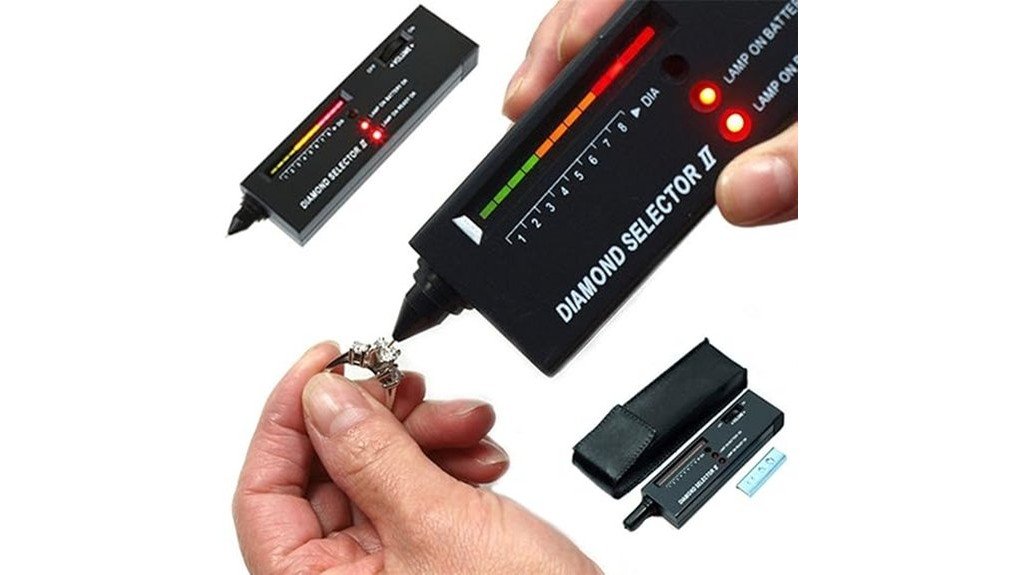
A quick diamond check can be useful, but only when the tester, stone, and room conditions are set up correctly. The Diamond Selector II is a compact, 9V battery-powered screening tool with an LCD display and audible feedback. It can help you screen likely diamonds from many common imitations. Its main limitation is just as important: a positive response is not a formal identification, appraisal, or reliable way to rule out every lookalike.
Quick Verdict
Rating: 7.5/10, Recommended with caveats
Best For: Jewelry hobbyists, small resellers, and professionals who need a portable first-pass diamond screening tool.
Bottom Line: The Diamond Selector II gives you fast visual and audible feedback in a compact package. It works best when you follow the setup instructions carefully, but the supplied details do not establish dedicated moissanite separation, and the tool cannot replace gemological examination or formal appraisal.
| Specification | Detail |
|---|---|
| Product Name | Diamond Selector II |
| Product Type | Portable diamond screening tester |
| Power | 9V battery |
| Display | LCD display |
| Feedback | Visual reading with an audible positive-response alert |
| Operating Temperature | 10-35 degrees Celsius |
| Humidity Guidance | Use below 80% humidity for more dependable readings |
| Testing Setup | Clean probe, correct sensitivity setting, steady stone contact, and finger contact with the metal panel |
| Best Use | First-pass screening of diamonds from many common imitations |
| Main Limitation | Not a full gemstone identifier, grading tool, or appraisal device; no dedicated moissanite-separation function is established in the supplied details |
| Package Note | A leather pouch is mentioned in the source details, but included accessories may vary by seller |
What Is the Diamond Selector II?
The Diamond Selector II is a handheld tester made for quick checks at a jewelry counter, workbench, market table, or home collection. You touch its probe to an accessible stone surface, watch the LCD reading, and listen for the alert described in the product instructions.
Its 9V battery design makes it practical when you do not have access to a wall outlet or charging cable. The compact body fits into a small tool kit, drawer, or travel pouch.
This is a screening product, not a grading instrument. It may help you decide which stones deserve a closer look, but it does not establish carat weight, cut, color, clarity, value, treatment history, or whether a diamond is natural or laboratory-grown.
Who Should Buy It?
Best For
- Jewelry hobbyists who want a simple first check before visiting a professional.
- Small resellers who need a portable screening step for routine intake.
- Jewelers who want a basic backup tool for quick counter checks.
Skip If
- You need written authentication, grading, valuation, or insurance documentation.
- You need dependable separation of diamond from moissanite or identification of many gemstone types.
- You usually test outdoors or in cold, humid, windy, or unstable conditions.
Before You Buy: Treat every positive result as a screening result, not proof of authenticity. Thermal-style diamond testers can give diamond-like responses on moissanite, and a basic screening result cannot tell you whether a diamond is natural or laboratory-grown. Unless the current manual confirms dual testing, use a dedicated moissanite or dual tester, or seek professional gemological service.
Key Features of the Diamond Selector II
The Diamond Selector II keeps the testing process simple by combining a probe, an LCD display, and an audible alert. That layout is easier to follow than a visual-only method when you are checking several stones or working in a busy setting.
- LCD display: Gives you a visible reference while the probe is in contact with the stone.
- Audible feedback: Signals when the tester detects the response described as positive in the instructions.
- 9V battery power: Supports portable use without a charger or wall outlet.
- Adjustable setup: Requires you to match the setting to stone size and temperature rather than using one fixed level for every test.
- Metal contact panel: Requires direct finger contact during testing for the intended setup.
- Compact storage: Fits into a small kit, with a pouch mentioned in the source package details.
The controls are simple, but the process is not completely automatic. You still need a clean probe, a stable room, a suitable setting, and careful contact with the stone.
Display, Alerts, and Reading Clarity
The LCD gives you a visual reference while you hold the probe in place. This is helpful when you need to confirm that the tester is responding rather than relying on sound alone.
The audible alert makes the result easier to notice, but it should not be read as a final pass-or-fail judgment. A positive response means the stone behaved as the tester expected during that attempt. A silent or weak response can point to a simulant, but it can also come from poor contact, a weak battery, an unsuitable sensitivity setting, or unstable conditions.
Build, Portability, and Storage
The compact body is one of the Diamond Selector II’s clearest advantages. You can keep it in a jewelry drawer, workbench kit, market bag, or counter station without giving up much space.
The source details mention a leather pouch, which can help protect the probe from dust, scratches, and impact during storage. Check the current seller package before ordering because batteries, pouches, instructions, and other accessories can vary by listing or condition.
Testing Conditions for Better Accuracy
The article-supported operating range is 10-35 degrees Celsius, with humidity kept below 80%. Cold equipment, high humidity, wind, and sudden temperature changes can make a quick result harder to trust.
Let the tester, battery, and jewelry reach a stable indoor temperature before you begin. A stone moved from a cold vehicle or outdoor market may need time to adjust before you test it.
Keep the work surface steady and dry. You should also test away from strong airflow, because a moving probe or shifting stone can break contact and produce an inconsistent reading.
How to Use It Correctly
- Install and check the 9V battery. Replace a weak battery before relying on the tester for an important decision.
- Clean the probe and stone. Use a soft, lint-free cloth to remove dust, skin oil, lotion, or polishing residue.
- Let the tester warm up as directed. Use it within the stated temperature and humidity range.
- Set the sensitivity. Follow the product instructions and adjust for the stone’s size and temperature.
- Keep finger contact with the metal panel. Maintain the contact described in the original operating guidance.
- Touch the stone, not the setting. Hold the probe steady on an accessible stone surface and avoid slipping onto metal.
- Repeat the check. Test more than one accessible point when possible and compare the results.
Pro Tip: Practice first on a stone with known identity and on a common simulant. This helps you learn the display and sound pattern before you use the tester on an unknown piece.
Common Testing Mistakes to Avoid
- Testing immediately after moving the jewelry from a cold or humid environment.
- Using the same sensitivity setting for every stone size.
- Touching a prong, bezel, or metal setting instead of the stone.
- Holding the probe at an unstable angle or pressing hard enough to slip.
- Trusting one beep or one silent result without cleaning and retesting.
- Treating the result as proof of origin, grade, or value.
Understanding Test Results
A clear alert means the tester detected a positive response during that contact. It does not by itself prove that the stone is a natural diamond, a laboratory-grown diamond, or free from treatments.
- Positive response: The stone reacted in the range the device associates with diamond, but further testing may still be needed.
- Negative response: The stone may be a low-conductivity imitation, or the setup may need correction.
- Inconsistent response: Check the battery, probe, sensitivity, finger contact, temperature, humidity, and test angle.
- Moissanite concern: Unless the current manual confirms a dedicated separation function, use a moissanite or dual diamond/moissanite tester instead of relying on this tool alone.
- High-value decision: Ask a qualified jeweler, gemologist, or laboratory for confirmation and documentation.
Use the result to choose your next step. It can help you sort pieces or flag a stone for further review, but it should not be the only evidence behind a purchase, insurance claim, estate decision, or resale description.
How It Performs in Real Use
For Jewelry Counter Checks
At a counter, the display and audible alert give you a quick first-pass result without a large testing station. The tool is most useful for deciding whether a piece should move to a second test, magnified inspection, or professional verification.
For Home Jewelry Collections
For inherited rings, loose stones, or older pieces with missing paperwork, the tester can help you organize what deserves attention first. It cannot replace records or establish value, so use the result to plan a jeweler visit rather than label a stone as genuine.
For Travel and Market Use
The 9V battery and compact size suit estate sales, flea markets, trade counters, and travel kits. Outdoor conditions remain a weakness, so move to a stable indoor area when cold, wind, or humidity could affect contact and temperature.
For Long-Term Use
Long-term consistency depends on simple care. Keep the probe clean, protect it from impact, remove or check an old battery before storage, and retest known reference stones when the device starts giving unusual readings.
Maintenance and Care Tips for Longevity
Wipe the probe with a soft, lint-free cloth after use, especially when jewelry has lotion, polishing compound, or dust on it. Do not scrape the probe across the stone or metal setting.
Turn the tester off before replacing the battery. If readings become weak or inconsistent, check the 9V battery before assuming the stone or tester has changed.
Store the unit in a dry, protected case or pouch. Avoid high heat, damp storage, and loose placement in a bag where the probe can strike other tools.
Compatibility and Safety Notes
The Diamond Selector II is intended for diamond screening, not universal gemstone identification. Do not use it as your only method for moissanite, sapphire, ruby, emerald, coated stones, composite stones, or unknown materials.
Mounted jewelry needs extra care because the probe must touch the stone without sliding onto a prong, bezel, or band. Support the piece on a stable surface, keep your hand steady, and stop if the stone is too small or inaccessible to test safely.
For expensive jewelry, disputed stones, insurance records, estate distribution, or resale claims, seek professional guidance. A qualified jeweler or gemologist can combine magnification, electrical or thermal testing, spectroscopy, and documentation as needed.
Pros and Cons
Pros
- Portable 9V battery design works without a charger or wall outlet.
- LCD and audible feedback are easier to follow than visual inspection alone.
- Compact size fits a home, counter, resale, or travel testing kit.
- Clear temperature, humidity, contact, and sensitivity guidance supports repeatable setup.
- Useful as a first screening step before professional examination.
Cons
- Cannot provide grading, valuation, origin, or formal authentication.
- No dedicated moissanite-separation function is established in the supplied details.
- Needs careful sensitivity, probe, finger, temperature, and humidity setup.
Is It Worth the Price?
The Diamond Selector II makes the most sense as a budget-oriented screening tool. It gives occasional users and small sellers a faster first check than visual inspection alone, while staying portable and simple to store.
You get the most value when you understand its limits and already plan to confirm important stones through another method. It is a weaker buy when you need dependable moissanite separation, broad gemstone identification, written reports, or professional-grade documentation.
Prices and package contents can change by seller. Check the current listing for the battery, pouch, instructions, and any included accessories before you order.
How It Compares to Alternatives
A jeweler’s loupe helps you inspect inclusions, facet edges, chips, prongs, and craftsmanship, but it requires more training and does not give an electronic response. The Diamond Selector II is easier for a quick first pass, although it tells you less about condition and quality.
A dual diamond/moissanite tester is the better comparison when moissanite is a realistic concern. Professional gemological testing costs more, but it is the right choice when you need identification, grading, origin information, valuation, or written documentation.
Frequently Asked Questions
Does a positive Diamond Selector II result prove a stone is a diamond?
No. A positive response means the stone reacted in the range the device associates with diamond during that test. You still need a second method or professional confirmation for valuable, disputed, or undocumented stones.
Can the Diamond Selector II distinguish moissanite from diamond?
Do not rely on this basic screening tester alone for that distinction. Moissanite can produce diamond-like responses on thermal-style testers, so unless the current manual confirms dual testing, use a dedicated moissanite tester, a dual tester, or professional gemological testing.
Can it tell a natural diamond from a laboratory-grown diamond?
No. This type of first-pass tester is not designed to determine diamond origin. Natural and laboratory-grown diamonds require specialized examination when origin matters.
What battery does the Diamond Selector II use?
The tester uses a 9V battery. Check or replace the battery when the display, alert, or readings become weak or inconsistent.
Why does the tester stay silent or give inconsistent results?
A dirty probe, weak battery, poor finger contact, wrong sensitivity, cold stone, high humidity, or contact with the metal setting can affect the result. Correct the setup, clean the contact point, and repeat the test before drawing a conclusion.
Can you test a diamond while it is mounted in jewelry?
You can test a mounted stone when the probe can reach a clean stone surface without touching a prong, bezel, or band. Small or deeply set stones may be difficult to test safely and consistently.
What conditions are best for testing?
Use the tester in a stable indoor space between 10 and 35 degrees Celsius and below 80% humidity, based on the source guidance. Let cold jewelry and the tester reach room conditions before you begin.
Who should skip the Diamond Selector II?
Skip it when you need a formal appraisal, broad gemstone identification, dependable moissanite separation, or written authentication. It is better for quick screening than for final buying, insurance, estate, or resale decisions.
The Bottom Line
The Diamond Selector II is worth considering when you need a compact, battery-powered tool for quick diamond screening at home, at a counter, or while traveling. Its LCD, audible feedback, and simple setup are useful, but the result still depends on careful contact and stable conditions.
Buy it as a first-pass tool, not as proof of authenticity. Skip it when you need moissanite separation, origin testing, grading, valuation, or formal documentation.
Ready to Buy?
Check the latest price, seller details, and package contents before you decide.