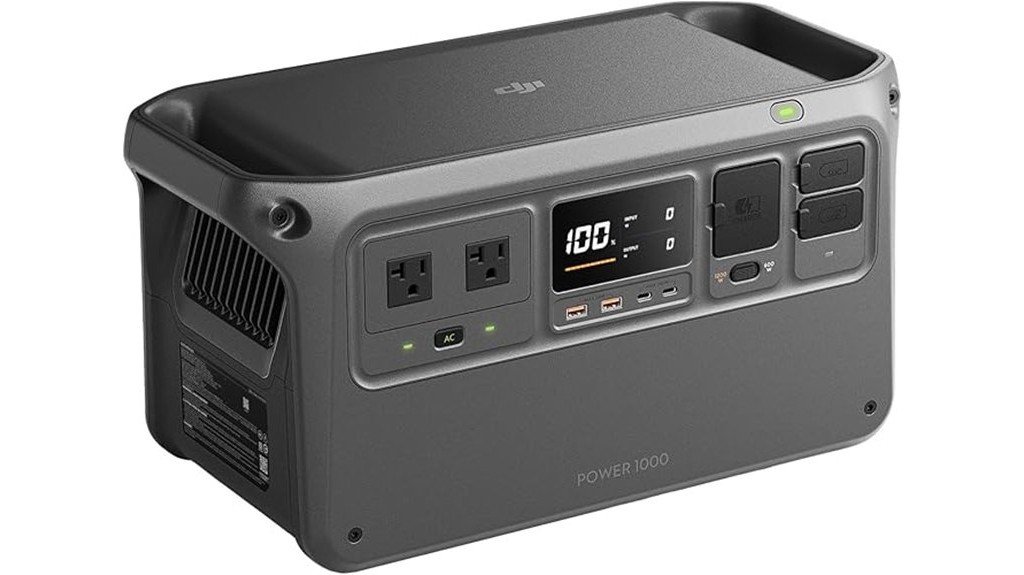
The DJI Power 1000 presents a compact, quiet power station for outdoor use and home backup, with a 1024 Wh capacity, 2200 W continuous output, and 70-minute full charge time. It weighs 14.77 kg, runs at about 23 dB, and includes dual USB-C fast-charge ports. How does that translate to real-world runtimes, charging cycles, and portability trade-offs? The next sections assess design, performance, and ideal users.
Key Takeaways
- 1024Wh LiFePO4 battery with 2200W continuous (2600W peak) supports high-power devices quietly.
- Charges 0–80% in ~50 minutes and reaches full charge in about 70 minutes for fast reuse.
- Ultra-silent operation (~23 dB) makes it ideal for camping, RVs, and noise-sensitive environments.
- Dual 140W USB-C ports and two AC outlets provide versatile charging but limit simultaneous AC device use.
- Portable at 14.77 kg with an integrated handle, yet weight and outlet count may restrict heavy long-term backup.
Design, Specs, and What’s in the Box
The DJI Power 1000 presents a compact, utilitarian design tailored for portability and performance; it measures 17.6 in length x 8.8 in width x 9 in height and weighs 14.77 kg (32.5 lbs), making it manageable for one person to move but substantial enough to require planning for frequent transport.
The unit balances design aesthetics with rugged practicality, clean lines, integrated handle, and clear port labeling.
What are the product dimensions and specs? 17.6 x 8.8 x 9 in, 1024Wh LiFePO4, 2200W (peak 2600W) AC, dual USB-C 140W.
What’s in the box? Power unit, AC cable, user manual.
Real-World Performance: Charging, Output, and Noise
Several practical tests show how the DJI Power 1000 performs under real-world conditions, focusing on charging speed, sustained output, and noise levels.
The unit recharges 0–80% in about 50 minutes, 0–100% in 70 minutes from grid power, showing strong charging efficiency; solar topping to 80 minutes is also practical.
Recharges rapidly — 0–80% in ~50 minutes, full charge ~70 minutes; solar topping to 80% is practical.
Output reliability was consistent: 2200W continuous (peak 2600W) handled small appliances, dual 140W USB-C powered laptops.
Noise measured ~23 dB, barely perceptible.
Q: Is it loud? A: No, certified ultra-silent.
Practical note: weight (14.77 kg) and two AC outlets limit simultaneous heavy loads.
Who Should Buy the DJI Power 1000
Because portability and quiet operation matter to different users in different ways, the DJI Power 1000 suits specific use cases where its 1024Wh LiFePO4 battery, 2200W continuous (2600W peak) AC output, and ultra-silent 23 dB operation deliver clear advantages.
Who should buy it? Outdoor enthusiasts wanting low-noise power for RVs, camper vans, and campers’ preferences for overnight comfort. Homeowners seeking short-term home backup for essentials, refrigerators, and routers.
Pros and cons:
- Pros: 1024Wh, 2200W, 70-minute full charge, 14.77 kg portability.
- Cons: only two AC outlets, 32.5 lb weight.
Q: Is it right for long-term backup? A: No, consider larger capacity.
Frequently Asked Questions
How Long Is the Warranty and What Does It Cover?
767 reviewers inform the tone: the warranty duration is up to 5 years; coverage details include defects, battery performance and repairs within terms, with a 30-day return option and standard exclusions for misuse and accidental damage.
Can I Use It as an Uninterruptible Power Supply (UPS)?
Yes. It can function as a UPS-compatible power backup for short outages, offering fast switchover and stable output; however, users should verify device-specific cold-start, surge tolerance, and seamless transfer requirements before deployment.
Is the Lifepo4 Battery User-Replaceable?
Can the end user swap the LiFePO4 pack themselves? No — the battery is not user-replaceable. The manufacturer handles replacements, which affects user replaceable benefits and shifts responsibility for battery maintenance to authorized service.
Are There Vehicle or Aircraft Transport Restrictions?
Yes. He notes transport regulations restrict battery transport: the LiFePO4 1024Wh unit faces airline and certain vehicle limits, requiring compliance with carriage rules, documentation, and possible disconnection or shipping via approved hazmat procedures.
What Accessories or Expansion Options Are Available?
They cite battery expansion via compatible external packs and modular hookups, plus charging accessories like dual 140W USB-C cables, AC fast chargers, solar input adapters, vehicle chargers, and protective carrying cases for expanded versatility and mobility.