E316L-16 stainless steel welding electrodes offer low-carbon, stabilized filler metal for demanding corrosive and cryogenic work. They come in 3/32″ and 1/8″ diameters, produce austenitic deposit chemistry, and resist pitting and crevice attack down to −452 °F; typical uses include chemical, paper, and cryogenic vessels. What are the best electrode size, amperage range, and post-weld treatments for a given alloy and joint configuration?
Key Takeaways
- E316L-16 electrodes weld 18%Cr–12%Ni–2.5%Mo stainless steels with low carbon (≤0.04%) for excellent corrosion resistance.
- Available sizes 3/32″×12″ (0.5 lb) for thin sections and 1/8″×14″ (2 lb, 4.4 lb) for heavier joints.
- All-position SMAW performance and compatibility with GTAW when controlling heat input and precleaning.
- Rated for pitting/crevice resistance and cryogenic service down to −452 °F, ideal for valves and piping.
- Pack size/length choices affect job continuity, storage moisture control, and electrode waste management.
Product Specifications and Physical Dimensions
Specifications for the E316L-16 welding electrode are concise and practical, giving the reader clear physical dimensions and packaging details to plan welding jobs accurately.
The reviewer notes electrode dimensions: 3/32″ × 12″ (0.5 lb) and 1/8″ × 14″ (available 2 lb, 4.4 lb packs).
What welding thickness range suits each size? Smaller 3/32″ fits thin sections; 1/8″ handles heavier joints.
Practical considerations: compatibility with 18% Cr–12% Ni–2½% Mo base metals, low carbon deposits, all-position use.
Packaging counts, storage, and electrode length affect job setup, travel, and waste—plan purchases to match project scale.
Performance in Corrosive and Cryogenic Environments
When exposed to aggressive chemicals or extreme cold, the E316L-16 electrode delivers predictable, high-integrity welds that resist pitting, crevice attack, and thermal embrittlement. It offers notable corrosion resistance and cryogenic durability to −452 °F, suitable for acid, gas, water, and steam service. Practical specs: max C 0.04%, welds 18%Cr–12%Ni–2.5%Mo steels, common for valves and chemical plants.
| Property | Value |
|---|---|
| Cryogenic rating | −452 °F |
| Carbon content | ≤0.04% |
| Typical uses | Chemical, paper, valves |
Q: How to specify? A: Match base metal, control heat, use 3/32″ or 1/8″ sizes.
Compatibility With Stainless and Stabilized Alloys
Although E316L-16 is primarily formulated for austenitic 18% Cr–12% Ni–2.5% Mo stainless steels, it also performs well with a range of ferritic–austenitic and stabilized grades, provided service temperatures and joint design are appropriate.
The reviewer notes compatible alloys: 329, 405, 410, 430, and stabilized 316Ti, usable below 750 °F.
Which welding techniques suit these mixes? GTAW and SMAW with 3/32″ or 1/8″ electrodes, controlled heat input, and interpass temps under 300 °F.
Practical considerations: precleaning, matched filler, dilution control, and postweld stabilization when titanium/niobium are present.
Assess alloy selection against service environment.
Typical Industrial Applications and Use Cases
Applications for the E316L-16 electrode span a broad range of corrosive and cryogenic service environments where 18% Cr–12% Ni–2.5% Mo metallurgy and low carbon (≤0.04% C) deposits are required. It serves rayon, dye, paper, rubber, and chemical plants, builds valve faces, and supports cryogenic piping to −452 °F. Which welding techniques fit? All-position SMAW, careful heat input control, and post-weld cleaning. How to meet industry standards? Follow procedure qualification, filler selection, and traceability. Practical notes: electrode 12″ x 3/32″ (0.5 lb packs), compatible with stabilized alloys, limits service temp ≤750 °F.
| Application | Example use |
|---|---|
| Chemical plants | Acid-resistant piping |
| Cryogenics | Low-temperature vessels |
| Valves/fittings | Sealing faces |
| Paper/rayon | Process equipment |
| Mixed alloys | Dissimilar welds |
Sizing, Packaging, and Ordering Considerations
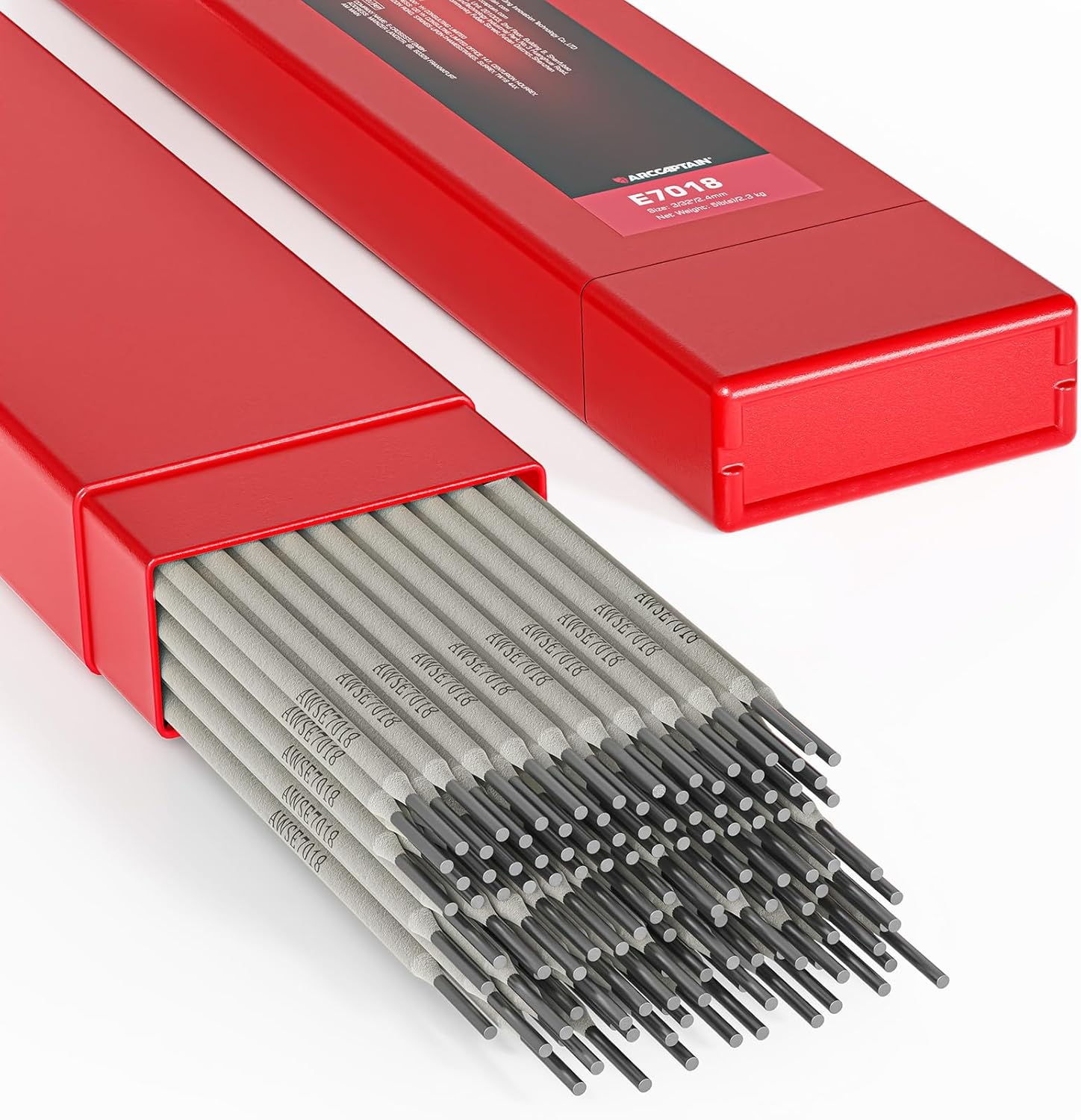
Sizing and packaging choices for E316L-16 electrodes hinge on project scale, joint design, and storage practices. The reviewer notes clear sizing options: 3/32″ (12″) and 1/8″ (14″), sold in 0.5 LB, 2 LB, and 4.4 LB packs.
Practical ordering balances electrode count per pound, job continuity, and shelf protection against moisture. Which pack size suits the job? Consider travel, inventory turnover, and cryogenic or corrosive service needs.
Packaging details should state quantity, length, and coating condition. Recommendations:
- Match diameter to groove geometry and current capacity.
- Choose pack weight for continuous welding vs. intermittent repairs.
- Verify Picture #2 for electrode counts.
Frequently Asked Questions
What Storage Conditions Extend Electrode Shelf Life?
Store electrodes in dry, sealed containers with ideal humidity below 20% and strict temperature control (50–77°F). They remain liberated from moisture, rod coatings protected, desiccants used, and stock rotated to uphold weld integrity and freedom.
Are There Recommended Preheat or Postheat Procedures?
Yes—minimal preheat is usually unnecessary, though some fear cracking; preheat benefits include reduced condensation and improved weld puddle control, while postheat techniques involve slow cooling or brief tempering to relieve stresses and guarantee ductile, corrosion-resistant joints.
What Flux Removal or Cleaning Methods Are Best?
Mechanical brushing and pickling remove flux types residue; then apply ultrasonic cleaning or alkaline degreasing. Cleaning techniques should liberate surfaces, ensuring corrosion resistance and freedom from slag, salts, and contaminants for durable, emancipated weld integrity.
Is This Electrode Suitable for Food-Grade Equipment Welding?
Absolutely fit for purpose — like a fortress of purity, it offers strong corrosion resistance and dependable weld quality; however, third-party sanitary finishing and strict cleaning are required to meet food-grade standards and regulatory hygiene expectations.
Are There Specific Welding Current and Polarity Recommendations?
DCEN is recommended for best electrode performance; low to medium welding currents suit 3/32″ and 1/8″ sizes, with short arc and stringer beads. Welding techniques favor controlled heat input to liberate consistent, corrosion-resistant deposits.
Conclusion
Conclusion:
The E316L-16 electrode proves itself a dependable choice for demanding welds, offering 3/32″ and 1/8″ diameters, cryogenic toughness to −452 °F, and low carbon chemistry for minimal carbide precipitation. How does it serve industry needs? It resists pitting and crevice attack, suits austenitic and stabilized alloys, and fits chemical, paper, and cryogenic applications. Like a navigator’s sextant, it guides precision work—reliable, measured, and built for harsh environments.