Disclosure: As an Amazon Associate, we earn from qualifying purchases. If you click a link on this page and make a purchase, we may receive a small commission at no extra cost to you.
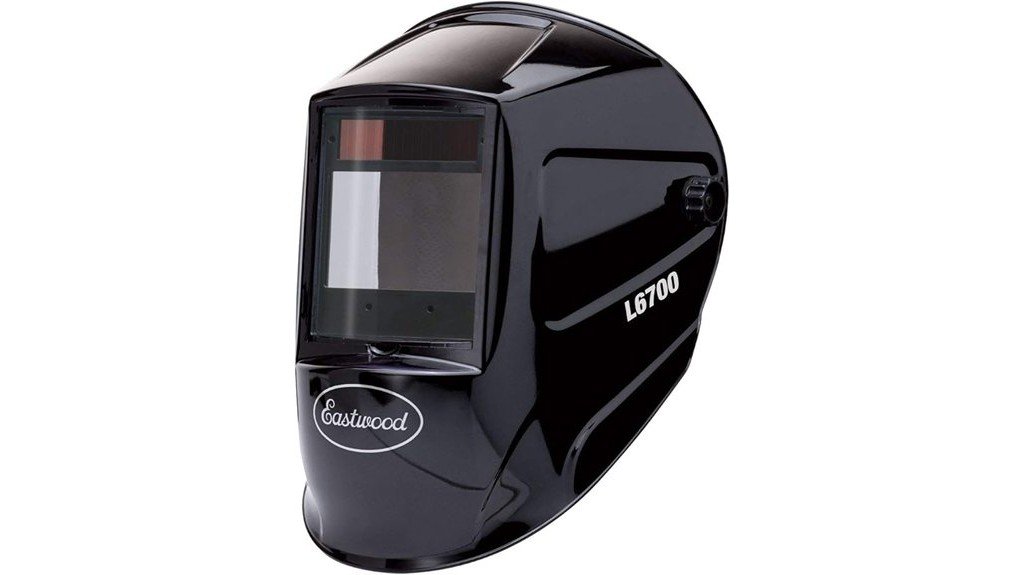
Poor visibility can make it harder to follow a joint, control the puddle, and keep a steady travel angle. The Eastwood L6700 Large View Auto-Darkening Welding Helmet addresses that problem with True Color Technology, a 3.9 x 2.64-inch viewing area, adjustable lens controls, and a dedicated grind mode. It also uses five-way adjustable headgear designed to fit head circumferences from 21.6 to 24.8 inches. This review explains where the L6700 performs well, which details you should verify, and whether it suits your welding setup.
Quick Verdict
Rating: Recommended with caveats, 8.2/10
Best For: DIY welders and regular shop users who want a large true-color lens, adjustable auto-darkening controls, and grind mode.
Bottom Line: The Eastwood L6700 offers useful visibility, fit, and control features for general welding and fabrication work. Its main tradeoff is that some technical details, replacement components, and current certification markings require confirmation before purchase.
| Specification | Detail |
|---|---|
| Brand | Eastwood |
| Model | L6700 |
| Eastwood part number | 21483 |
| Product type | Large-view auto-darkening welding helmet |
| Color | Gloss black |
| Lens technology | True Color Technology |
| Viewing area | 3.9 x 2.64 inches (100 x 67 mm) |
| Cartridge size | 4.5 x 5.25 inches |
| Optical clarity rating | 1/1/1/2 |
| Listed shade range | #4 to #13 |
| Lens controls | Adjustable shade, sensitivity, and delay |
| Grind mode | Yes |
| Shell material | Impact-resistant nylon |
| Headgear | Five-way adjustable headgear with sweatband |
| Listed head-size range | 21.6 to 24.8 inches in circumference |
| Magnifying lens support | Compatible with a suitable magnifying lens |
| Listed compliance claims | ANSI, CE, and RoHS claims appear in product information. Confirm the markings on the helmet and manual. |
| Best use | General welding, fabrication, fit-up, and grinding preparation when the selected settings match the task. |
Key Takeaways
- The L6700 is an auto-darkening welding helmet with adjustable shade, sensitivity, and delay controls.
- Its 3.9 x 2.64-inch True Color viewing area provides a wider, more natural-looking view of your joint and workpiece.
- A listed #4 to #13 shade range gives you flexibility, but the correct shade still depends on your process, amperage, and electrode size.
- The dedicated grind mode lets you complete certain preparation and cleanup tasks without repeatedly removing the helmet.
- Five-way adjustable headgear, a sweatband, and a 21.6 to 24.8-inch fit range improve its usefulness for repeated shop sessions.
- You should confirm the Amazon listing, product markings, replacement covers, and warranty terms before ordering.
What Is the Eastwood L6700 Welding Helmet?
The Eastwood L6700, also sold under Eastwood part number 21483, is a large-view auto-darkening welding helmet. It is designed to darken the lens when it detects a welding arc, allowing you to position the torch or electrode while the lens remains in its lighter state.
Its main selling points are the 3.9 x 2.64-inch viewing area, True Color Technology, grind mode, and adjustable lens controls. Instead of relying on one fixed response, you can adjust the shade, sensor sensitivity, and return delay to suit different working conditions.
The helmet is aimed at DIY fabricators, automotive restorers, welding students, and shop users who need more control than a basic fixed-shade helmet provides. Buyers working under formal workplace rules should verify the exact markings and documentation on the unit they receive.
Before You Buy: The original Amazon ASIN may redirect or appear under an updated listing. Confirm that the page shows the Eastwood L6700 or part number 21483, a 3.9 x 2.64-inch viewing area, grind mode, and the expected safety markings before ordering.
Who Should Buy It?
Best For
- DIY welders who want more viewing space than a compact fixed-shade helmet offers.
- Automotive and fabrication users who switch between fit-up, welding, and grinding preparation.
- Beginners who want adjustable controls and a more natural view while learning puddle control.
Skip If
- You need complete workplace compliance documents approved before purchase.
- You want an integrated work light or the larger viewing area found on newer premium helmets.
- You need confirmed replacement cartridges, cover lenses, or warranty terms before placing an order.
Features and Specifications
True Color Lens Visibility
True Color Technology is designed to reduce the heavy green tint associated with many older welding filters. The result is a more natural view of the metal, joint line, torch position, and surrounding workspace.
Better color separation can make setup and positioning easier, particularly when you are learning to identify the puddle edge. It does not replace correct lighting, body position, or welding technique, but it can reduce visual guesswork.
Large 3.9 x 2.64-Inch Viewing Area
The viewing window measures 3.9 x 2.64 inches, or approximately 100 x 67 mm. It provides enough space to see more of the workpiece while you keep the helmet in its normal lowered position.
A larger lens is helpful when you are welding inside a vehicle body, following a curved joint, or checking the angle between two fitted parts. You may need fewer head movements than you would with a narrow viewing window.
Auto-Darkening Shade, Sensitivity, and Delay Controls
The L6700 provides adjustable shade, sensitivity, and delay controls. Shade changes how dark the filter becomes, sensitivity affects how readily the helmet responds to an arc, and delay controls how quickly the lens returns to its light state after the arc stops.
These adjustments matter when you move between low-current work, brighter arcs, tack welds, and longer passes. High sensitivity may help the lens detect a lower-output arc, while too much sensitivity can cause nearby welding activity or bright light to trigger the filter.
The listed shade range is #4 to #13. You should never choose a setting only because it provides the clearest view. Match the shade to the welding process, amperage, electrode size, and instructions supplied with your equipment.
Grind Mode
Grind mode keeps the lens from darkening while you perform suitable grinding or preparation work. This can save time when you switch between welding, reshaping tungsten, cleaning a tack, or removing a small spot weld.
You must switch grind mode off before striking an arc. A grind setting is not a welding shade, so develop a consistent check routine each time you move back to welding.
Impact-Resistant Nylon Shell
The helmet uses an impact-resistant nylon shell. This material helps keep the body manageable while providing a barrier against sparks, light spatter, heat, and normal workshop handling.
The shell is not a substitute for a hard hat, respirator, fire-resistant clothing, or other job-specific protection. Inspect it for cracks, heat damage, loose hardware, or warped areas before each session.
Five-Way Adjustable Headgear and Sweatband
The five-way headgear allows you to adjust the fit, viewing position, helmet angle, and movement resistance. Its listed fit range covers head circumferences from 21.6 to 24.8 inches.
A sweatband helps manage contact around your forehead, but fit remains personal. The helmet should stay stable when raised, lower smoothly, and place the lens directly in front of your eyes without forcing you to bend your neck.
Magnifying Lens Compatibility
The L6700 is listed as compatible with a suitable magnifying lens. This can help users who need a closer view of fine TIG work, small joints, or detailed fabrication.
Confirm the required plate size and mounting method before ordering a magnifying insert. A poorly fitted insert may move, obstruct your view, or interfere with the filter cartridge.
Pro Tip: Adjust the headgear while wearing your usual safety glasses. Lower and raise the helmet several times to confirm that the lens returns to the same eye position without hitting your eyewear.
How It Performs in Real Use
For Beginner Welding Practice
Beginners often struggle to see the puddle while maintaining a steady torch or electrode angle. The true-color filter and larger viewing window can make the joint, workpiece, and puddle boundary easier to follow during practice beads.
The adjustable controls also give you room to refine the response as you learn. Start with the manufacturer’s recommended settings rather than changing every control at once.
For MIG, TIG, and Stick Welding
The broad shade range and adjustable sensitivity make the L6700 suitable for several common arc-welding situations when its settings match the work. MIG and stick welding may require different shades and delay settings from low-current TIG work.
Confirm the correct settings in the helmet manual and welding-equipment instructions. Low-output TIG work can be especially demanding for an auto-darkening filter, so test the helmet before beginning the weld.
For Automotive and Garage Fabrication
The large window is useful when you are working around brackets, floor pans, exhaust sections, body panels, or other parts that limit your head position. It helps you keep more of the joint and nearby metal within view.
Five-way headgear also benefits jobs that involve repeated measuring, fitting, tacking, and welding. A secure fit reduces the need to readjust the helmet each time you lower it.
For Grinding and Weld Cleanup
Grind mode is convenient when you need to smooth a tack, prepare an edge, or reshape tungsten. You can keep your face covered while using the appropriate primary eye protection beneath the helmet.
The main risk is forgetting to return the helmet to welding mode. Make checking the mode, shade, and lens condition part of your pre-arc routine.
Setup Tips Before First Use
- Inspect the helmet: Check the shell, lens covers, filter cartridge, controls, and headgear for shipping damage.
- Confirm the product identity: Look for the Eastwood name, L6700 model reference, part number 21483, and applicable safety markings.
- Adjust the headgear: Set the circumference, height, angle, and movement resistance while wearing your normal safety glasses.
- Remove protective film: Check both sides of any lens cover for shipping film that could make the view cloudy.
- Select welding mode: Confirm that grind mode is off before striking an arc.
- Set the shade: Use the welding process, amperage, electrode size, equipment manual, and applicable safety guidance to choose a suitable shade.
- Adjust sensitivity and delay: Begin with the manual’s recommended settings, then make small changes for the working environment.
- Test the response: Follow Eastwood’s test procedure before every work session and after replacing a lens component.
Cleaning and Lens Maintenance
Wipe the shell and lens covers with a soft cloth after use. Grinding dust, smoke residue, and fingerprints can reduce visibility even when the auto-darkening cartridge works correctly.
Do not use harsh solvents unless the manual specifically allows them. Strong chemicals may cloud a cover lens, damage the shell, or affect seals around the cartridge.
Replace scratched, cracked, pitted, or permanently cloudy cover lenses. Before purchasing replacements, confirm the required dimensions and whether the part is an outer cover, inner cover, or complete auto-darkening cartridge.
Compatibility and Safety Notes
A welding helmet protects your face and filters hazardous arc light, but it should not serve as your only eye protection. Wear suitable safety glasses or goggles beneath the helmet, especially when sparks, grinding fragments, or slag may travel around the shell.
Select the filter shade according to your welding process, amperage, electrode size, and applicable workplace rules. A setting that feels comfortable may still be below the minimum protection required for the task.
Product information for the L6700 lists ANSI, CE, and RoHS claims. RoHS relates to restricted substances rather than welding performance. Inspect the markings on the helmet and filter cartridge, then compare them with your employer, school, or jobsite requirements.
You will still need welding gloves, flame-resistant clothing, suitable footwear, ventilation, and respiratory protection when the material or process requires it. Do not weld coated, unknown, or hazardous materials without understanding the fumes and controls involved.
Customer Feedback and Buyer Notes
Buyer feedback commonly focuses on the large viewing area, true-color lens, headgear comfort, and grind mode. These are useful review topics because they affect how easily you can position your work and how consistently the helmet stays aligned.
When reading current reviews, pay close attention to comments about auto-darkening consistency, low-amperage TIG response, headgear durability, and the availability of cover lenses. Give more weight to recent reviews that clearly identify the L6700 or Eastwood part number 21483.
Also check whether reviews refer to the original L6700, the newer L6700 LED edition, or a different Eastwood helmet. Similar product names can cause feedback from separate versions to appear together.
Warranty and Return Information
Warranty and return terms may differ between Eastwood, Amazon, and third-party sellers. Confirm the current return window, warranty length, exclusions, and who handles a defective auto-darkening cartridge before ordering.
Keep the receipt, product label, manual, and packaging until you have tested the helmet. These details can help identify the exact version if you need support, a replacement cover, or a warranty claim.
Pros and Cons
Pros
- True Color Technology provides a more natural view than a heavily green-tinted filter.
- 3.9 x 2.64-inch viewing window helps you see more of the joint and surrounding workpiece.
- Adjustable shade, sensitivity, and delay controls support different welding conditions.
- Grind mode reduces the need to remove the helmet during suitable preparation work.
- Five-way headgear, a sweatband, and a defined fit range improve adjustability.
Cons
- The Amazon listing and ASIN may require extra checking to confirm the exact product version.
- Replacement cover-lens and cartridge details are not consistently documented across sellers.
- Buyers who need formal workplace approval may require more documentation before use.
Is It Worth the Price?
The Eastwood L6700 offers strong value for the price when your priorities are a larger lens, true-color viewing, adjustable auto-darkening controls, and grind mode. These are meaningful upgrades over a basic fixed-shade helmet or a compact entry-level auto-darkening model.
DIY fabricators, automotive hobbyists, and welding students are likely to receive the most value from it. Its headgear adjustment and viewing area also suit users who move frequently between measuring, fitting, tacking, and welding.
It is not the best fit when you need an integrated light, an extra-large panoramic view, or complete compliance documentation before purchase. The value also depends on whether suitable cover lenses and support remain available for the exact version you receive.
How It Compares to Alternatives
The Eastwood XL9300 is worth comparing when you want a larger viewing area and are comfortable moving to a higher-tier Eastwood helmet. The Eastwood L6700 LED editions add an integrated light and use updated product documentation, but they are separate versions rather than proof that every specification carries over to this original L6700.
A basic fixed-shade helmet may cost less and avoids electronic controls, but it requires you to lift or lower the helmet during positioning. The original L6700 makes the most sense when you want adjustable auto-darkening performance and grind mode without moving directly to Eastwood’s larger premium models.
Frequently Asked Questions
Is the Eastwood L6700 an auto-darkening helmet?
Yes. The L6700 uses an auto-darkening filter with adjustable shade, sensitivity, and delay controls. Test the filter according to the manual before each welding session.
Is the Eastwood L6700 good for beginners?
It can suit beginners because the large true-color window makes the joint and surrounding metal easier to see. New welders must still learn how to select the correct shade and test the helmet before striking an arc.
What is the viewing area on the Eastwood L6700?
The listed viewing area is 3.9 x 2.64 inches, or approximately 100 x 67 mm. This provides more visual space than many compact welding-helmet windows.
Can you use the L6700 for MIG, TIG, and stick welding?
Its adjustable #4 to #13 range supports several welding conditions when the correct setting is selected. Check the helmet manual and shade guidance for your exact process, amperage, and electrode size.
Does the Eastwood L6700 have grind mode?
Yes. Grind mode prevents the lens from darkening during suitable grinding and preparation tasks. Switch the helmet back to welding mode and verify the shade before striking an arc.
What head size does the L6700 fit?
The listed head-circumference range is 21.6 to 24.8 inches. Fit can still vary with your safety glasses, cap, hairstyle, and preferred helmet angle.
Can you install a magnifying lens in the L6700?
The helmet is listed as magnifying-lens compatible. Confirm the required plate dimensions and mounting arrangement before buying an insert because magnifying lenses are not universally sized.
Does the welding helmet replace safety glasses?
No. Wear suitable safety glasses or goggles beneath the helmet to protect your eyes from particles, slag, and grinding debris that may travel around the shell. Follow your workplace PPE requirements.
The Bottom Line
The Eastwood L6700 is a practical choice for DIY welders and shop users who value a large true-color viewing area, adjustable auto-darkening controls, grind mode, and flexible headgear. Its strongest benefit is improved visibility, while its main limitation is the need to verify the current listing, product markings, and replacement-part support.
Skip it when your employer requires complete documentation before purchase or when you want a newer helmet with an integrated work light. For general fabrication and automotive welding, it remains recommended with caveats at 8.2/10.
Ready to Buy?
Check the latest price, product version, and safety markings before you decide.