Disclosure: As an Amazon Associate, we earn from qualifying purchases. If you click a link on this page and make a purchase, we may receive a small commission at no extra cost to you.
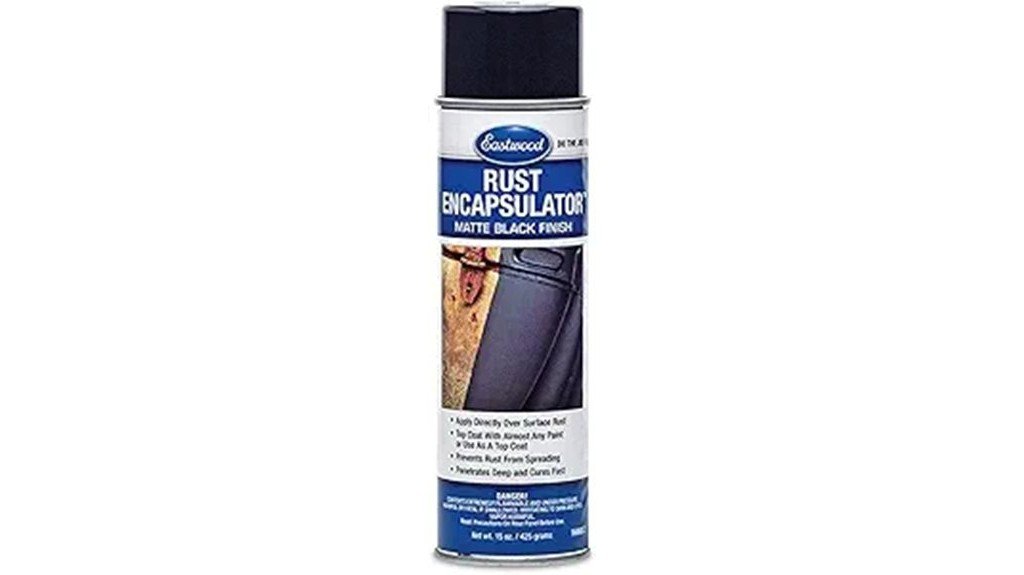
Surface rust on a frame, suspension part, engine-bay bracket, or other steel component can spread quickly if you simply paint over loose corrosion. Eastwood Rust Encapsulator Black Aerosol 15 oz is designed to coat properly prepared surface rust and bare metal while giving you an aerosol format that can reach smaller automotive areas. Its main strengths are quick drying, heat resistance up to 400°F, and straightforward spray application, but the 15 oz can is better suited to targeted repairs than large restoration jobs. This review explains the verified specifications, preparation steps, limitations, safety requirements, and situations where this rust encapsulator makes the most sense.
Quick Verdict
Rating: 8/10, Recommended with caveats
Best For: Small automotive rust repairs, chassis and suspension areas, engine-bay metal, and other prepared steel surfaces.
Bottom Line: Eastwood Rust Encapsulator gives you a convenient way to seal properly prepared surface rust, with fast drying and heat resistance up to 400°F. Its main tradeoff is coverage, since one 15 oz aerosol is rated for only about 10 square feet and heavily rusted metal still needs mechanical preparation.
| Specification | Detail |
|---|---|
| Brand | Eastwood |
| Product | Rust Encapsulator Black Aerosol |
| Manufacturer item | 16060Z |
| Container size | 15 oz aerosol |
| Color / finish | Black, low-gloss to flat appearance |
| Coverage | Up to approximately 10 sq. ft. per 15 oz can |
| Heat resistance | Up to 400°F |
| Spray distance | 10-12 inches from the surface |
| Touch dry | About 20 minutes at 68°F |
| Thoroughly dry | About 3-4 hours at 68°F |
| Second coat | May be applied after about 1 hour for greater durability |
| Topcoat timing | Allow at least 6-8 hours after the final coat |
| Surface preparation | Remove loose rust, scale, paint, dust, grease, and oil before spraying |
| Best use | Targeted automotive and metal rust-control projects |
| Safety note | Flammable pressurized aerosol. Use appropriate eye, skin, and respiratory protection with strong ventilation. |
Key Takeaways
- The 15 oz aerosol covers up to about 10 square feet, so it works best for smaller sections rather than complete vehicle restorations.
- It is rated for temperatures up to 400°F, making it useful for suitable engine-bay and brake-adjacent metal where temperatures remain within the product limit.
- A single medium coat can be used, while a second coat after about one hour can improve durability.
- Surface preparation still matters. Loose rust, scale, failing paint, oil, grease, and dust should be removed first.
- At 68°F, the coating is touch dry in about 20 minutes and thoroughly dry in approximately 3-4 hours.
- If you plan to apply a topcoat, Eastwood instructs you to allow at least 6-8 hours after the final Rust Encapsulator coat.
What Is the Eastwood Rust Encapsulator?
Eastwood Rust Encapsulator Black Aerosol is a direct-to-rust protective coating made for properly prepared rusty or bare metal. The original formula is epoxy-fortified to improve adhesion and help compatible topcoats bond over the encapsulator. Unlike a chemical rust converter, its job is primarily to encapsulate and isolate existing adherent rust beneath a protective coating.
The aerosol format is especially useful when you need to reach suspension pieces, frame sections, brackets, wheel-area components, engine-bay metal, and other shapes that are awkward to brush. One 15 oz can is rated for up to about 10 square feet, which makes project size an important buying consideration.
You can leave the black coating as the finished surface in suitable applications or apply a compatible topcoat after the required drying period. For visible bodywork where appearance matters, you should treat the encapsulator as part of the preparation and coating system rather than expecting it to create a showroom-quality final finish by itself.
Who Should Buy It?
Best For
- You need to protect smaller areas of surface-rusted automotive metal.
- You want aerosol application for corners, brackets, suspension parts, or complex shapes.
- You need a coating rated for temperatures up to 400°F in an appropriate automotive location.
Skip If
- You need to cover a large frame, floor pan, trailer, or restoration area economically.
- The metal has heavy loose scale, structural perforation, or damage that requires repair rather than coating.
- You cannot provide strong ventilation and the required personal protective equipment during spraying.
Before You Buy: Rust Encapsulator is not a substitute for repairing structurally weakened metal. Flaking scale, loose rust, failing paint, grease, and contamination still need to be removed before you coat the surface.
Formula, Finish, and Heat Resistance
The original Eastwood Rust Encapsulator uses an epoxy-fortified coating designed to adhere to prepared bare metal and surface rust. The black finish has a relatively low sheen, which fits chassis, suspension, underbody, and engine-bay work better than highly visible exterior body panels where you may want a smoother cosmetic topcoat.
Its 400°F heat rating is one of the more useful automotive specifications. That gives you more flexibility around suitable engine-bay components and brake-adjacent areas than ordinary general-purpose paint. The rating does not mean the aerosol belongs on exhaust manifolds, headers, brake friction surfaces, rotors, pads, or any component that exceeds the coating’s temperature limit.
The product is also intended to resist UV exposure better than many coatings in this category. Even so, application environment, preparation, film thickness, and exposure conditions all influence how well any rust coating lasts.
Surface Preparation and Adhesion
Preparation has a direct effect on how well this coating performs. Start by removing loose rust, scale, and failing paint with a stiff wire brush or another appropriate mechanical method. You do not need to grind every trace of tightly bonded surface rust to bright metal, but anything loose enough to flake away should come off before coating.
Next, remove dust, grease, oil, and other contamination. The surface should be clean and dry before spraying. When you are blending a repaired area into surrounding paint, Eastwood recommends feathering the existing paint with 220-grit wet/dry sandpaper so the transition is smoother.
Preparation is especially important on old vehicle parts because road grime, penetrating oil, undercoating residue, silicone products, and grease can interfere with adhesion even when the metal looks clean from a distance.
Pro Tip: Do all degreasing before the final sanding and spraying steps. After cleaning, avoid touching the prepared area with oily hands, and follow the product label for the final surface-cleaning procedure.
Application and Drying Time
Shake the aerosol vigorously for at least two minutes after the mixing ball begins to rattle. During application, hold the can roughly 10-12 inches from the metal and apply a controlled medium coat rather than trying to flood the surface.
At 68°F, one coat is touch dry in about 20 minutes and thoroughly dry in approximately 3-4 hours. If you want a second coat for greater durability, Eastwood allows it after about one hour. Heavy coats take longer to dry, so adding more material is not a shortcut to a faster or stronger finish.
If you plan to paint over the Rust Encapsulator, allow at least 6-8 hours after the final coat. Eastwood also recommends sanding with 320-grit wet/dry paper for maximum topcoat adhesion. The manufacturer’s instructions state that topcoating within roughly 36 hours is preferable; after that period, scuffing the surface before topcoating becomes especially important.
After spraying, clear the aerosol valve according to the can instructions. Keeping the nozzle clear matters because a partially blocked tip can produce uneven spray, spitting, and poor film control during the next use.
How It Performs in Real Use
Small Chassis and Suspension Repairs
The aerosol format suits brackets, control-arm areas, suspension hardware surfaces, frame patches, and similar small sections where a brush may be awkward. Because one can covers only about 10 square feet, you can estimate your project before starting and avoid running out halfway through a coating session.
Engine-Bay Metal
The 400°F rating gives the coating useful heat tolerance for appropriate engine-bay metal. You still need to keep it away from components that exceed the rated temperature and from areas where a coating could interfere with electrical grounds, fastener torque, moving parts, or service procedures.
Brake-Adjacent Areas
Eastwood markets the coating for suitable areas near brakes because of its heat resistance. That does not mean you should spray brake rotors, friction surfaces, pads, drums, braking hardware that requires bare mating surfaces, or any part where coating could affect safe operation. Mask carefully before spraying.
Patch and Spot Repair Work
This is where the aerosol format makes the most sense. You can feather surrounding paint, clean the exposed metal, encapsulate a localized rusty section, and topcoat afterward if needed. For an entire chassis, trailer, or large floor pan, a larger brush-on or spray-gun product can be more practical than buying many aerosol cans.
Common Application Mistakes to Avoid
- Spraying over loose scale: Encapsulating weak material does not make the weak layer structurally sound.
- Skipping degreasing: Oil and road contamination can interfere with adhesion.
- Holding the can too close: Excess material can run and dry more slowly.
- Applying very heavy coats: Eastwood’s stated drying times assume proper application, not a flooded surface.
- Topcoating too early: Give the final encapsulator coat the required drying time first.
- Ignoring overspray: Mask brake surfaces, wiring connections, threads, moving joints, finished paint, and nearby components that should remain uncoated.
Safety, Storage, and Warranty Information
This is a solvent-based pressurized aerosol, so safe application matters. Work outdoors or in a strongly ventilated area and use appropriate eye, skin, and respiratory protection as directed by the label and safety documentation. Keep the product away from sparks, smoking, hot surfaces, open flame, and other ignition sources.
The container is pressurized and should be protected from excessive heat and direct sunlight. Eastwood’s safety documentation warns against exposing the can to temperatures above approximately 122°F. Do not puncture or burn the container, even after use, and follow local rules for disposal.
Eastwood currently lists a 90-day warranty, a 90-day satisfaction guarantee, and lifetime technical support for this product. Warranty conditions and return eligibility can change, so check the current seller or manufacturer terms when purchasing.
The original product documentation does not provide a reliable universal number of days that every opened aerosol remains usable. Storage conditions, valve cleanliness, and contamination can affect future use, so clear the nozzle after spraying and follow the can’s storage directions rather than relying on a fixed opened-can lifespan.
Pros and Cons
Pros
- Heat resistant up to 400°F for suitable automotive applications.
- Touch dry in about 20 minutes at 68°F.
- Aerosol reaches corners and irregular metal more easily than a brush.
- Can be applied to properly prepared surface rust and bare metal.
- Compatible with subsequent painting when you follow the stated drying and preparation steps.
Cons
- One 15 oz can covers only about 10 square feet.
- Loose or structurally damaged rust still requires mechanical work or repair.
- Solvent and aerosol hazards require ventilation, protective equipment, masking, and careful storage.
Is It Worth the Price?
Eastwood Rust Encapsulator Aerosol makes the most sense when convenience and access matter more than bulk coverage. For a few brackets, a rusty frame section, suspension pieces, or another targeted repair, the spray format can save you from setting up a spray gun or cleaning a brush afterward.
The value becomes less attractive as the project grows. With coverage of up to about 10 square feet per 15 oz can, a complete chassis or large restoration area may require several cans. For that type of work, comparing the cost and coverage of Eastwood’s larger containers or another brush-on coating is sensible.
It is therefore a strong value for small and medium spot repairs, but not automatically the cheapest format for large-area rust treatment.
How It Compares to Alternatives
POR-15 Rust Preventive Coating is worth comparing if you are tackling a larger restoration and prefer a multi-step brush, roller, or spray-gun system. POR-15 emphasizes a cleaner, metal-prep, and coating process and is commonly chosen for frames, floors, and larger restoration work.
Rust-Oleum Rust Reformer takes a different approach because it is marketed as a rust converter that chemically changes rusty surfaces into a paintable layer. Eastwood Rust Encapsulator is better viewed as an encapsulating protective coating rather than the same type of conversion chemistry.
You can also compare the original product with Eastwood Rust Encapsulator Plus. The Plus line uses a different formulation and specifications, so do not assume its coat timing, heat rating, or other instructions are interchangeable with the original 15 oz product reviewed here.
Frequently Asked Questions
Do you have to remove all rust before using Eastwood Rust Encapsulator?
No. The product is made to go over properly prepared surface rust, but you should remove all loose rust, scale, and failing paint first. Clean away dust, oil, grease, and other contamination before spraying.
How much area does one 15 oz can cover?
Eastwood states that one 15 oz aerosol can covers up to approximately 10 square feet. Actual consumption can vary with surface texture, overspray, rust condition, coating thickness, and the number of coats you apply.
How long does Eastwood Rust Encapsulator take to dry?
At 68°F, Eastwood states that a normal coat is touch dry in about 20 minutes and thoroughly dry in roughly 3-4 hours. Temperature, coating thickness, airflow, and other conditions can change the actual drying time.
Can you apply a second coat?
Yes. Eastwood says one coat can be used, and a second coat may be applied after about one hour when you want greater durability. Avoid excessively heavy coats because they require additional drying time.
Can you paint over Eastwood Rust Encapsulator?
Yes, the original formula can be topcoated with compatible paint. Eastwood instructs you to wait at least 6-8 hours after the final coat and recommends sanding with 320-grit wet/dry paper for maximum topcoat adhesion.
Can you powder coat over Rust Encapsulator?
Do not assume standard powder-coat compatibility. The verified instructions for this original aerosol discuss conventional topcoating but do not establish a universal powder-coating procedure. Powder curing can involve substantial heat, so confirm the complete coating system with Eastwood and your powder-coating provider first.
Can it be used on aluminum or stainless steel?
This product is primarily marketed for rusted and bare metal, especially surfaces affected by iron rust. Because aluminum and stainless steel have different corrosion behavior, do not treat the product as a universal corrosion treatment for those metals unless Eastwood confirms your exact substrate and preparation method.
Who should skip the aerosol version?
You may want another format if you are coating an entire frame, trailer, floor pan, or other large area because the 15 oz can covers only about 10 square feet. You should also repair rather than coat metal that is structurally weakened, perforated, or covered with heavy loose scale.
The Bottom Line
Eastwood Rust Encapsulator Black Aerosol is a good fit when you need convenient rust encapsulation on a properly prepared, relatively small automotive metal area. Its strongest points are simple aerosol application, roughly 20-minute touch drying, compatibility with later topcoating, and heat resistance up to 400°F.
Skip it as a shortcut for badly deteriorated metal or as the most economical choice for a very large restoration. For targeted chassis, suspension, engine-bay, and patch-area work where you can prepare the surface correctly and follow the safety instructions, it earns a Recommended with caveats verdict.