Disclosure: As an Amazon Associate, we earn from qualifying purchases. If you click a link on this page and make a purchase, we may receive a small commission at no extra cost to you.
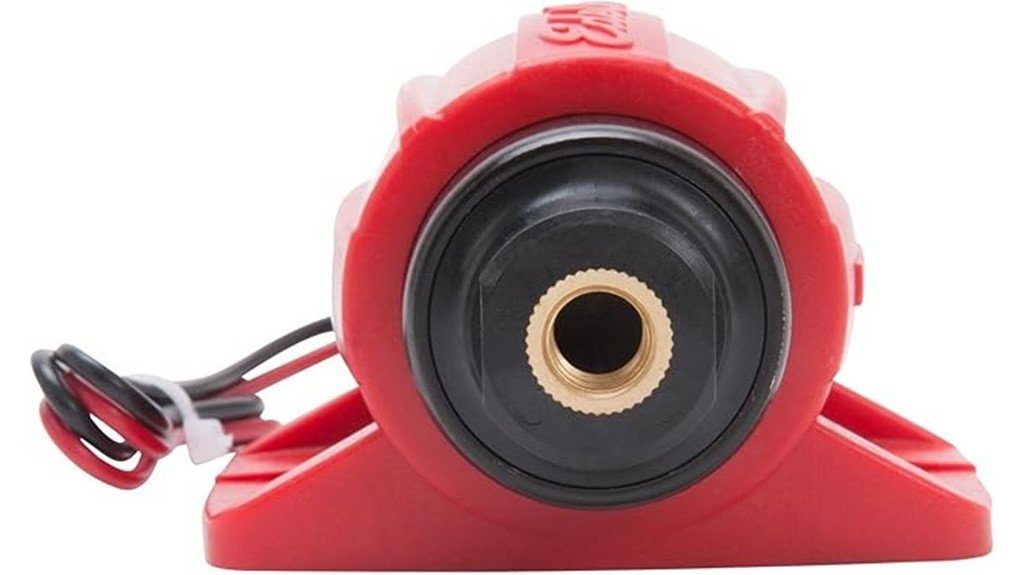
Choosing a low-pressure electric fuel pump is mostly about matching its flow, pressure, fuel type, and mounting requirements to your vehicle. The Edelbrock 17301 Universal Micro Electric Fuel Pump delivers up to 38 GPH (144 LPH) at a 4-7 PSI operating range for gasoline and E85 applications, making it relevant to many carbureted setups. Its simple two-wire design and included filter and mounting hardware make installation relatively straightforward, but it is a gravity-fed pump that must be positioned correctly near the fuel tank. This review explains where the 17301 makes sense, where it does not, and what you should know before installing it.
Quick Verdict
Rating: 7.5/10, Recommended with caveats
Best For: Carbureted gasoline or E85 applications that need a compact external pump in the 4-7 PSI and 38 GPH range.
Bottom Line: The Edelbrock 17301 offers useful low-pressure fuel delivery, simple wiring, and an included filter. Its main limitation is installation: it must be gravity-fed and mounted at or below the lowest point of the tank, so it is not suitable for every fuel-system layout.
Key Specifications
| Specification | Detail |
|---|---|
| Brand | Edelbrock |
| Model | 17301 |
| Product Type | Universal micro electric fuel pump |
| Pump Design | External, in-line, gravity-fed electric pump |
| Maximum Flow | 38 GPH / 144 LPH |
| Pressure Range | 4-7 PSI |
| Fuel Compatibility | Gasoline and E85 |
| Fuel Line Size | Designed for 5/16-inch fuel lines |
| Electrical System | 12V negative-ground |
| Current Requirement | Approximately 1A |
| Fuse Recommendation | 5A in-line fuse, not included |
| Regulation | Not internally regulated; external regulator required when maintaining a specific pressure |
| Included Items | Fuel pump, fuel filter, mounting hardware, and instructions |
| Filter | 40-micron filter; replacement Edelbrock 17311 |
| Maintenance Guidance | Inspect pump and connections, and replace filter, about every 500-600 operating hours |
| Warranty | Edelbrock documentation states a limited 90-day warranty; confirm current terms for your application |
Key Takeaways
- The Edelbrock 17301 is a 38 GPH / 144 LPH micro electric pump with a 4-7 PSI operating range.
- It is intended for gasoline and E85, not diesel. Edelbrock’s 17302 is the related diesel model.
- The pump must be installed at or below the lowest point of the fuel tank and close to the tank because it relies on gravity feeding.
- The supplied filter is an important part of the installation, and Edelbrock specifies 5/16-inch fuel lines.
- The pump is not internally regulated, so an external regulator is required when your application needs fuel pressure held at a specific setting.
What Is the Edelbrock 17301?
The Edelbrock 17301 is a small external electric fuel pump designed mainly to replace or supplement fuel delivery in carbureted applications. Edelbrock rates it for gasoline and E85, with a maximum flow of 38 GPH and a 4-7 PSI pressure range.
It uses a simple two-wire electrical connection and is designed to push fuel from the tank toward the engine. Edelbrock also lists its micro pumps for uses such as farm, lawn, and garden equipment, fuel-transfer systems, and some booster-pump applications when the installation requirements are followed.
The key point is that “universal” does not mean it can be mounted anywhere. This model depends on the fuel tank feeding the pump correctly, and its location is one of the most important parts of a reliable installation.
Before You Buy: The 17301 must be mounted at or below the lowest point of the fuel tank and close to the tank. Edelbrock warns that using it as a lift pump or mounting it too high can lead to pump failure.
Who Should Buy It?
Best For
- Carbureted gasoline or E85 systems that work within a 4-7 PSI pressure range.
- Projects that need an external 38 GPH fuel pump with a simple two-wire connection.
- Installations where the pump can be securely mounted near and below the fuel tank.
Skip If
- You need diesel compatibility. The Edelbrock 17302 is the diesel version.
- Your system requires EFI-level pressure or more than 38 GPH of fuel flow.
- Your installation cannot place the pump at or below the lowest point of the tank.
Performance, Flow, and Fuel Pressure
The strongest reason to choose the 17301 is its clearly defined operating range. Edelbrock rates it for 38 GPH / 144 LPH with fuel pressure between 4 and 7 PSI. Those figures suit many traditional carbureted applications, but you should compare them with the requirements of your carburetor and engine before ordering.
The pump is not internally regulated. That matters because a carburetor that needs pressure held below the pump’s available range may require a suitable external fuel-pressure regulator. You should not assume the pump will automatically deliver the exact pressure your carburetor needs under every condition.
It is also not positioned as a high-pressure EFI pump. If your vehicle requires fuel-injection pressure or substantially higher fuel volume, choose a pump designed for that system instead of trying to adapt the 17301 beyond its intended range.
Fuel Compatibility
The 17301 is listed for gasoline and E85. It should not be confused with Edelbrock part 17302, which shares the 38 GPH and 4-7 PSI ratings but is the diesel-specific model.
You should also make sure the rest of your fuel system is compatible with the fuel you plan to use. Edelbrock specifically advises replacing worn fuel lines with lines suitable for the selected fuel type.
One documentation issue deserves attention: current Edelbrock catalog information identifies the 17301 as gasoline/E85 compatible, while an older warranty document contains inconsistent wording about E85 and warranty coverage. If E85 use is central to your build, confirm the current warranty policy directly with Edelbrock before purchase.
Installation and Mounting
Correct mounting is more important with this pump than its compact size. Edelbrock instructs installers to position it at or below the lowest point of the fuel tank and within about one foot of the tank. The pump is directional and should push fuel from the tank toward the engine.
The catalog may describe the design as self-priming, but that does not mean the pump should be expected to pull fuel upward over a significant distance. Edelbrock’s later technical guidance emphasizes that it is gravity-fed and should not be treated as an extended-duty lift pump.
The supplied fuel filter installs on the inlet side. Edelbrock specifies 5/16-inch fuel lines and recommends proper stepped barb fittings if your system uses another line size. The instructions also say to use thread sealer on the supplied filter threads rather than Teflon tape.
Pro Tip: Decide where the pump will mount before you buy it. Confirm that you have a secure location near the tank, below the tank’s lowest point, with enough room for the filter, fuel lines, wiring, and future filter replacement.
Electrical Setup
The 17301 uses a basic 12V negative-ground, two-wire connection. Edelbrock’s documentation specifies a red positive lead connected to a switched ignition source and a black lead connected to a suitable frame ground.
The electrical requirement is approximately 1 amp, while the installation instructions recommend an in-line 5 amp fuse. The fuse holder and fuse are not listed as included with the pump.
Edelbrock calls for automotive-grade wiring with at least 16-gauge cable. If the electrical run exceeds 20 feet, its instructions specify 14-gauge wire or larger. Good connections and suitable wire sizing reduce voltage drop and help the pump operate as intended.
Filter and Maintenance
The included filter is not simply an optional accessory. Edelbrock’s instructions require the supplied filter during installation and state that failing to use it can void warranty coverage. The replacement filter for the 17301 is Edelbrock part 17311, rated at 40 microns.
For ongoing maintenance, Edelbrock recommends checking the pump and its connections about every 500-600 operating hours. The fuel filter is also recommended for replacement on approximately the same schedule.
You should inspect the system sooner if you notice leakage, damaged fuel hose, poor electrical connections, unusual pump behavior, or changes in fuel delivery. Fuel-system repairs involve flammable liquid, so use appropriate safety procedures and have a qualified professional perform the work if you are not experienced with automotive fuel systems.
How It Performs in Real Use
Street-Driven Carbureted Vehicle
For a carbureted street vehicle whose fuel requirements fall inside the 4-7 PSI and 38 GPH specifications, the 17301 provides a simple way to move fuel without installing a large high-output pump. Its two-wire electrical setup also keeps the system relatively uncomplicated.
Gasoline or E85 Project
The 17301 gives you flexibility when the fuel system is built for gasoline or E85. You still need compatible fuel lines, fittings, and other components, and E85 users should verify Edelbrock’s current warranty terms because older warranty documentation contains conflicting language.
Fuel Transfer and Equipment Use
Edelbrock’s instructions also identify farm, lawn, garden, fuel-transfer, and booster-pump uses. The same gravity-feed and mounting requirements remain important, so the application needs to allow the pump to sit close to and at or below the fuel source.
Long-Term Use
Long-term reliability depends heavily on installation and maintenance. Keeping the supplied filter in place, mounting the pump correctly, protecting the wiring, and inspecting the system at the recommended 500-600-hour interval are more important than treating the pump as a maintenance-free component.
Common Mistakes to Avoid
- Mounting the pump above the tank: The 17301 depends on gravity-fed fuel supply and should be mounted at or below the tank’s lowest point.
- Mounting too far from the tank: Edelbrock specifies a location within roughly one foot of the tank.
- Installing it backward: Follow the directional flow marking so fuel moves from the tank toward the engine.
- Leaving out the supplied filter: Edelbrock requires the filter and links its use to warranty coverage.
- Assuming it has an internal regulator: It does not. Use a suitable external regulator when your system requires controlled fuel pressure.
- Using undersized wiring: Follow Edelbrock’s wire-gauge guidance and use the recommended fused power connection.
Compatibility and Safety
Before installation, compare the pump’s 4-7 PSI pressure range and 38 GPH flow capacity with the requirements of your engine and carburetor. A universal-fit label does not guarantee that the pressure, flow, fuel type, fittings, or mounting arrangement will suit every vehicle.
Fuel leakage creates a serious fire hazard. Edelbrock’s instructions tell installers to inspect fuel and electrical connections before starting the engine, prime the system, and check carefully for leaks before normal operation. If you are not comfortable working with fuel systems, professional installation is the safer choice.
Pros and Cons
Pros
- Verified 38 GPH / 144 LPH flow with a useful 4-7 PSI range for many carbureted systems.
- Compatible with both gasoline and E85 according to current Edelbrock specifications.
- Simple 12V two-wire electrical design with modest current requirements.
- Fuel filter, mounting hardware, and installation instructions are included.
- Replacement 40-micron filter is identified by Edelbrock as part 17311.
Cons
- Strict gravity-fed mounting requirement limits where you can install it.
- Not internally regulated, so some carburetor setups need an external regulator.
- Not appropriate for diesel, high-pressure EFI, or applications requiring more than 38 GPH.
Warranty, Support, and Maintenance
Edelbrock documentation for the micro fuel-pump series states a limited 90-day warranty. Warranty coverage depends on correct installation and normal use, so following the mounting, filter, and electrical instructions matters.
Because Edelbrock documentation from different dates contains inconsistent E85 warranty language, you should confirm the current written warranty directly with Edelbrock if you plan to use E85. This does not change the current catalog specification identifying the 17301 as compatible with gasoline and E85, but checking the warranty removes uncertainty before purchase.
Is It Worth the Price?
The 17301 offers its best value when you need exactly what it provides: an external low-pressure pump delivering up to 38 GPH for a gasoline or E85 carbureted system. The included filter and mounting hardware also reduce the number of basic installation parts you need to source separately.
Because online pricing changes, assigning a fixed budget, mid-range, or premium label without a stable verified price would be misleading. Instead, compare its current cost with pumps that offer similar pressure, flow, fuel compatibility, and included hardware.
It is worth considering if your system fits its operating range and you can meet its gravity-fed mounting requirements. It offers less value if you need high-pressure EFI operation, higher fuel volume, diesel compatibility, or a pump capable of reliably lifting fuel from below its mounting position.
How It Compares to Alternatives
Within Edelbrock’s own micro-pump range, the 17303 is the better comparison for a gasoline/E85 application needing lower pressure. It is rated at 30 GPH and 2-3.5 PSI, compared with the 17301’s 38 GPH and 4-7 PSI.
If you need diesel compatibility, the Edelbrock 17302 is the relevant alternative. It carries the same 38 GPH and 4-7 PSI ratings but is designated for diesel. The 17301 makes the most sense when your application specifically requires gasoline or E85 compatibility and falls within its pressure and flow range.
Frequently Asked Questions
What pressure and flow does the Edelbrock 17301 provide?
Edelbrock rates the 17301 at a maximum flow of 38 GPH, or 144 LPH, with a 4-7 PSI pressure range. Compare those figures with your carburetor and engine requirements before installation.
Can the Edelbrock 17301 be used with diesel?
No. The 17301 is specified for gasoline and E85. Edelbrock part 17302 is the related 38 GPH, 4-7 PSI model intended for diesel applications.
Does the 17301 need a fuel-pressure regulator?
The pump is not internally regulated. Edelbrock states that an external regulator is required when you need to maintain a specific desired fuel pressure, so check your carburetor’s pressure requirement.
Where should the Edelbrock 17301 be mounted?
Mount it at or below the lowest point of the fuel tank and as close to the tank as possible. Edelbrock’s installation guide specifies a position within about one foot of the tank because the pump is designed to push fuel rather than operate as an extended-duty lift pump.
What electrical connection does the pump require?
The 17301 uses a 12V negative-ground electrical system and a basic two-wire connection. Edelbrock recommends a 5A in-line fuse and at least 16-gauge automotive-grade wiring, with 14-gauge or larger wiring for runs over 20 feet.
Does it include a fuel filter?
Yes. A fuel filter is included, and Edelbrock requires the supplied filter to be used with the pump. The specified replacement for the 17301 is the Edelbrock 17311 40-micron filter.
How often should the pump and filter be serviced?
Edelbrock recommends inspecting the pump and its connections every 500-600 operating hours. The manufacturer also recommends replacing the fuel filter at roughly the same interval.
Is the Edelbrock 17301 suitable for EFI or high-output racing use?
It is designed primarily for low-pressure carbureted applications and is limited to 38 GPH and 4-7 PSI. If your EFI or performance setup requires higher pressure or substantially greater fuel volume, choose a pump specifically rated for those requirements.
The Bottom Line
The Edelbrock 17301 is a practical choice when you need a 38 GPH, 4-7 PSI external pump for a gasoline or E85 carbureted application and can mount it correctly near and below the fuel tank. Its simple electrical setup, included filter, and clearly defined operating range are useful strengths, while its gravity-fed mounting requirement and lack of internal pressure regulation are the main limitations.
Buy it when those specifications match your fuel system. Skip it if you need diesel compatibility, high-pressure EFI operation, substantially higher flow, or an installation that requires the pump to lift fuel from below its mounting location.