The Elgato Wave XLR presents a compelling option for audio creators seeking high-quality sound and versatility. Its XLR to USB-C connection and advanced preamp technology promise clarity and reliability. However, its higher price and potential learning curve may deter some users. As this review unfolds, it will explore the intricate details that set the Wave XLR apart and assess whether its features justify the investment for both novice and seasoned audio professionals.
Overview
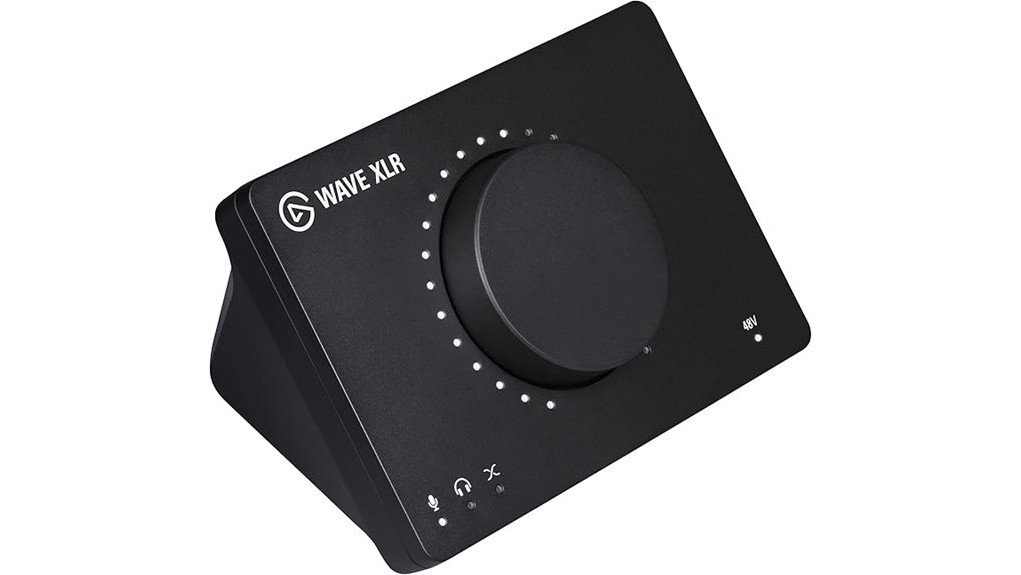
In examining the Elgato Wave XLR, one finds a robust mic interface that bridges the gap between professional audio quality and user-friendly design. The product design emphasizes functionality, featuring a sleek, compact form factor that is both aesthetically pleasing and practical for various setups.
User experience is prioritized through intuitive controls, allowing seamless interaction for both novices and seasoned creators. The integration of advanced technology, such as ultra-low-noise preamps and a capacitive mute button, enhances the overall experience.
This interface empowers users, fostering a sense of liberation in audio production, where creativity can flourish without technical hindrances.
Detailed Features
The Elgato Wave XLR is equipped with several features that cater to both professional and amateur audio creators, enhancing its functionality and user experience.
Its premium XLR to USB-C connection guarantees robust audio connectivity, allowing seamless integration with various systems. The interface supports a wide range of microphone compatibility, including phantom-powered condensers, thanks to its 48V supply.
Users benefit from an ultra-low-noise preamp with up to 75 dB gain, while proprietary Clipguard technology mitigates distortion, guaranteeing clear audio reproduction.
Additionally, the customizable user interface, featuring a multifunctional control dial, facilitates intuitive management of recording settings and monitoring.
Pros and Cons
While weighing the pros and cons of the Elgato Wave XLR, it becomes apparent that this mic interface offers a compelling mix of features suited for various users. Its robust build quality and exceptional sound clarity make it a strong contender for both amateur and professional audio applications. However, some users might find the learning curve steep due to its multifunctional controls.
| Pros | Cons |
|---|---|
| Excellent sound clarity | Steeper learning curve |
| Sturdy build quality | Limited standalone features |
| Versatile connectivity | Higher price point |
Concluding Thoughts
Achieving excellence in audio quality and functionality often necessitates a careful balance of features and usability, a principle embodied by the Elgato Wave XLR.
This mic interface stands out for its impressive specifications and innovative technology, promising transformative user experiences. The inclusion of features such as Clipguard and customizable elements underscores a commitment to evolving audio standards.
As users navigate their creative journeys, potential future upgrades could further enhance its appeal, ensuring it remains relevant in a fast-paced market.
Ultimately, the Elgato Wave XLR represents a pivotal step towards liberation in audio, marrying sophistication with accessibility for diverse creators.
Frequently Asked Questions
Is the Elgato Wave XLR Compatible With Gaming Consoles?
The Elgato Wave XLR is not inherently compatible with gaming consoles, limiting its console audio integration. Its design focuses on PC connectivity, which may hinder ideal gaming performance for console users seeking high-quality audio solutions.
Can I Use This Mic Interface for Live Streaming?
Yes, this mic interface excels in live streaming, countering concerns about audio quality with its ultra-low-noise preamp and Clipguard technology, ensuring a professional sound. Enhanced monitoring and customization further support engaging, high-fidelity broadcasts.
What Type of Cables Are Required for Connection?
To connect the device, high-quality XLR cables are essential for microphone input, while TRS connections may be utilized for headphone output. This setup guarantees peak audio fidelity and versatile performance during various broadcasting scenarios.
Does It Support Mac and Windows Operating Systems?
Compatibility options abound, as the device seamlessly supports both Mac and Windows systems. Its system requirements are invigoratingly minimal, allowing aspiring audio enthusiasts to liberate their creativity without being shackled by technological constraints.
How Does the Clipguard Feature Work in Practice?
The Clipguard functionality intelligently monitors microphone gain, dynamically adjusting levels to prevent distortion. This guarantees a clean audio signal during recording, allowing users to focus on content creation without worrying about unwanted clipping or sound artifacts.