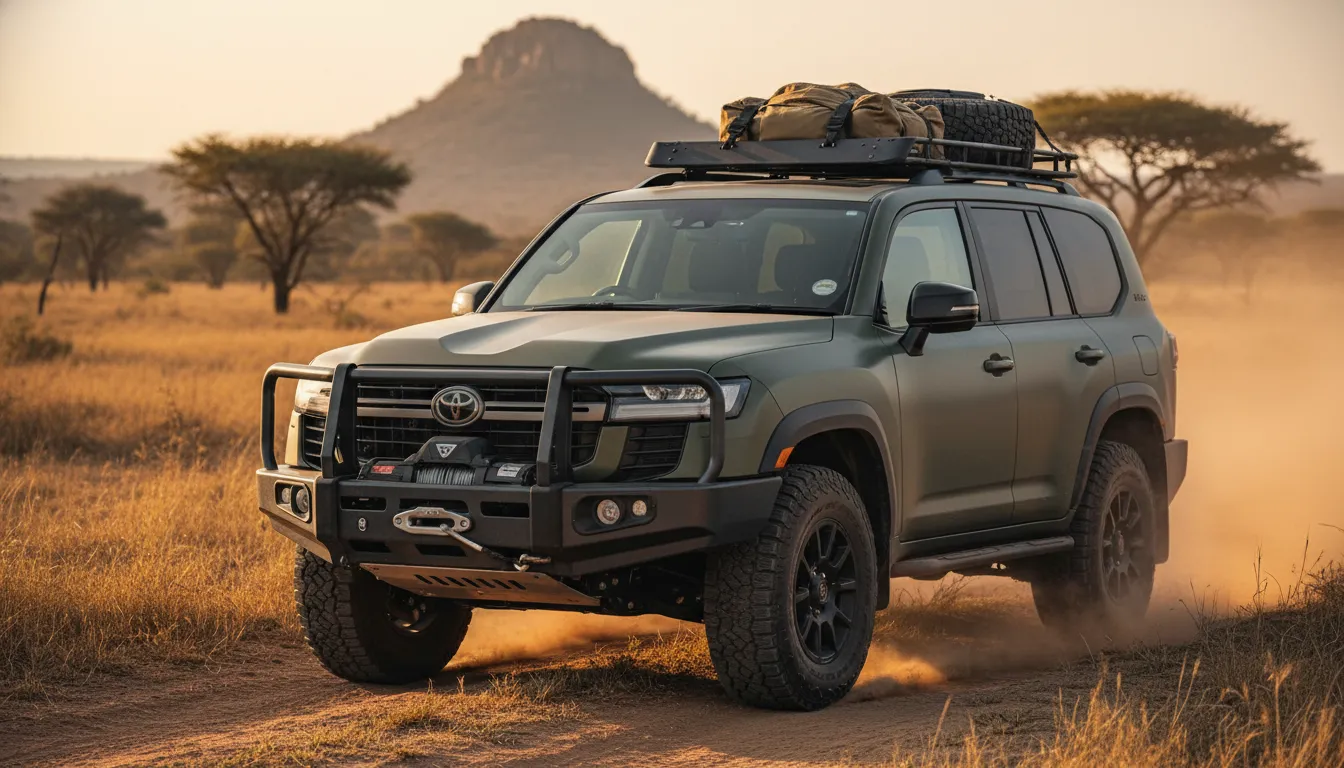
🚙 First impressions: A Land Cruiser that actually looks the part
Haters say the new Land Cruiser is not that cool, but they’ve never seen this Land Cruiser.
I like bold statements, and this build earns it. Expedition One took a 250 Land Cruiser hybrid and turned the boxy, capable platform into something that actually looks ready for a safari while still functioning as a day-to-day vehicle.
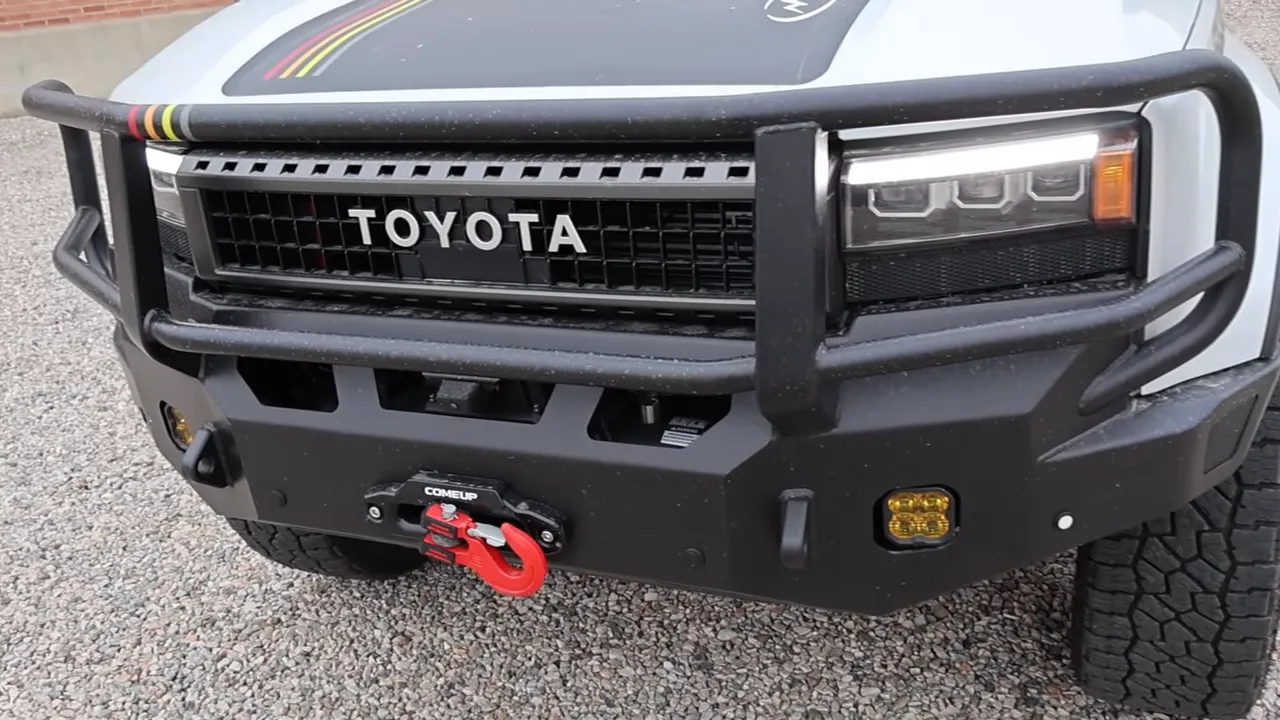
The front end gets a steel brush guard and integrated winch, with parking sensors and the camera system cleverly relocated so nothing looks hacked together. Expedition One didn’t wrap the brush guard around like some builds because the 250’s squared-off nose already provides visual reference points and protection. That gives the rig a clean, intentional aesthetic instead of a bunch of aftermarket parts awkwardly bolted on.
🛠️ Build highlights: Bumpers, lights, and roof setup
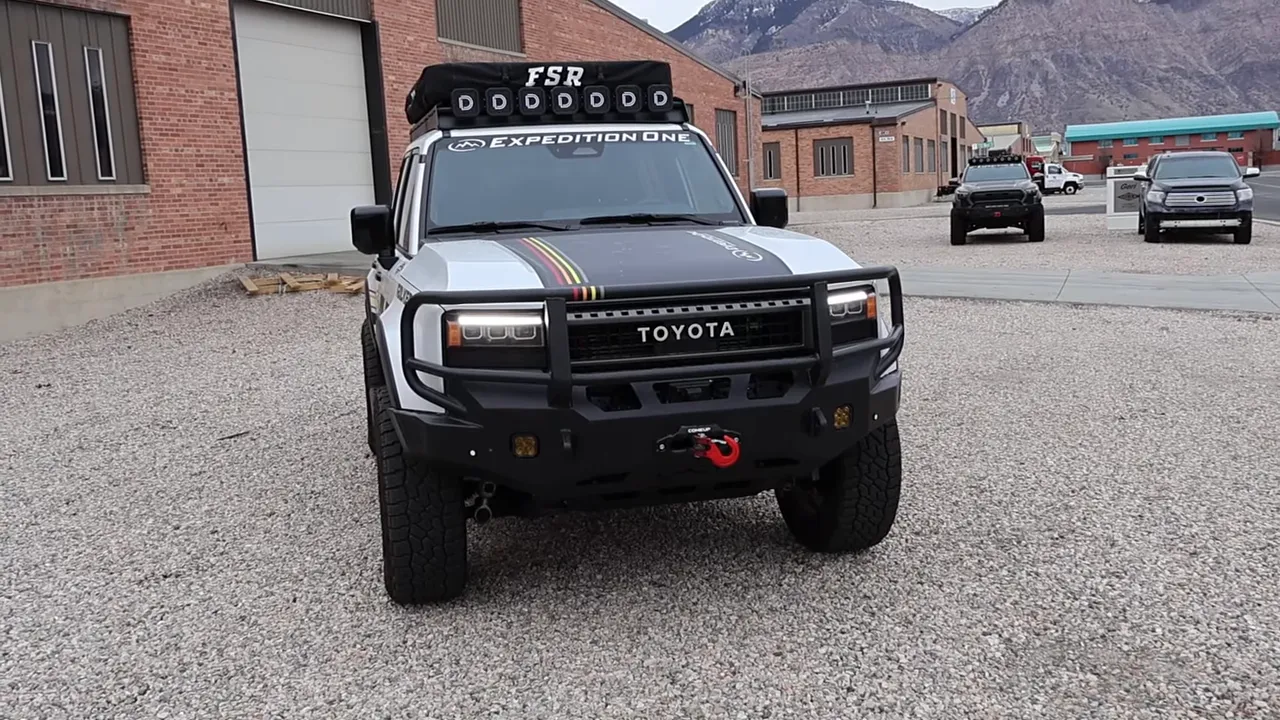
The bumper is steel and fully integrated with lights and sensors. Expect added weight — a steel bumper can be roughly 200 pounds — but Expedition One removes about 60 pounds of front-end plastic when they install the new bumper, so the net addition is typically in the mid-100s once you factor in the winch.
There’s extra lighting up top and a roof rack mounted in the factory positions, meaning no drilling or hacks to the body. That’s an important detail: factory mounting points keep the build clean and serviceable.
🛞 Wheels, suspension, and stance
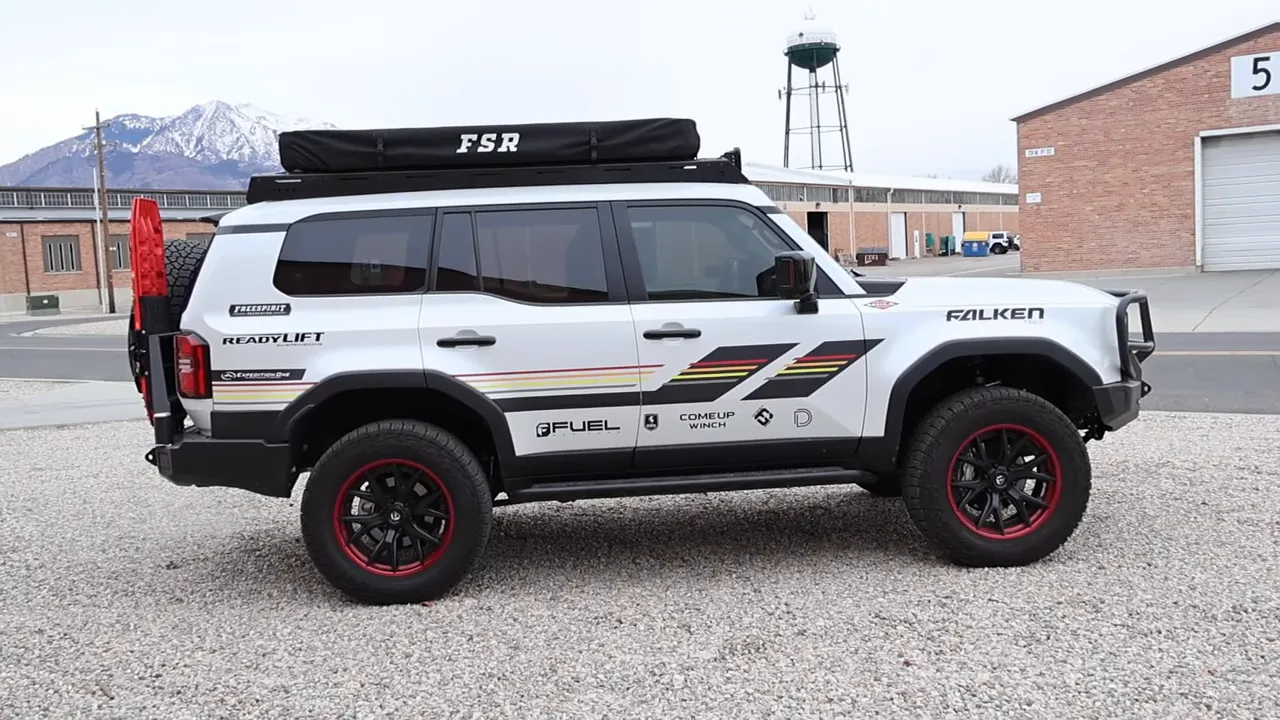
This particular build wears 285/65R20 tires on big wheels, more of a show-oriented setup compared with the 17s the other builds had. Suspension is a ReadyLift roughly 3.5-inch lift with Falcon shocks. Frame-mounted step sliders add utility and protection.
The added height and wheel/tire combo completely change the Land Cruiser’s stance — it looks taller, tougher, and much more purposeful than stock.
🔧 Rear functionality and storage options

The rear swing gates open with proper latches, and the rear window still pops independently so you can access the cargo area without lowering the whole hatch. The camera gets relocated down on the swing-gate arm so the 360 system still functions seamlessly.
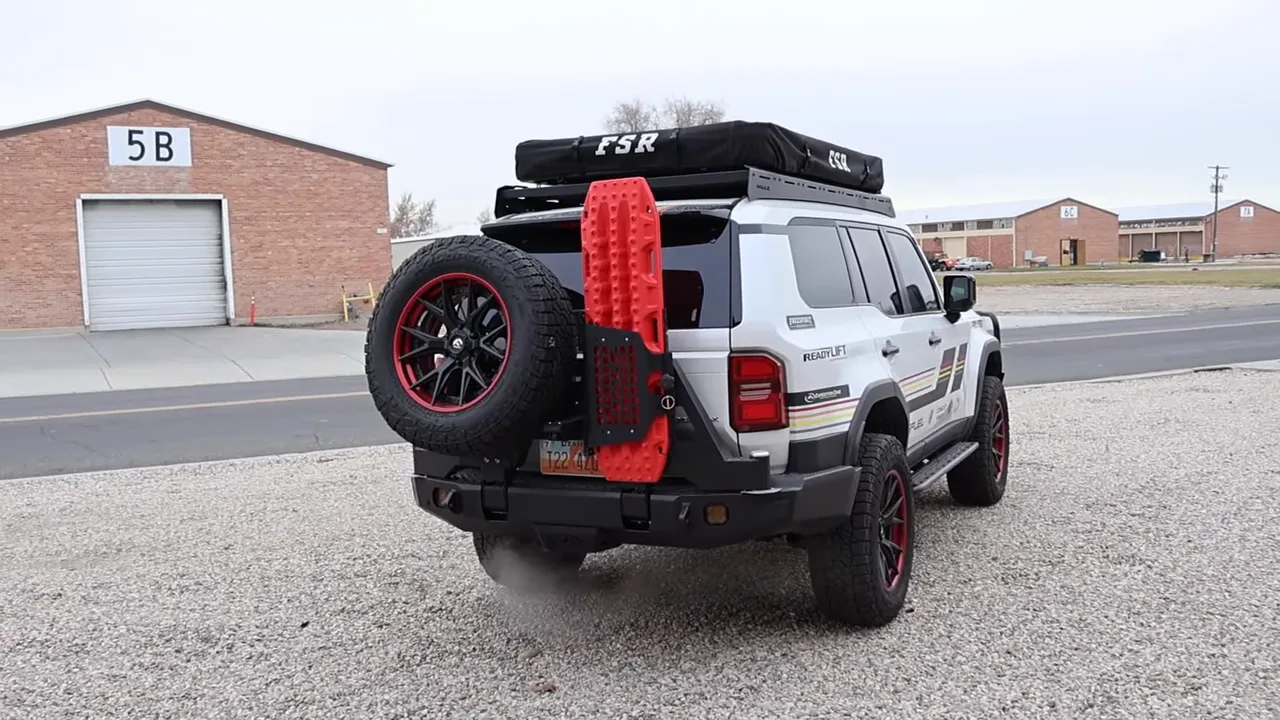
Storage options are modular: you can mount traction boards or Jerry cans, and Expedition One thoughtfully angled spare tires on the back to improve fit and function. Small touches like reintegrating parking sensors and blind-spot sensors into the new bumper keep the electronic safety features intact without looking out of place.
⚙️ Off-road tech you want
The 250 platform ships with serious off-road hardware from the factory. Expect:
- Multi-terrain select and crawl control
- Center and rear diff locks
- Two-speed transfer case with full-time four-wheel drive
- Front stabilizer bar disconnect
Those systems make the 250 a capable starting point for serious modification. The aftermarket work didn’t remove or degrade these features — Expedition One built around them.
🚦 On-road impressions: power, noise, and ride
This is the hybrid 250. Expect low-end torque and a different power feel compared with the GX’s V6. The hybrid feels torquey down low but has a different power delivery — electric-assist characteristics can taper off at the top end, whereas an internal combustion engine tends to continue pulling.
Fuel economy is affected by lifts, larger tires, and extra weight. The onboard readout showed about 13.4 mpg on this build. That isn’t surprising given the modifications, and it’s a realistic trade-off for the look and capability.
The brush guard is more than aesthetic. It gives visual anchor points at the ends of the hood, helping you place the vehicle in tight situations and making it feel easier to drive than the stock nose. Braking felt normal and predictable; ride quality was comfortable despite the extra mass up top.
⚖️ Weight, center of gravity, and handling
Adding bumpers, a winch, roof rack, and a lift changes dynamics, but not always as dramatically as people expect. The biggest handling changes come from raising the center of gravity with a lift and adding weight high up (roof racks, lights, spare tires). A steel bumper adds mass low on the vehicle, which affects the front end but is less impactful to roll stability than high-mounted items.
This build’s suspension tuning and Falcon shocks showed the importance of matched components — handled well, it still felt composed. The electronic suspension and stability systems on newer Toyotas also help mitigate some of the penalties that previously made heavily modified rigs feel mushy or unsettled.
🔁 Comparing the 250 hybrid to the GX and older Toyotas
I’ve spent time with a GX and older generations, and here’s what stands out:
- The GX’s V6 delivers a different character — more engine noise at higher RPMs, and a linear feel that some prefer when you start adding weight.
- Torque numbers are close: the GX vs the 250 hybrid shows similar torque figures, but horsepower and delivery differ. The GX has a slightly higher horsepower number and a V6 feel that some find more natural with heavy aftermarket pieces.
- New-gen Toyotas respond better to modification than previous generations. The hybrid 250’s abundant low-end torque helps carry the extra weight of bumpers and accessories more easily than older platforms without the 5.7 V8.
In short, a stock new-gen Land Cruiser might not thrill everyone. Put the right modifications on it and it becomes a stronger candidate than the older models for people who want capability and comfort together.
✅ Final takeaways
Expedition One’s build proves the new Land Cruiser platform is a great canvas for serious, cohesive modification. They integrate electronics, re-route cameras and sensors, and keep functionality intact while improving looks and capability. Expect trade-offs in fuel economy and some added weight, but the overall result is a tall, purposeful Land Cruiser that is as comfortable on open road as it looks at a campsite.
If you like a boxy, safari-ready aesthetic with modern off-road tech, this build lands in a sweet spot.