Disclosure: As an Amazon Associate, we earn from qualifying purchases. If you click a link on this page and make a purchase, we may receive a small commission at no extra cost to you.
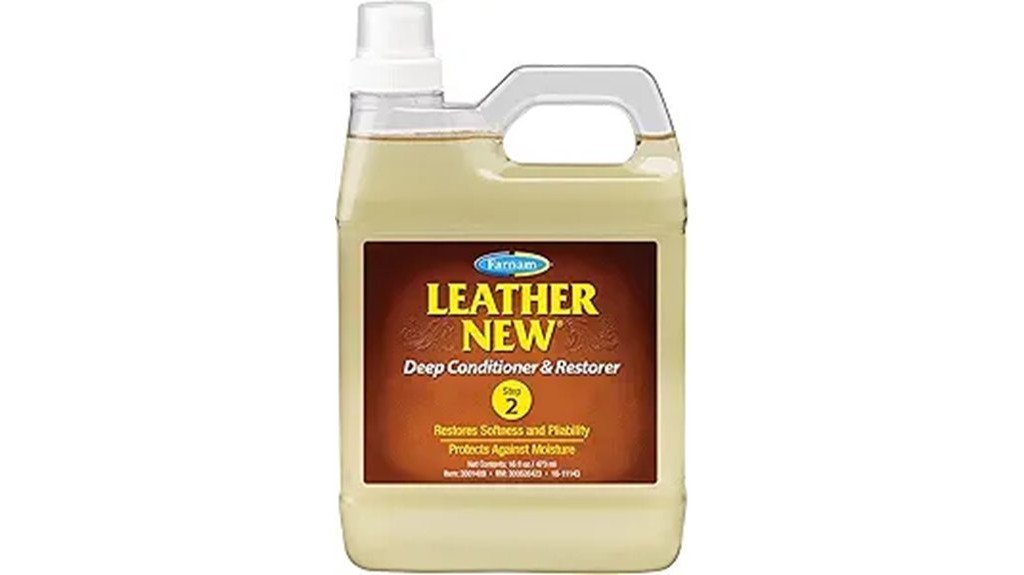
Dry, stiff leather needs more than a surface wipe if you want to restore some of its lost suppleness. Farnam Leather New Deep Conditioner & Restorer is an oil-based treatment made for deeper conditioning of old or dry leather, especially saddles and tack. Its biggest strengths are quick penetration, moisture protection, and a formula that Farnam says will not harm stitching or leave a greasy residue. The main limitation is equally important: this is not a universal leather-care product, and the manufacturer specifically excludes suede, leather furniture, and leather clothing.
Quick Verdict
Rating: 8/10, Recommended with caveats
Best For: Saddle and tack owners who need to soften and condition clean, dry leather.
Bottom Line: Leather New Deep Conditioner & Restorer gives dry leather a focused conditioning treatment without silicones, waxes, or petroleum distillates. It makes the most sense for compatible tack and similar leather goods, but you should not assume it is safe for every leather surface.
Key Specifications
| Specification | Detail |
|---|---|
| Brand | Farnam |
| Model / Item | 3001409 |
| Product Type | Deep leather conditioner and restorer |
| Size | 16 fl oz, pack of 1 |
| Formula | Blend of natural and synthetic oils |
| Excluded Ingredients | No silicones, waxes, or petroleum distillates |
| Main Use | Softening, conditioning, and preserving old, dry, or hard leather |
| Stitching | Manufacturer states it will not harm stitching |
| Residue | Designed not to leave a greasy residue after proper application |
| Suggested Frequency | Every few months or as the leather needs conditioning |
| Do Not Use On | Suede, leather furniture, or leather clothing |
What Is the Farnam Leather New Deep Conditioner & Restorer?
Leather New Deep Conditioner & Restorer is a conditioning treatment intended to put oils back into leather that has become dry, hard, or less flexible. Farnam describes the formula as a blend of natural and synthetic oils that penetrates into the leather instead of simply coating the surface.
The product is especially associated with equestrian tack. Saddles, bridles, straps, and other compatible leather gear can lose moisture through regular use, dirt exposure, sweat, storage, and dry conditions. This conditioner is meant to restore suppleness after the leather has first been cleaned.
That distinction matters. A conditioner and a cleaner do different jobs. Farnam sells separate Leather New cleaning products, while this formula focuses on deeper conditioning and restoration.
Before You Buy: Do not treat this as a universal cleaner or apply it to every item labeled “leather.” Farnam’s product label says not to use the Deep Conditioner & Restorer on suede, leather furniture, or leather clothing. Always test a small area first.
Who Should Buy It?
Best For
- Saddle and tack owners dealing with dry or stiff compatible leather.
- Buyers who want a deep conditioner without silicones, waxes, or petroleum distillates.
- People maintaining leather gear where preserving suppleness and stitching matters.
Skip If
- You need a one-step product primarily for removing dirt and grime.
- You want to treat suede, a leather sofa, or leather clothing.
- You need a conditioner specifically approved by the maker of a delicate or specialty leather item.
Key Benefits of Farnam Leather New
Deep Conditioning for Dry Leather
The strongest reason to choose this product is its focus on dry, hard leather. Farnam says the oil blend penetrates quickly and deeply to restore softness and pliability. That makes it more relevant when routine surface cleaning no longer leaves your tack feeling supple.
Leather still needs sensible care. Adding more conditioner is not always better. Apply what the leather can absorb, allow it to dry, and remove excess rather than repeatedly soaking the material.
Moisture Protection
The formula is also intended to help protect leather against moisture. That does not make treated leather waterproof, but proper conditioning can help maintain the material’s flexibility and reduce the problems associated with leather becoming excessively dry.
No Silicone, Wax, or Petroleum Distillates
Farnam specifically lists the absence of silicones, waxes, and petroleum distillates. Instead, the conditioner uses a blend of natural and synthetic oils. For a buyer comparing leather-care formulas, that is a more useful distinction than vague claims about a product being “premium” or “professional.”
Stitching-Friendly Formula
Saddles and tack depend on more than the leather panels themselves. Seams and stitching also matter. Farnam states that the conditioner will not harm stitching, which is useful when you are treating constructed leather gear rather than a simple flat piece of hide.
No Greasy Finish When Used Correctly
The conditioner is designed not to leave a greasy residue. The application process still matters: the leather should absorb what it needs, and you should buff or wipe away excess with a clean, dry cloth.
How It Performs in Real Use
For Routine Tack Maintenance
For saddles and other compatible tack that are already clean but beginning to feel dry, the conditioner fits naturally after the cleaning stage. You do not need to use it after every ride. Farnam’s product guidance suggests deep conditioning every few months, while the actual interval can depend on how dry the leather becomes.
For Old or Stiff Leather
Dry, harder leather is the main use case. The oil blend is meant to restore some flexibility as the leather absorbs the conditioner. Very dry material may behave differently from well-maintained tack, so drying time and the number of applications can vary.
A conditioner cannot repair leather that is structurally damaged. Cracked straps, torn stitching, badly thinned areas, or failing hardware should be inspected and repaired rather than treated as a conditioning problem.
For New Leather Break-In
Farnam also describes the conditioner as useful for shortening the break-in period of new leather. That can help when compatible new tack feels unusually stiff. You should still follow the tack maker’s care recommendations, especially when the leather has a special finish or color treatment.
For Long-Term Storage Care
Conditioning works best as part of a larger storage routine. Keep leather clean and dry, and avoid sealing tack in plastic or another airtight covering. A dry, protected storage area helps reduce the cycle of excess moisture followed by drying and stiffness.
Pro Tip: Check how quickly clean leather absorbs conditioner. Apply a controlled amount, let the leather absorb what it needs, and buff away excess instead of adding repeated heavy coats.
How to Use Farnam Leather New Correctly
Farnam’s directions are simple, but following the sequence matters:
- Test a small area first. This helps you check how the particular leather reacts before treating the entire item.
- Start with clean leather. Dirt should be removed before deep conditioning rather than trapped under the treatment.
- Apply the conditioner. Give the leather time to absorb the amount it needs to regain suppleness.
- Allow it to dry thoroughly. Drying time varies with the thickness and dryness of the leather.
- Buff with a clean, dry cloth. Rub briskly to finish the surface and remove conditioner that was not absorbed.
Common Mistakes to Avoid
- Skipping the small test area before treating the whole item.
- Applying deep conditioner over dirty leather instead of cleaning first.
- Using more product simply because the leather still looks wet.
- Failing to allow enough drying time.
- Using the conditioner on suede, leather furniture, or leather clothing despite the label restriction.
- Trying to solve cracked stitching, torn straps, or structural damage with conditioner alone.
Compatibility and Safety
The original version of this review described the product as safe for all leather goods, but that is too broad. Farnam’s label specifically tells you not to use Leather New Deep Conditioner & Restorer on suede, leather furniture, or leather clothing.
The manufacturer also instructs you to test a small area before full application. This is especially sensible with light-colored, finished, dyed, antique, or specialty leather because appearance can vary by material and finish.
The product label says not to ingest it, to keep it out of reach of children, and to wash your hands after use. If it gets in your eyes, follow the label’s first-aid directions. For valuable tack or specialty leather, follow the leather item’s manufacturer or saddlemaker care instructions when they are more specific.
Pros and Cons
Pros
- Made specifically to soften and condition dry, hard leather.
- Uses a blend of natural and synthetic conditioning oils.
- Contains no silicones, waxes, or petroleum distillates.
- Manufacturer states it will not harm stitching.
- Designed to protect against moisture without leaving a greasy residue after proper use.
Cons
- It is a deep conditioner, so heavily soiled leather still needs proper cleaning first.
- Not intended for suede, leather furniture, or leather clothing.
- Drying time and the amount absorbed vary with the leather’s condition and thickness.
Is It Worth the Price?
Leather New Deep Conditioner & Restorer is worth considering if your priority is maintaining compatible saddles and tack rather than buying a general-purpose household leather treatment. The 16 fl oz bottle is aimed at periodic deep conditioning, so you are not expected to apply it as frequently as a routine cleaner.
The strongest value comes from its focused formula: deep conditioning oils, moisture protection, no greasy residue when properly applied, and compatibility with stitching. The tradeoff is narrower use. If you need one bottle for furniture, clothing, suede, and tack, this is not designed to cover all of those jobs.
How It Compares to Alternatives
Farnam Leather New Saddle Soap & Leather Cleaner is the more logical choice when your main job is removing dirt and grime while cleaning, softening, and polishing tack. The Deep Conditioner & Restorer reviewed here is better positioned as the deeper treatment you use after cleaning when leather needs added conditioning.
Leather New Total Care 2-in-1 combines cleaning and conditioning in one product and is marketed for a broader range of compatible leather uses. The Deep Conditioner & Restorer makes more sense when your main concern is old, dry, or hard tack and you are comfortable using a separate cleaning step.
Frequently Asked Questions
Is Farnam Leather New a cleaner or a conditioner?
This specific model, 3001409, is Farnam’s Leather New Deep Conditioner & Restorer. Its main purpose is to deep-condition, soften, and preserve leather, so you should apply it to leather that has already been cleaned.
How often should you use Leather New Deep Conditioner?
Farnam recommends using the deep conditioner every few months. The actual need depends on how dry the leather becomes, so avoid automatically adding heavy coats on a fixed schedule.
Can you use Farnam Leather New on suede?
No. Farnam’s label specifically says not to use the Deep Conditioner & Restorer on suede. Choose a care product designed for suede instead.
Can you use it on leather furniture or leather clothing?
No, not according to the manufacturer’s label for this product. Leather furniture and leather clothing are specifically listed among the surfaces where the Deep Conditioner & Restorer should not be used.
Will it damage stitching?
Farnam states that the formula will not harm stitching. You should still inspect old tack for loose, torn, or weakened stitching because a conditioner cannot repair structural damage.
How long does Leather New take to absorb and dry?
Farnam does not give one fixed drying time. The label says drying time and the number of applications vary according to the thickness and dryness of the leather, so allow the treated item to dry thoroughly before judging the result.
Can you use it on faux or synthetic leather?
The verified manufacturer directions focus on leather and do not establish compatibility with every synthetic leather material. For faux leather, follow the item’s care instructions and use a product specifically approved for that synthetic surface.
Should you test it before treating an entire saddle?
Yes. Farnam directs you to apply the product to a small test area first. That is especially useful with light, dyed, finished, antique, or unfamiliar leather where you want to check the surface response before full application.
The Bottom Line
Farnam Leather New Deep Conditioner & Restorer is a strong fit when you need to soften and maintain compatible dry leather tack with a dedicated conditioning treatment. Its deep-conditioning oil blend, stitching-friendly formula, and lack of silicones, waxes, and petroleum distillates are meaningful strengths, but buyers who need a general cleaner or treatment for suede, furniture, or leather clothing should choose something else.
Ready to Buy?
Check the latest product details and buying options before you decide.