Disclosure: As an Amazon Associate, we earn from qualifying purchases. If you click a link on this page and make a purchase, we may receive a small commission at no extra cost to you.
Making a custom gasket is only useful when the sheet material matches the heat, pressure, and flange design of the repair. The FEL-PRO 3009 Gasket Making Material is a 12 x 28-inch, steel-reinforced sheet intended for high-temperature areas such as manifolds and exhaust pipe flanges. Its perforated steel core gives it more structure than ordinary paper or rubber-cellulose stock, but that same core makes cutting slower and requires proper metalworking tools. This review explains its verified construction, best uses, limitations, cutting method, and safety points so you can decide whether it fits your project.
Quick Verdict
Rating: 9.0/10, Recommended with tool and application checks
Best For: Mechanics, fabricators, and restorers who need cut-to-fit gasket stock for high-temperature manifold or exhaust-flange repairs.
Bottom Line: FEL-PRO 3009 combines a watertight, non-asbestos facing with a perforated steel core in a useful 12 x 28-inch sheet. It offers strong support for demanding flanges, but it is not universal gasket stock and is harder to cut than rubber-cellulose or cork material.
| Specification | Detail |
|---|---|
| Brand | Fel-Pro |
| Model / Part Number | 3009 |
| Product Type | Cut-to-fit sheet gasket material |
| Material Name | Pro-Ramic 301 / FEL-RAMIC |
| Sheet Dimensions | 12 inches x 28 inches |
| Material Thickness | 3/64 inch, approximately 0.047 inch |
| Core Construction | Perforated steel core |
| Facing | Watertight, non-asbestos facing, with fiber on one side |
| Item Weight | 8 ounces |
| Primary Applications | High-temperature manifolds and exhaust pipe flanges |
| Fit | Universal sheet stock that must be traced and cut for the application |
| Warranty Note | Major retailer listings state a one-year defect warranty; confirm the seller’s current terms |
| Amazon Customer Feedback | 4.6 out of 5 stars from 257 ratings, checked August 2026 |
What Is the FEL-PRO 3009 Gasket Making Material?
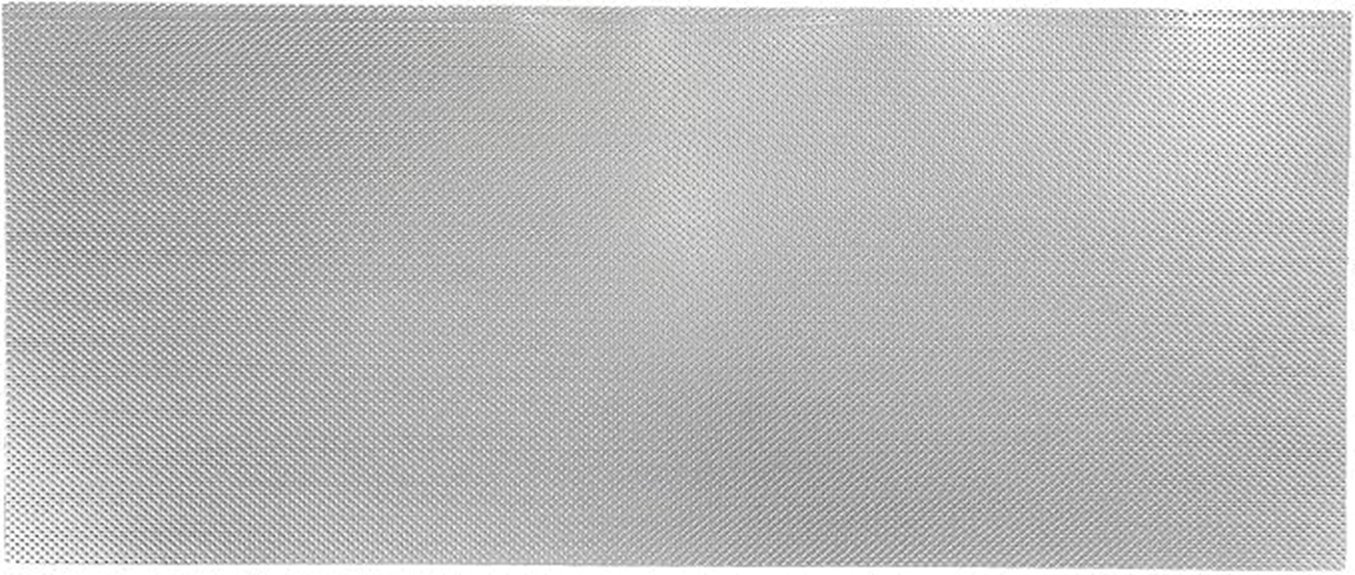
The FEL-PRO 3009 is a single sheet of Pro-Ramic 301 gasket material that you cut to match a flange. The sheet measures 12 inches by 28 inches and is 3/64 inch thick, giving you enough area for several small gaskets or one larger custom pattern, depending on the repair.
Its key feature is the perforated steel core. The non-asbestos facing is mechanically clinched to that core, and the product listing describes fiber on one side. This construction is intended to give the finished gasket more shape control and support than soft sheet materials that can stretch, tear, or squeeze outward during installation.
Fel-Pro lists high-temperature manifolds and exhaust pipe flanges as the main applications. It is therefore best viewed as specialized high-heat sheet stock, not as a universal substitute for every paper, cork, molded-rubber, multi-layer steel, or application-specific gasket.
Who Should Buy It?
Best For
- You need to reproduce an unavailable manifold or exhaust-flange gasket from a usable template.
- You build custom exhaust, crossover, or fabricated flange connections that require cut-to-fit material.
- You want durable high-temperature sheet stock in your workshop for vintage, industrial, or small-engine repairs.
Skip If
- A correct, affordable pre-cut gasket is available for your exact engine or flange.
- Your repair manual specifies a different construction, such as molded rubber, multi-layer steel, cork-rubber, or liquid sealant only.
- You do not have tin snips, a proper hole-punch set, files, and basic eye and hand protection.
Before You Buy: FEL-PRO 3009 is steel-reinforced sheet stock, not a pre-cut vehicle gasket. Confirm the required material and finished thickness in the service information for your repair before tracing or cutting the sheet.
Features and Performance Breakdown
Perforated Steel Core for High-Heat Flanges
The perforated steel core is the main reason to choose the 3009 over ordinary fiber or rubber-cellulose sheet material. It helps the cut gasket keep its shape while you position it over bolt holes and ports. The core also gives the material physical reinforcement in flange areas exposed to heat and pulsing exhaust flow.
This does not mean the sheet is correct for every high-temperature joint. Port shape, flange finish, bolt pattern, clamping load, and the manufacturer’s required gasket design still matter. Use the 3009 where its material type and 3/64-inch thickness match the repair, rather than choosing it only because the joint becomes hot.
Watertight Non-Asbestos Facing
The Amazon and retailer descriptions identify a watertight, non-asbestos facing mechanically clinched to the perforated core. That facing supplies the conformable sealing surface, while the steel provides reinforcement. The listing also specifies fiber on one side, which is more precise than describing the sheet as having matching fiber layers on both sides.
No broad chemical-compatibility chart is published on the product page. Do not assume the material is approved for every fuel, oil, coolant, solvent, or process fluid. Check the repair manual or Fel-Pro application guidance when the gasket will contact a fluid other than water or exhaust gas.
12 x 28-Inch Sheet and 3/64-Inch Thickness
The 12 x 28-inch working area is large enough for tracing long flange patterns and arranging several smaller gaskets around unused sections. Careful layout matters because narrow strips between ports or bolt holes can become difficult to cut cleanly once the surrounding material has been removed.
The listed thickness is 3/64 inch, or about 0.047 inch. Thickness affects component spacing, flange alignment, and bolt clamping, so do not stack layers to compensate for an incorrect choice unless the repair procedure specifically calls for it.
Cutting Difficulty and Tool Requirements
The steel core makes this material slower to shape than paper, cork, or rubber-cellulose stock. A utility knife may score the facing, but it will not cleanly cut the embedded steel. For reliable edges, use aviation snips or quality tin snips for the perimeter and a sharp hollow punch for round bolt holes.
Complex internal ports take the most time. A starter hole lets you insert narrow snips, but the finished edge may still need light filing to remove burrs. Plan the cutting sequence before you begin so the sheet stays rigid while you work on small openings.
Pro Tip: Make a full-size cardboard test template first. Check every bolt hole and port against the flange, then transfer the corrected pattern to the FEL-PRO 3009 sheet to avoid wasting steel-core material.
Universal Sheet Stock, Not Confirmed Vehicle Fit
Although an online listing may display vehicle-fitment prompts, the 3009 is fundamentally a sheet that you customize. It does not arrive with ports or bolt holes for a specific year, make, model, or engine. Your template and measurements determine the finished fit.
When an original gasket is available, inspect it before using it as a pattern. A burned, stretched, torn, or shrunken gasket may no longer show the correct port shape. In that case, trace the clean flange face or use manufacturer dimensions instead.
How It Performs in Real Use
Exhaust Manifold and Pipe Flanges
This is the product’s clearest use case. Fel-Pro specifically lists high-temperature manifolds and exhaust pipe flanges, and the perforated steel core gives the gasket more reinforcement than unbacked paper stock. It is useful when the correct pre-cut part is unavailable and the flange design can accept a flat, 3/64-inch sheet gasket.
Custom Fabricated Exhaust Connections
Fabricators can trace a custom two-bolt, three-bolt, or irregular flange after checking the required material and thickness. The large sheet provides room for wide outer margins, accurate bolt spacing, and a clean port opening. A cardboard test piece is especially helpful when both mating flanges were made by hand.
Vintage and Obsolete Equipment
Older tractors, motorcycles, stationary engines, and out-of-production equipment may use simple flat gaskets that are no longer sold pre-cut. The 3009 can help reproduce suitable high-temperature patterns when you still have a sound original, a clean housing, or reliable service dimensions to use as a template.
Workshop Backup Material
A full 12 x 28-inch sheet can be useful workshop stock for planned custom work or a hard-to-source repair. Store the unused portion carefully and label it with the part number, material type, and thickness so it is not confused with easier-to-cut sheet stock intended for different applications.
How to Cut and Fit FEL-PRO 3009
Steel-reinforced gasket material rewards careful preparation. Use the following process to reduce distorted holes, ragged ports, and wasted material:
- Confirm the application: Check that a flat Pro-Ramic-style sheet and 3/64-inch thickness are appropriate for the joint.
- Flatten the material: If the sheet arrives curved, place it on a clean flat surface under smooth boards or other even weight before tracing.
- Build a test pattern: Make a cardboard template and verify the outer shape, bolt centers, and port clearance on the actual flange.
- Trace clearly: Use a fine marker, scribe, or layout fluid that leaves an easy-to-follow line without hiding small details.
- Punch bolt holes first: Support the sheet on hardwood or a dense cutting mat and use a sharp hollow punch sized for each fastener.
- Cut the internal openings: Drill or punch a starter hole inside the waste area, then trim toward the line with narrow snips.
- Trim the outer edge: Use aviation snips or tin snips, taking small bites around curves to reduce bending.
- Deburr and dry-fit: Remove sharp steel burrs with a fine file, clean away debris, and verify alignment before installation.
During installation, clean the mating surfaces without gouging them, keep debris out of ports, and follow the vehicle or equipment manufacturer’s tightening sequence and torque specification. Do not add RTV, adhesive, or another coating unless the repair procedure or sealant manufacturer specifically supports it for that joint.
Safety and Material Notes
The sheet uses non-asbestos facing, but cutting a perforated steel composite still creates sharp edges and small particles. Wear safety glasses and cut-resistant work gloves, and use a dust mask when filing or sanding the facing. Work in a ventilated area and clean the bench afterward so metal fragments do not remain around other parts.
The Amazon product information carries a California Proposition 65 warning. Review the current product label and seller safety information before use, particularly if you will cut, sand, or handle the material frequently. Keep unused pieces away from children and store them where the steel edges cannot damage nearby parts or packaging.
This material should not be used to improvise critical gaskets that require an engineered fire ring, multi-layer steel construction, molded sealing beads, compression limiters, or a vehicle-specific design. When the sealing joint affects engine safety or you cannot confirm material compatibility, use the specified replacement gasket or consult a qualified technician.
Pros and Cons
Pros
- Perforated steel core adds reinforcement for suitable high-temperature flange applications.
- Verified 12 x 28-inch sheet provides useful space for custom patterns.
- Watertight, non-asbestos facing is mechanically attached to the core.
- 3/64-inch thickness is clearly specified for accurate material matching.
- Useful for obsolete, custom, and hard-to-source flat gasket patterns.
Cons
- Harder to cut and punch than paper, cork, or rubber-cellulose gasket stock.
- Not a universal substitute for every engine, fluid, or sealing application.
- Accurate results depend on a correct template, proper tools, and careful deburring.
Is It Worth the Price?
FEL-PRO 3009 offers strong value when you need one or more custom high-temperature flat gaskets and cannot buy a correct pre-cut part. The sheet’s size lets you plan several patterns, and the steel-reinforced construction serves a more demanding role than basic paper stock.
The value drops when a direct-fit gasket is readily available. A pre-cut part saves tracing and tool work, reduces the risk of port misalignment, and is more likely to match the specified construction. The 3009 is therefore worth considering for custom fabrication, obsolete parts, and workshop stock, but it is not automatically the cheaper or safer choice for every repair.
How It Compares to Alternatives
FEL-PRO 3009 vs. FEL-PRO 3075 rubber-cellulose sheet: The 3075 is a 3/64-inch rubber-cellulose sheet that is easier to cut because it does not use the 3009’s perforated steel core. Choose between them according to the specified gasket material and operating environment, not only by thickness.
FEL-PRO 3009 vs. cork-rubber sheet: Cork-rubber is more compressible and easier to shape for applications designed around that material. The 3009 is the better match when the joint specifically calls for reinforced high-temperature sheet material.
FEL-PRO 3009 vs. a pre-cut gasket or RTV: A correct pre-cut gasket is usually the simplest choice because its ports, holes, thickness, and sealing features are already engineered for the application. RTV is not a direct replacement for reinforced sheet stock and should be used only where the service procedure calls for liquid sealant.
Frequently Asked Questions
Can FEL-PRO 3009 be used for exhaust applications?
Yes. Fel-Pro lists high-temperature manifolds and exhaust pipe flanges among its intended applications. You still need to confirm that the flange design and required 3/64-inch thickness match your repair.
Is the FEL-PRO 3009 a vehicle-specific gasket?
No. It is a universal 12 x 28-inch sheet that you trace and cut. Online fitment prompts do not turn it into a pre-cut gasket for a particular vehicle or engine.
What tools work best for cutting the steel core?
Use aviation snips or sturdy tin snips for straight and curved edges. A sharp hollow punch supported by hardwood or a dense mat makes cleaner bolt holes than drilling through the finished gasket.
Can I cut FEL-PRO 3009 with a utility knife or household scissors?
A knife may score the facing, but it will not reliably cut the perforated steel core. Household scissors can dull, bend, or leave rough edges, so metal-cutting snips are the better choice.
Can this sheet be used to make a cylinder-head gasket?
Do not treat it as a universal head-gasket substitute. Cylinder-head gaskets often need application-specific fire rings, multi-layer construction, coatings, and engineered coolant and oil passages, so use the specified part.
Is FEL-PRO 3009 resistant to oil, coolant, gasoline, and other fluids?
The listing describes the facing as watertight, but it does not publish a complete fluid-compatibility chart. Verify suitability for the exact fluid and temperature in your application before installation.
Should I apply RTV or gasket adhesive to the sheet?
Do not add sealant automatically. Follow the service procedure for the joint, because extra RTV can change clamping, squeeze into a port, or make later removal harder when it is not required.
How should unused FEL-PRO 3009 material be stored?
Keep it clean, dry, and as flat as practical. Protect the cut steel edges, retain the part-number label, and store it away from moisture, children, and tools that could crease or contaminate the facing.
The Bottom Line
The FEL-PRO 3009 is a strong choice when you need cut-to-fit, steel-reinforced sheet material for a suitable manifold or exhaust-flange application. Buy it for verified high-temperature flat-gasket work, custom fabrication, or obsolete patterns, but skip it when a correct pre-cut gasket or a different specified material is available. Its main advantage is the perforated steel core, while its main tradeoff is the extra cutting skill and tooling that core requires.
Ready to Buy?
Check the latest price, seller terms, and product details before you decide.