Disclosure: As an Amazon Associate, we earn from qualifying purchases. If you click a link on this page and make a purchase, we may receive a small commission at no extra cost to you.
A bass amp can sound powerful in a product description yet struggle once a drummer, guitar, and full rehearsal mix enter the room. The Fender Rumble 100 V3 Bass Combo Amplifier aims to balance usable volume with a portable 22-pound cabinet. It combines 100 watts, a 12-inch Eminence speaker, four-band EQ, three voicing switches, overdrive, and several practice and stage connections. This review explains where that combination works well, where it reaches its limits, and what you should confirm about the linked Renewed listing before buying.
Quick Verdict
Rating: 8/10, recommended with caveats
Best For: Bass players who want one lightweight amp for home practice, rehearsals, recording, and smaller performances.
Bottom Line: The Rumble 100 V3 gives you useful volume, flexible tone shaping, a 12-inch speaker, and direct PA connectivity in an unusually manageable cabinet. It lacks an external speaker output and a full onboard effects section, while the linked Amazon page is labeled Renewed rather than new.
| Specification | Detail |
|---|---|
| Brand | Fender |
| Model | Rumble 100 V3 |
| Product Type | One-channel bass combo amplifier |
| Power Output | 100 watts at 8 ohms |
| Amplifier Type | Class D |
| Speaker | One 12-inch Eminence Special Design speaker |
| Cabinet | Ported lightweight plywood enclosure with removable grille |
| Dimensions | 16.5 inches wide × 18.5 inches high × 14 inches deep |
| Weight | 22 pounds |
| Equalization | Bass, low-mid, high-mid, and treble controls |
| Voicing Controls | Bright, Contour, and Vintage switches |
| Drive Feature | Overdrive with separate Drive and Level controls |
| Connections | Bass input, auxiliary input, headphone output, effects-loop send and return, XLR line output, and footswitch jack |
| External Speaker Output | Not included on the Rumble 100 combo |
| Footswitch | Optional single-button latching footswitch; not included |
| Finish | Black textured vinyl with silver grille cloth |
| Best Use | Practice, rehearsals, recording, lessons, and smaller performances |
| Linked Amazon Condition | The preserved affiliate link is labeled as a Renewed product listing |
What Is the Fender Rumble 100 V3?
The Fender Rumble 100 V3 is a solid-state bass combo that places the amplifier, controls, and speaker in one cabinet. Its 100-watt Class D power section drives a single 12-inch Eminence Special Design speaker inside a ported plywood enclosure.
The model sits between a small home-practice amp and a heavier performance rig. It gives you more headroom and fuller low-frequency output than many compact practice models, but it remains light enough to carry between home, lessons, rehearsals, and smaller venues.
Its main selling point is versatility without excessive weight. You get four-band EQ, three preset voicing switches, controllable overdrive, an effects loop, private headphone practice, an auxiliary input, and an XLR output for a PA system or recording console.
Before You Buy: The linked Amazon page identifies this unit as Renewed. Confirm the product condition, seller, return policy, warranty coverage, power version, and included accessories before placing your order. The optional overdrive footswitch is not listed as a standard included accessory.
Who Should Buy It?
Best For
- Players who want a 100-watt amp that weighs only 22 pounds.
- Bassists who need one amp for practice, rehearsals, recording, and modest live settings.
- Players who want four-band EQ, switchable voicings, overdrive, an effects loop, and direct PA output.
Skip If
- You need an external speaker output for adding another cabinet.
- You regularly compete with a loud drummer without PA support.
- You want onboard compression, chorus, reverb, delay, or amp modeling.
Key Features and Performance
100-Watt Class D Power Section
The Class D design helps Fender keep the cabinet at 22 pounds without limiting the amplifier to bedroom-level output. You have more usable headroom than you would get from a small 15-watt, 25-watt, or 40-watt practice combo.
That extra power matters during rehearsals because clean bass notes require headroom. You can raise the volume without immediately pushing every note into unwanted distortion. Actual room coverage still depends on the drummer, other amplifiers, room size, and how much low end your group uses.
The Rumble 100 also includes Fender’s Delta-Comp limiter within its amplifier design. This operates behind the scenes rather than as a separate compressor effect with adjustable controls.
12-Inch Eminence Speaker and Ported Cabinet
A single 12-inch Eminence Special Design speaker handles the sound output. This speaker size gives the combo a useful balance between low-frequency body, note definition, cabinet size, and transport weight.
The ported plywood enclosure supports the speaker’s low-frequency response without requiring a much larger cabinet. It can produce fuller bass than a compact practice speaker, although it will not move air like a larger 15-inch combo or a multi-speaker cabinet.
The removable front grille can make cleaning or servicing easier, but the speaker itself should still be protected from impacts, moisture, and loose objects during transport.
Four-Band EQ
The control panel separates the EQ into Bass, Low-Mid, High-Mid, and Treble. This four-band arrangement gives you more targeted control than a basic bass-and-treble layout.
Low-mid adjustments can change body and warmth, while high-mid adjustments affect attack and how clearly the bass cuts through guitars. The Bass and Treble controls handle the wider low and high ranges. Small adjustments are usually more useful than turning several controls to their maximum positions.
Bright, Contour, and Vintage Voicing
Three switches let you make broad tonal changes before fine-tuning the EQ. The Bright setting adds upper-frequency presence, which can help finger noise, pick attack, and slap-style articulation come forward.
Contour reduces some midrange while boosting the low and high ranges. It can produce a wider, polished sound at lower volume, but a deep mid cut may make your bass harder to hear inside a crowded band mix.
Vintage produces a darker voice with added harmonic character and natural compression. It suits rounder or older-style bass tones, especially when you do not need a sharp top-end attack.
Overdrive Circuit
The built-in overdrive has separate Drive and Level controls. Drive adjusts the amount of preamp distortion, while Level balances the volume between your clean and driven sounds.
You can activate overdrive from the control panel or connect a compatible single-button latching footswitch. The footswitch is optional, so check the listing carefully if remote switching is important to your live setup.
The circuit adds grit for rock, punk, alternative music, or any part that needs more harmonic edge. It does not replace a full pedalboard because the amp does not include onboard delay, chorus, reverb, or other creative effects.
Effects Loop and External Pedals
The Rumble 100 includes effects-loop Send and Return connections. This lets you place compatible pedals or processors after the amp’s preamp section instead of running every effect directly between your bass and the main input.
An effects loop is particularly useful for delay, chorus, and similar effects that may sound cleaner after the preamp and overdrive stages. It also gives you more flexibility than an amp with only a basic instrument input.
Headphones and Auxiliary Input
The headphone output automatically mutes the internal speaker when headphones are connected. This gives you a private practice option for apartments, shared rooms, or late-night sessions.
The auxiliary input accepts an external audio source for backing tracks, lessons, or recorded songs. The amp’s controls do not adjust the auxiliary signal, so you should set track volume from the connected phone, computer, or music player.
XLR Line Output
The balanced XLR line output lets you send the bass signal to a PA system or recording console. This is one of the Rumble 100’s most useful performance features because your stage amp can act as a personal monitor while the main sound system covers the room.
The connection includes a ground-lift function for addressing some hum or buzz caused by connected equipment. Fender also lists pre/post switching, which gives you control over whether the direct signal follows the amp’s preamp settings.
Design and Portability
The cabinet measures about 16.5 inches wide, 18.5 inches high, and 14 inches deep. Those dimensions make it easier to place in a bedroom, rehearsal corner, vehicle, or small performance area than a separate head-and-cabinet rig.
Its 22-pound weight is a major practical advantage. You can usually carry it with one hand using the molded strap handle, although you should support the cabinet carefully on stairs and avoid letting the speaker grille strike door frames or equipment.
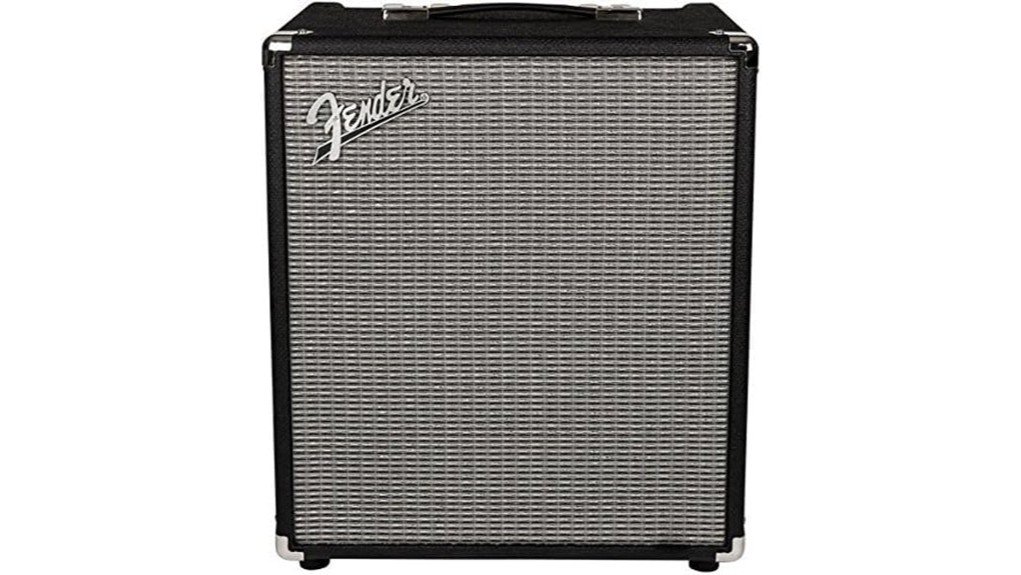
The lightweight plywood cabinet has black textured vinyl, silver grille cloth, a painted metal control panel, and vintage-style radio knobs. The design looks traditional, but the Class D amplifier keeps the internal power section relatively light.
How It Performs in Real Use
For Home Practice
The Rumble 100 provides more low-frequency body than most tiny practice amps, even when you keep the master volume restrained. The headphone output and auxiliary input also let you practice silently with lessons or backing tracks.
You may not need all 100 watts at home, but the larger speaker and extra headroom can make low notes sound less strained. Place the amp carefully because bass can become excessive when the port sits close to a corner.
For Band Rehearsals
In a controlled rehearsal, the amp can provide enough volume for many small groups. Its four-band EQ helps you find space around guitars, keyboards, and drums instead of solving every mix problem by raising the master volume.
A loud acoustic drummer and high-volume guitar cabinets can push the Rumble 100 closer to its limit. In that setting, reducing excessive sub-bass and adding useful midrange may improve audibility more than turning up the Bass control.
For Smaller Performances
The 22-pound cabinet makes load-in and setup quick. For cafés, small stages, worship spaces, rehearsals with an audience, and modest rooms, it can work as the main bass source when stage volume remains reasonable.
For larger venues, use the XLR output to send the signal to the main PA. This lets the combo provide nearby monitoring while the venue’s speakers handle wider audience coverage.
For Recording and Pedal Use
The XLR output can feed a recording interface or console, while the effects loop gives you more control over pedal placement. You can record the amp’s shaped signal or adjust the pre/post setting when you need a cleaner direct feed.
Players with several pedals should plan cable routing before a session. Keeping power cables away from signal cables can reduce avoidable noise, and the ground-lift control may help when a connected system creates hum.
Setup Tips Before First Use
Start with the Master, Gain, and overdrive Level controls low. Connect your bass, turn on the amplifier, and raise the controls gradually. This reduces the chance of a sudden volume jump or unwanted distortion.
Both active and passive basses can connect to the main input. An active bass with a strong output may require a lower Gain setting. If your clean sound distorts unexpectedly, reduce the instrument volume or amp Gain before changing the EQ.
Begin with the four EQ controls near their center positions and leave Bright, Contour, Vintage, and Overdrive off. Listen to the neutral sound first, then activate one feature at a time so you can hear what each setting changes.
Move the cabinet slightly away from a wall or corner if the low end becomes boomy. Raising the amp closer to ear level can also help you hear attack and midrange without increasing overall volume.
Pro Tip: In a band mix, reduce excessive bass and add a small amount of low-mid or high-mid presence before raising the master volume. Clear midrange often helps other players hear your notes more effectively than extra low-frequency energy.
Compatibility and Safety
The main instrument input accepts passive and active bass guitars. The Rumble 100 is designed as a bass amplifier, although its auxiliary input can play backing tracks from a separate audio device.
The effects loop supports external processors, and the footswitch connection accepts Fender-compatible or generic single-button latching footswitches. Confirm compatibility before buying a switch because momentary and multi-button models may not operate correctly.
The Rumble 100 combo does not include an external speaker output. Do not connect a speaker cabinet to the effects loop, XLR output, headphone output, or any connection not labeled for speakers.
Use the correct voltage version for your location and follow the owner’s manual during setup. Keep the cabinet dry, use undamaged cables, avoid unstable stands, and leave enough open space for normal ventilation.
Pros and Cons
Pros
- Delivers 100 watts through a 12-inch Eminence Special Design speaker.
- Weighs only 22 pounds and uses a compact plywood cabinet.
- Provides four-band EQ plus Bright, Contour, and Vintage voicing switches.
- Includes controllable overdrive, an effects loop, auxiliary input, and silent headphone practice.
- Balanced XLR output makes PA and recording-console integration easier.
Cons
- No external speaker output for expanding the built-in cabinet.
- May need PA support when competing with loud drums or covering a larger room.
- The preserved Amazon link is for a Renewed listing, so condition and coverage require extra checking.
Is It Worth the Price?
The Fender Rumble 100 V3 sits in a practical middle tier between a small practice amp and a higher-powered performance combo. Its value comes from combining a 100-watt Class D power section, a 12-inch speaker, four-band EQ, several connections, and a 22-pound cabinet.
It offers the most value when you need one portable amp for several jobs. You can practice through headphones, rehearse with a group, connect pedals through the effects loop, record through the XLR output, and send your signal to a PA during a performance.
The linked unit’s Renewed condition changes the buying calculation. Compare its condition, seller support, return terms, warranty details, and included accessories with a factory-new Rumble 100 before deciding which option offers better value.
How It Compares to Alternatives
The Fender Rumble 40 is smaller and lighter, using 40 watts and a 10-inch speaker. It can make more sense for lower-volume home practice, but the Rumble 100 gives you more rehearsal headroom, a larger speaker, and an effects loop.
The Fender Rumble 200 moves in the other direction with 200 watts, a 15-inch speaker, and greater stage headroom. It weighs more and takes up additional space, but it is better suited to louder bands and buyers who need an external speaker connection. The Rumble 100 makes the most sense when portability and connection flexibility matter more than maximum output.
Frequently Asked Questions
Is the Fender Rumble 100 V3 loud enough for gigs?
It can handle smaller performances when band and room volume remain controlled. For a loud drummer or larger venue, connect the balanced XLR output to the PA instead of relying only on the internal speaker.
Can I connect an external speaker cabinet?
No. Fender does not equip the Rumble 100 combo with an external speaker output. The effects loop and XLR connection serve different purposes and must not be used as speaker outputs.
Does the headphone output mute the speaker?
Yes. Connecting compatible headphones automatically mutes the internal speaker. This lets you practice privately while using the amp’s gain, EQ, voicing, and overdrive controls.
Does the Rumble 100 have an effects loop?
Yes. It has quarter-inch Send and Return connections for compatible external effects. This can be useful for placing delay, chorus, and other processors after the preamp section.
Can I use an active bass with this amplifier?
Yes. The input supports active and passive basses. If an active bass produces unwanted distortion because of its stronger output, lower the Gain control and increase the master volume only as needed.
Is an overdrive footswitch included?
The standard Fender specifications describe the compatible footswitch as optional. Check the individual seller’s package contents rather than assuming a footswitch comes with the amplifier.
Can the XLR output connect directly to a PA system?
Yes. The balanced XLR line output is designed for a PA system or recording console. Its ground-lift control can help address some hum caused by connected equipment.
Is the linked Amazon amplifier new?
The preserved Amazon affiliate link is labeled as a Renewed Rumble 100 V3 listing. Review the current condition description, seller, return terms, warranty information, and included accessories before ordering.
The Bottom Line
The Fender Rumble 100 V3 is a strong choice when you want 100 watts, a 12-inch speaker, detailed tone controls, pedal-friendly connections, and direct PA output in a 22-pound combo. You should skip it if you need an expandable speaker system, extensive onboard effects, or enough independent stage volume for consistently loud venues.
Its performance and portability support the 8/10 verdict, but the linked Renewed condition deserves careful review before you complete the purchase.
Ready to Buy?
Check the latest condition, seller details, price, and package contents before you decide.